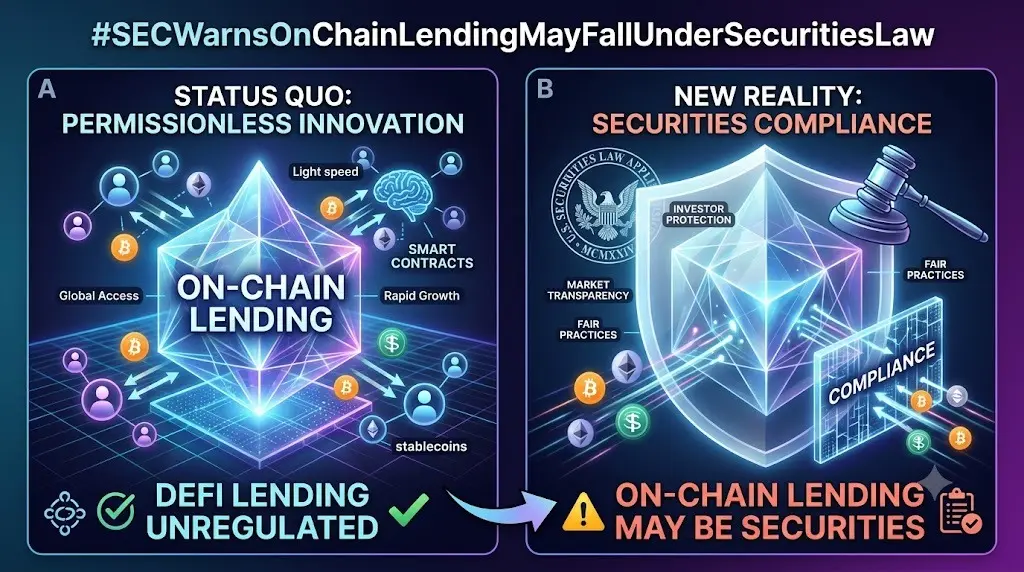
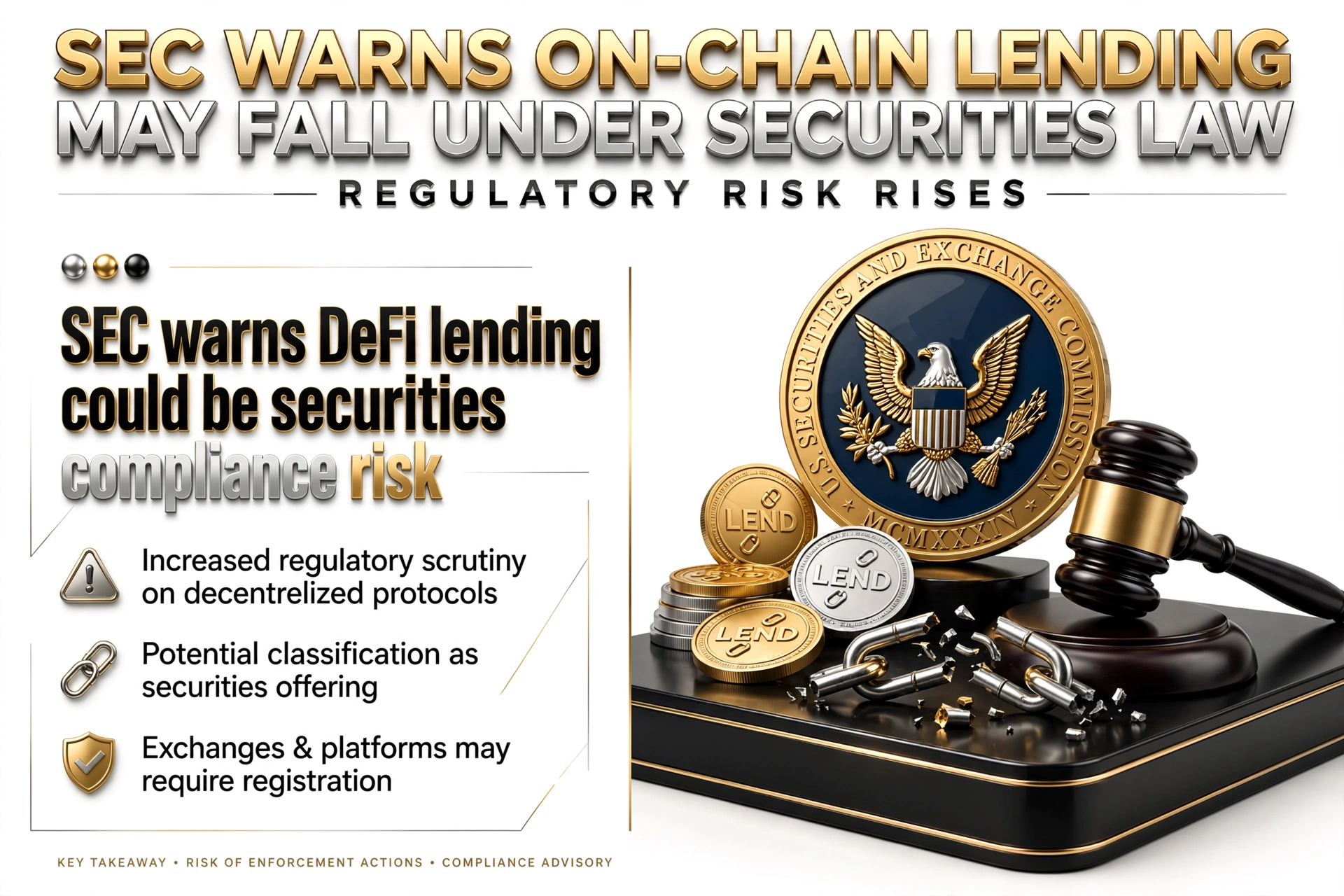
#SECWarnsOnChainLendingMayFallUnderSecuritiesLaw
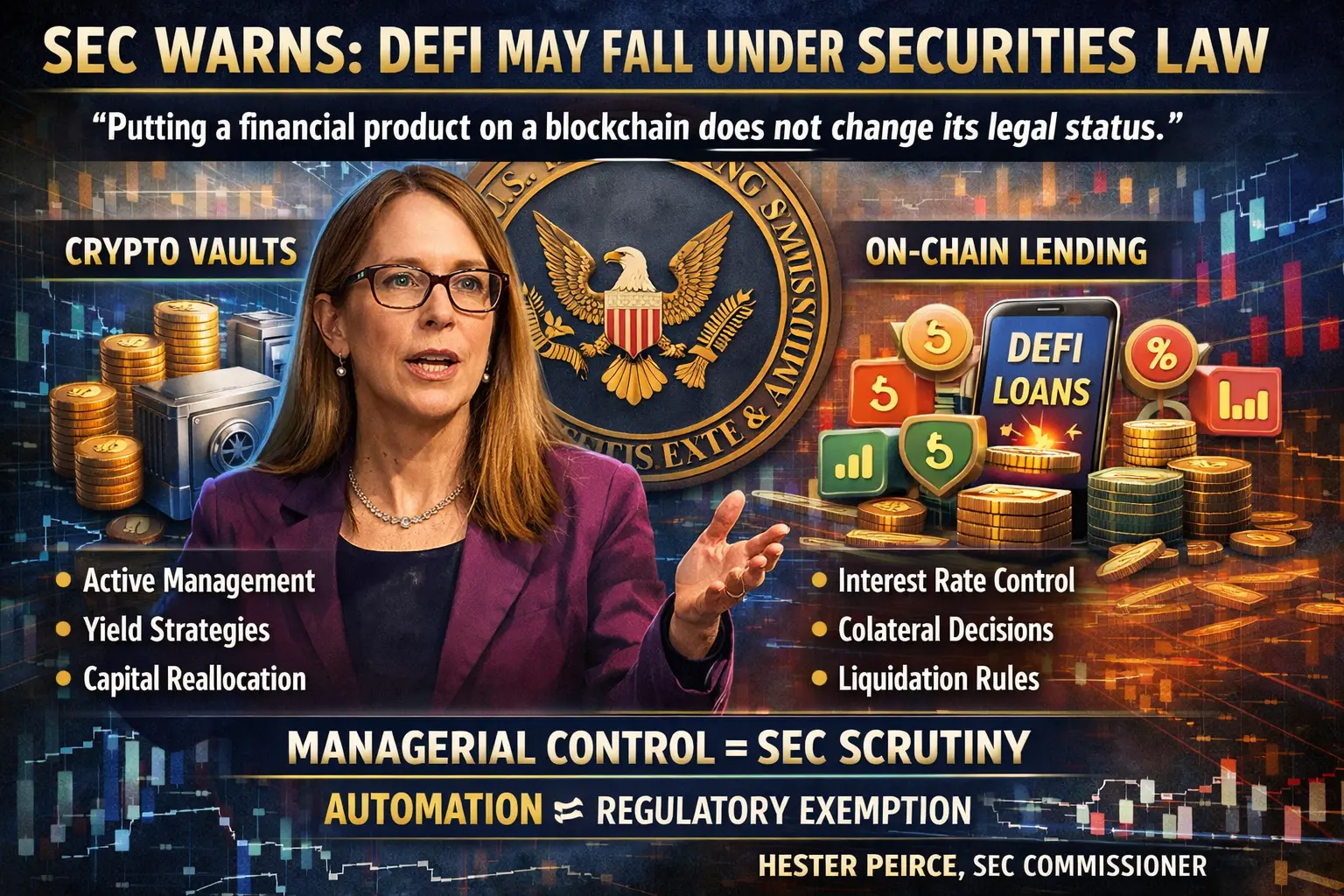
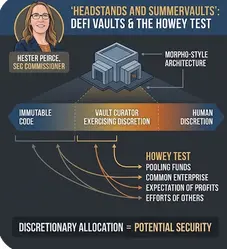
SEC Commissioner Hester Peirce’s statement—titled “Headstands and Summervaults: A Statement on Crypto Vaults and Lending Strategies”—marks a pivotal moment for Decentralized Finance (DeFi). Because Peirce is historically one of the SEC's most pro-innovation commissioners, her clear warning signals that regulatory scrutiny over on-chain yield is intensifying.
This statement is significant because it clarifies the SEC's regulatory approach rather than announcing a new rule. The central message is:
Putting a financial product on a blockchain does not change its legal status.
Here's what it means in practice:
Crypto vaults
Crypto vaults (such as automated yield strategies) often pool user funds and deploy them into different DeFi protocols.
The SEC is signaling that if an operator:
decides where assets are invested,
changes strategies over time,
reallocates capital,
actively manages risk,
then the arrangement may look like an investment product rather than simply software.
That could trigger obligations under U.S. securities laws, including registration or exemptions.
On-chain lending
For lending protocols, the SEC is focusing on whether there is meaningful human or organizational control over things like:
setting interest rates,
deciding which assets can be used as collateral,
determining liquidation parameters,
modifying protocol rules.
Greater discretion by identifiable managers makes it more likely regulators will view the activity as falling within existing securities regulations.
Why "managerial discretion" matters
A recurring theme in U.S. securities law is whether investors are relying on the efforts of others to generate returns.
If users simply interact with immutable code that no one controls, the regulatory analysis may differ from a protocol where a team continually adjusts parameters to optimize yields.
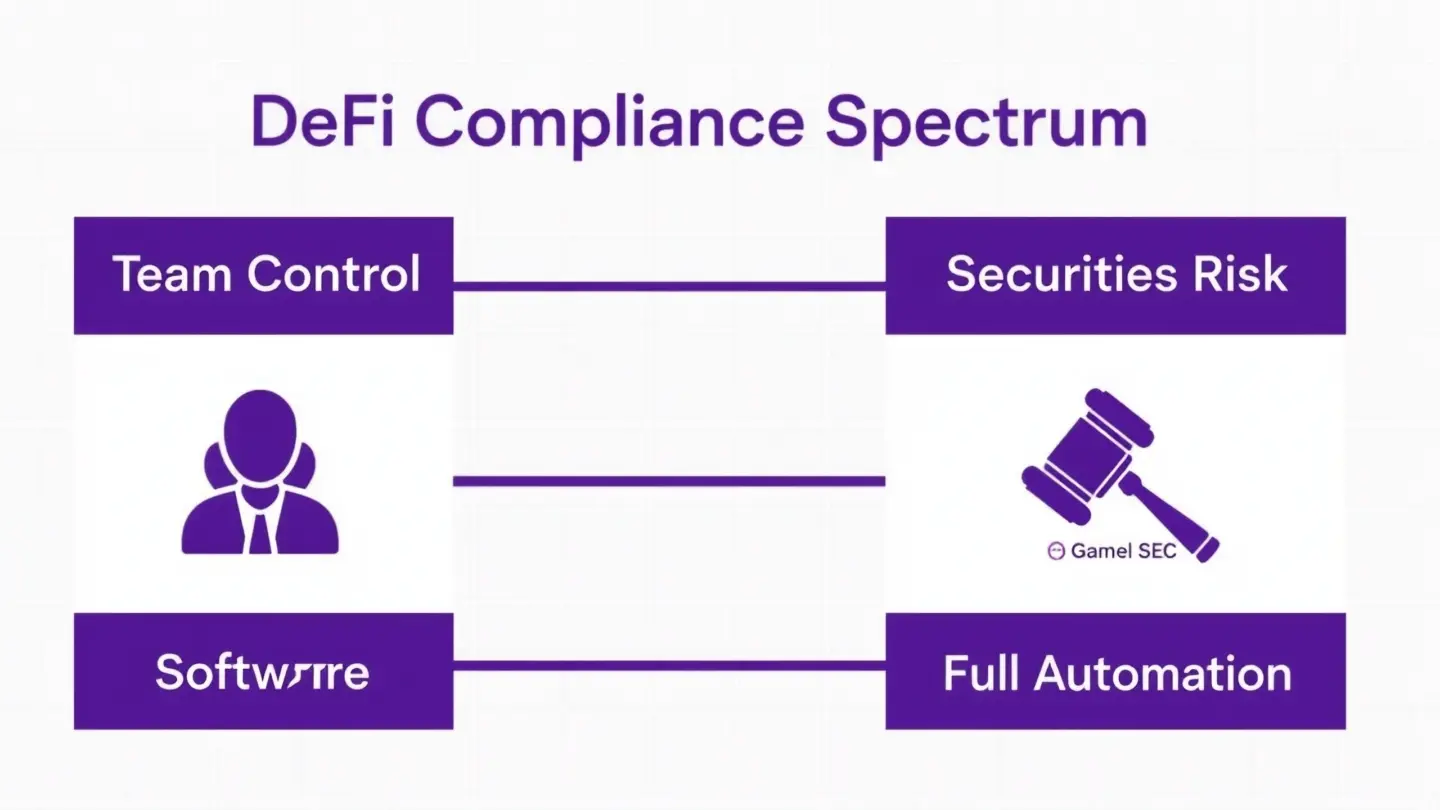
In general:
More automation and less human discretion → weaker argument that users rely on managerial efforts.
More active management → stronger case that securities laws could apply.
What this means for DeFi
The statement reinforces that:
DeFi is not automatically exempt from securities regulation.
Governance structures and operational control matter more than marketing labels like "decentralized."
Protocol developers and DAO participants may need to evaluate whether their activities create securities-law obligations.
Notably
Commissioner Hester Peirce has generally been viewed as one of the SEC's more crypto-friendly commissioners. Her invitation for market participants to engage with the SEC about potential rule revisions suggests the agency is open to discussing how existing laws should apply to evolving DeFi models. At the same time, her statement emphasizes that current federal securities laws remain applicable where their legal tests are met.
Overall, the practical takeaway is that the degree of human management and discretion—not simply the use of blockchain technology—is likely to be a key factor in determining whether crypto vaults and on-chain lending arrangements fall under U.S. securities laws.
SEC Commissioner Hester Peirce’s statement—titled “Headstands and Summervaults: A Statement on Crypto Vaults and Lending Strategies”—marks a pivotal moment for Decentralized Finance (DeFi). Because Peirce is historically one of the SEC's most pro-innovation commissioners, her clear warning signals that regulatory scrutiny over on-chain yield is intensifying.
This statement is significant because it clarifies the SEC's regulatory approach rather than announcing a new rule. The central message is:
Putting a financial product on a blockchain does not change its legal status.
Here's what it means in practice:
Crypto vaults
Crypto vaults (such as automated yield strategies) often pool user funds and deploy them into different DeFi protocols.
The SEC is signaling that if an operator:
decides where assets are invested,
changes strategies over time,
reallocates capital,
actively manages risk,
then the arrangement may look like an investment product rather than simply software.
That could trigger obligations under U.S. securities laws, including registration or exemptions.
On-chain lending
For lending protocols, the SEC is focusing on whether there is meaningful human or organizational control over things like:
setting interest rates,
deciding which assets can be used as collateral,
determining liquidation parameters,
modifying protocol rules.
Greater discretion by identifiable managers makes it more likely regulators will view the activity as falling within existing securities regulations.
Why "managerial discretion" matters
A recurring theme in U.S. securities law is whether investors are relying on the efforts of others to generate returns.
If users simply interact with immutable code that no one controls, the regulatory analysis may differ from a protocol where a team continually adjusts parameters to optimize yields.
In general:
More automation and less human discretion → weaker argument that users rely on managerial efforts.
More active management → stronger case that securities laws could apply.
What this means for DeFi
The statement reinforces that:
DeFi is not automatically exempt from securities regulation.
Governance structures and operational control matter more than marketing labels like "decentralized."
Protocol developers and DAO participants may need to evaluate whether their activities create securities-law obligations.
Notably
Commissioner Hester Peirce has generally been viewed as one of the SEC's more crypto-friendly commissioners. Her invitation for market participants to engage with the SEC about potential rule revisions suggests the agency is open to discussing how existing laws should apply to evolving DeFi models. At the same time, her statement emphasizes that current federal securities laws remain applicable where their legal tests are met.
Overall, the practical takeaway is that the degree of human management and discretion—not simply the use of blockchain technology—is likely to be a key factor in determining whether crypto vaults and on-chain lending arrangements fall under U.S. securities laws.