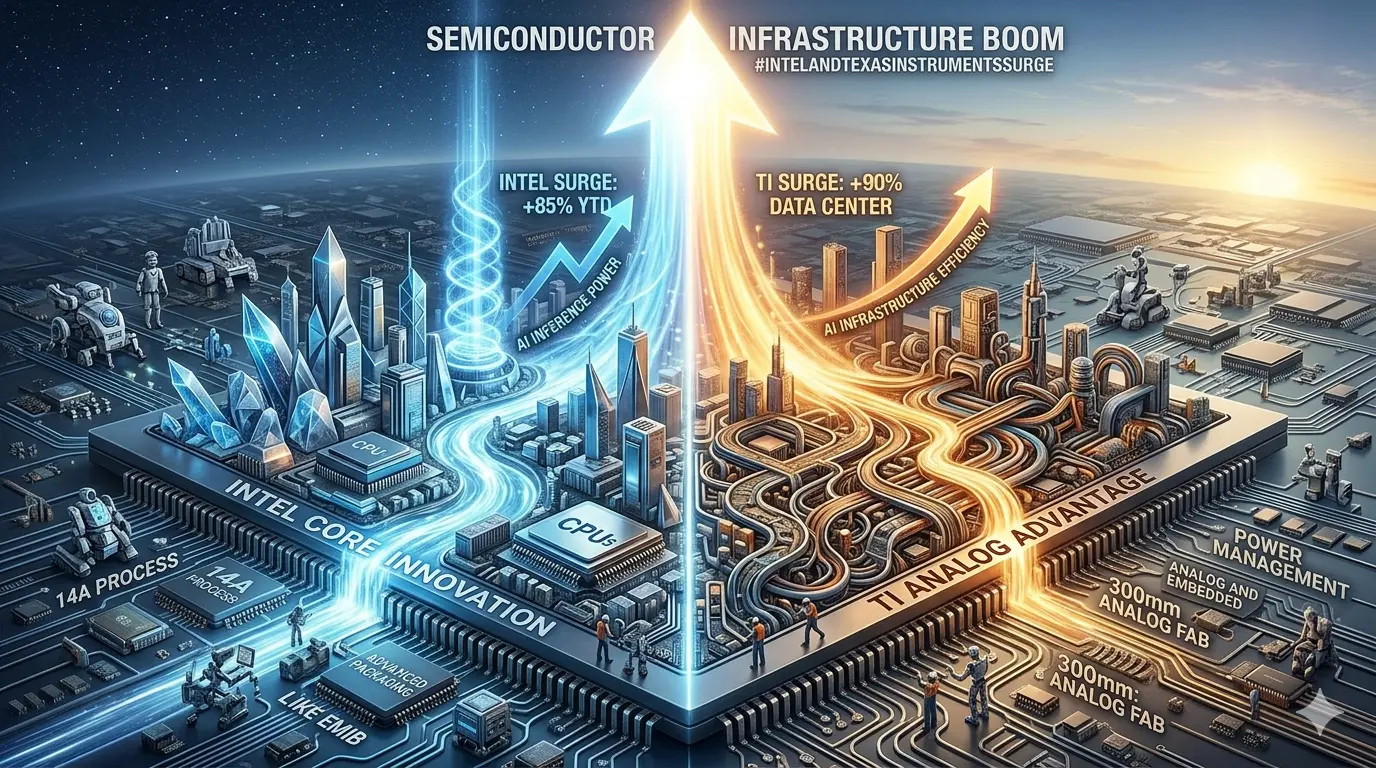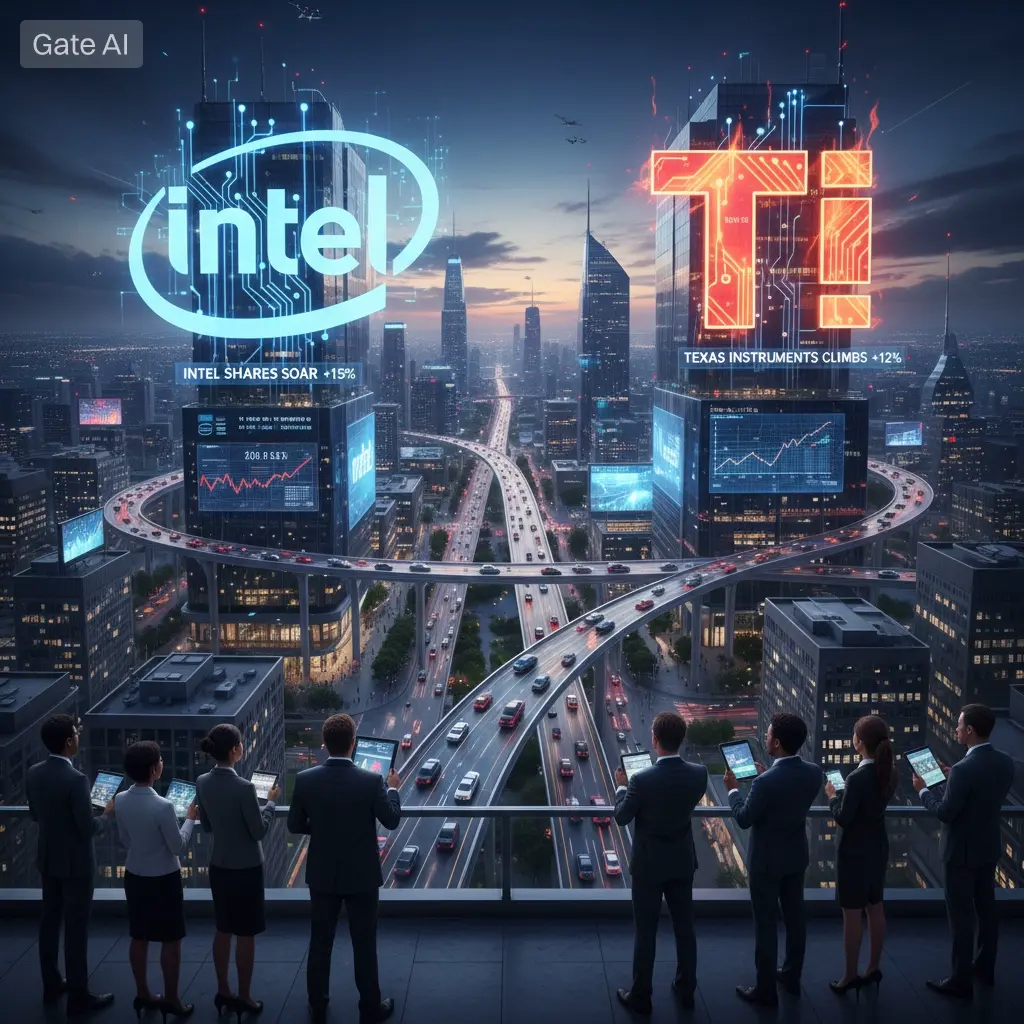
# IntelandTexasInstrumentsSurge

20.64K
#IntelandTexasInstrumentsSurge
The biggest mistake investors are making in 2026 is treating semiconductors, artificial intelligence, and crypto as separate stories.
They are not separate anymore.
They are now part of one connected capital system where movement in one layer creates pressure across the entire structure. What looks like a simple rally in companies like Intel and Texas Instruments is actually something much deeper: the market pricing the foundation of the next digital economy.
Semiconductors are no longer just products for consumer electronics or enterprise servers. They have bec
TOKEN6.46%
TRUST0.02%
post-image
  • Reward
  • 4
  • Repost
  • Share
MasterChuTheOldDemonMasterChu:
Just charge forward 👊
View More
#IntelandTexasInstrumentsSurge
#SemiconductorToCryptoConvergence The Silent Macro Engine Behind Tech Equities, AI Expansion, and the Next Phase of Digital Capital Rotation
What the market is currently mispricing is not a company, not a sector, and not even a narrative.
It is the synchronization of three systems that were never supposed to move together this tightly:
Semiconductor production cycles
AI infrastructure expansion
Crypto liquidity formation
And the uncomfortable truth is this:
Most participants are still reading a 2017 or 2021 mental model in a 2026 structural environment.
---
Semi
Dubai_Prince
#IntelandTexasInstrumentsSurge
#SemiconductorToCryptoConvergence The Silent Macro Engine Behind Tech Equities, AI Expansion, and the Next Phase of Digital Capital Rotation
What the market is currently mispricing is not a company, not a sector, and not even a narrative.
It is the synchronization of three systems that were never supposed to move together this tightly:
Semiconductor production cycles
AI infrastructure expansion
Crypto liquidity formation
And the uncomfortable truth is this:
Most participants are still reading a 2017 or 2021 mental model in a 2026 structural environment.
---
Semiconductor Strength Is Not a Rally — It Is a Capacity Expansion Signal
The rise in names like Intel and Texas Instruments is being dangerously oversimplified as “earnings recovery” or “cyclical rebound.”
That interpretation is outdated.
What is actually happening is far more structural:
Semiconductors are not reacting to demand anymore—
they are pre-building the physical ceiling of the next decade’s digital economy.
Every percentage increase in chip production capacity translates into:
Higher AI model scalability
Faster cloud deployment cycles
Lower marginal compute costs
Expanded data infrastructure density
This is not equity movement.
This is global computational infrastructure expansion pricing itself in real time.
And when that happens, markets do not behave like sectors.
They behave like systems under reconfiguration.
---
The Hidden Mechanism: Capital Is Rotating, Not Expanding
Most retail investors assume liquidity is “flowing into everything.”
That is incorrect.
Liquidity is rotating in a strict hierarchy:
1. Physical compute (semiconductors)
2. Infrastructure intelligence (AI systems)
3. Application layer monetization (tech platforms)
4. Speculative abstraction layer (crypto assets)
This is not random allocation.
This is risk cascading through complexity layers.
Semiconductors act as the first signal of institutional confidence in future digital output.
Crypto acts as the final expression of that confidence.
---
Crypto Is No Longer an Isolated Market — It Is a Beta Layer of Tech Liquidity
The outdated belief that crypto operates independently is one of the most expensive misconceptions still circulating.
In reality:
Crypto is now behaving as a leveraged reflection of macro tech sentiment.
When semiconductor equities expand, it signals:
Higher forward earnings expectations across tech
Increased institutional risk appetite
Stronger global liquidity conditions
Confidence in long-duration innovation cycles
These exact conditions historically precede:
Altcoin expansion phases
DeFi liquidity inflows
Infrastructure token repricing
Narrative-driven speculative cycles
Crypto is not disconnected.
It is downstream liquidity sensitivity disguised as an independent asset class.
---
DePIN Is Where Physical and Digital Economies Collapse Into One Layer
Decentralized Physical Infrastructure Networks are not a narrative trend.
They are a structural redefinition of resource coordination.
For the first time, compute power, storage, and bandwidth are:
Tokenized
Distributed
Incentivized
Market-coordinated
This creates a direct feedback loop with semiconductors:
More chips → more compute availability
More compute → more decentralized coordination demand
More coordination demand → higher utility for decentralized infrastructure systems
This is where the old boundary between:
“hardware companies” and “crypto protocols” disappears completely.
---
The Market’s Real Fragility: Geopolitical Compression of Supply Chains
While narratives are bullish, structure is not stable.
Semiconductors exist inside a geopolitically concentrated bottleneck system.
That means:
Small disruptions create global ripple effects
Supply concentration amplifies volatility
Policy shifts can instantly reprice entire sectors
So the current rally is not “safe growth.”
It is controlled expansion inside a structurally fragile system.
That is why volatility will not disappear—it will intensify.
---
Crypto Platforms Are Becoming Financial Operating Systems
The exchange era is over.
What is replacing it is far more aggressive:
Crypto platforms are evolving into full-stack financial ecosystems.
They now combine:
Trading infrastructure
Yield systems
Launch ecosystems
Asset issuance layers
User incentive engines
This creates a closed-loop environment where:
users are not participants—they are internal liquidity nodes.
---
Token Utility Is Quietly Becoming Institutional Infrastructure
Most tokens are still misunderstood as “assets.”
That framing is obsolete.
Modern ecosystem tokens function as:
Access keys
Fee-layer modifiers
Governance stabilizers
Liquidity retention mechanisms
And most importantly:
They create self-reinforcing demand cycles inside platforms.
More usage → more token demand
More token demand → deeper liquidity
Deeper liquidity → stronger ecosystem resilience
This is not speculation mechanics.
This is internal economic gravity formation.
---
The Real Driver of Volatility: Behavioral Liquidity
The new market does not move purely on fundamentals.
It moves on engineered participation dynamics.
Including:
Campaign-based trading surges
Incentive-driven liquidity spikes
Narrative rotation acceleration
Gamified capital deployment
This is why cycles are now:
Faster
Sharper
Less predictable
More emotionally amplified
Markets are no longer passive systems.
They are interaction-driven liquidity environments.
---
Trust Has Become the Only Non-Replaceable Asset
In a system dominated by speed, incentives, and volatility, one factor has become structurally dominant:
Trust.
Not branding. Not marketing. Not hype.
Trust in:
Reserve transparency
Asset custody security
Operational consistency
Long-term reliability
Without trust, liquidity is temporary.
With trust, liquidity becomes structural capital retention.
---
2026 Macro Reality: Everything Is Becoming One System
The separation between:
Tech equities
AI infrastructure
Semiconductor cycles
Crypto ecosystems
Digital platforms
Is collapsing.
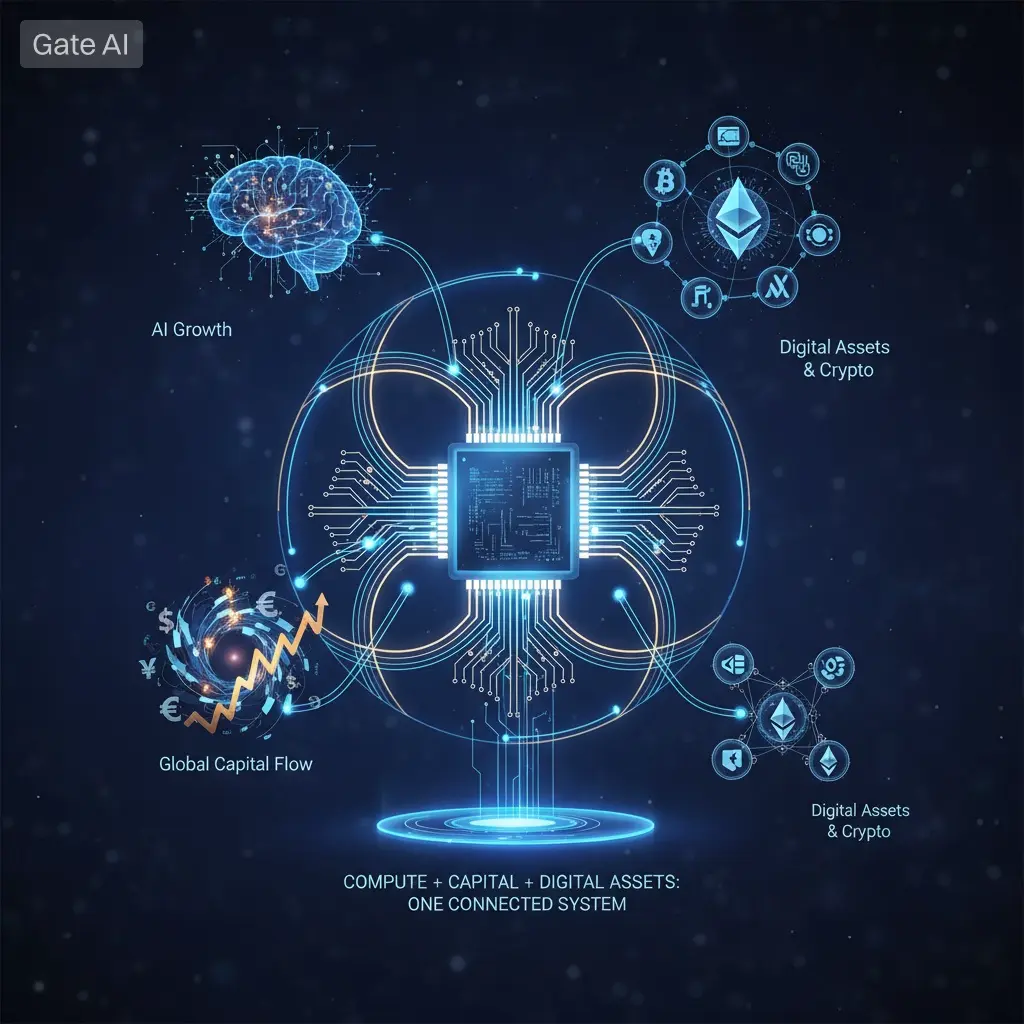
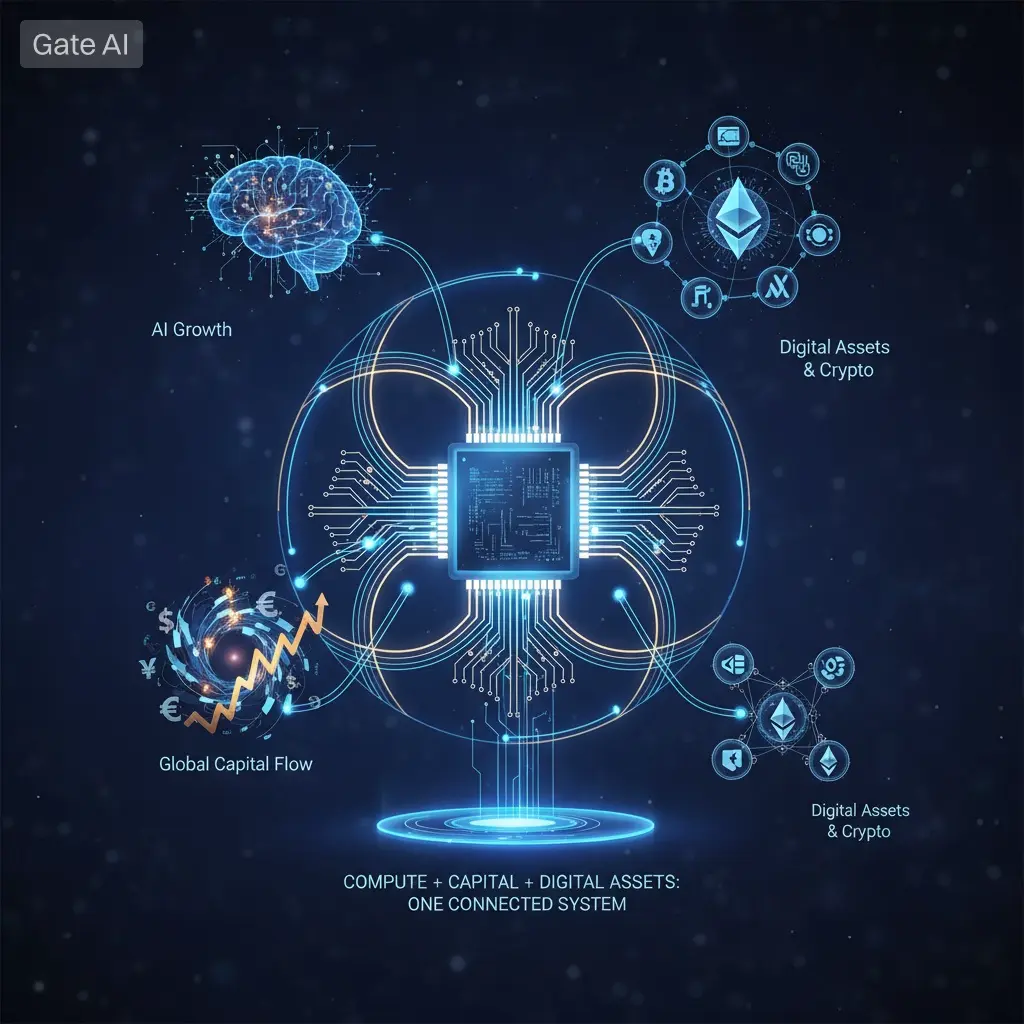
What is forming instead is a single interconnected capital network:
Semiconductors expand compute
Compute expands AI capability
AI attracts institutional capital
Capital flows into digital assets
Digital assets reinforce infrastructure demand
This is not correlation.
This is system convergence.
---
Final Reality Check
If you still view:
Chips as “stocks”
AI as “growth sector”
Crypto as “speculation”
You are not early.
You are using an outdated map for a new financial architecture.
The market is no longer moving in cycles.
It is moving in stacked infrastructure layers of exponential dependency.
And in that structure:
Those who understand flow will survive.
Those who misunderstand layers will get compressed.
---
#GateSquare
#ContentMining
#CreatorCarnival
repost-content-media
  • Reward
  • Comment
  • Repost
  • Share
#IntelandTexasInstrumentsSurge
The semiconductor sector witnessed a historic rally in late April 2026, with Intel and Texas Instruments leading the charge. This surge represents one of the most significant moves in the chip industry in decades, driven by blowout earnings, AI demand, and renewed investor confidence.
Intel Corporation (INTC) Surge Details
Intel stock experienced an extraordinary rally, gaining approximately 24% in a single trading session on April 24, 2026, marking its largest intraday gain since 1987. The stock price surged past 82 dollars, breaking a 25-year record from the y
BTC2.21%
ETH3.72%
HighAmbition
#IntelandTexasInstrumentsSurge
The semiconductor sector witnessed a historic rally in late April 2026, with Intel and Texas Instruments leading the charge. This surge represents one of the most significant moves in the chip industry in decades, driven by blowout earnings, AI demand, and renewed investor confidence.
Intel Corporation (INTC) Surge Details
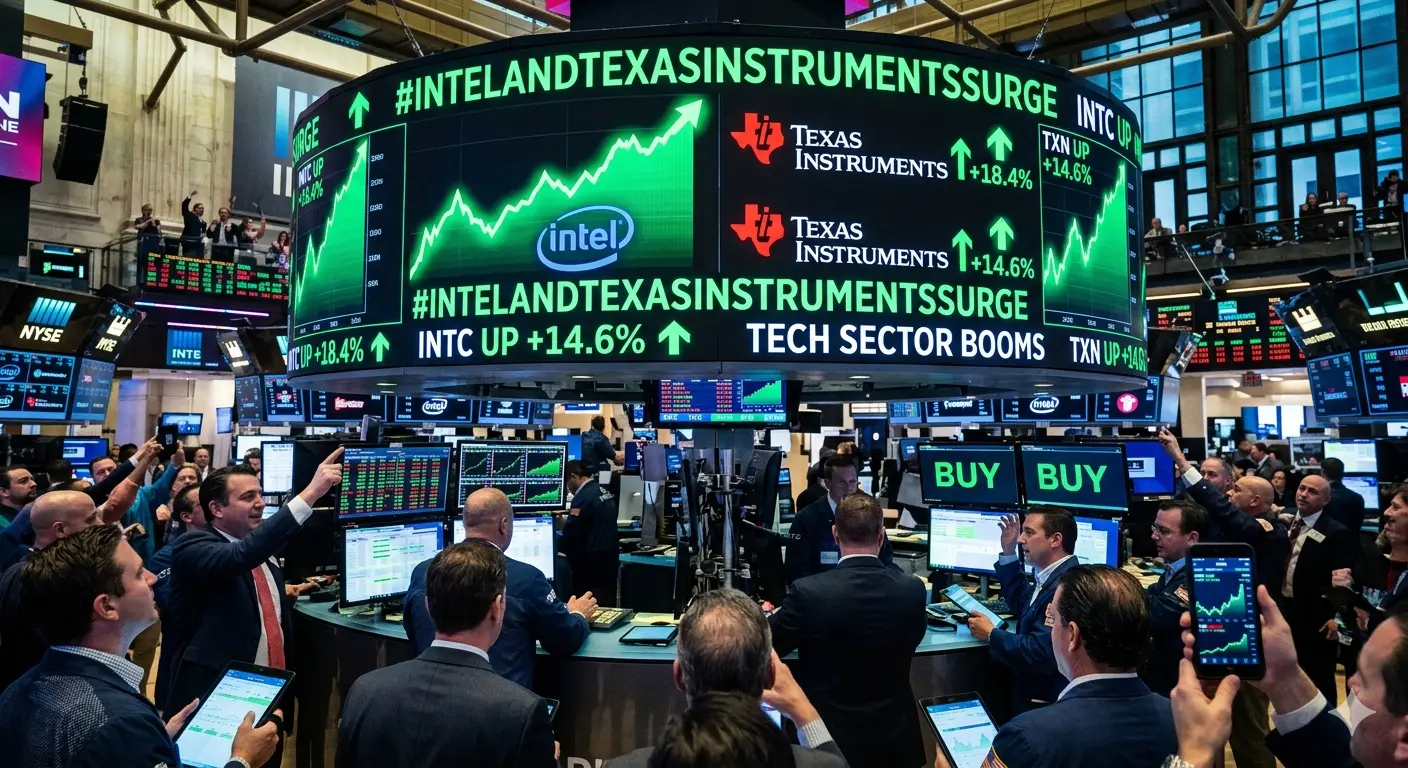
Intel stock experienced an extraordinary rally, gaining approximately 24% in a single trading session on April 24, 2026, marking its largest intraday gain since 1987. The stock price surged past 82 dollars, breaking a 25-year record from the year 2000. In after-hours trading following the Q1 earnings release on April 23, Intel jumped over 15% to reach 77.16 dollars, building on a 2.3% regular session gain that closed the stock at 66.78 dollars.
The first quarter revenue came in at 13.57 billion dollars, crushing analyst expectations. For the current quarter, Intel forecast adjusted earnings of 20 cents per share on sales of 14.3 billion dollars, compared to a loss of 10 cents per share on sales of 12.86 billion dollars in the year-ago quarter. This dramatic turnaround reflects the company's successful pivot toward AI-focused chip production.
A significant catalyst for Intel's surge was the announcement of a partnership with Elon Musk to develop the Terafab semiconductor factory using Intel's 14A chip technology. Tesla and SpaceX committed to using this technology, providing Intel with major customers for its advanced manufacturing capabilities. Additionally, the US government's 10% stake in Intel, purchased at approximately 20 dollars per share in 2025, has now appreciated by 315%, highlighting the scale of this rally.
Texas Instruments (TXN) Surge Details
Texas Instruments experienced an equally impressive surge, with its stock jumping 18-20% on April 23-24, representing its best single-day performance since 2000. The company reported first-quarter revenue of 4.83 billion dollars, representing 19% year-over-year growth and beating the analyst consensus estimate of 4.53 billion dollars.
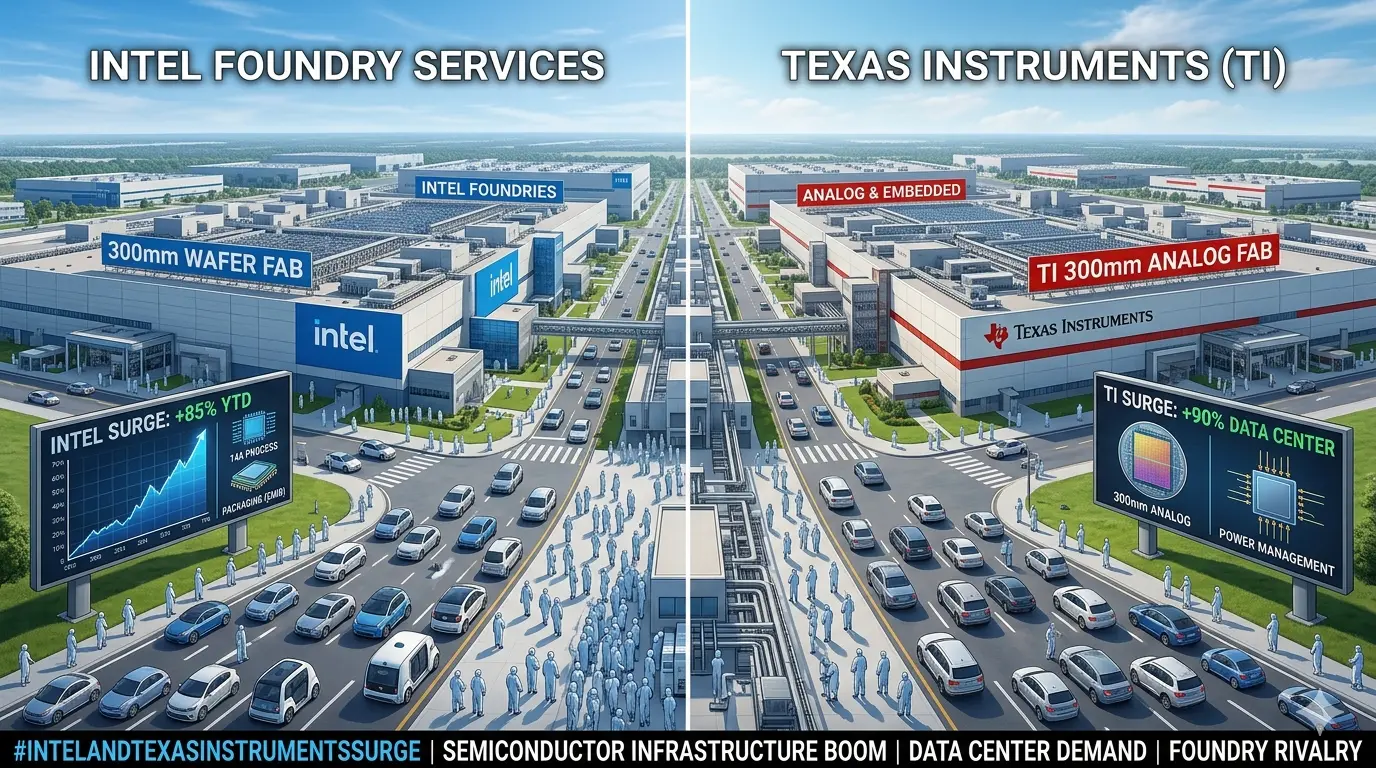
For the second quarter, Texas Instruments provided strong guidance, expecting revenue between 5 billion and 5.4 billion dollars, representing 17% growth at the midpoint. The company's data center segment, which accounts for 11% of sales, saw demand surge by 90% year-over-year, driven by AI power and control chips essential for data center infrastructure.
Texas Instruments is investing 60 billion dollars to build three new fabrication plants in the United States, with Apple committing to manufacture critical foundation semiconductors for iPhones at these facilities. This US reshoring initiative aligns with broader policy support for domestic semiconductor manufacturing.
Semiconductor Index Performance
The Philadelphia Semiconductor Index (SOX) gained for 16 consecutive trading sessions, marking the longest winning streak in history. This unprecedented rally reflects broad-based strength across the chip sector, with multiple semiconductor names appearing on the most overbought stocks list, including AMD, ON Semiconductor, NXP Semiconductors, Microchip Technology, and Analog Devices.
Impact on Cryptocurrency Markets
The semiconductor surge has significant implications for cryptocurrency markets, though the relationship operates through several indirect channels rather than direct price correlation.
Bitcoin is currently trading at 78,011 dollars, showing a modest 0.68% increase over the past 24 hours, with Ethereum at 2,330 dollars, up 0.66%. While these moves appear muted compared to the semiconductor rally, several important connections exist between chip stocks and crypto markets.
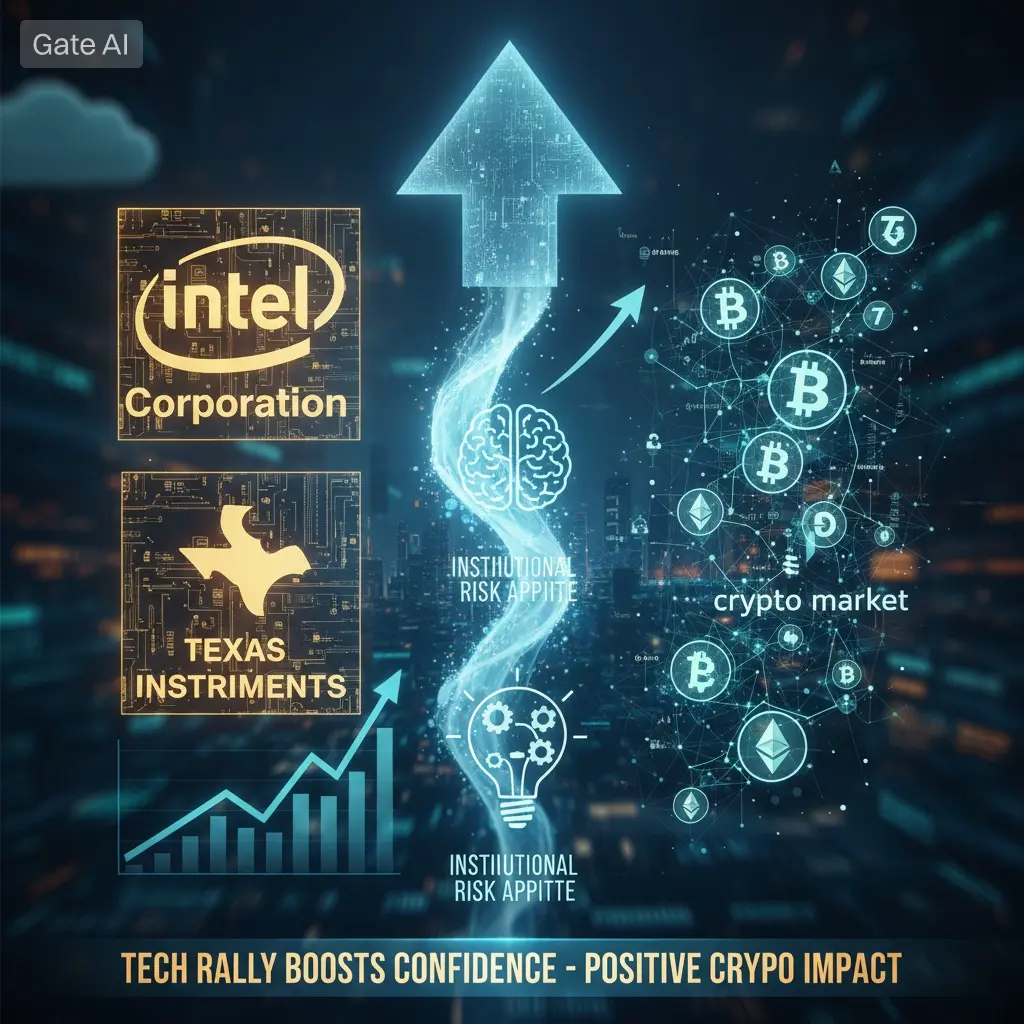
First, the correlation between Bitcoin and traditional stocks has reached a record 0.96, up from an average of 0.4 before recent geopolitical events. This near-perfect correlation means that major moves in equity markets, particularly in technology sectors, increasingly influence crypto price action. The semiconductor rally signals strong risk appetite among institutional investors, which typically supports crypto markets as well.
Second, the surge in AI-related semiconductor demand indirectly benefits crypto infrastructure. Data center growth, which drove Texas Instruments' 90% year-over-year increase in that segment, also supports blockchain networks and mining operations. Advanced chips produced by Intel and others power the computational requirements of both AI systems and cryptocurrency networks.
Third, the broader technology rally creates positive sentiment spillover into digital assets. When investors feel confident about technology innovation and adoption, as evidenced by the semiconductor surge, they become more willing to allocate capital to emerging technologies including cryptocurrencies.
However, the crypto fear and greed index currently sits at 33, indicating fear sentiment despite the semiconductor rally. This disconnect suggests that crypto markets may be lagging the equity rally or facing independent headwinds from regulatory concerns and geopolitical uncertainty.
Key Price Levels and Market Structure
Bitcoin faces critical resistance at the 80,000 dollar level, with the recent high of 78,194 dollars and low of 77,151 dollars establishing a tight trading range. Ethereum trades between 2,301 and 2,336 dollars, showing similar consolidation. The 24-hour trading volume for Bitcoin reached 169 million dollars, while Ethereum saw 112 million dollars in volume, indicating healthy liquidity despite the sideways price action.
Long-term holders have increased their Bitcoin holdings by 69% to 3.6 million coins, while exchange reserves have fallen to seven-year lows. This supply constriction, combined with institutional accumulation through spot ETFs, creates a favorable supply-demand dynamic that could support prices even if the correlation with equities moderates.
Conclusion
The Intel and Texas Instruments surge represents a fundamental repricing of the semiconductor sector based on AI demand, earnings beats, and manufacturing reshoring. Intel gained approximately 24% with prices moving from around 67 dollars to over 82 dollars, while Texas Instruments added 18-20% with prices reflecting strong data center demand. For cryptocurrency markets, this rally signals continued institutional risk appetite and technology investment, though the record correlation with stocks means crypto may face volatility if equity markets correct. The 90% growth in data center chip demand particularly benefits the infrastructure supporting both AI and blockchain networks, creating long-term tailwinds for the digital asset ecosystem.
repost-content-media
  • Reward
  • Comment
  • Repost
  • Share
#IntelandTexasInstrumentsSurge
Intel and Texas Instruments Surge: A Signal of Converging Tech and Crypto Cycles
The recent rally in semiconductor giants like Intel and Texas Instruments is being interpreted as far more than a simple equity market move. What appears on the surface as strong corporate performance is increasingly viewed by analysts as a macro-level signal—one that reflects shifting institutional sentiment, capital rotation, and renewed confidence in technology-driven growth.
In today’s financial environment, markets are deeply interconnected. Movements in one sector—especially o
BTC2.21%
ETH3.72%
GT0.81%
MrFlower_XingChen
#IntelandTexasInstrumentsSurge
Intel and Texas Instruments Surge: A Signal of Converging Tech and Crypto Cycles
The recent rally in semiconductor giants like Intel and Texas Instruments is being interpreted as far more than a simple equity market move. What appears on the surface as strong corporate performance is increasingly viewed by analysts as a macro-level signal—one that reflects shifting institutional sentiment, capital rotation, and renewed confidence in technology-driven growth.
In today’s financial environment, markets are deeply interconnected. Movements in one sector—especially one as foundational as semiconductors—tend to ripple outward. The strength in chipmakers is now influencing not only traditional equities but also crypto markets, where similar narratives around infrastructure, innovation, and risk appetite are playing out.
Semiconductor Strength as a Forward Indicator
Semiconductor companies sit at the core of the global digital economy. From artificial intelligence to cloud computing and consumer electronics, nearly every technological advancement depends on chip production. When companies like Intel and Texas Instruments experience sustained upward momentum, it often signals broader expansion in technological demand.
Institutional investors increasingly interpret semiconductor rallies as confirmation that the innovation cycle is accelerating. This concept—sometimes referred to as “innovation beta”—means that when foundational infrastructure grows, capital tends to flow into adjacent sectors that benefit from that growth. Crypto assets, particularly those tied to infrastructure and computation, are now part of that extended ecosystem.
Capital Rotation: From Hardware to Digital Assets
One of the most important dynamics emerging from this trend is capital rotation. When institutions allocate more capital into semiconductor stocks, they are effectively positioning themselves for long-term technological expansion. This increased exposure to growth often extends into higher-risk, high-upside assets.
In this context, assets like Bitcoin and Ethereum are not viewed as isolated investments—they are part of the same macro narrative. They represent digital layers built on top of the physical infrastructure that semiconductors enable.
As a result, semiconductor strength often coincides with:
Increased liquidity across markets
Higher institutional risk tolerance
Renewed speculative positioning in tech-aligned assets
This environment historically supports inflows into crypto markets, especially during early or mid-cycle expansions.
The Rise of DePIN: Infrastructure Meets Decentralization
Beyond major cryptocurrencies, a more subtle but structurally important trend is emerging in the form of decentralized infrastructure. This falls under the category of Decentralized Physical Infrastructure Networks.
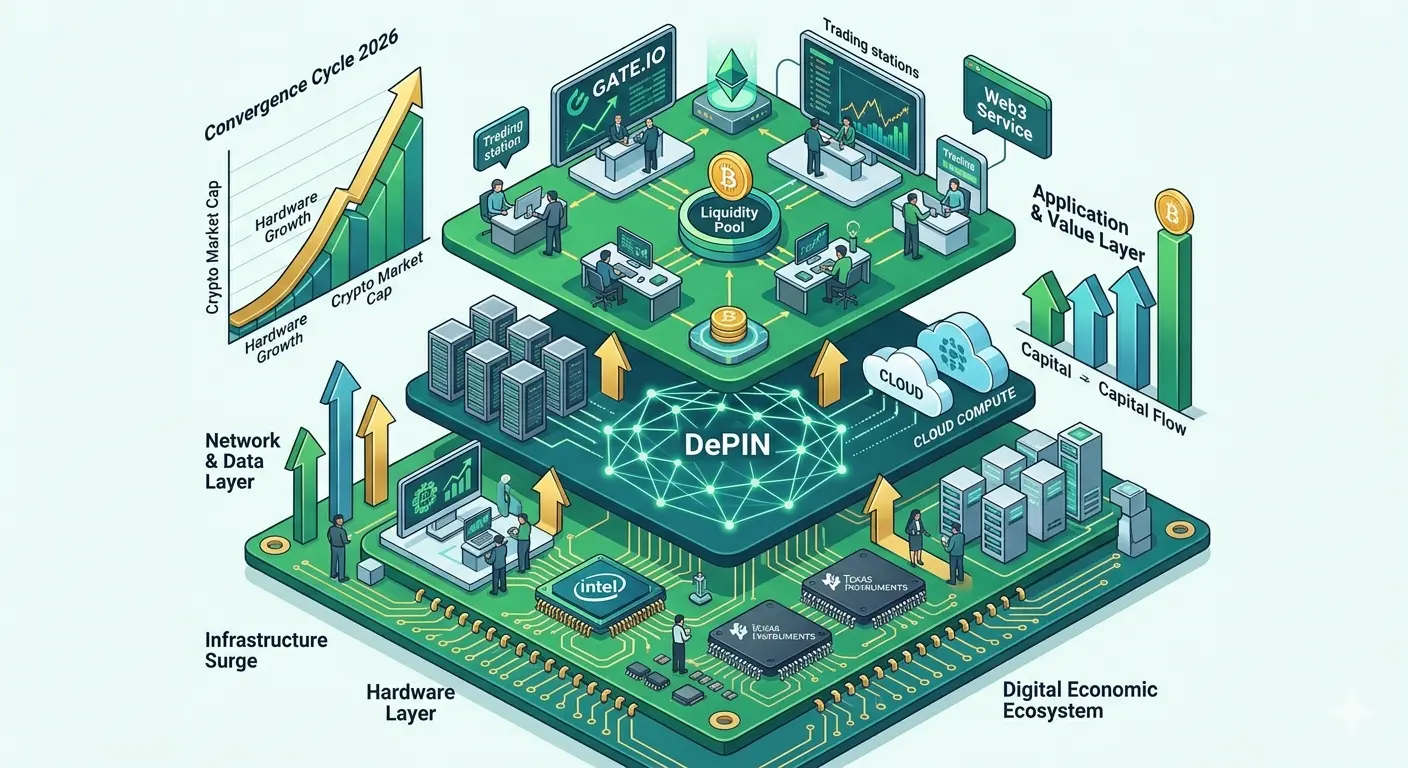
DePIN protocols aim to coordinate physical resources—such as computing power, storage, and bandwidth—through decentralized networks. As semiconductor capacity expands globally, the availability of raw hardware increases. DePIN acts as a coordination layer, enabling that hardware to be utilized more efficiently through decentralized systems.
This creates a powerful synergy:
More chips → more compute power
More compute → higher demand for coordination
More coordination → growth in decentralized infrastructure
Rather than competing with traditional tech, DePIN enhances it by adding a new layer of efficiency and accessibility.
Geopolitical Risk Beneath the Growth
Despite the bullish momentum, the semiconductor sector remains exposed to geopolitical risk. The global supply chain is concentrated in a limited number of regions, particularly in East Asia. Any disruption—whether political or logistical—can have immediate global consequences.
Markets are currently balancing two opposing forces:
Strong structural demand for technology
Persistent geopolitical uncertainty
This tension introduces fragility into the rally. While demand continues to rise, supply-side risks remain a key variable that could quickly shift sentiment.
Crypto and Semiconductor Correlation
An increasingly observed trend is the correlation between semiconductor performance and crypto market behavior. While crypto was once considered largely independent, it is now behaving more like a high-growth extension of the broader tech sector.
When semiconductor stocks rally, they often reflect:
Improved macro liquidity
Stronger growth expectations
Increased institutional confidence
These same factors tend to support crypto prices. While this relationship is not perfectly linear, it highlights how both sectors are reacting to the same underlying macro drivers.
Platforms Evolving into Ecosystems
Within this environment, crypto platforms are also evolving. Exchanges are no longer just trading venues—they are becoming full-scale ecosystems.
For example, Gate.io has transitioned from a traditional exchange into a multi-layer infrastructure platform. It now integrates trading, staking, launchpad participation, and Web3 services into a single ecosystem.
This reflects a broader industry shift:
Exchanges are becoming financial hubs
Users interact across multiple layers (trading, earning, investing)
Platforms retain liquidity through internal ecosystems
Token Utility and Feedback Loops
Native exchange tokens, such as GateToken, are playing an increasingly important role in these ecosystems. These tokens are no longer limited to fee discounts—they function as access mechanisms for platform features.
This creates a reinforcing cycle:
More user activity → higher token demand
Higher demand → stronger ecosystem engagement
Stronger engagement → deeper liquidity retention
Over time, this transforms platform tokens into infrastructure assets within their own ecosystems.
Behavioral Liquidity and Market Dynamics
Modern crypto platforms also influence trading behavior through incentives such as competitions and campaigns. These mechanisms introduce what can be described as “behavioral liquidity.”
Unlike passive markets, these environments actively shape:
Trading frequency
Risk-taking behavior
Capital rotation speed
Volatility levels
This results in short-term liquidity spikes, particularly in trending sectors like AI tokens, infrastructure assets, and meme-driven markets.
Trust as a Core Asset
In a market shaped by past failures and volatility, trust has become one of the most valuable assets. Platforms that demonstrate long-term stability gain a significant advantage.
Security measures such as:
Proof-of-reserves
Cold storage systems
Transparent operations
are no longer optional—they are essential. Investors increasingly prioritize reliability alongside returns.
2026 Outlook: A Unified Digital Economy
The broader trajectory of global markets in 2026 points toward convergence. Traditional finance, technology infrastructure, and crypto ecosystems are no longer separate domains—they are interconnected layers of a single system.
The cycle now looks like this:
Semiconductor growth increases hardware capacity
Hardware capacity enables AI and cloud expansion
AI growth attracts capital investment
Capital flows extend into crypto markets
This creates a unified macro structure where each layer reinforces the others.
Conclusion
The surge in semiconductor leaders like Intel and Texas Instruments is more than a sector-specific rally—it is a signal of broader systemic change. It reflects a world where hardware, software, and financial systems are deeply interconnected.
Crypto markets are no longer operating in isolation. They are responding to the same forces that drive traditional technology sectors: liquidity, innovation, and institutional capital flow.
As this convergence continues, the distinction between traditional finance and decentralized systems will become increasingly blurred. What we are witnessing is not just a market cycle—but the formation of a fully integrated digital economic system.
#GateSquare
#ContentMining
#CreaterCarnival
repost-content-media
  • Reward
  • 3
  • Repost
  • Share
discovery:
To The Moon 🌕
View More
#IntelandTexasInstrumentsSurge
The semiconductor sector witnessed a historic rally in late April 2026, with Intel and Texas Instruments leading the charge. This surge represents one of the most significant moves in the chip industry in decades, driven by blowout earnings, AI demand, and renewed investor confidence.
Intel Corporation (INTC) Surge Details
Intel stock experienced an extraordinary rally, gaining approximately 24% in a single trading session on April 24, 2026, marking its largest intraday gain since 1987. The stock price surged past 82 dollars, breaking a 25-year record from the y
BTC2.21%
ETH3.72%
post-image
  • Reward
  • 2
  • Repost
  • Share
Dubai_Prince:
Diamond Hands 💎
View More
#IntelandTexasInstrumentsSurge
#SemiconductorToCryptoConvergence The Silent Macro Engine Behind Tech Equities, AI Expansion, and the Next Phase of Digital Capital Rotation
What the market is currently mispricing is not a company, not a sector, and not even a narrative.
It is the synchronization of three systems that were never supposed to move together this tightly:
Semiconductor production cycles
AI infrastructure expansion
Crypto liquidity formation
And the uncomfortable truth is this:
Most participants are still reading a 2017 or 2021 mental model in a 2026 structural environment.
---
Semi
TOKEN6.46%
post-image
  • Reward
  • 1
  • Repost
  • Share
CryptoDiscovery:
good 👍
#IntelandTexasInstrumentsSurge A historic wave of demand for artificial intelligence has propelled two American semiconductor giants to record highs. On Friday, April 24, Intel delivered its most explosive single-day gain since 1987, while Texas Instruments soared to an all-time peak, igniting a powerful rally across the entire tech sector.
💻 Intel: Up ~24%
· Blowout Earnings: Data center revenue surged 22% YoY to $5.1B vs. $0.01 EPS expectations.
· The AI Pivot: Agentic AI workloads are now driving ~60% of Intel’s total revenue.
· The Trump Bump: The US government holds nearly 10% of Intel,
post-image
  • Reward
  • 2
  • Repost
  • Share
discovery:
To The Moon 🌕
View More
#IntelandTexasInstrumentsSurge
Semiconductor Momentum and the Expanding Macro Link Between Tech and Crypto Cycles
The recent upward movement in semiconductor giants such as Intel and Texas Instruments is increasingly being interpreted as more than a sector-specific rally. Instead, it is being viewed as a reflection of a deeper macro transition—one where global liquidity, technological expansion, and digital asset markets are becoming tightly interconnected.
What appears at first as strong earnings performance or cyclical recovery in chip manufacturing is now bei
post-image
  • Reward
  • 1
  • Repost
  • Share
Dubai_Prince:
To The Moon 🌕
💡 5 Tips During #IntelandTexasInstrumentsSurge 📈
1️⃣ Follow market trends before making investment decisions.
2️⃣ Don’t invest based only on hype — always do your own research. 🔍
3️⃣ Keep an eye on AI and semiconductor industry developments. 💻
4️⃣ Manage risk wisely and avoid emotional trading. ⚠️
5️⃣ Think long-term when investing in strong tech companies. 🚀
Smart decisions today can build stronger portfolios tomorrow! 📊✨
post-image
  • Reward
  • 1
  • Repost
  • Share
GateUser-f3b39f08:
Ape In 🚀
#IntelandTexasInstrumentsSurge The recent surge in semiconductor giants like Intel and Texas Instruments is sending powerful signals across global financial markets, and its impact is extending far beyond traditional equities into the fast-evolving world of crypto. This isn’t just another short-term rally—it reflects a deeper shift in institutional sentiment, capital allocation, and the broader narrative around technology-driven growth in 2026.
At the core of this movement is a renewed confidence in the semiconductor sector. Chips are the backbone of everything from artificial intelligence and
BTC2.21%
post-image
post-image
  • Reward
  • 8
  • Repost
  • Share
MasterChuTheOldDemonMasterChu:
DYOR 🤓
View More
Load More