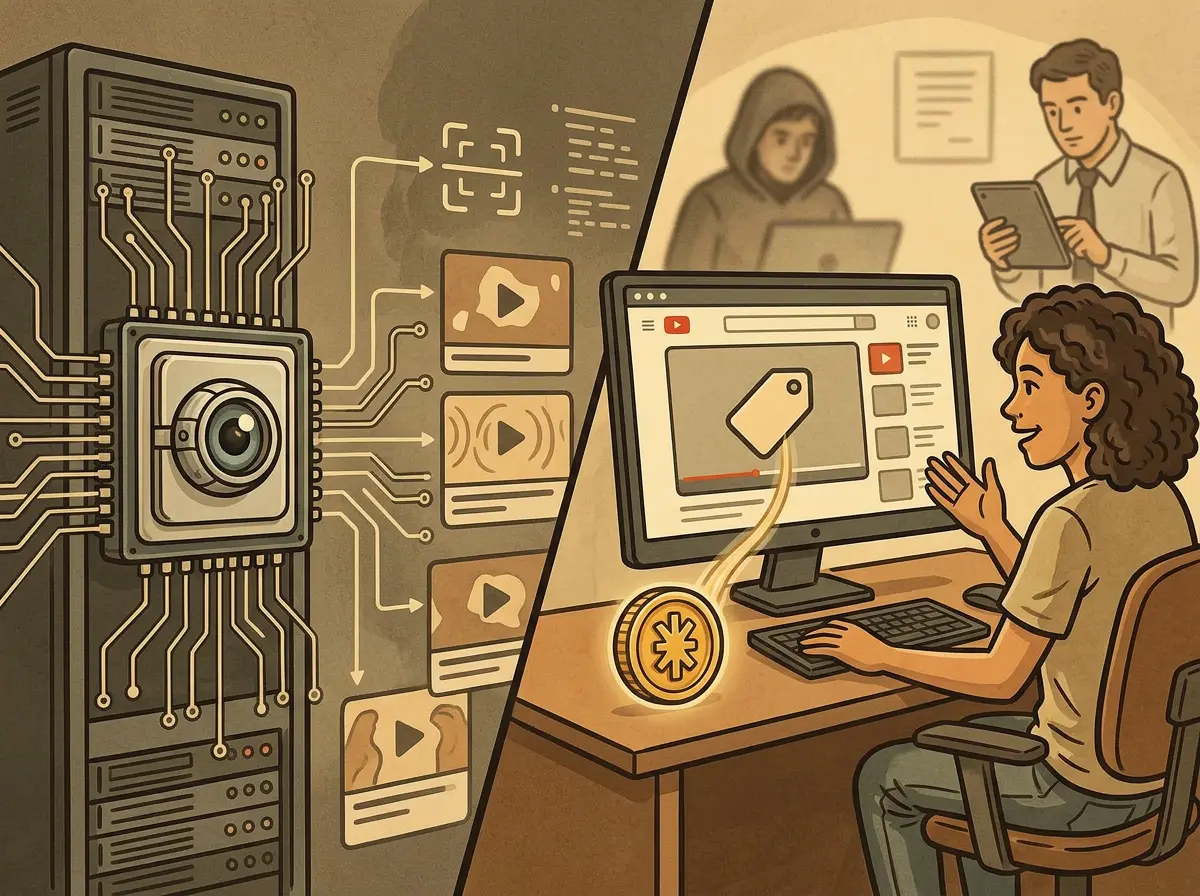
On May 28, YouTube announced the deployment of an internal signal to identify AI-generated or heavily modified videos and automatically label them. This goes beyond the previous policy that mainly relied on creators voluntarily disclosing it. YouTube confirmed that its automatic labeling system primarily targets videos created or edited with AI that could be mistaken for real people, locations, or events. If creators do not proactively disclose their use of AI tools, YouTube will automatically label the content.
Confirmed automatic labeling triggers and non-removable exceptions by YouTube
YouTube confirmed that this change is about enforcement intensity rather than core policy: videos that clearly depict animated or fantasy scenes (such as unicorns in a magic world) still do not require labels; for videos with only minor AI edits or that are clearly animation productions, labels will still be shown only in expanded descriptions.
If creators subject to automatic labeling believe there is a misidentification, YouTube confirmed they can proactively update their disclosure status. However, labels cannot be removed for content created using YouTube’s own AI tools (Veo or Dream Screen), as well as videos that include C2PA metadata indicating they were fully generated by AI.
Update confirmation on label display locations: differences between long-form videos and Shorts
YouTube confirmed the specific changes in where labels are displayed. Previously, AI labels typically appeared in the expanded description area, and were only prominently shown when sensitive topics such as health or news were involved.
After this update, the AI label on long-form videos will be displayed directly below the player and above the video description; for YouTube Shorts, the AI label will be overlaid directly on the video image. YouTube said this is intended to make it easier for viewers of realistic or AI-modified content to notice the relevant markings.
Confirmation background on the C2PA standard and YouTube’s deepfake detection tools
YouTube confirmed that this automatic labeling system is built on its previously expanded AI deepfake detection tools. These tools allow any adult user to scan face matches on the platform, with the initial testing targets being celebrities, politicians, and public figures.
The C2PA standard provides encrypted provenance information for digital content. OpenAI has recently joined C2PA, and other confirmed members include Nvidia, Kakao, and Eleven Labs. YouTube’s permanent labeling of videos with C2PA tags is one of the most concrete real-world applications of the C2PA standard by major platforms.
FAQ
Will YouTube’s AI automatic labeling affect creators’ earnings or recommendation algorithms?
YouTube confirmed that AI labels do not affect a video’s recommendation potential or monetization ability. This confirmation applies to all creators using AI tools for creation, regardless of whether the label is voluntarily disclosed by the creator or automatically added by YouTube’s detection.
Which two categories of AI-generated videos have labels that cannot be removed?
Based on YouTube’s confirmation, labels cannot be removed for two types of videos: content created using YouTube’s own AI tools (Veo or Dream Screen), and videos that include C2PA metadata indicating they were fully generated by AI. For other cases, if creators believe there is a misidentification, they can update their disclosure status.
What are the major platforms and companies currently that have joined the C2PA standard?
According to reports, OpenAI has recently joined the C2PA standard, and other confirmed members include Nvidia, Kakao, and Eleven Labs. YouTube’s permanent labeling of videos with C2PA tags is one of the most concrete adoption cases of this standard by major mainstream platforms to date.


