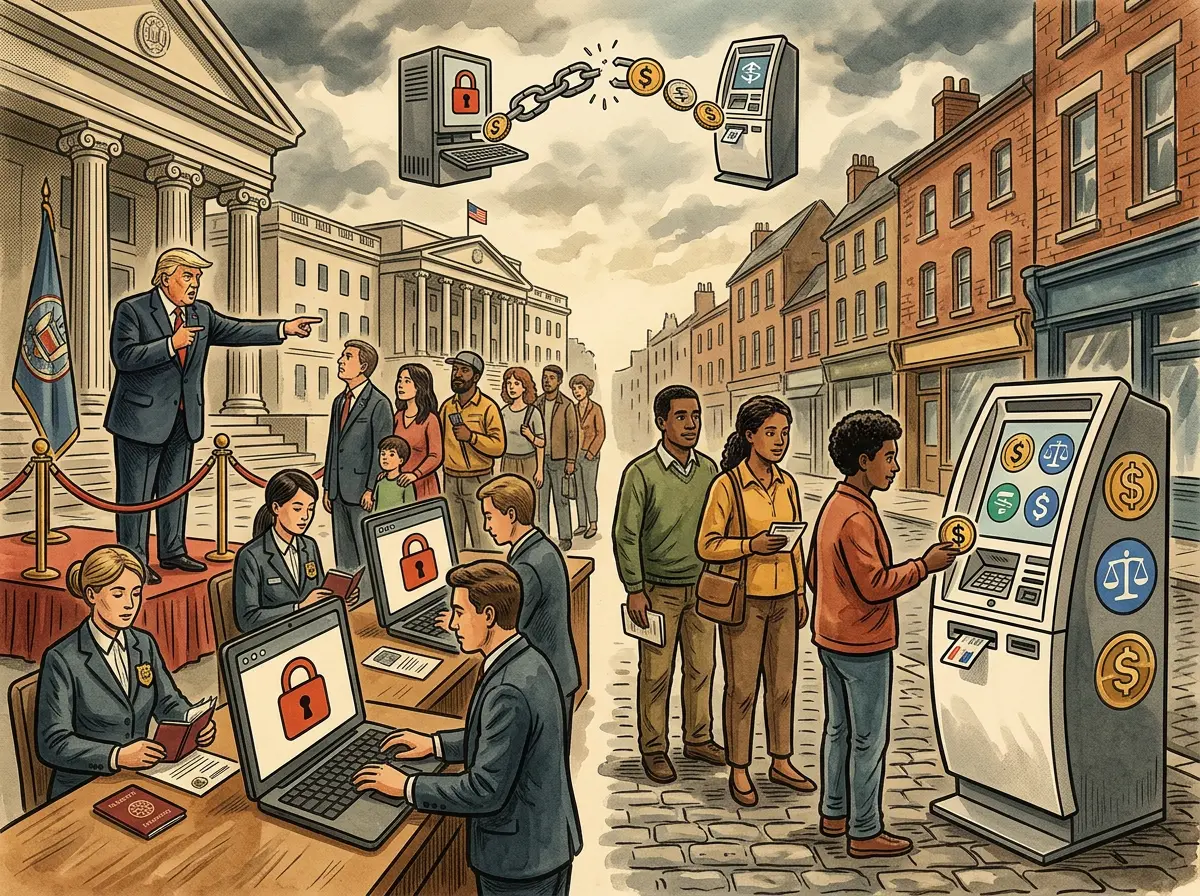
Decryt reported on May 31 that US President Trump signed an executive order named “restoring the integrity of the US financial system,” tasking the Treasury Department and other federal regulators to consider issuing rules to strengthen fraud screening and risk management related to services provided to undocumented immigrants, pushing undocumented immigrants toward cryptocurrencies or shadow financial systems. Nicholas Anthony, a researcher at the Cato Institute, said the order effectively authorizes banks to act as immigration law enforcement officers.
What the executive order confirms, and the Trump family’s crypto background
A White House-attached briefing document confirmed: “A gap in customer identity verification practices allows terrorists, drug dealers, and money launderers to move illicit funds through US financial institutions.” The executive order also instructs the Treasury Department to develop guidance specifically for situations involving “off-the-books wage payments using peer-to-peer payment platforms.”
Regarding the Trump family background, Eric Trump and Donald Trump Jr. previously confirmed that one of the motivations for them to found World Liberty Financial in 2024 was challenges in the banking industry; Donald Trump Jr. confirmed in a meeting: “We got into cryptocurrency because—out of necessity—we lost access to banking services.”
Confirmed policy stances from all sides and known obstacles to crypto alternatives
Nicholas Anthony confirmed that some undocumented immigrants will turn to cryptocurrencies, while others may turn to remittance channels run by organized criminal groups. This policy “effectively portrays the banking system as a hostile place.” Nic Carter confirmed a warning: “Conservatives should also be concerned about this, even if it appears to align with short-term goals,” and pointed out that this regulatory expansion creates a dangerous blueprint.
Tom Feltner of Americans for Financial Reform confirmed that stablecoins and Bitcoin ATMs lack federal regulatory requirements for remittance service safeguards (including the ability to unconditionally revoke a payment within 30 minutes), and stated: “The whole purpose of designing the remittance mechanism is to prevent people from getting pulled into the shadow banking system.” Dilip Ratha, a former World Bank economist, confirmed that even though cryptocurrencies can move across borders, converting digital assets into local currency remains a real barrier.
Frequently Asked Questions
What is the legal basis for the confirmation of the Trump executive order, and what exactly are the Treasury Department’s responsibilities?
Based on Decrypt’s confirmed report, the executive order, framed in the name of national security, directs the Treasury Department and other regulators to consider issuing rules to strengthen fraud screening and risk management for services provided to undocumented immigrants, and instructs the Treasury Department to develop guidance for “off-the-books wage payments” using peer-to-peer payment platforms. The specific rulemaking work has not yet been completed.
What specific connection does Bitcoin Depot’s bankruptcy and this policy discussion have?
Bitcoin Depot applied for bankruptcy protection in May 2026 and closed 9,000 ATMs in the United States. The CEO confirmed that this is attributed to “significant changes” in the regulatory environment making its business model “no longer viable.” Bitcoin Depot’s exit makes the policy-level discussion of Bitcoin ATMs as a replacement tool for unbanked populations even more prominent.
What is Nic Carter’s stance toward his confirmation of this policy, and how does it differ from his earlier position on “Operation Choke Point 2.0”?
Nic Carter confirmed he opposes the policy, saying that any debanking is cruel to those involved, and that conservatives should also be concerned about the government’s expanded surveillance. He confirmed that, although this time it targets individuals rather than legitimate businesses (unlike “Operation Choke Point 2.0”), he still warns that this approach establishes a dangerous blueprint.


