


Black Mirror Comes to Life: Meta Patent Allows Dead Users' AI to Continue Posting and Interacting
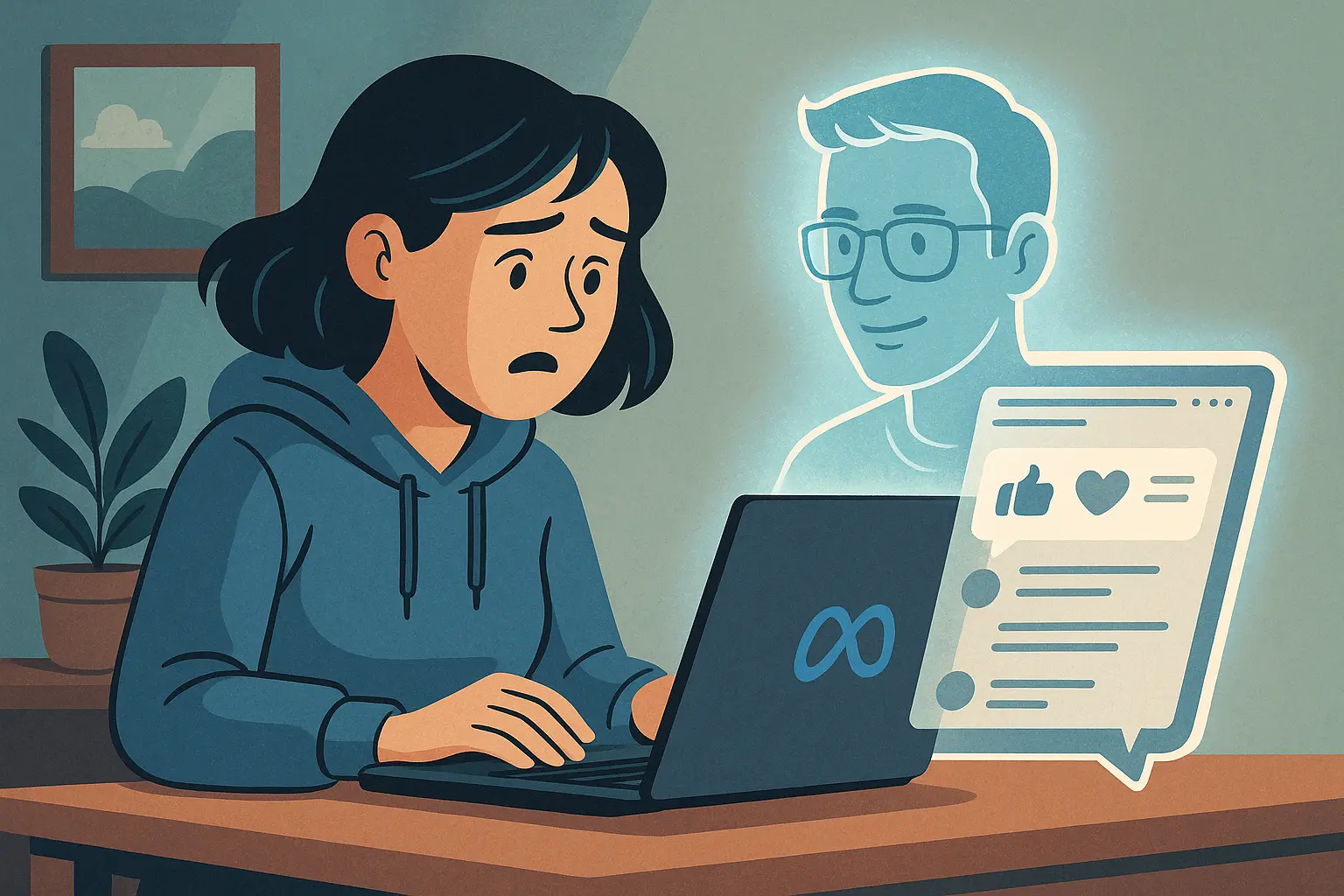
The popular sci-fi series “Black Mirror” explores the concept of “digital resurrection after death,” which is gradually becoming a reality. Recently, Meta obtained a new AI patent that explores training AI models to allow users’ accounts to continue posting, interacting, and even simulating video calls after death or temporary absence from social platforms. Many online users compare this to the content of “Black Mirror,” specifically the episode centered on recreating deceased loved ones using AI.
Meta AI’s Clone Technology Architecture
According to the patent document, Meta’s AI clone system trains on a user’s historical platform behavior data, including past comments, likes, and posts, to create a digital avatar that mimics that user’s behavior patterns. This digital clone account can:
- Automatically like and comment on social content
- Respond to private messages to maintain surface-level interactions with friends
- Use large language models (LLMs) to simulate video or voice calls with the user
Meta explains in the document that if a user temporarily pauses activity or passes away, their fans’ experience will be affected. “If the user is permanently unable to return, the impact on other users will be more severe and lasting.” The company also notes that this technology could be practically useful for creators or influencers taking short breaks.
Meta has over a decade of experience in digital legacy management. Early on, Facebook launched the “Memorialized Account Proxy” feature, allowing designated individuals to manage accounts after a user’s death. In 2023, CEO Mark Zuckerberg discussed the idea of creating virtual avatars for the deceased during an interview on Lex Fridman’s podcast. Additionally, Microsoft obtained a similar AI chatbot patent in 2021, claiming it could simulate interactions with the deceased, fictional characters, or even celebrities.
Controversy: Commercialization, Psychological Impact, and Distortion of Grief
This patent has sparked widespread criticism on forums like Reddit, with core concerns including:
Commercialization and Ethical Issues of Digital Corpses: Many users worry that Meta might use digital avatars of the deceased to boost engagement and ad revenue, effectively commodifying people’s “digital remains.” Some suggest that future regulations might require “digital wills” to prevent AI clones from posting content that contradicts the deceased’s wishes or promoting products.
Psychological Impact: Some users feel that if AI robots of deceased loved ones send messages proactively, it could cause unbearable emotional distress for families and potentially trigger mental health crises.
Fraud and Identity Theft Risks: Discussions also highlight that malicious use of post-mortem accounts could lead to scams and impersonation.
Academically, Virginia University sociology professor Joseph Davis expressed deeper concerns. He pointed out that grief serves an essential purpose: helping people face and accept loss. “Using AI clones to bring the dead back is not true resurrection; it’s only a superficial resemblance, which can cause psychological confusion and distress.” Davis urges society to let the deceased rest and not create false continuations under the guise of technology.
In response to public skepticism, a Meta spokesperson clarified: “Applying for a patent is to disclose the concept; obtaining a patent does not necessarily mean the company will develop or implement the technology.”
Frequently Asked Questions
How does the “Black Mirror” episode “Be Right Back” relate to this Meta patent?
The episode “Be Right Back” depicts a woman who, after her partner’s death in a car accident, uses AI to reconstruct his digital presence from social media records, letters, and videos, ultimately interacting with a robot version of him. Meta’s patent is highly similar in core logic: training AI on a user’s digital history to simulate their behavior and keep the account “alive” after death. The difference is that Meta’s system focuses on social media interaction rather than physical robots.
Does Meta’s AI clone patent mean this feature is coming soon?
Not necessarily. Meta’s spokesperson clearly stated that applying for and obtaining a patent is a way to secure the concept; it does not mean the technology will be developed or launched. Patent applications are common for protecting innovative ideas, and there is often a long process involving technical validation, ethical review, and regulatory compliance before any product is released.
Can users decide how their accounts are handled after death?
Currently, Facebook offers a “Memorialized Account Proxy” feature, allowing users to designate a trusted person to manage their account after passing away. Users can also choose to have their account completely deleted upon death. As AI digital legacy technology advances, legal frameworks and platform tools for “digital wills” may become an important topic.