

















Bitcoin's Holding Structure Shows the Largest Differentiation in a Decade
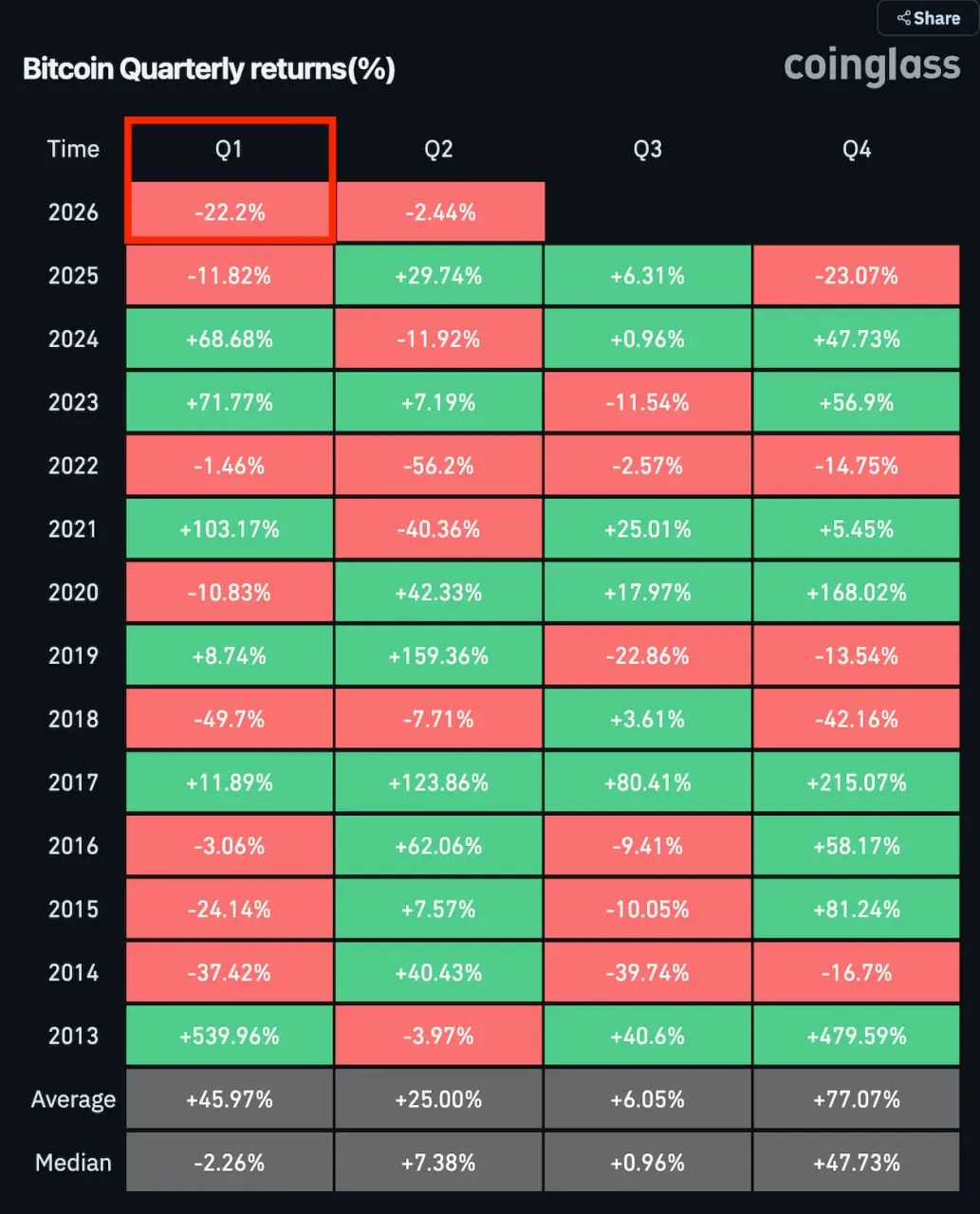
Bitcoin appears calm on the surface, with prices hovering below $70,000 and the Fear & Greed Index lingering in the "Extreme Fear" zone for an extended period. Yet on-chain and institutional data reveal a profound structural shift underway. Strategy (formerly MicroStrategy) continues its aggressive accumulation, recently pushing its total holdings to approximately **762,099 BTC** with an average acquisition cost around **$75,694**. This positions the company as one of the most dominant corporate holders, controlling a significant portion of public company Bitcoin treasuries — roughly 65% in recent assessments.
Exchange whale ratio has climbed sharply, reaching levels not seen since 2020 and marking one of the highest readings in recent years. Meanwhile, retail participation has receded notably, contributing to the most pronounced divergence between holder cohorts in over a decade.
On-chain metrics paint a clear picture. The share of short-term holders — particularly those holding for one week to one month — has contracted significantly, with broader short-term holder supply (coins held less than 155 days) reflecting reduced speculative activity. In past cycles, such low short-term holder dominance often coincided with market capitulation zones or early accumulation phases. Long-term holders now control a larger portion of the supply, daily trading velocity has slowed, and speculative flows appear subdued. This points to a broader transition from high-frequency, retail-driven trading toward more structural, institutional accumulation.
At its core, this differentiation reflects a systematic transfer of Bitcoin supply from retail and early decentralized holders to institutional balance sheets. Bitcoin is not disappearing; it is undergoing a major reallocation. The elevated exchange whale ratio highlights large holders moving coins onto platforms, yet the net effect shows "old" whales trimming positions while "new" institutional players build aggressively. Strategy alone accounted for the vast majority of recent corporate buying, adding tens of thousands of BTC in short windows while other public companies contributed only marginally — around 1,000 BTC in comparable 30-day periods.
**How Strategy's ~762,000 BTC Position Is Financed**
Strategy's Bitcoin treasury now represents roughly 3.6% of Bitcoin's total fixed supply. To sustain and expand this, the company has evolved its capital-raising approach. Early phases relied heavily on low- or zero-coupon convertible senior notes, which benefited from equity premiums and minimal immediate cash interest burden. This allowed efficient Bitcoin acquisition while MSTR traded at a premium to its net asset value.
As the premium narrowed and market conditions shifted, Strategy pivoted toward a mix of at-the-market (ATM) common stock sales and perpetual preferred shares, notably the "Stretch" (STRC) series. These preferred instruments carry higher effective yields — often in the double digits when including compounding features — increasing the annual cost of capital. Recent purchases have been funded through a blend of common equity and preferred issuances, with some weeks seeing substantial reliance on one or the other. This shift raises the overall financing expense compared to the earlier low-cost convertible era, placing the average cost basis near current market levels and exposing newer tranches to paper losses during dips.
The company has signaled ambitious targets, including pathways toward 1 million BTC, which would require significant additional capital raises through equity and preferred structures. Despite periodic pauses in weekly buying, the long-term commitment to Bitcoin as the primary treasury asset remains central to the strategy.
**Exchange Whale Ratio at Decade-High Levels — What It Signals**
The exchange whale ratio, which tracks the proportion of large inflows relative to total exchange activity, has spiked to multi-year extremes. Historically, such elevated readings have often marked periods of heightened selling pressure from large holders but have also coincided with market bottoms, as exhausted supply sets the stage for recovery.
Importantly, the whale cohort is not acting uniformly. Mid-tier whales (1,000–10,000 BTC) have shown net distribution in recent phases, reducing aggregate positions from prior peaks. In contrast, larger entities and institutional accumulators have added substantial volumes, with some monthly inflows among the strongest on record. This internal divergence — legacy holders providing liquidity through measured sales while new capital absorbs and locks away supply — creates a complex, range-bound dynamic that complicates traditional trend formation.
**Structural Costs of This Extreme Differentiation**
The ongoing reallocation centralizes pricing power and blunts some traditional on-chain signals. Metrics like MVRV Z-Score face challenges in interpretation as ETF custody addresses, OTC deals, and synthetic exposures via derivatives alter visible supply dynamics. Perpetual futures markets increasingly serve as vehicles for "synthetic" spot exposure among certain players.
On the demand side, institutional accumulation has become highly concentrated. Strategy has dominated corporate treasury purchases, often accounting for the overwhelming share of net additions while peers remain sidelined or minimal in activity. ETF flows similarly reflect rotation more than pure new capital: strong inflows into certain products are partially offset by outflows from others, resulting in modest net growth in total ETF-held Bitcoin.
This concentration introduces new risks, including dependency on single-entity execution and financing conditions, even as it provides a more predictable bid structure compared to fragmented retail demand.
**Implications for the Broader Crypto Landscape**
Bitcoin's market is evolving from a broad supply-demand framework toward a structural power game, where liquidity and control increasingly rest with large, well-capitalized players. The intergenerational transfer of supply — from early adopters and decentralized holders to corporate treasuries and institutional vehicles — continues at scale. Early holders gain orderly exit opportunities without massive disruption, while institutions integrate Bitcoin as a core reserve asset using sophisticated capital market tools.
Strategy's holdings now rival or approach major ETF vehicles in scale, though the mechanisms differ fundamentally: one relies on continuous equity/preferred issuance and balance sheet leverage, the other on spot creation/redemption flows. Together, they represent the maturation of Bitcoin from a retail-dominated asset to one with deepening institutional infrastructure.
This holding structure shift strengthens long-term conviction in Bitcoin's scarcity and monetary properties while making short-term price action more sensitive to coordinated institutional behavior, financing availability, and macro liquidity. Market participants must increasingly monitor not only classic technical and on-chain indicators but also corporate treasury dynamics, capital raise execution, and the balance between legacy distribution and fresh institutional demand.
The result is a more mature — yet still evolving — Bitcoin ecosystem, where structural accumulation coexists with periodic volatility and differentiation.
#GateSquareAprilPostingChallenge #MarchNonfarmPayrollsIncoming #CryptoMarketSeesVolatility #OilPricesRise #SpaceXIPOTargets$2TValuation
Bitcoin appears calm on the surface, with prices hovering below $70,000 and the Fear & Greed Index lingering in the "Extreme Fear" zone for an extended period. Yet on-chain and institutional data reveal a profound structural shift underway. Strategy (formerly MicroStrategy) continues its aggressive accumulation, recently pushing its total holdings to approximately **762,099 BTC** with an average acquisition cost around **$75,694**. This positions the company as one of the most dominant corporate holders, controlling a significant portion of public company Bitcoin treasuries — roughly 65% in recent assessments.
Exchange whale ratio has climbed sharply, reaching levels not seen since 2020 and marking one of the highest readings in recent years. Meanwhile, retail participation has receded notably, contributing to the most pronounced divergence between holder cohorts in over a decade.
On-chain metrics paint a clear picture. The share of short-term holders — particularly those holding for one week to one month — has contracted significantly, with broader short-term holder supply (coins held less than 155 days) reflecting reduced speculative activity. In past cycles, such low short-term holder dominance often coincided with market capitulation zones or early accumulation phases. Long-term holders now control a larger portion of the supply, daily trading velocity has slowed, and speculative flows appear subdued. This points to a broader transition from high-frequency, retail-driven trading toward more structural, institutional accumulation.
At its core, this differentiation reflects a systematic transfer of Bitcoin supply from retail and early decentralized holders to institutional balance sheets. Bitcoin is not disappearing; it is undergoing a major reallocation. The elevated exchange whale ratio highlights large holders moving coins onto platforms, yet the net effect shows "old" whales trimming positions while "new" institutional players build aggressively. Strategy alone accounted for the vast majority of recent corporate buying, adding tens of thousands of BTC in short windows while other public companies contributed only marginally — around 1,000 BTC in comparable 30-day periods.
**How Strategy's ~762,000 BTC Position Is Financed**
Strategy's Bitcoin treasury now represents roughly 3.6% of Bitcoin's total fixed supply. To sustain and expand this, the company has evolved its capital-raising approach. Early phases relied heavily on low- or zero-coupon convertible senior notes, which benefited from equity premiums and minimal immediate cash interest burden. This allowed efficient Bitcoin acquisition while MSTR traded at a premium to its net asset value.
As the premium narrowed and market conditions shifted, Strategy pivoted toward a mix of at-the-market (ATM) common stock sales and perpetual preferred shares, notably the "Stretch" (STRC) series. These preferred instruments carry higher effective yields — often in the double digits when including compounding features — increasing the annual cost of capital. Recent purchases have been funded through a blend of common equity and preferred issuances, with some weeks seeing substantial reliance on one or the other. This shift raises the overall financing expense compared to the earlier low-cost convertible era, placing the average cost basis near current market levels and exposing newer tranches to paper losses during dips.
The company has signaled ambitious targets, including pathways toward 1 million BTC, which would require significant additional capital raises through equity and preferred structures. Despite periodic pauses in weekly buying, the long-term commitment to Bitcoin as the primary treasury asset remains central to the strategy.
**Exchange Whale Ratio at Decade-High Levels — What It Signals**
The exchange whale ratio, which tracks the proportion of large inflows relative to total exchange activity, has spiked to multi-year extremes. Historically, such elevated readings have often marked periods of heightened selling pressure from large holders but have also coincided with market bottoms, as exhausted supply sets the stage for recovery.
Importantly, the whale cohort is not acting uniformly. Mid-tier whales (1,000–10,000 BTC) have shown net distribution in recent phases, reducing aggregate positions from prior peaks. In contrast, larger entities and institutional accumulators have added substantial volumes, with some monthly inflows among the strongest on record. This internal divergence — legacy holders providing liquidity through measured sales while new capital absorbs and locks away supply — creates a complex, range-bound dynamic that complicates traditional trend formation.
**Structural Costs of This Extreme Differentiation**
The ongoing reallocation centralizes pricing power and blunts some traditional on-chain signals. Metrics like MVRV Z-Score face challenges in interpretation as ETF custody addresses, OTC deals, and synthetic exposures via derivatives alter visible supply dynamics. Perpetual futures markets increasingly serve as vehicles for "synthetic" spot exposure among certain players.
On the demand side, institutional accumulation has become highly concentrated. Strategy has dominated corporate treasury purchases, often accounting for the overwhelming share of net additions while peers remain sidelined or minimal in activity. ETF flows similarly reflect rotation more than pure new capital: strong inflows into certain products are partially offset by outflows from others, resulting in modest net growth in total ETF-held Bitcoin.
This concentration introduces new risks, including dependency on single-entity execution and financing conditions, even as it provides a more predictable bid structure compared to fragmented retail demand.
**Implications for the Broader Crypto Landscape**
Bitcoin's market is evolving from a broad supply-demand framework toward a structural power game, where liquidity and control increasingly rest with large, well-capitalized players. The intergenerational transfer of supply — from early adopters and decentralized holders to corporate treasuries and institutional vehicles — continues at scale. Early holders gain orderly exit opportunities without massive disruption, while institutions integrate Bitcoin as a core reserve asset using sophisticated capital market tools.
Strategy's holdings now rival or approach major ETF vehicles in scale, though the mechanisms differ fundamentally: one relies on continuous equity/preferred issuance and balance sheet leverage, the other on spot creation/redemption flows. Together, they represent the maturation of Bitcoin from a retail-dominated asset to one with deepening institutional infrastructure.
This holding structure shift strengthens long-term conviction in Bitcoin's scarcity and monetary properties while making short-term price action more sensitive to coordinated institutional behavior, financing availability, and macro liquidity. Market participants must increasingly monitor not only classic technical and on-chain indicators but also corporate treasury dynamics, capital raise execution, and the balance between legacy distribution and fresh institutional demand.
The result is a more mature — yet still evolving — Bitcoin ecosystem, where structural accumulation coexists with periodic volatility and differentiation.
#GateSquareAprilPostingChallenge #MarchNonfarmPayrollsIncoming #CryptoMarketSeesVolatility #OilPricesRise #SpaceXIPOTargets$2TValuation