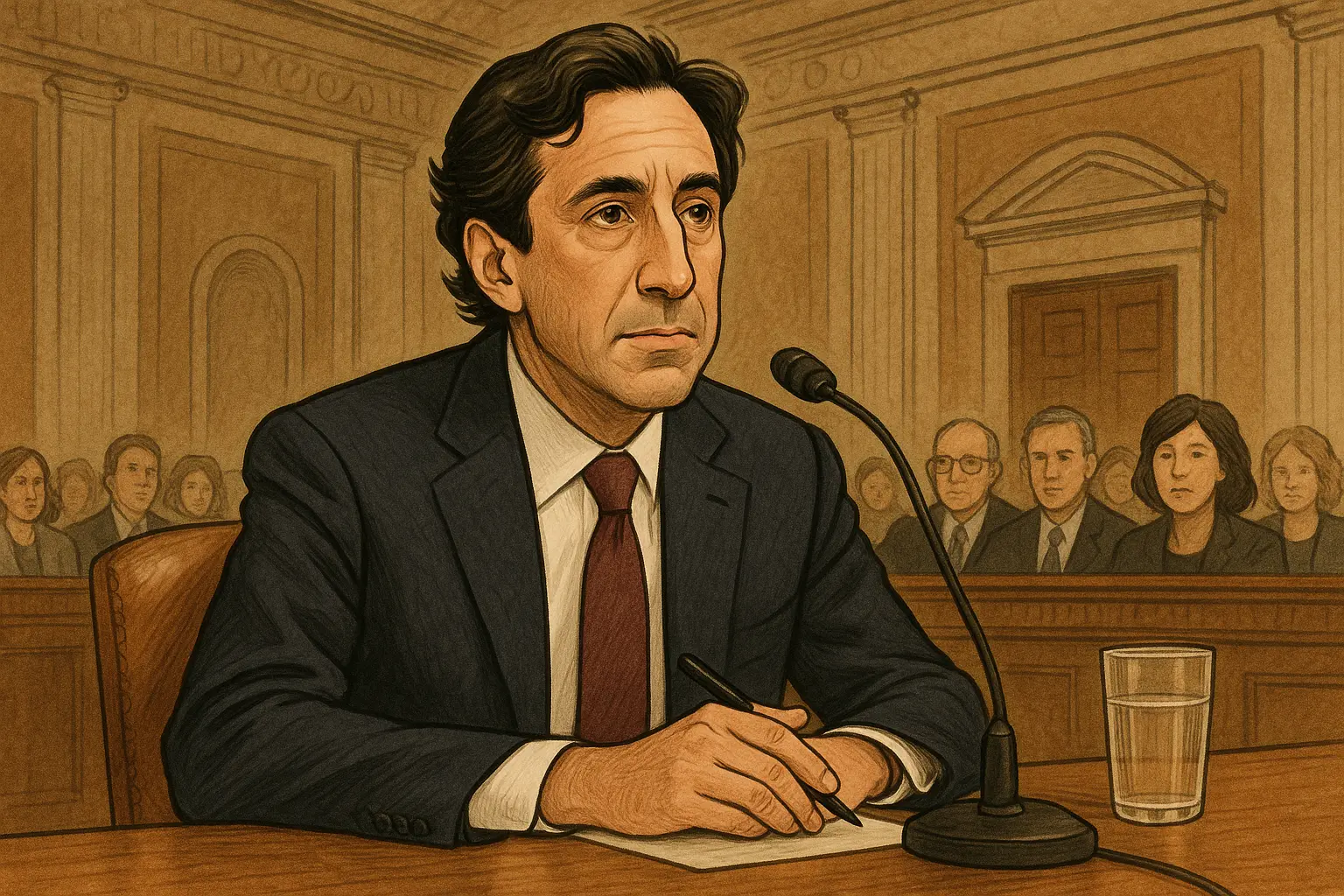
Federal Reserve chair nominee Kevin Warsh has submitted documents from the Office of Government Ethics (OGE) to the Senate Banking Committee, completing the final major bureaucratic step before the confirmation hearing is scheduled. Under Senate rules, the hearing must be announced one week in advance, and the Banking Committee currently can schedule the hearing for the week of April 21 at the earliest. The current chair, Powell’s term, is set to expire on May 15.
OGE document submission: The last procedural obstacle to clearing hearing scheduling
The Senate Banking Committee had originally scheduled a hearing for April 16, but the hearing date was forced back because the government failed to submit the OGE documents on time. With this document successfully submitted, the final procedural bottleneck for the confirmation schedule has been officially cleared.
The complexity of Kevin Warsh’s ethics review is far beyond that of an average nominee. His wife, Jane Lauder, is an heir in the Estée Lauder family, with estimated net worth of $1.9 billion. In his 2006 financial filing, Warsh listed nearly 1,200 assets, most of which were assets held in his wife’s name. The massive and complex structure of his wealth caused OGE’s document workload needed to check potential conflicts of interest to far exceed that of a typical review, directly leading to delays in the review timeline.
Key milestones in the confirmation timeline
January 30: President Trump nominates Kevin Warsh to succeed Powell as Federal Reserve chair
March 4: The White House formally submits the nomination papers to the Senate
April 14: The OGE ethics documents are successfully submitted to the Senate Banking Committee
Earliest: the week of April 21: The confirmation hearing is expected to be held at the earliest
May 15: Powell’s term expires, and the confirmation process must be completed by then
White House officials still say they believe Warsh’s confirmation will be completed as scheduled before the end of Powell’s term.
Tillis threat: One vote is enough to throw off the confirmation pace
The confirmation process faces a variable that cannot be ignored. North Carolina Republican Senator Tom Tillis has publicly stated that he will block confirmation votes for all Federal Reserve officials’ nominees unless the Department of Justice withdraws its criminal investigation into Powell. At the end of January, in a public statement, Tillis made it clear that he would oppose all Federal Reserve nominations, including the chair position, until the relevant investigation is resolved with a “complete, transparent” outcome.
The Banking Committee currently has a partisan vote count of 13 Republicans to 11 Democrats. If Tillis carries out the threat and votes against, the available Republican votes would drop to 12. At that point, if any additional Republican member is absent or flips, the vote could fall into a stalemate, preventing Warsh from completing the confirmation process before May 15.
Frequently asked questions
What core background does Kevin Warsh have for serving as Federal Reserve chair?
Kevin Warsh served on the Federal Reserve Board of Governors from 2006 to 2011, building up direct experience in monetary policy decision-making during the 2008 financial crisis. He is also a fellow at Stanford University’s Hoover Institution, and is widely viewed in the market as a hawkish choice that favors a more aggressive path to normalizing interest rates. If he were to formally take over as chair, markets expect his policy style to differ from Powell’s era.
Why did Kevin Warsh’s ethics review take so long?
The main reasons were his wife Jane Lauder’s personal assets of up to $1.9 billion, and the nearly 1,200-item list of assets in his 2006 financial filing. OGE needs to verify such a huge asset structure item by item to assess potential conflicts of interest. The workload is far beyond that of a typical nominee, which directly led to a significant delay in the document submission.
What substantive impact does Tillis’s opposition have on Warsh’s confirmation?
The Republicans currently hold a majority on the Banking Committee of 13 to 11. If Tillis votes against, the available votes would fall to 12 to 11. The committee would only need to lose one more vote to potentially result in a 11-to-11 tie, which would prevent the confirmation vote from passing the committee before Powell’s term expires on May 15. This would then create the rare situation of a vacancy in the Federal Reserve chair position.
Disclaimer: The information on this page may come from third parties and does not represent the views or opinions of Gate. The content displayed on this page is for reference only and does not constitute any financial, investment, or legal advice. Gate does not guarantee the accuracy or completeness of the information and shall not be liable for any losses arising from the use of this information. Virtual asset investments carry high risks and are subject to significant price volatility. You may lose all of your invested principal. Please fully understand the relevant risks and make prudent decisions based on your own financial situation and risk tolerance. For details, please refer to
Disclaimer.


