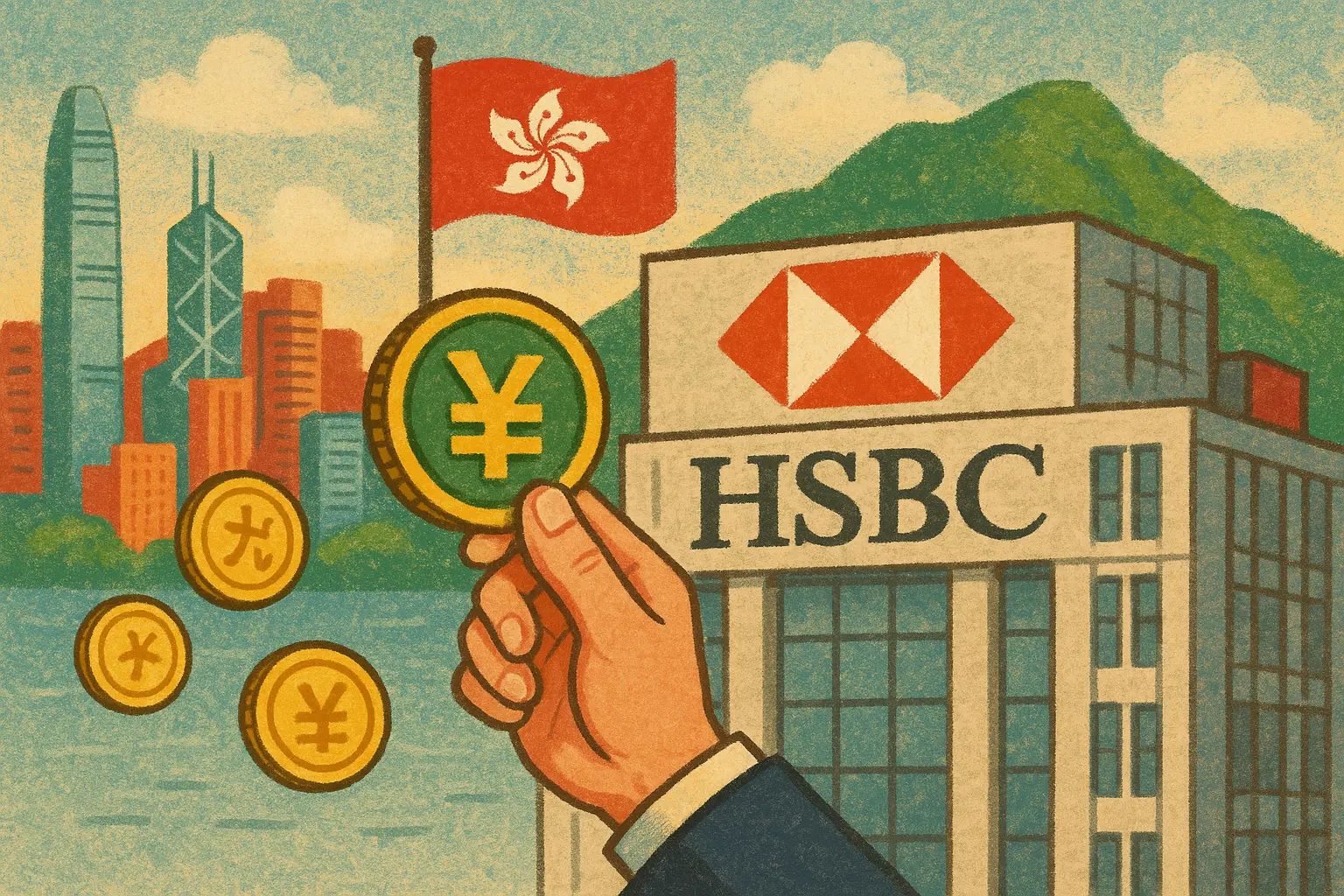
The Hong Kong Monetary Authority (HKMA) has officially issued the first batch of two statutory stablecoin licenses, granted to HSBC Bank and Anchorpoint Financial, a joint venture set up by Standard Chartered Bank, Animoca Brands, and Hong Kong Telecommunications. At the same time, the HKMA confirmed that the existing regulatory framework technically allows the issuance of stablecoins pegged to the renminbi, but the relevant companies must obtain formal approval from regulatory authorities in Mainland China in advance.
First Batch of Licenses: Launch Plan for HSBC and Anchorpoint Financial
The first batch of licenses issued by the HKMA establishes the basic market entry framework for Hong Kong’s statutory stablecoin sector. Under the regulatory requirements, issuers must maintain 100% in liquid reserves, and their paid-in capital must not be less than 25 million HKD.
HSBC’s Hong Kong dollar stablecoin program is being integrated into PayMe and the HSBC Hong Kong app, supporting three major use cases: P2P personal transfers, P2M merchant payments, and investment in tokenized products. As one of Hong Kong’s largest retail banks, HSBC’s entry will significantly lower the barrier for ordinary users to access stablecoins, and its existing large app user base will also become an important channel for the rapid adoption of Hong Kong dollar stablecoins.
Anchorpoint Financial plans to launch the Hong Kong dollar stablecoin HKDAP, with issuance potentially starting as early as Q2 2026, and is currently advancing technical and compliance preparations in line with regulatory requirements.
Conditions for Renminbi Stablecoins Opened Up: Potential Breakthroughs and Real-World Constraints
Allowing renminbi stablecoins is the most strategically significant provision in this regulatory framework. The HKMA has clearly stated that issuers may choose their own pegged assets. The renminbi falls within the technically permitted scope, but the issuer must obtain formal approval from regulatory authorities in Mainland China in advance.
This prerequisite reflects Hong Kong’s balancing considerations between digital financial innovation and Mainland China’s capital controls framework. China has strict rules on cross-border capital flows and currency issuance, so there remains a high degree of uncertainty regarding the final implementation of renminbi stablecoins. However, the HKMA’s explicit legal pathway for renminbi stablecoins within the regulatory framework is itself an arrangement with symbolic significance.
If renminbi stablecoins are ultimately approved, it will provide a new channel for digital financial integration between Hong Kong and Mainland China, and will be of major strategic significance for cross-border trade settlement and the internationalization of the renminbi.
Core Compliance Requirements for Licensed Issuers
Under the framework published by the HKMA, all licensed stablecoin issuers must meet the following standards:
100% Liquid Reserves: Issuers must support all circulating stablecoins with liquid assets of equivalent value to ensure they can complete 1:1 redemptions at any time
Minimum Capital Threshold: Paid-in capital must not be less than 25 million HKD to ensure the issuing entity has sufficient financial strength
Segregation of User Funds: Customer funds must be strictly separated from the issuer’s own assets to protect users’ rights and interests
Periodic Compliance Reporting: Issuers must regularly submit financial reports and independent audit information to the HKMA
The Hong Kong Financial Secretary’s Office stated: “Hong Kong is building a trustworthy framework that balances innovation and financial stability.” This stance echoes a mainstream trend among major global financial centers: establishing rules for crypto innovation while maintaining regulatory flexibility.
Frequently Asked Questions
Why does Hong Kong allow the issuance of renminbi stablecoins?
The HKMA’s regulatory framework allows issuers to choose the pegged asset. The renminbi is technically within the permitted scope. This arrangement aligns with Hong Kong’s role as a financial hub connecting Mainland China and international markets, but actual issuance still requires formal approval from regulatory authorities in Mainland China. There are currently no renminbi stablecoin plans that have been approved.
What specific use cases does HSBC Bank’s Hong Kong dollar stablecoin support?
HSBC plans to integrate the Hong Kong dollar stablecoin into PayMe and the HSBC Hong Kong app in the second half of 2026, supporting P2P personal transfers, P2M merchant payments, and investment in tokenized products. Users can use the stablecoin directly through existing bank application interfaces without needing an additional crypto wallet.
What core regulatory requirements must Hong Kong stablecoin issuers meet?
Issuers must maintain 100% liquid reserves, paid-in capital not less than 25 million HKD, strictly segregate customer funds, and regularly submit compliance reports and audit information to the HKMA. These requirements are designed to ensure that users can redeem stablecoins at a 1:1 ratio at any time, safeguarding asset security.
Disclaimer: The information on this page may come from third parties and does not represent the views or opinions of Gate. The content displayed on this page is for reference only and does not constitute any financial, investment, or legal advice. Gate does not guarantee the accuracy or completeness of the information and shall not be liable for any losses arising from the use of this information. Virtual asset investments carry high risks and are subject to significant price volatility. You may lose all of your invested principal. Please fully understand the relevant risks and make prudent decisions based on your own financial situation and risk tolerance. For details, please refer to
Disclaimer.


