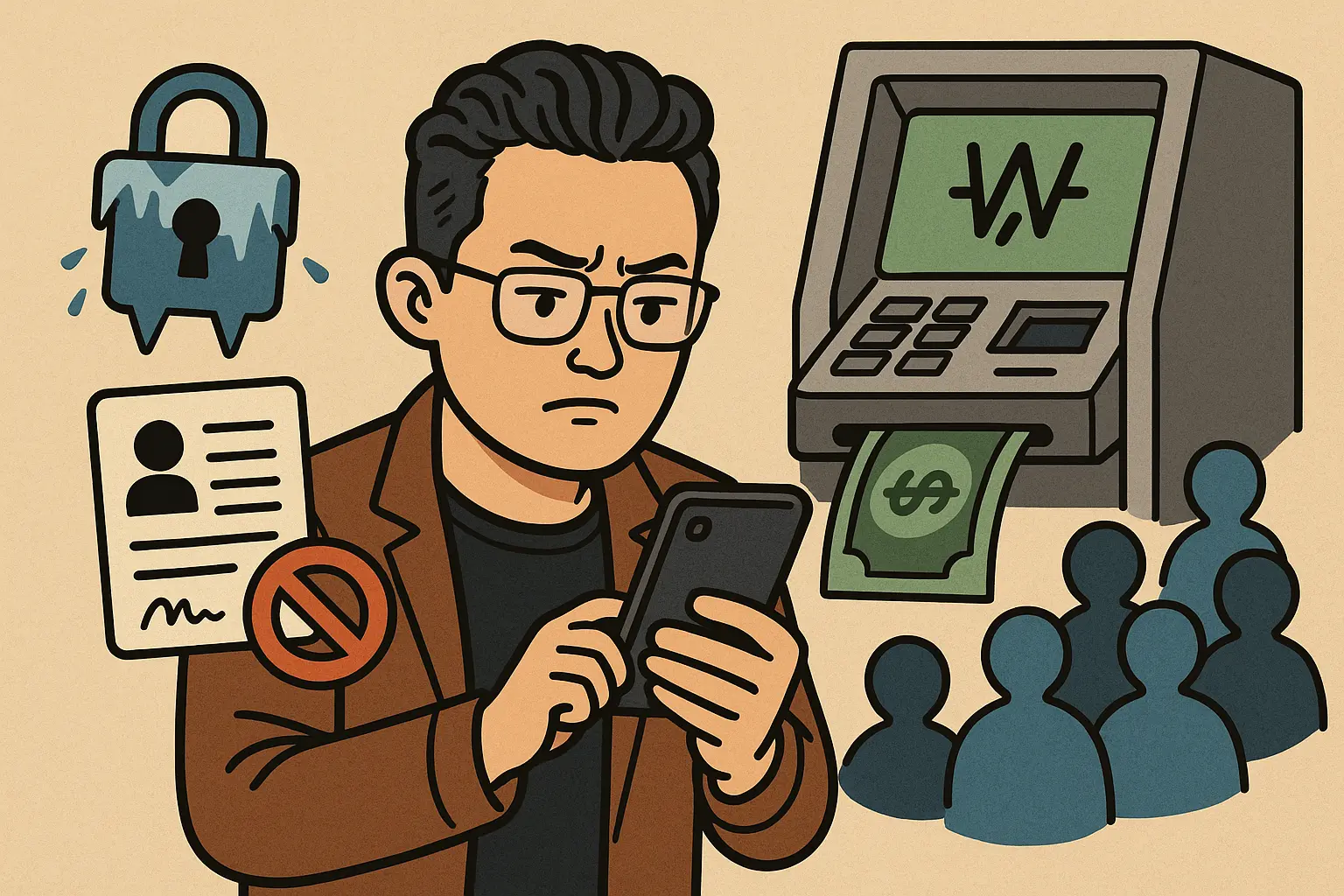
Tron founder Justin Sun publicly blasted World Liberty Financial (WLFI) on the X platform on April 12, accusing the crypto project—associated with Donald Trump—of secretly embedding a “blacklist” feature in its smart contracts that can freeze investors’ token ownership rights without prior notice or the provision of any remediation measures, and criticizing the team for “treating the crypto community like a personal ATM.”
Justin Sun’s Accusations: Hidden Backdoor in WLFI Smart Contracts
Justin Sun said in his post that his initial investment in WLFI was based on his belief in its public messaging about decentralized finance (DeFi) and broader retail access, but he later found a freezing function in the contract that had never been disclosed to investors. His personal wallet was blacklisted as early as the project’s launch in 2025. According to analysis by blockchain data firm Bubblemaps, this has already caused losses of more than $80 million.
Justin Sun clearly laid out four major accusations on X:
Hidden Backdoor Control: Secretly implanting the ability to control backdoors for users’ assets without disclosing it to investors
Freezing Funds Without Due Process: Freezing investors’ token ownership rights without disclosing it publicly or under any due governance procedures
Unauthorized Fees: Charging users fees without community authorization
Illegitimate Use of Community Funds: Criticizing that all actions taken by WLFI “have never been authorized by any fair, transparent, or good-faith community governance process”
From the Biggest Supporter to the Strongest Critic
Justin Sun is not a secondary holder of WLFI—he has put at least $75 million into WLFI tokens, making him one of the largest known supporters of the project. For that reason, his public accusations are far more damaging to the project’s reputation than criticisms from typical investors.
WLFI said the reason it marked Justin Sun’s wallet was because it suspected that the address had misappropriated funds belonging to other holders. Justin Sun denied that claim and re-framed the entire matter as specific evidence that WLFI retains centralized control capabilities while packaging them under the “DeFi” brand. He believes this approach directly betrays the core principles of decentralized finance.
WLFI Faces Multiple Pressures
Justin Sun’s public salvo comes as WLFI faces multiple pressures. On-chain data shows that the WLFI team pledged about $400 million worth of WLFI tokens as collateral and borrowed $150 million in stablecoins through a decentralized lending protocol, Dolomite, that has ties to WLFI advisors. This has drawn widespread questions from observers about liquidity risk, conflicts of interest involving related parties, and the liquidation pressure that could result if the token price drops further.
After investors digested the Dolomite loan report, the WLFI token price fell to near its all-time low of around $0.08. WLFI then tried to stabilize the market: on April 11, it announced it had repaid a $25 million loan, stating the loan position was “far from liquidation levels,” and pledged to publish a phased governance unlocking plan for early retail buyers.
Frequently Asked Questions
What are Justin Sun’s core accusations against WLFI?
Justin Sun accuses WLFI of hiding a blacklist function in its smart contracts that can freeze investors’ tokens, and that this function was never disclosed to investors. His personal wallet was blacklisted when the project launched in 2025, causing losses of more than $80 million, and he criticized WLFI for packaging the DeFi brand with opaque centralized control.
Why did WLFI put Justin Sun’s wallet on the blacklist?
WLFI said it was because it suspected that Justin Sun’s wallet had misappropriated funds from other holders. Justin Sun denied that claim and characterized it as specific proof that the project preserves centralized control capabilities, rather than a legitimate security measure.
What major risks does WLFI face right now?
In addition to Justin Sun’s public accusations, WLFI also faces: the token price dropping to its historical low of $0.08; liquidity risk from borrowing $150 million in stablecoins through Dolomite using about $400 million worth of WLFI as collateral; and potential issues involving conflicts of interest with related parties. WLFI has started repaying part of the loans and has committed to releasing a governance unlocking plan.
Disclaimer: The information on this page may come from third parties and does not represent the views or opinions of Gate. The content displayed on this page is for reference only and does not constitute any financial, investment, or legal advice. Gate does not guarantee the accuracy or completeness of the information and shall not be liable for any losses arising from the use of this information. Virtual asset investments carry high risks and are subject to significant price volatility. You may lose all of your invested principal. Please fully understand the relevant risks and make prudent decisions based on your own financial situation and risk tolerance. For details, please refer to
Disclaimer.
Related Articles
Kamino Pauses LayerZero-Related Asset Interactions, Closes Deposit and Lending Functions
Kamino has temporarily suspended interactions with LayerZero-related tokens as a precaution, while allowing withdrawals and debt repayments. They emphasize that this measure is for risk management and that user funds are safe.
GateNews1h ago
Kelp DAO Hacked for $292 Million: LayerZero Cross-Chain Bridge Attacked with Forged Messages, Biggest DeFi Event of 2026
Kelp DAO was hacked on April 19. The attacker used LayerZero’s cross-chain bridge to forge messages, releasing 116,500 rsETH, for losses of about $292 million, making it the largest DeFi event of 2026. This incident highlights security vulnerabilities in cross-chain bridges, triggering a sharp market reaction; related protocols also urgently froze assets, facing further liquidation risk.
ChainNewsAbmedia3h ago
Kelp DAO Cross-Chain Bridge Exploited, 116,500 rsETH Worth $292M Stolen
Kelp DAO's cross-chain bridge was exploited, resulting in the theft of 116,500 rsETH worth about $292 million, the largest DeFi attack of 2026. Multiple protocols have taken protective measures, and Kelp DAO is investigating the incident with experts.
GateNews4h ago
KelpDAO's Liquid Staking Token Faces Over $100M Exploitation
Gate News message, according to onchain data, KelpDAO's liquid staking token has been exploited for over $100 million. The incident involves KelpDAO's liquid staking token infrastructure.
GateNews9h ago
Chainalysis Details 'Shadow Crypto Economy' Exposure as Grinex Suspends Operations
Grinex’s shutdown is intensifying scrutiny of crypto laundering tactics, as fund movements suggest behavior inconsistent with typical enforcement actions. Chainalysis analysis highlights patterns that raise questions about whether the activity aligns with a conventional external hack or
Coinpedia11h ago
Rhea Finance Suffers a $18.4 Million Loss After an Oracle Attack: ZachXBT Warns, Tether Freezes 4.34 Million USDT, and the Attacker Returns Some Funds
Rhea Finance suffered an oracle manipulation attack on the NEAR Protocol, with losses reaching $18.4 million—double the initial estimate. The attacker manipulated the pricing of a fake token, causing collateral valuations to be incorrect. Tether froze about $4.34 million in USDT; the attacker returned roughly $3.5 million. To date, more than $7.8 million has been recovered, highlighting the importance of oracle security.
ChainNewsAbmedia19h ago


