
Futures
Access hundreds of perpetual contracts
TradFi
Gold
One platform for global traditional assets
Options
Hot
Trade European-style vanilla options
Unified Account
Maximize your capital efficiency
Demo Trading
Introduction to Futures Trading
Learn the basics of futures trading
Futures Events
Join events to earn rewards
Demo Trading
Use virtual funds to practice risk-free trading
Launch
CandyDrop
Collect candies to earn airdrops
Launchpool
Quick staking, earn potential new tokens
HODLer Airdrop
Hold GT and get massive airdrops for free
Launchpad
Be early to the next big token project
Alpha Points
Trade on-chain assets and earn airdrops
Futures Points
Earn futures points and claim airdrop rewards


More




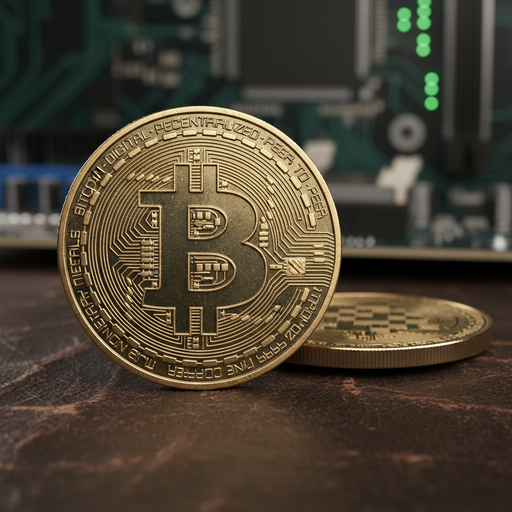

The global economy is shaped by internationally accepted criteria, from Asia to Europe, from the Middle East to the Americas, in every region of the world, particularly by the dynamics of developed economies and the major economies that influence them. Factors such as gold, silver, oil, and other commodities, the flow of money, political decisions, global wars, tensions, and similar elements directly determine this structure and have a strong impact on cryptocurrencies. In this context, the direction of money, the performance of stock markets, fluctuations in oil prices, and similar factors play a decisive role in the price formation of crypto assets, creating both risks and opportunities for investors.
The relationship between classic asset classes and cryptocurrencies has become increasingly complex in recent years. While gold is considered a traditional safe haven, cryptocurrencies, especially Bitcoin, are positioned as digital gold and show the potential to appreciate in value amid inflationary pressures. Silver, due to industrial demand, similarly affects energy costs like oil, increasing the expenses of mining operations and narrowing the supply side of proof-of-work assets like Bitcoin. Rising oil prices increase the costs for energy-intensive crypto mining, creating selling pressure in the short term but potentially supporting prices in the long term through supply constraints.
Geopolitical tensions in various parts of the world profoundly affect capital flows and risk perception. Conflicts in the Middle East threaten oil supplies, triggering global inflation and leading central banks to tighten interest rate policies, ultimately reducing the liquidity of cryptocurrencies, which are seen as risky assets. Trade wars and supply chain disruptions in Asia are slowing the growth momentum of major economies, particularly China and India, negatively impacting the crypto sector, which shows a high correlation with technology stocks on exchanges. In Europe, energy dependence and geopolitical uncertainties are weakening the Eurozone economy, paving the way for a stronger dollar and highlighting the dollar-indexed movement of stablecoins and Bitcoin. Policy changes in the Americas, especially Federal Reserve decisions and fiscal stimulus packages in the US, directly shape global liquidity, accelerating capital inflows and outflows to crypto markets.
All these factors determine the direction of money flows, creating a strong synchronicity between the performance of stock markets and cryptocurrencies. In developed economies, rising equity markets increase risk appetite, supporting smart contract platforms like Ethereum and the altcoin ecosystem, while uncertainties stemming from oil shocks or wars trigger safe haven trends, putting short-term pressure on Bitcoin's value. The price effects of cryptocurrencies cannot be considered independently of these dynamics, as institutional investors' inclusion of crypto assets alongside gold and oil derivatives in their portfolios has increased correlation coefficients.
For investors, expectations, vision, and mission require a long-term perspective in this complex structure. Cryptocurrencies offer a decentralized alternative outside the traditional financial system, acting as an inflation hedge and a store of value; however, managing volatility in the face of geopolitical risks and commodity price fluctuations becomes critical. From a visionary perspective, the crypto ecosystem is poised to play a central role in the digital transformation of the global economy because blockchain technology accelerates cross-border payments while creating hybrid asset models through the tokenization of physical commodities like oil and gold. The mission should be based on sustainable growth and risk management. Investors should diversify their portfolios and create liquidity buffers by continuously monitoring macroeconomic indicators, oil inventory data, gold reserve movements, and global tension reports.
In conclusion, within this framework themed around the global economy, cryptocurrencies are evolving not in the shadow of traditional factors, but intertwined with them. The direction of money flows, the momentum of stock markets, oil pricing, and geopolitical factors all shape cryptocurrency prices, offering investors both protection and high return potential. Evaluating these dynamics with a holistic perspective forms the basis for future success and increasingly strengthens the place of cryptocurrencies in the world economy.
#CreatorLeaderboard
#CryptoMarketSeesVolatility
#OilPricesRise
#PreciousMetalsPullBackUnderPressure
#GateSquareAprilPostingChallenge
https://www.gate.com/en/announcements/article/50520