

Trade
Basic
Futures
Futures
Hundreds of contracts settled in USDT or BTC
TradFi
Gold
Trade global traditional assets with USDT in one place
Options
Hot
Trade European-style vanilla options
Unified Account
Maximize your capital efficiency
Demo Trading
Futures Kickoff
Get prepared for your futures trading
Futures Events
Participate in events to win generous rewards
Demo Trading
Use virtual funds to experience risk-free trading
Earn
Launch
CandyDrop
Collect candies to earn airdrops
Launchpool
Quick staking, earn potential new tokens
HODLer Airdrop
Hold GT and get massive airdrops for free
Launchpad
Be early to the next big token project
Alpha Points
New
Trade on-chain assets and enjoy airdrop rewards!
Futures Points
New
Earn futures points and claim airdrop rewards
Investment
Simple Earn
Earn interests with idle tokens
Auto-Invest
Auto-invest on a regular basis
Dual Investment
Buy low and sell high to take profits from price fluctuations
Soft Staking
Earn rewards with flexible staking
Crypto Loan
0 Fees
Pledge one crypto to borrow another
Lending Center
One-stop lending hub
VIP Wealth Hub
Customized wealth management empowers your assets growth
Private Wealth Management
Customized asset management to grow your digital assets
Quant Fund
Top asset management team helps you profit without hassle
Staking
Stake cryptos to earn in PoS products
Smart Leverage
New
No forced liquidation before maturity, worry-free leveraged gains
GUSD Minting
Use USDT/USDC to mint GUSD for treasury-level yields

More


Trending Topics
View More3.13K Popularity
46.47K Popularity
361.19K Popularity
35.72K Popularity
59.51K Popularity




Pin
Exploring the Core of Economic Trade: Understanding the Medium of Exchange
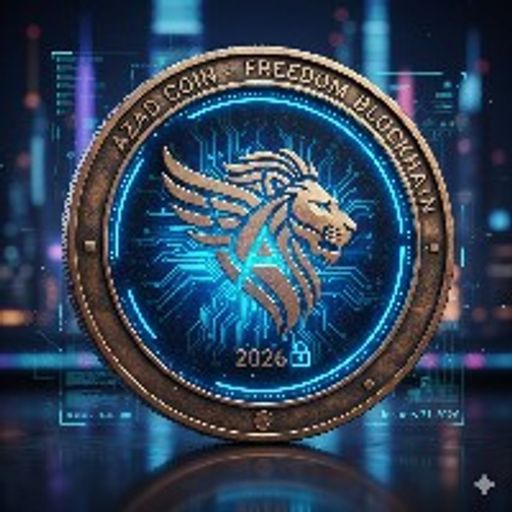
The foundation of any thriving economy rests on the ability to trade efficiently. Throughout history, societies have grappled with a fundamental challenge: how to exchange goods and services in a way that benefits all parties involved. This is where the concept of a medium of exchange becomes central to economic survival and growth.
From Barter’s Limitations to a Unified System of Exchange
Before standardized currency emerged, civilizations relied on barter—the direct exchange of goods for other goods. While this system worked within small tribal communities, it quickly became impractical as societies expanded. The core problem was what economists call the “coincidence of wants”: I have wheat, you have fish, but you need grain instead of wheat, and I need salt, not fish. Finding someone with exactly what you need who also wants exactly what you have becomes an increasingly frustrating puzzle.
Around 2,600 years ago, the Lydians recognized this inefficiency. They developed the first standardized coins from a gold and silver alloy, stamped with official marks to guarantee weight and authenticity. This innovation solved a critical transaction problem: it provided a commonly accepted intermediary that could represent value across multiple trades. Rather than searching endlessly for a perfect match, traders could now exchange goods for coins and coins for other goods—dramatically lowering transaction costs and enabling commerce to flourish.
Defining What Makes an Effective Medium of Exchange
A medium of exchange is fundamentally an intermediary that bridges the gap between what people want to buy and what they want to sell. But not every item can serve this function effectively.
For something to work as a medium of exchange, it must first gain widespread acceptance. People must trust it, recognize its value, and confidently use it in transactions. Equally important is portability—the ability to move it easily across distances without degradation or loss of value. In ancient times, shells, salt, and tobacco served this role in various cultures because they were recognized as valuable and could be transported relatively easily.
Modern currencies fulfill these requirements through government backing and infrastructure. However, they come with vulnerabilities: political instability, inflation, and government policy failures can undermine a currency’s value and stability overnight. This inherent fragility has sparked the search for alternative systems.
The Critical Role of Trust and Acceptability
What truly determines whether something becomes a effective medium of exchange is salability—a concept that operates across three critical dimensions: time, space, and scale.
Across time, the medium must retain its value so holders don’t suffer excessive loss. Across space, it must be transportable and accepted in distant markets without losing credibility. Across scale, it must work equally well for a small transaction as for a large one.
When all three dimensions align, an item transitions through money’s evolutionary stages: first becoming a store of value (something people want to hold), then emerging as a medium of exchange (something people want to trade), and ultimately becoming a unit of account (the standard measure of price).
The practical advantage of having a unified medium of exchange cannot be overstated. When buyers and sellers trade through a standardized system, producers can predict demand and set rational prices. Consumers can budget confidently. The entire economy achieves a level of coordination impossible under barter.
Bitcoin and the Digital Transformation of Exchange
The digital era has introduced possibilities that previous generations couldn’t imagine. Bitcoin represents the first cryptocurrency specifically designed to function as a medium of exchange in a decentralized environment—operating without reliance on governments or financial institutions.
Bitcoin possesses several characteristics that strengthen its case as a modern medium of exchange. Transactions settle every 10 minutes on the blockchain, substantially faster than traditional banking systems that can require days or weeks. Perhaps more importantly, Bitcoin’s second-layer solutions like the Lightning Network enable near-instant transactions with minimal fees. This means market participants can conduct microtransactions and everyday purchases without waiting for blockchain confirmations—addressing the speed limitations that critics raise.
Beyond efficiency, Bitcoin offers properties that traditional currencies cannot: censorship resistance protects users from arbitrary government seizure or transaction blocking, particularly valuable in economically unstable or authoritarian regions. Additionally, Bitcoin’s absolute scarcity—capped at 21 million coins—creates a fundamentally different value proposition than currencies subject to unlimited printing and inflation.
Enduring Principles for a Functioning Exchange System
Thousands of years separate the first Lydian coins from Bitcoin’s blockchain, yet the underlying requirements for a successful medium of exchange have remained constant. Any system that facilitates trade must be widely accepted, easily transportable, capable of retaining value, and ideally resistant to arbitrary control.
As commerce continues evolving—from barter to metal coins to paper currency to digital systems—these foundational properties will continue determining success. Different mediums of exchange will emerge and compete, but the one that best satisfies these criteria across time, space, and scale will naturally become dominant.
The medium of exchange continues adapting to technological advancement and societal needs, but the principles governing its effectiveness are timeless. Understanding these principles reveals why certain systems persist while others fade into history, and suggests which innovations may shape the future of trade.