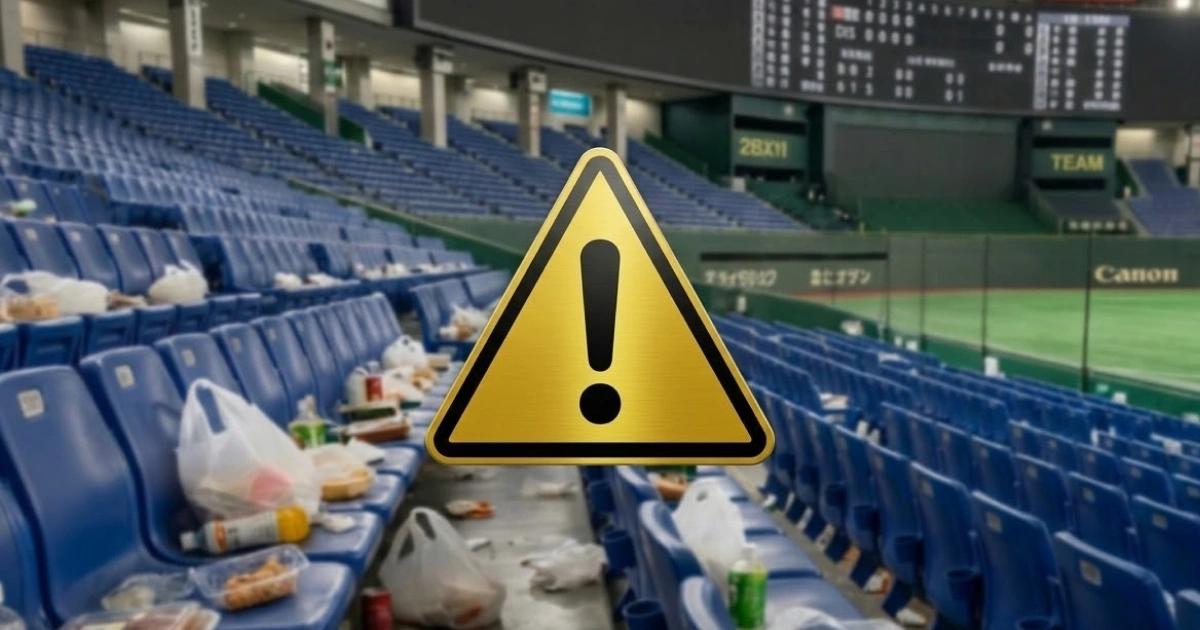
It is falsely circulated that Taiwanese fans littered at Tokyo Dome; these are AI-generated fake images. Taiwanese media, in the AI era, further highlight the bad habit of lack of fact-checking, having previously misreported the rock climber Horner photographer incident, emphasizing the need for the public in Taiwan to improve media literacy and proactive information verification skills in the AI age.
During the WBC Classic Tournament, an AI-generated image claimed that Taiwanese people left trash all over Tokyo Dome
During the preliminary round of the 2026 WBC World Baseball Classic, a widely circulated photo accused Taiwanese fans of leaving trash after watching a game at Tokyo Dome.
According to the Taiwan Fact-Checking Center, the earliest source of the image was a Facebook post by the online media “LIFE Leisure Fun News,” which clearly marked the original image as AI-generated in the bottom right corner, but this mark was deliberately erased during subsequent circulation. The earliest traceable source of the image without the AI mark is a post by X platform user Xu Fangli on March 7.
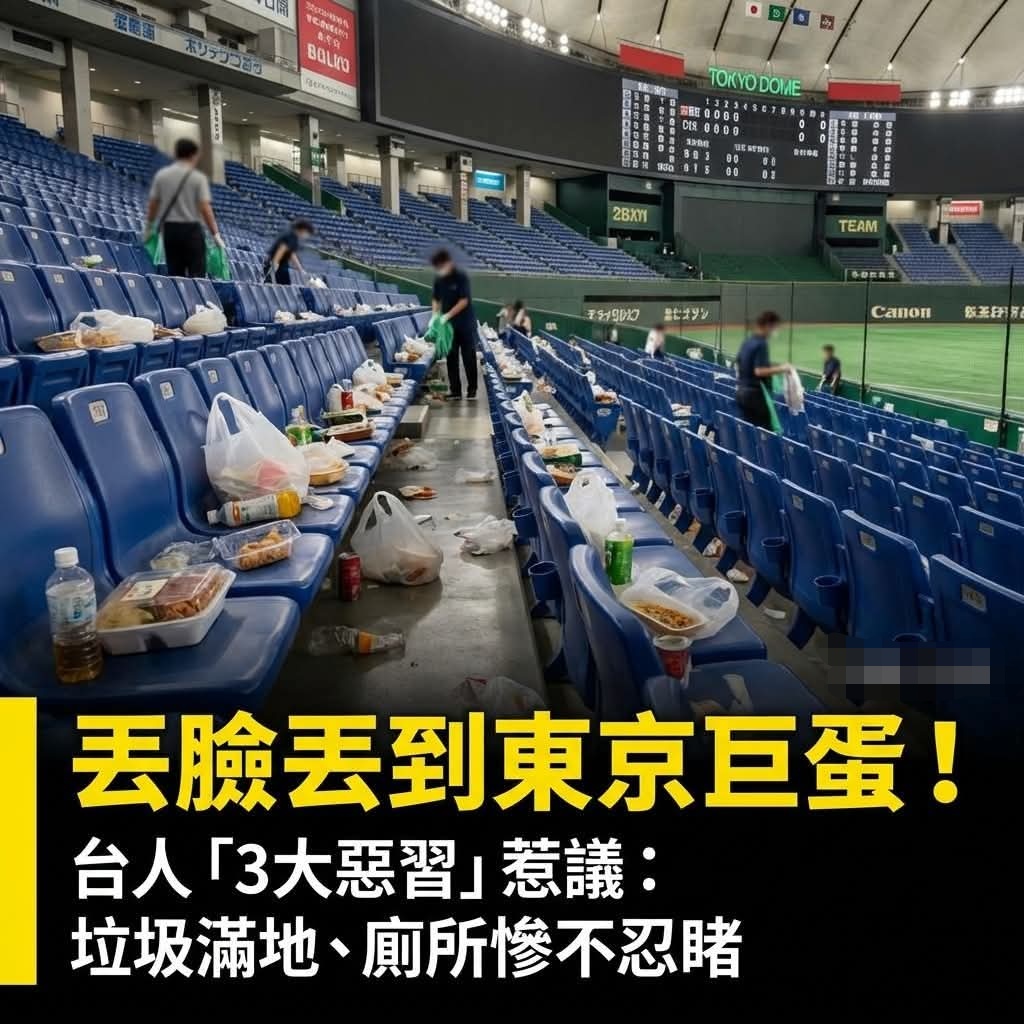
Image source: X platform user Xu Fangli deliberately erased the AI generation mark and circulated a photo of Taiwanese people littering at Tokyo Dome
In response, Japanese sports media “The Answer” reporter personally visited Tokyo Dome’s third-base side infield seats and observed that the circulated image was severely inconsistent with the actual scene.
The reporter pointed out that the seats at Tokyo Dome are elastic foldable seats that automatically bounce up when unoccupied, which are completely different from the fixed, integrated plastic chairs in the image. The yellow left outfield scoreboard that should be visible from the angle is missing, and the scoreboard text inside the stadium does not match the actual sponsors’ names.
Based on these unnatural phenomena, the reporter from “The Answer” concluded that this is a clearly AI-generated fake image.
Taiwan Fact-Checking Center presents multiple pieces of evidence of AI fake images
The Taiwan Fact-Checking Center provided more detailed evidence of forgery. Besides comparing the differences in seats and signage, they used Google’s Gemini tool for detection, which confirmed that the image was indeed generated by Google AI.
The main evidence includes multiple AI artifacts in the photo, such as garbled text on the scoreboard’s team columns and banners below, and an inexplicable “TEAM” text on the right side. The screen’s proportions also do not match the real scene.
The center further pointed out that the deliberate erasure of the “AI generated” mark and posting on X by the account “Xu Fangli” is located in Hong Kong. This account was previously investigated by authorities in 2022 for spreading multiple major rumors and is listed as one of the accounts used by Chinese and other foreign forces.

Image source: X platform account “Xu Fangli” located in Hong Kong, which was previously flagged by authorities in 2022 for spreading multiple major rumors
On March 6, multiple media outlets cited posts from Threads users complaining about Taiwanese littering and dirty restrooms at Tokyo Dome. “LIFE Leisure Fun News” also followed up with a report, but the images attached were AI-generated and marked accordingly, and the Facebook post was later deleted. However, the false images have been widely circulated on social media platforms.
Fake news in the AI era is rampant, and media literacy faces new challenges
Besides the spread of AI fake images on social media, frequent misreporting caused by Taiwanese media’s lack of verification also occurs.
For example, earlier this year, renowned extreme climber Alex Honnold free-climbing Taipei 101, some content creators, after asking AI tools like Gemini for answers and receiving incorrect responses, falsely claimed on social media that the photographer was Oscar-winning director Jimmy Chin.
Subsequently, mainstream media such as United Daily News and Jusky Satellite directly quoted the online post in their reports. After being questioned, they quietly deleted the articles.
- Detailed investigation report:** Popular post causes Taiwanese media to misreport: Honnold’s 101 climbing photographer is Jimmy Chin, and media literacy in the AI era faces challenges**
Recently, multiple Taiwanese media outlets also extensively reported on an AI short drama “Huo Qu Bing,” claiming that the drama, shortly after release, had a viewership of 500 million, and the full version is 23 minutes long.
However, as verified by “Crypto City,” the 23-minute version of this AI short drama “Huo Qu Bing” cannot be found online. The versions circulating on major social and video platforms are only 4 minutes and 23 seconds long, with total views under 20,000. The claimed 500 million views lack verifiable data, raising doubts about the authenticity of this figure.
- Detailed investigation report:** Taiwanese media claims: AI short drama “Huo Qu Bing” has 500 million views since launch—what are the suspicious points?**
Most Taiwanese people lack the habit of verification
A report by the Taiwan Internet Information Center shows that over 40% of Taiwanese use generative AI, and their news sources have shifted significantly toward social media platforms. However, most people rarely verify the authenticity of the information themselves.
Compared to Finland, which has incorporated media literacy and AI fake news detection into its education system, Taiwanese people generally lack media literacy, making them prone to “believing hearsay” and being influenced by biased opinions or false information. Taiwan could learn from Finland by cultivating citizens’ ability to judge the authenticity of information from a young age, to prevent misinformation and information warfare threats.
Further reading:
Attention on Hualien Guangfu disaster! Someone used AI to generate fake images to attract traffic. Is media literacy in the AI era even more difficult?
Crypto media only cares about making money? Over 60% of press releases exaggerate claims, research reveals poor crypto ecosystem
Disclaimer: The information on this page may come from third parties and does not represent the views or opinions of Gate. The content displayed on this page is for reference only and does not constitute any financial, investment, or legal advice. Gate does not guarantee the accuracy or completeness of the information and shall not be liable for any losses arising from the use of this information. Virtual asset investments carry high risks and are subject to significant price volatility. You may lose all of your invested principal. Please fully understand the relevant risks and make prudent decisions based on your own financial situation and risk tolerance. For details, please refer to
Disclaimer.


