Nintendo’s US subsidiary has filed a lawsuit with the U.S. International Trade Court, demanding a full refund of the tariffs imposed during the Trump era, including interest. An ongoing constitutional battle over the boundaries of executive power is unfolding.
(Background: U.S. Customs announced on the 24th that it would stop collecting tariffs deemed unconstitutional during Trump’s administration, but the $175 billion in refunds remains unresolved.)
(Additional context: Trump made a late-night escalation! Global tariffs increased from 10% to 15%, and Bitcoin fluctuated around $68,000.)
Table of Contents
Toggle
- The Supreme Court Draws a Line
- How to Repay $166 Billion
- Trump’s Next Move
Nintendo, claiming to have the “world’s strongest legal team,” officially filed a lawsuit this week against the U.S. Department of the Treasury, Department of Homeland Security, and Customs and Border Protection (CBP). The demand is simple: Give me my money back, with interest.
Nintendo states that Trump’s reciprocal tariffs are “unauthorized executive orders executed unlawfully,” which caused them substantial harm.
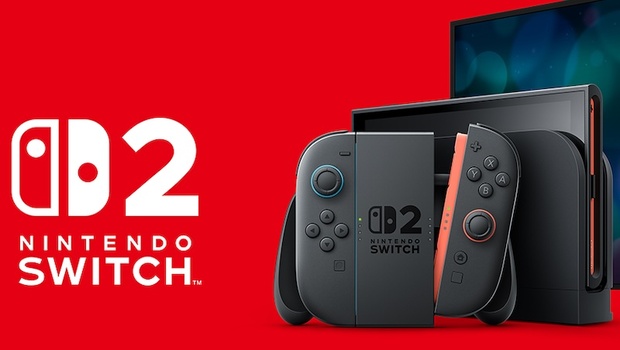
A key event was in April 2025, when Trump announced increased tariffs on imports from Vietnam and China. As a result, Nintendo had to delay the pre-order schedule for the Switch 2 from April 9 to April 24 to assess the cost impact. Ultimately, the console’s price remained unchanged, but all peripheral accessories increased in price.
Nintendo’s confidence in filing the lawsuit is based on a Supreme Court ruling from two weeks ago.
The Supreme Court Draws a Line
On February 20, the U.S. Supreme Court, in a 6-3 decision, ruled that President Trump’s use of the International Emergency Economic Powers Act (IEEPA) to impose tariffs exceeded the authority granted by Congress.
The logic is as follows: IEEPA authorizes the President to “control imports” during emergencies, but control does not equal taxation. Tariffs are essentially taxes, and the power to legislate taxes resides with Congress, not the executive branch.
How to Repay $166 Billion
While the ruling established a principle, it did not resolve a very practical issue: how to get the money back.
As of March 4, U.S. Customs and Border Protection (CBP) had collected approximately $166 billion in IEEPA tariffs from over 330,000 importers. Almost simultaneously with the Supreme Court decision, International Trade Court Judge Richard Eaton ruled on March 5 that companies are entitled to refunds.
However, CBP immediately stated: The system is not ready yet; the refund process will take at least another 45 days.
Judge Eaton indicated that the court will personally oversee the refund process, as the mechanism proposed by CBP requires court approval before implementation. In other words, how to refund, in what order, and how to calculate interest remain unresolved issues.
Meanwhile, nearly 2,000 companies have filed claims, including not only Nintendo but also Costco, GoPro, Toyota, Revlon… This is not just a few victims protesting; it’s an organized legal mobilization.
Trump’s Next Move
Although the Supreme Court overturned the tariffs imposed under IEEPA, it did not overturn Trump’s intent to impose tariffs.
Trump has explicitly stated that he plans to reimpose tariffs through other legal channels, such as invoking Section 232 (National Security) or Section 301 (Unfair Trade Practices) of the 1974 Trade Act, which have clearer congressional authorization.
This means that even if Nintendo wins the refund, the trade environment may not necessarily improve. Under new legal frameworks, tariffs could reappear under different pretexts.

Disclaimer: The information on this page may come from third parties and does not represent the views or opinions of Gate. The content displayed on this page is for reference only and does not constitute any financial, investment, or legal advice. Gate does not guarantee the accuracy or completeness of the information and shall not be liable for any losses arising from the use of this information. Virtual asset investments carry high risks and are subject to significant price volatility. You may lose all of your invested principal. Please fully understand the relevant risks and make prudent decisions based on your own financial situation and risk tolerance. For details, please refer to
Disclaimer.


