Because Asia relies heavily on Middle Eastern energy, rising oil prices threaten inflation prospects, reversing the “sell US, buy Asia” trade. The MSCI Asia Pacific Index experienced its largest weekly decline in six years, and global funds are withdrawing from Asian markets at the fastest pace in nearly four years. This article is sourced from Wallstreetcn, compiled, translated, and written by Foresight News.
(Previous summary: Korean stocks plummeted 20% in two days, the worst in Asia. Why?)
(Additional background: Trump tariffs ruled illegal! U.S. courts order “prohibition of enforcement,” White House quickly appeals, Asian markets cheer early trading)
Table of Contents
Toggle
- The “sell US, buy Asia” trade reverses, risk reassessment becomes the main theme
- Oil price sensitivity rises: Asia’s dependence on Middle Eastern energy supplies is revalued
- Stock and currency decline together, volatility and deleveraging concerns heat up
- Institutional adjustments: Morgan Stanley shifts to defensive, Citibank waits for stability signals
Global funds are withdrawing from emerging Asian stocks at the fastest pace in nearly four years. Wallstreetcn previously reported that Asian markets such as Japan and South Korea are heavily dependent on Middle Eastern oil imports. Escalating Iran conflicts have triggered risk aversion, prompting investors to reprice risks quickly, transmitting to equities and forex markets.
According to Bloomberg data, global funds have net sold about $11 billion of emerging Asian stocks excluding Mainland China this week, likely the largest weekly outflow since March 2022. South Korea saw about $1.6 billion outflow, India about $1.3 billion.
The outflow, combined with a sharp decline in risk appetite, has caused regional stock markets to plunge. The MSCI Asia Pacific Index fell over 6% this week, marking its largest weekly drop in nearly six years and the biggest underperformance relative to the S&P 500 since April. South Korea’s Kospi experienced a record single-day drop, with some markets halting trading multiple times.
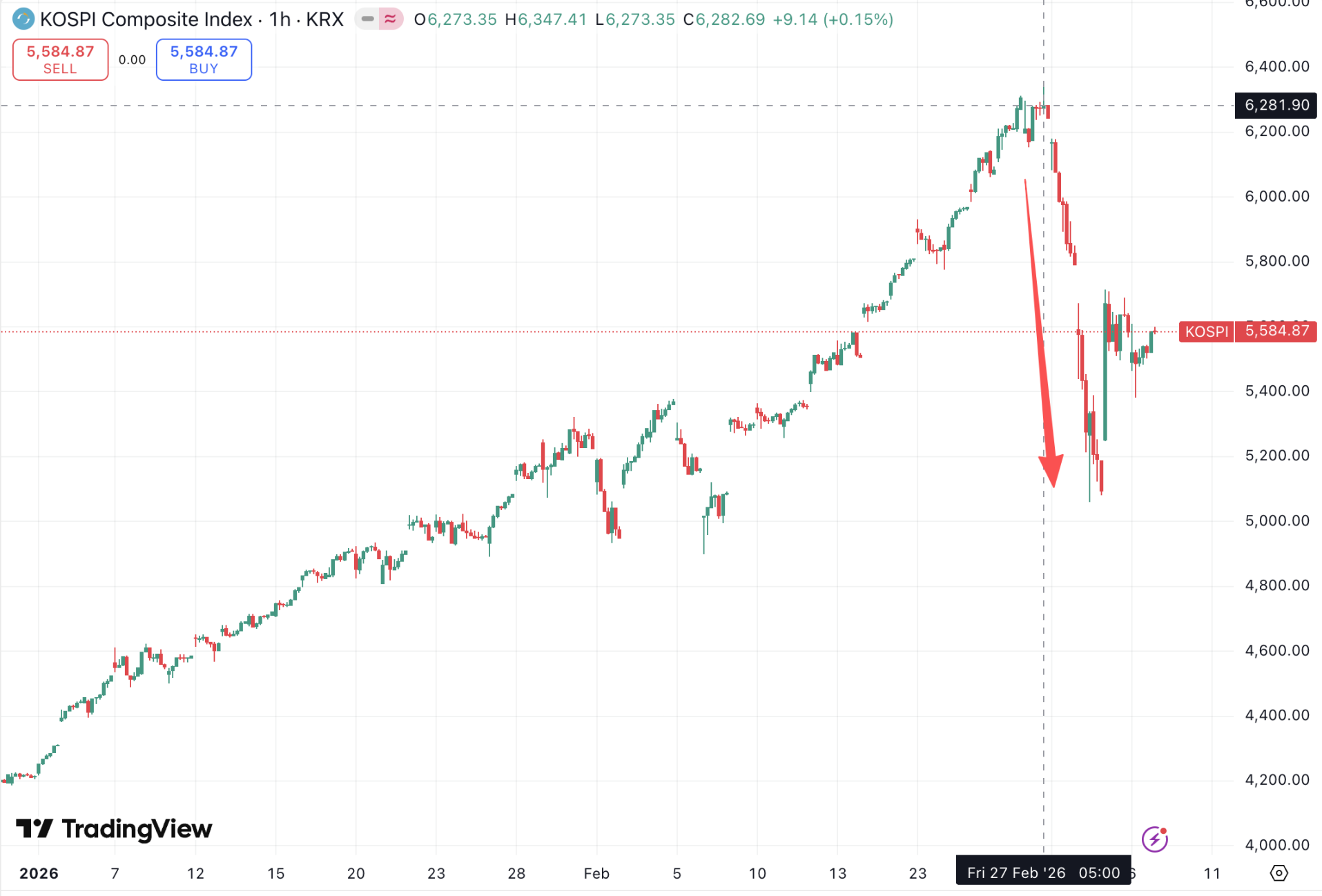
Morgan Stanley strategists, citing risks related to the Iran war, have adopted a more cautious stance on Asian and emerging market stocks, downgrading India and the UAE from overweight to neutral, noting that Asia “heavily depends on Middle Eastern crude oil, refined products, and LNG supplies,” and believing the market underestimates supply chain risks.
The “sell US, buy Asia” trade reverses, risk reassessment becomes the main theme
This recent outflow marks a reversal of a high-yield strategy known as “sell US, buy Asia.” The strategy bet on a weakening dollar, moderate inflation, and the AI boom driving demand for regional chip stocks, rotating funds from overvalued US stocks to Asian equities.
However, the Iran situation has shaken these key assumptions. Allspring Global Investments fund manager Gary Tan said investors previously bought Asian stocks based on expectations of a weakening dollar and benign inflation, but the Iran tensions challenge both assumptions. The market is now assessing whether the dollar’s long-term strength and high oil prices could reignite inflation pressures.
Oil price sensitivity rises: Asia’s dependence on Middle Eastern energy supplies is revalued
One reason for deeper retreat in Asian assets is the relatively high dependence on Middle Eastern crude oil. Large fuel imports pass through the strategic Strait of Hormuz, and escalating conflicts increase supply chain risk premiums. Rising oil prices exacerbate inflation fears, especially as many central banks are just beginning to build confidence in cooling inflation.
Economies like Japan, South Korea, India, and Indonesia are among the world’s largest oil importers, while the U.S. has become a net oil exporter. This difference reinforces the view that Asia, as a “net importer,” is more vulnerable to inflation and policy constraints from oil price shocks.
Stock and currency decline together, volatility and deleveraging concerns heat up
Driven by risk aversion, the dollar has strengthened, suppressing emerging market currencies. Markets are especially attentive to the impact on net oil-importing currencies and domestic inflation. South Korea’s won hit its largest single-day decline since 2009 on Tuesday, with investors wary of passive deleveraging and forced liquidations.
Meanwhile, volatility indicators are rising. JPMorgan’s emerging market FX volatility index surged above comparable G7 levels this week, ending a long period of being below G7 levels, highlighting a rapid shift in risk pricing.
Institutional adjustments: Morgan Stanley shifts to defensive, Citibank waits for stability signals
On the strategic front, Morgan Stanley strategists, citing Iran war risks, have adopted a more cautious stance on Asian and emerging stocks, downgrading India and the UAE from overweight to neutral, and upgrading Saudi Arabia from reduction to neutral.
Daniel Blake and Jonathan Garner wrote in their report, “We remain defensive,” emphasizing that Asia “heavily depends on Middle Eastern crude oil, refined products, and LNG supplies,” and believe the market underestimates supply chain risks.
Citibank emphasizes pace management. Luis Costa and others noted in their report that they have significantly reduced risk exposure in recent days but hope to re-establish emerging market bullish positions if stability signs emerge. Despite “initial signs of stabilization” in oil prices, it is premature to assert that oil prices will follow the 2022 trend again.
Beyond Middle Eastern tensions, investors will also watch tonight’s U.S. non-farm payroll data for clues on the Fed’s rate path. The re-pricing of dollar strength and global risk appetite may determine whether this “withdrawal” from Asian assets is a temporary fluctuation or a more lasting rebalancing.
Disclaimer: The information on this page may come from third parties and does not represent the views or opinions of Gate. The content displayed on this page is for reference only and does not constitute any financial, investment, or legal advice. Gate does not guarantee the accuracy or completeness of the information and shall not be liable for any losses arising from the use of this information. Virtual asset investments carry high risks and are subject to significant price volatility. You may lose all of your invested principal. Please fully understand the relevant risks and make prudent decisions based on your own financial situation and risk tolerance. For details, please refer to
Disclaimer.


