usdt delisted
What Does USDT Delisting Mean?
USDT delisting refers to a platform’s decision to suspend or remove USDT-related functionalities, such as taking down trading pairs, pausing deposits, or disabling withdrawals. This is an operational adjustment at the platform level, not an on-chain token burn.
USDT is a stablecoin pegged to the US dollar, commonly used as a unit of account and an intermediary asset in the crypto market. Understanding this role clarifies the impact scope of USDT delisting: if a trading pair is removed, users cannot buy or sell directly with USDT; if deposits or withdrawals are suspended, users must use alternative coins or different network routes to transfer assets.
Delisting processes are typically phased: first, a public announcement; next, trading is disabled; then, a withdrawal-only window may be offered; finally, all related features are fully closed. The sequence of these stages determines how users should prioritize their actions.
Why Does USDT Delisting Occur?
USDT delisting is usually triggered by compliance requirements, risk management assessments, or technical maintenance. Platforms make such adjustments after weighing regulatory environments, asset safety, and operational stability.
From a compliance perspective, changes in local stablecoin regulations, anti-money laundering rules, or customer identity verification standards may require platforms to temporarily or permanently adjust their USDT support strategies. On the risk management side, limitations in partner channels, changes in settlement or custody mechanisms, or the need to reduce reliance on a single stablecoin could prompt delisting or temporary suspension.
Technical factors—such as network congestion, cross-chain bridge risks, or wallet system upgrades—can also result in short-term delisting. Fee structure changes (e.g., rising on-chain gas fees) may further influence whether deposit and withdrawal channels remain open.
How Does USDT Delisting Affect Users?
The direct effect of USDT delisting is decreased trading convenience and altered asset transfer routes. Indirect impacts include changes to liquidity, pricing, and trading costs.
On spot markets, removal of USDT-quoted trading pairs means users must switch to other quote currencies for order placement. This can introduce additional conversion steps and slippage costs. For margin or derivatives trading, if USDT is no longer supported as collateral, users will need to convert margin assets or adjust position valuation to avoid risks from pricing changes.
For deposits and withdrawals, suspending the USDT channel requires users to use alternative stablecoins or major cryptocurrencies for transfers, then convert back to target assets within the platform. Cross-network transfers may also change—users must verify that chosen network and address remain available.
What Is the Relationship Between USDT Delisting and Regulation/Compliance?
USDT delisting is closely linked to regulatory environments. Platforms must comply with local and user-country rules including anti-money laundering measures, customer identity verification, and stablecoin reserve transparency.
As of 2024, multiple jurisdictions are advancing legislation and guidance on stablecoins. Platforms respond by periodically reviewing and adjusting supported tokens, transfer channels, and product offerings (source: public regulatory discussions and industry compliance reports, 2024). When regulations tighten or new disclosure/audit requirements are imposed, platforms may temporarily delist USDT to complete technical upgrades and process overhauls.
The core compliance goal is safeguarding funds and ensuring transaction traceability. For users, understanding these compliance factors helps accurately assess whether delisting reflects risk management or simply a transitional measure.
How Should Users Handle Funds After USDT Delisting?
After USDT is delisted, users are advised to follow clear steps to minimize friction and risk:
Step 1: Review announcements. Confirm the scope of the delisting (trading, deposits, withdrawals), effective dates, and whether a withdrawal-only window is provided.
Step 2: Check your assets and network. In your account, verify USDT balances and which networks you hold assets on to avoid leaving funds in soon-to-close channels.
Step 3: Choose your path. Follow platform guidance to exchange USDT for other stablecoins or mainstream cryptocurrencies within the platform before transferring out to external wallets or other exchanges. Pay attention to conversion rates and slippage.
Step 4: Test with small amounts. First conduct a small deposit, withdrawal, or conversion test to ensure addresses, networks, and arrival times are correct before handling larger balances.
Step 5: Keep records. Save transaction histories and announcement screenshots for after-sales support and reconciliation.
Any conversion or withdrawal may incur fees and price fluctuation risks. For large sums or cross-border transfers, consider splitting transactions to reduce timing-related risks.
What Are the Alternatives to USDT After Delisting?
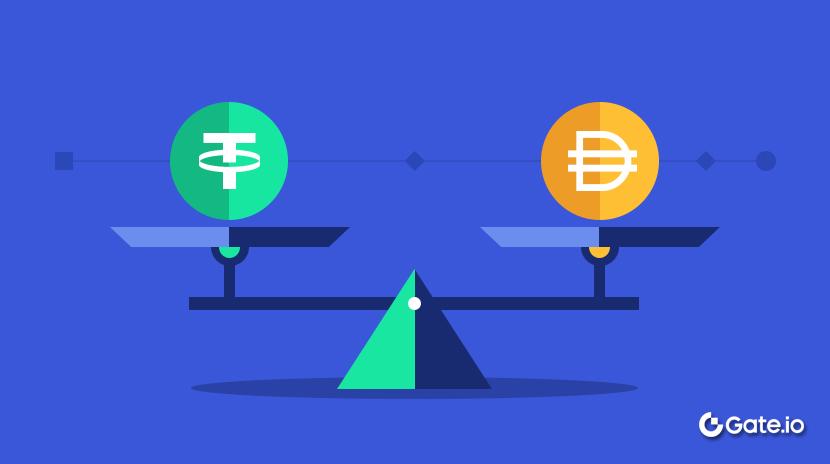
If USDT is delisted, users can switch to other stablecoins or mainstream cryptocurrencies as substitutes. Popular options include USDC and DAI, which are also USD-pegged and widely used for trading and settlement.
Within platforms that offer stablecoin exchange services, you can convert USDT into other supported stablecoins for continued trading. If direct conversion is unavailable, exchange USDT into a major cryptocurrency first and then into your target stablecoin. At each step, monitor exchange rates, slippage, and network fees.
When selecting alternatives, pay attention to stablecoin transparency, frequency of reserve disclosures, and network congestion/fee conditions. Diversifying among multiple quote currencies helps reduce single-point dependency risk.
How Does Gate Typically Notify and Manage USDT Delisting?
USDT delisting on Gate is typically announced via its notification center, direct messages within the platform, or app alerts—always specifying the timeline and affected trading pairs. Users will see delisting labels and countdown indicators in the spot trading section.
Operationally, Gate displays balance status and available options in user accounts—for example, enabling stablecoin conversion or withdrawal-only windows during the announcement period. Usual procedures include advance notice, halting new orders/opening new positions, allowing only closing trades or withdrawals, and ultimately closing all related channels.
For actual transactions, follow announcement instructions to confirm correct network and address before converting or withdrawing funds. If unsure about address formats or network choices, test with small amounts first and consult customer support if needed.
What Are Future Trends and Risks of USDT Delisting?
Looking ahead, USDT delisting may become more phased and region-specific—adapting as compliance standards evolve, technology upgrades proceed, and market structures shift. Platforms increasingly seek to reduce reliance on a single stablecoin by supporting multiple quote currencies in parallel.
As of 2024, USDT remains dominant among stablecoins; its issuer regularly releases reserve attestations (source: Tether transparency disclosures, 2024). However, platform policies change dynamically based on regulation and risk controls. Users should closely follow announcements and channel statuses—avoid interpreting short-term measures as permanent conclusions.
Key risks include slippage and rising fees, wrong address/network selection, or missing withdrawal windows. Establishing diverse funding routes and backup quote currencies helps mitigate uncertainty.
Key Takeaways on USDT Delisting
USDT delisting is an operational support adjustment driven by compliance checks, risk management, or technical maintenance. User impact centers on trading convenience and asset transfer routes. Recommended responses: promptly review announcements; check balances/networks; complete conversions or withdrawals within the platform; retain transaction records. When choosing replacement stablecoins, focus on transparency, fee structures, and network conditions. On Gate specifically, clear announcements and timelines define action windows—following guidance helps minimize friction. The overall strategy is to diversify quote currencies, maintain multiple deposit/withdrawal options, and stay updated with compliance news and platform notifications for asset security.
FAQ
Will My Funds Be Lost After USDT Delisting?
Your funds will not be lost—your USDT remains safe. Delisting typically means the platform stops new deposits/withdrawals or trading functions; existing holdings remain intact with an announced window for conversion or withdrawal. It’s recommended you proactively transfer your USDT to another wallet or exchange that supports it (such as Gate), or convert it into another stablecoin before the deadline for continued use.
Which Stablecoin Is Safest to Use After USDT Delisting?
Common safe alternatives include USDC, TUSD, PAX—these are highly compliant stablecoins. Choose based on your needs: for frequent trading pick those with broad pair support; for holding long-term select coins issued by reputable large platforms. Gate supports multiple stablecoin trades—you can directly swap between types.
What Happens If I Don’t Act Before USDT Is Delisted?
If you miss the processing window, your USDT may become temporarily frozen on that platform—unavailable for trading or withdrawal. You’ll need to contact customer support for help; typically platforms offer remedies like extending processing times or manual transfers. To avoid this scenario, act promptly after receiving delisting notifications.
Is USDT Delisted Because There’s a Problem? Should I Be Worried?
USDT itself does not have inherent issues—delisting usually results from regulatory policy changes or strategic adjustments by platforms. When certain countries tighten stablecoin regulations platforms may proactively delist for compliance reasons. This is normal market practice—not an indicator of risk with USDT itself—but it does mean you’ll need to change trading venues or coins.
Can I Still Use USDT Elsewhere After One Platform Delists It?
Yes—USDT is a globally recognized stablecoin supported by Gate and many other exchanges/wallets. Even if one platform delists it you can transfer your USDT to another that supports it for continued trading or storage. Opt for large regulated platforms like Gate for long-term stability and access.
Related Articles

In-depth Explanation of Yala: Building a Modular DeFi Yield Aggregator with $YU Stablecoin as a Medium
What is Stablecoin?