


crypto capacity
What Is Cryptocurrency Throughput?
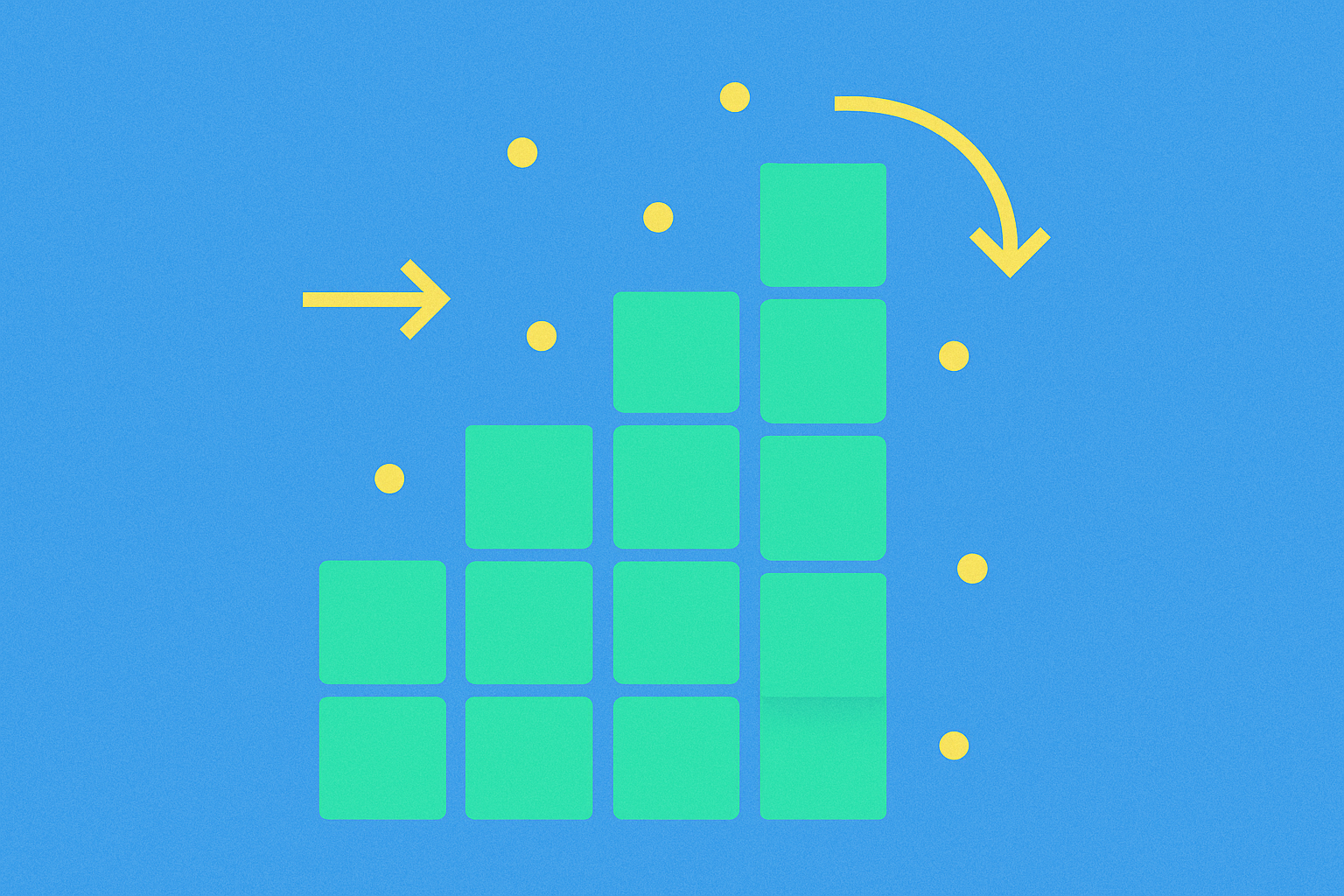
Cryptocurrency throughput refers to the maximum number of transactions a blockchain can process and settle within a given timeframe. You can think of each block as a container for transactions: the larger and faster the containers, the more transactions the network can handle.
Throughput is not just about “transaction per second” (TPS); it also encompasses how long it takes for a transaction to be confirmed after being submitted. Higher throughput and stable confirmations usually result in more predictable transaction fees and more reliable application performance.
Why Does Cryptocurrency Throughput Matter?
Cryptocurrency throughput directly impacts transaction costs and wait times when sending funds or interacting on-chain. When the network is congested, transaction fees rise and confirmations become slower.
During bull markets or periods of high activity (such as NFT minting), surges in transaction volume can exceed network capacity, leading to long queues. This can delay exchange withdrawals, increase price slippage in DeFi operations, and cause users to miss market opportunities.
For developers, throughput determines whether an application can support high concurrent users. For regular users, throughput affects transaction reliability and may influence the timing of their activities.
Key Metrics for Measuring Cryptocurrency Throughput
Common indicators include TPS (transactions per second), block size or weight, block time, gas limits, and data availability bandwidth. These factors collectively define how many transactions can be processed and confirmed within a certain period.
- TPS: The number of transactions completed per second.
- Block Size/Weight: The amount of transaction data each block can hold.
- Block Time: The interval between new blocks, similar to “departure frequency”—shorter times mean faster processing.
- On Ethereum, gas functions as a “fuel fee”; each operation consumes gas, and the block gas limit caps the total computational workload per block. When demand rises, transactions offering higher gas fees are prioritized.
Other factors to watch include the number of unconfirmed transactions in the mempool, the number of blocks required for secure confirmation, and the growth rate of on-chain state data—all of which affect long-term scalability.
How Is Cryptocurrency Throughput Reflected in Bitcoin?
Bitcoin manages its throughput using block size/weight and a target block time of roughly 10 minutes. Each block acts like a regularly departing truck—its capacity and frequency define how much data it can transport.
Segregated Witness (SegWit) streamlines signature data by measuring block capacity in “weight units,” allowing more efficient use of space. During peak demand, users compete by increasing their fee rates; higher fees are confirmed faster.
When the mempool is congested, low-fee transactions may experience significant delays. Payment channel networks such as the Lightning Network move frequent small payments off-chain, alleviating mainnet pressure—but each channel has a “channel capacity,” which sets the upper limit for funds that can flow through it.
How Does Cryptocurrency Throughput Work on Ethereum?
Ethereum uses gas to measure the cost of computation and storage; each block has a gas limit, similar to setting a “maximum load” for a container. Transactions pay gas fees—comprised of a base fee plus tips—which increase during periods of high activity.
With an average block time of around 12 seconds, Ethereum achieves faster confirmations than Bitcoin. As network usage has grown, Ethereum has improved throughput by increasing block capacity, refining its fee mechanisms, and supporting efficient data handling for Layer 2 solutions.
Optimized data channels for Layer 2 networks (often referred to as “Rollup data availability zones”) expand data bandwidth, reducing batch processing costs for Layer 2s and enhancing overall throughput and user experience across the ecosystem.
Relationship Between Cryptocurrency Throughput and Layer 2 Networks
Layer 2 (L2) solutions move most computation off the main chain, boosting throughput via batch processing and posting cryptographic summaries back to the mainnet. Think of the main chain as a “settlement layer” and Layer 2 as a “high-speed expressway.”
Rollups aggregate multiple transactions into single data submissions on the mainnet. The mainnet handles security and settlement, while Layer 2 executes and scales activity. Overall capacity is determined by mainnet settlement limits, data availability bandwidth, and Layer 2 execution efficiency.
Payment channel networks are well-suited for frequent small payments. They require pre-funded channels with fixed “channel capacities” but enable nearly instant and low-cost micropayments once set up.
How to Assess Cryptocurrency Throughput in Practice
You can gauge network congestion and throughput by monitoring on-chain load and fee signals—helpful for choosing optimal transaction times and managing costs.
- Check recent block intervals and fee recommendations on a block explorer. Rising or volatile fee estimates usually indicate congestion.
- Monitor the mempool for unconfirmed transactions; growing backlogs suggest longer waits for low-fee transactions.
- Observe Layer 2 batch submission costs and block intervals. Lower batch costs typically mean faster, cheaper Layer 2 interactions.
- On Gate’s withdrawal or deposit pages, review available networks, estimated confirmation numbers, and fees. If an asset supports multiple networks, compare options before transacting.
- Try a small test transfer first to validate network speed and reliability before sending larger amounts—reducing risks from congestion or errors.
How Can Cryptocurrency Throughput Be Increased?
Common approaches include increasing block size or gas limits, enhancing data availability bandwidth, developing Layer 2 solutions, optimizing clients and signature compression, introducing parallel execution, and implementing state sharding. All these methods aim to pack and propagate more transactions efficiently.
Expanding blocks or gas limits provides an immediate TPS boost but increases bandwidth and hardware requirements for nodes—potentially reducing decentralization.
Improving data availability (such as providing cheaper space for Rollups) amplifies Layer 2 benefits and sharply lowers batch transaction costs.
Signature aggregation and zero-knowledge proofs reduce on-chain data or verification costs, raising effective throughput. Parallel execution and sharding enable simultaneous processing of different transactions or partitions, supporting higher concurrency.
Risks and Trade-Offs with Increasing Cryptocurrency Throughput
Boosting throughput often involves balancing performance against decentralization. Larger blocks make node synchronization harder, raising participation barriers and risking increased centralization.
Fee market dynamics are also affected: excessive congestion causes fee spikes; overly loose capacity without robust fee mechanisms can undermine the scarcity—and incentive structure—of block space.
Layer 2s and payment channels have security models distinct from mainnets. Rollups depend on mainnet data availability and fraud proofs; channels require liquidity management and orderly settlement. Users should understand confirmation and exit rules for each solution.
Quick Recap: Key Points on Cryptocurrency Throughput
Cryptocurrency throughput determines “how much you can fit, how fast it runs, and how much it costs.” It is shaped by block space, block intervals, gas limits, data availability, and Layer 2 capabilities—directly impacting fees, confirmation times, and app scalability. In practice: monitor on-chain fees and congestion; use Gate’s network options and confirmation estimates; try small transfers first when necessary. Scaling always involves trade-offs—striking a balance between performance, security, and decentralization is essential.
FAQ
What Are the Throughput Limits for Bitcoin and Ethereum?
Bitcoin’s block size is capped at 1MB with one block every 10 minutes, yielding a theoretical maximum of about 7 TPS. Ethereum controls capacity via a gas limit (currently around 15 million per block) with average block times of about 12 seconds—allowing roughly 15–30 TPS. Both are fundamentally constrained by mainnet architecture and cannot be increased arbitrarily.
Why Are My Transfers Sometimes Fast and Sometimes Slow?
Transfer speed depends on network utilization. When transaction volume surges (such as during BTC price swings or Ethereum DeFi activity peaks), saturated capacity leads to queues and longer confirmations; otherwise, transfers are quick. You can expedite your transaction by increasing the fee priority or transacting during off-peak periods—Gate’s smart fee tools can help you adjust automatically.
Can Sidechains or Layer 2 Networks Fully Replace Mainnets?
No—they cannot fully replace mainnets. Sidechains and Layer 2 solutions (like Lightning Network or Arbitrum) can process thousands of transactions per second off-chain but still rely on periodic mainnet settlement for security; the main chain remains the ultimate source of trust. These solutions are ideal for routine small payments but large transfers still require mainnet confirmation.
Can Capacity Shortages Cause Loss of Funds?
No—capacity shortages do not result in loss of funds; they only impact speed and cost. During congestion, transactions may remain unconfirmed for extended periods or fail—but your assets stay in your wallet. Failed transactions are refunded apart from any consumed fees. To avoid issues, refrain from large transfers during extreme congestion or use tools like Gate’s network estimator to check conditions beforehand.
How Should I Choose Which Chain to Transact On?
Key factors include speed (throughput/block time), cost (gas fees), and ecosystem support. Bitcoin offers top-tier security but is slow; Ethereum has the most mature ecosystem but volatile fees; Layer 2s/sidechains like Arbitrum or Polygon offer faster speeds at lower costs but come with higher relative risks. For newcomers, experiment with different wallets on Gate to find the best fit based on your needs and risk tolerance.
Related Articles

The Future of Cross-Chain Bridges: Full-Chain Interoperability Becomes Inevitable, Liquidity Bridges Will Decline

Solana Need L2s And Appchains?
