binary number coding
What Is Binary Encoding?
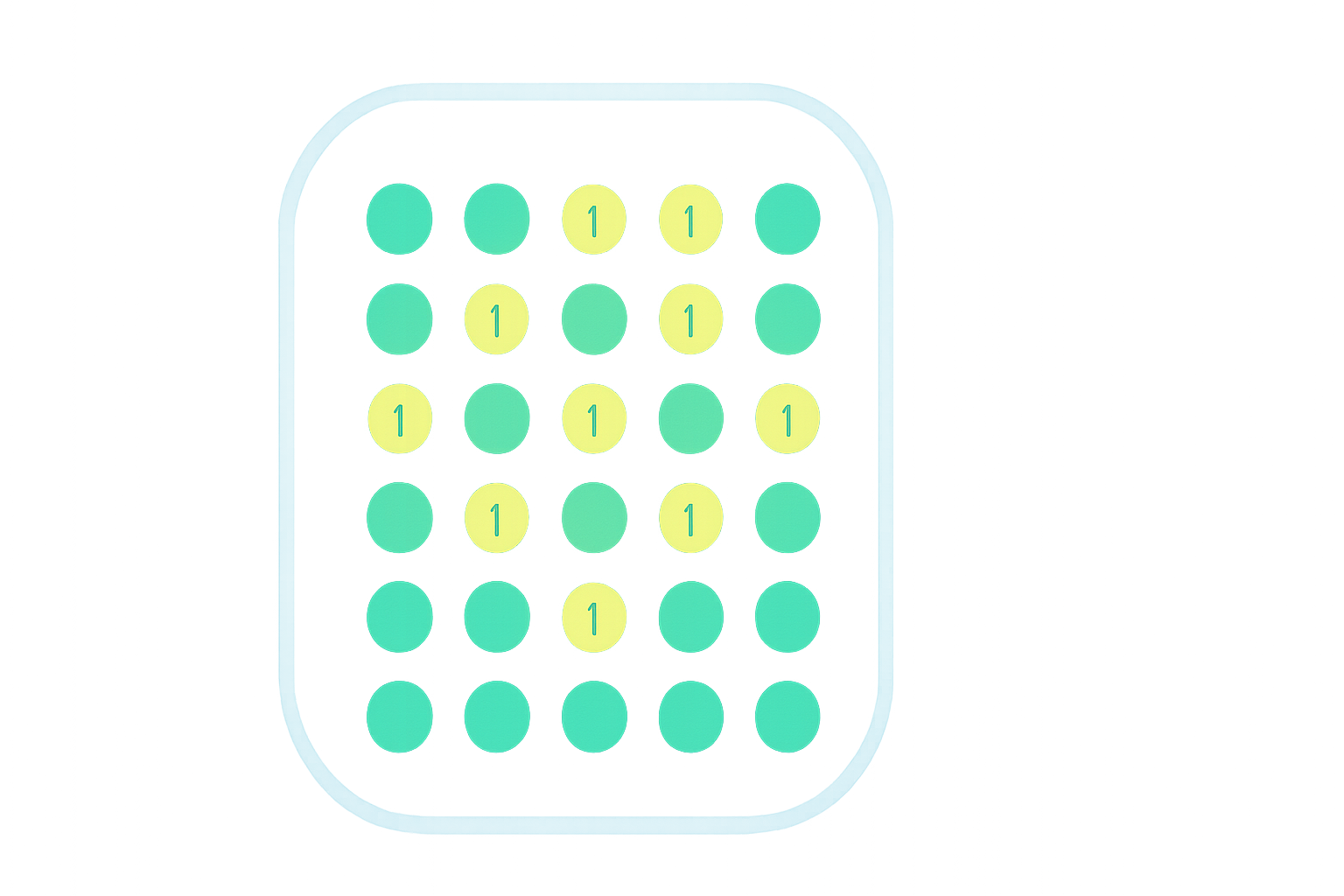
Binary encoding is a method of representing all data using only the electrical signals 0 and 1, which are then packaged as bytes. You can think of it as a series of "switches": a switch turned off is 0, turned on is 1. Arranging many such switches in sequence allows computers to express numbers, text, and images.
In computing, eight switches form a byte—the most common fundamental unit. When you see a string of seemingly random characters (such as a transaction hash or address), these are typically the result of displaying underlying bytes in a more human-readable format, but at the core, they remain sequences of bytes encoded in binary.
What Role Does Binary Encoding Play in Blockchain?
Binary encoding determines how data such as transactions, addresses, balances, and contract data are stored and transmitted on-chain. All on-chain data ultimately becomes bytes, which are then packaged, signed, broadcast, and validated by network nodes.
For example, when processing a transaction, a wallet first encodes information like sender, recipient, amount, and transaction fees into bytes. It then generates a digital signature using the private key and finally sends the data to the network. On Gate’s deposit and withdrawal pages, the address you see is human-readable text, but underneath it’s still binary-encoded bytes that have simply been converted for easier reading.
How Does Binary Encoding Work Within Transaction Data?
Transaction data undergoes “serialization,” which converts multiple fields into a single byte stream for signing and broadcasting. Serialization means arranging various fields in a predefined order and format to form a continuous sequence of bytes.
On Ethereum, transactions use encoding schemes like RLP to serialize fields such as nonce, gas, recipient address (to), value, and data into bytes, followed by the signature. Bitcoin transactions arrange inputs and outputs in fixed formats and use “variable-length integers” to represent list lengths; they also sign the resulting byte sequence. When nodes receive these bytes, they decode them according to the same rules, verify the signature, and write the transaction into the block.
How Does Binary Encoding Relate to Hexadecimal, Base58, and Bech32?
These schemes display binary-encoded bytes as characters that are easier for humans to read. Hexadecimal uses 16 symbols (0-9 and A-F) to represent bytes—every two hexadecimal characters map to one byte. That’s why TxIDs on blockchain explorers usually appear as hexadecimal strings.
Base58 and Bech32 are commonly used for addresses. Base58 omits easily confused characters (such as 0 and O) to reduce transcription errors. Bech32 includes a human-readable prefix (like "bc1" or "addr1") and an embedded checksum for better error detection. On Gate’s deposit page, addresses may be displayed in Base58 or Bech32, but both represent the same underlying binary bytes in different formats.
How Is Binary Encoding Used in Smart Contract ABIs?
An ABI (Application Binary Interface) defines how contract parameters are transformed into bytes. Wallets encode function names and parameters into bytes following ABI rules so that smart contracts can correctly interpret your call.
For example, in a common transfer function—transfer(address,uint256)—the call data includes a “function selector” (the first 4 bytes derived from the function signature), followed by parameter bytes arranged in fixed widths. This allows the contract to reconstruct which function to execute and what values were passed, ensuring the call behaves as expected.
How Is Binary Encoding Implemented Across Different Blockchains?
Different blockchains adopt unique binary encoding conventions tailored to their architecture and performance requirements. Ethereum uses RLP for transaction serialization and ABI for contract calls. Polkadot utilizes SCALE, a compact byte layout scheme. Cosmos networks typically use Protobuf for message definition and serialization. Bitcoin relies on fixed field structures with variable-length integers and executes validation logic within its scripting system based on byte sequences.
Understanding these differences is key for cross-chain development and tool building since the same concept may have a different byte structure or decoding method on each chain.
What Are Common Risks Associated With Binary Encoding?
Common risks arise from misreading or miswriting byte sequences. For example, using a Base58 address as if it were Bech32, or choosing the wrong network, can result in failed deposits or even loss of funds. On Gate’s deposit page, always ensure the network and address type match.
Other issues include “endianness” (byte order) and “precision.” Endianness refers to how byte order is defined; reading it incorrectly can yield the wrong value. Precision concerns token decimal places—treating an integer as a decimal (or vice versa) can cause transaction amounts to be off. Always verify units and decimals when entering data, and confirm that withdrawal addresses match the target chain’s encoding and network.
How Can You Decode Transactions Using Tools?
Blockchain explorers and decoding tools can convert transaction bytes into readable information.
Step 1: Open a blockchain explorer (e.g., an Ethereum explorer) and locate your transaction record. On Gate’s withdrawal record page, you’ll typically find the TxID; clicking it takes you directly to the corresponding explorer entry.
Step 2: Find the “input data” or “raw transaction” section and copy the hexadecimal string. This string is the binary-encoded bytes displayed in hex format.
Step 3: Use an ABI decoding tool (either built into most explorers or provided by third-party services). Select the contract’s ABI or use a template for common functions, then paste the input data for decoding.
Step 4: Review the decoded function name and parameter values to confirm whether the address, amount, and token contract match your intent. For Bitcoin transactions, raw transaction decoders can display inputs, outputs, scripts, amounts, and change addresses for verification.
What Are the Trends for Binary Encoding in Web3?
With the growth of cross-chain solutions and complex smart contracts, binary encoding is moving toward greater standardization and more readable signing experiences. More wallets now use structured signing standards that provide clear human-readable information before users sign transactions. Cross-chain bridges and multi-chain SDKs are also aligning message formats to minimize compatibility issues due to decoding differences.
Meanwhile, technologies like zero-knowledge proofs and state compression demand even more compact byte layouts with precise field boundaries to boost efficiency while maintaining security. The overall goal: make underlying bytes more stable and interoperable while ensuring user-facing experiences are intuitive and less prone to error.
Key Takeaways on Binary Encoding
Binary encoding is the foundational language for blockchain data—transactions, addresses, and contract calls all rely on bytes for expression and verification. It’s important to understand that hexadecimal, Base58, and Bech32 are simply display formats for bytes—not differences in the underlying data itself. Mastering serialization and ABI concepts helps you interpret how transactions work under the hood. In practice, always verify network and address types, check decimal places and units, and leverage explorers or decoding tools to reduce risks associated with misinterpreting encoded data.
FAQ
I see transaction hashes as long hexadecimal strings—what’s their relationship with binary encoding?
A transaction hash is binary data shown in hexadecimal format. All computer data is stored as binary internally; for human readability, it’s typically displayed as hex (where every 4 bits of binary maps to one hex character). Understanding this relationship helps you better trace on-chain transactions.
Why does my exported wallet private key look like gibberish?
A wallet private key is fundamentally binary data encoded for display using hexadecimal, Base58, or other formats. These encoding schemes just change how the data looks—the actual content remains identical. Wallets like Gate automatically handle these conversions; you don’t need to manually manage encoding.
How are parameter types like uint256 or bytes32 in smart contract ABIs converted to binary?
Each parameter type in a smart contract has specific binary encoding rules. For example, uint256 uses 256 bits to represent numbers; bytes32 uses 256 bits for data. The ABI standard specifies how each type should be serialized into binary so contracts can accurately parse call data.
Why do different blockchains (Ethereum, Bitcoin, Solana) have different binary formats for transactions?
Each blockchain has its own transaction structure and encoding standards—Bitcoin uses its own scripting language while Ethereum uses EVM opcodes—so their underlying binary layouts are fundamentally different. This is why cross-chain operations require specialized bridge contracts to convert between formats.
Do I need to understand binary structure to verify a transaction’s integrity?
It’s not strictly necessary—but it helps. Most of the time exchanges like Gate and wallet software automatically verify transaction signatures and structure at the binary level for you. However, if you want to perform deep audits or learn development skills, understanding binary encoding will let you interpret every byte of raw transaction data.
Related Articles

Blockchain Profitability & Issuance - Does It Matter?

An Overview of BlackRock’s BUIDL Tokenized Fund Experiment: Structure, Progress, and Challenges