What Is TradFi Copy Trading?
To meet user demand for traditional financial market strategies, Gate launched its new TradFi Copy Trading service on April 2, 2026. TradFi (Traditional Finance) refers to traditional financial markets, including gold, forex, stock indices, commodities, and leading stocks.
With this service, users trade contracts for difference (CFDs) on these assets. CFDs allow traders to speculate on price movements—up or down—without holding the underlying asset. This trading method offers greater flexibility and convenient access to global financial markets.
TradFi Copy Trading serves as a key addition to Gate’s copy trading product lineup, providing strategic options across different market segments alongside the platform’s existing crypto futures copy trading.
Key Features of TradFi Copy Trading
Gate’s TradFi Copy Trading introduces a specialized trading and profit-sharing framework that fosters transparency between copiers and lead traders.
- Global Coverage of Leading TradFi Assets
Lead traders can access and trade CFDs on a wide range of traditional financial assets, including gold, forex, stock indices, and stocks.
Copiers simply select a trader, and the system proportionally mirrors the trader’s strategies automatically.
- Copy Trading Based on Total Assets Ratio
The system calculates and replicates the lead trader’s positions in proportion to the copier’s account assets.
It also supports precise synchronization of partial close positions, ensuring strategy replication closely matches the original trades.
- Risk Control Mechanism
TradFi Copy Trading provides adjustable stop-loss ratio settings, empowering users to control potential loss ranges during market volatility and reduce trading risk.
- High Water Mark (HWM) Profit-Sharing Model
The platform uses a High Water Mark (HWM) profit-sharing mechanism. Profit sharing only occurs when the copier’s cumulative net profit exceeds their previous highest record.
Traders can set the profit-sharing ratio up to a maximum of 20%, with automatic weekly settlements.
- Transparent Performance Metrics
To assist users in selecting the right traders, the platform offers comprehensive performance indicators, including:
-
ROI
-
Profit/Loss Data
-
Sharpe Ratio
-
Maximum Drawdown
These metrics help users evaluate trader performance from multiple perspectives.
How Does Gate TradFi Copy Trading Work?
Within Gate’s TradFi Copy Trading system, users can select one or more traders to replicate strategies. Copy trading is executed according to the copier’s total asset ratio, with the system automatically synchronizing the lead trader’s open and close positions. Users can follow up to five TradFi lead traders at once.
Complete TradFi Copy Trading Workflow
To start using TradFi Copy Trading, follow these steps:
Step 1: Select a Lead Trader
On the TradFi Copy Trading page, browse the list of traders and review their performance metrics. After selecting a suitable trader, click “Copy” to begin setup.

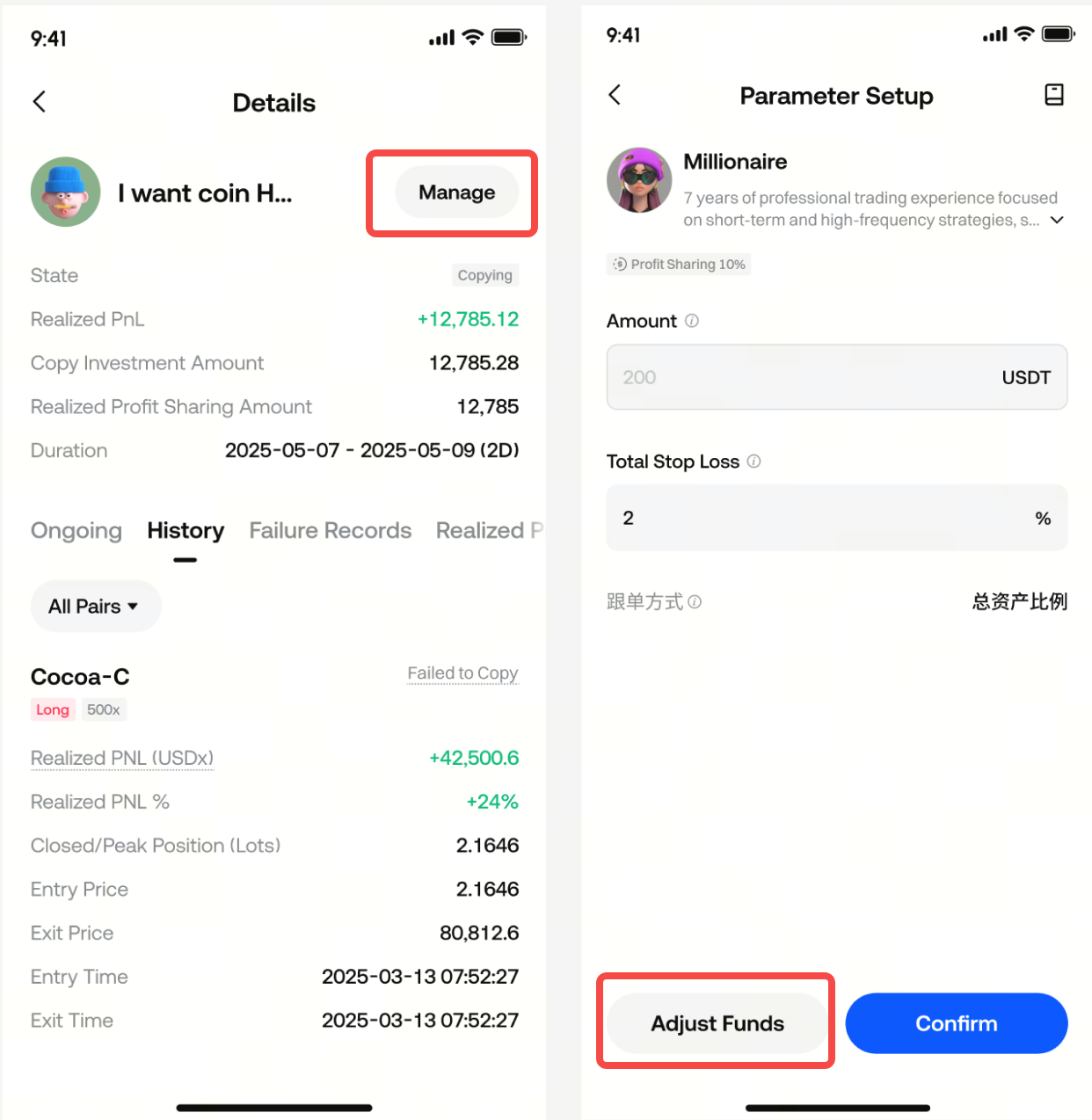
Step 2: Set Copy Trading Parameters
On the copy trading setup page, enter the following details:
-
Copy Trading Amount
-
Copy Stop Loss Ratio
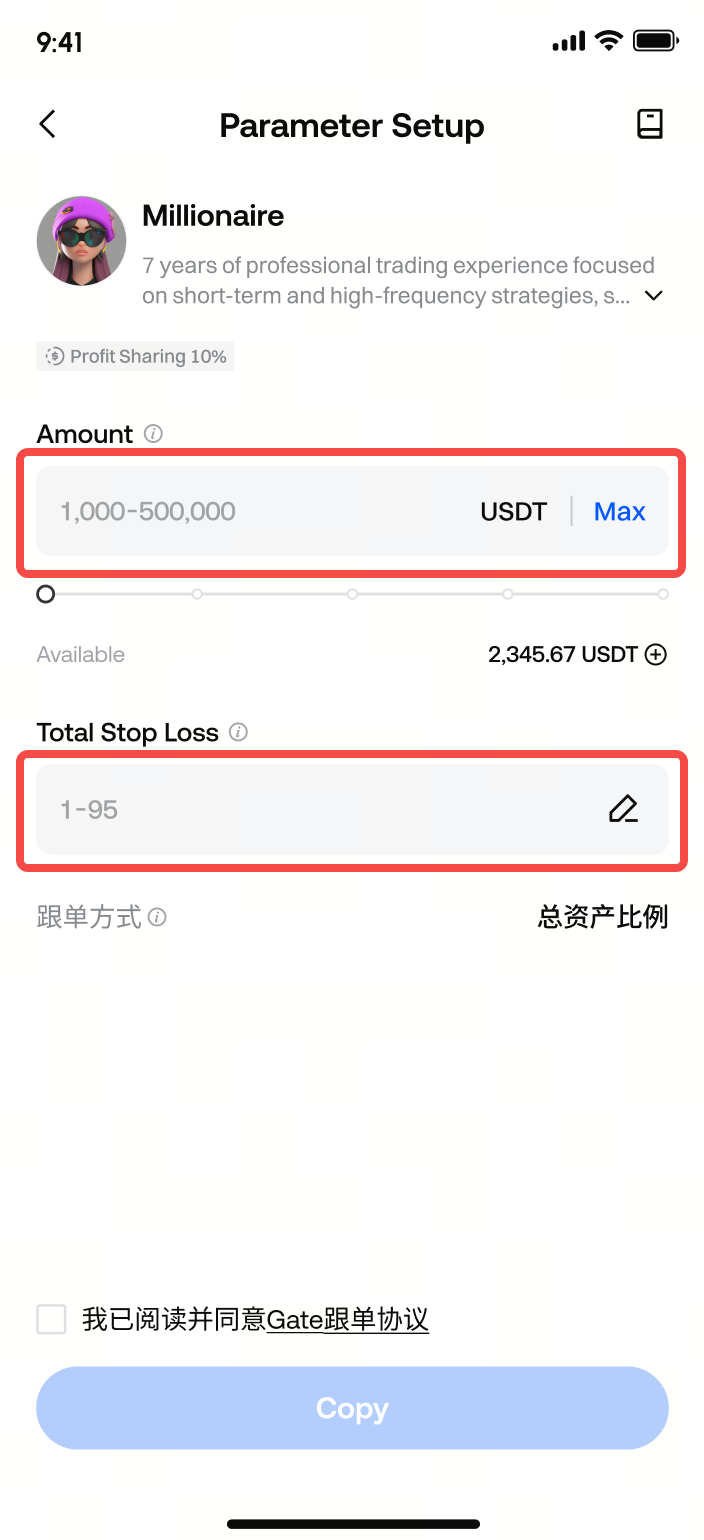 These settings determine the risk and fund allocation for subsequent trades.
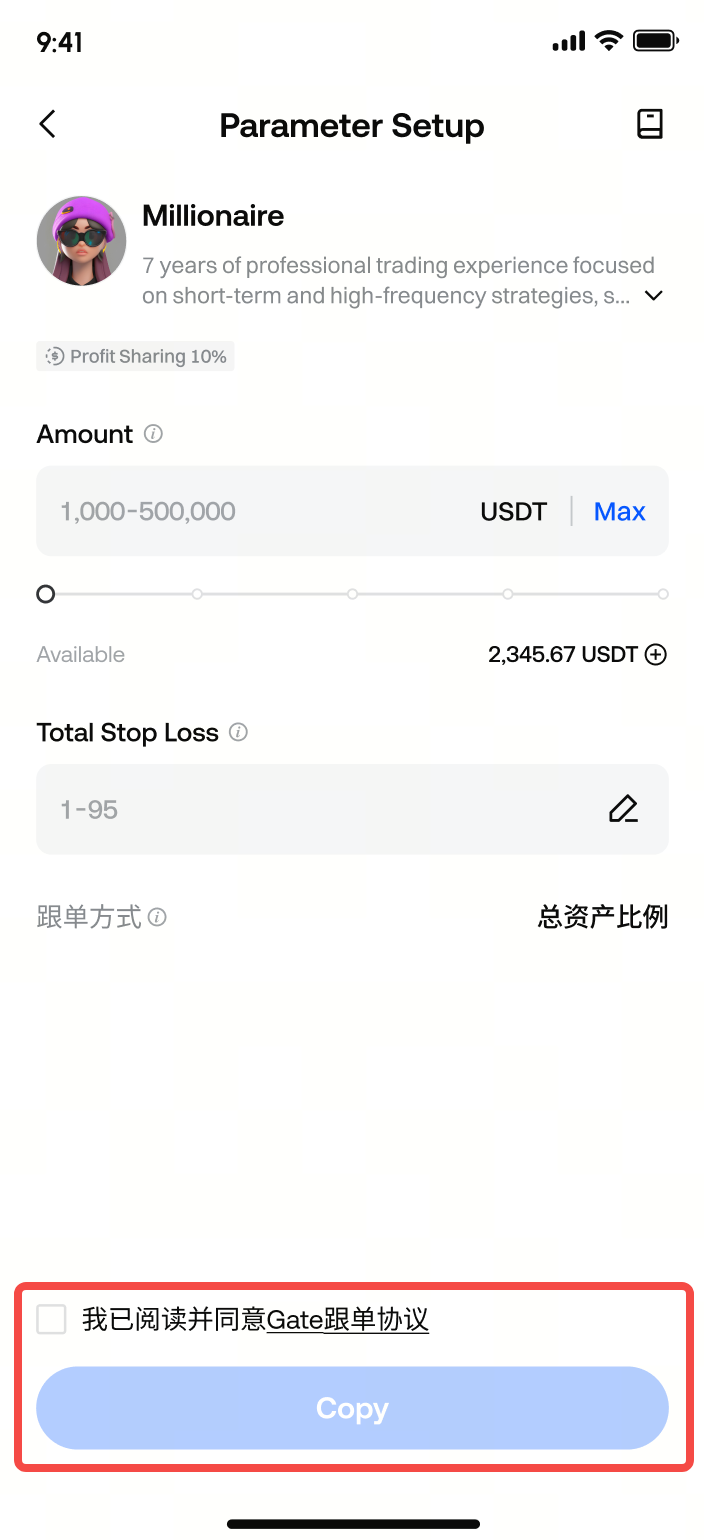
Step 3: Confirm and Establish Copy Trading Relationship
After reviewing the relevant agreements and risk reminders, confirm the information and submit to complete setup.
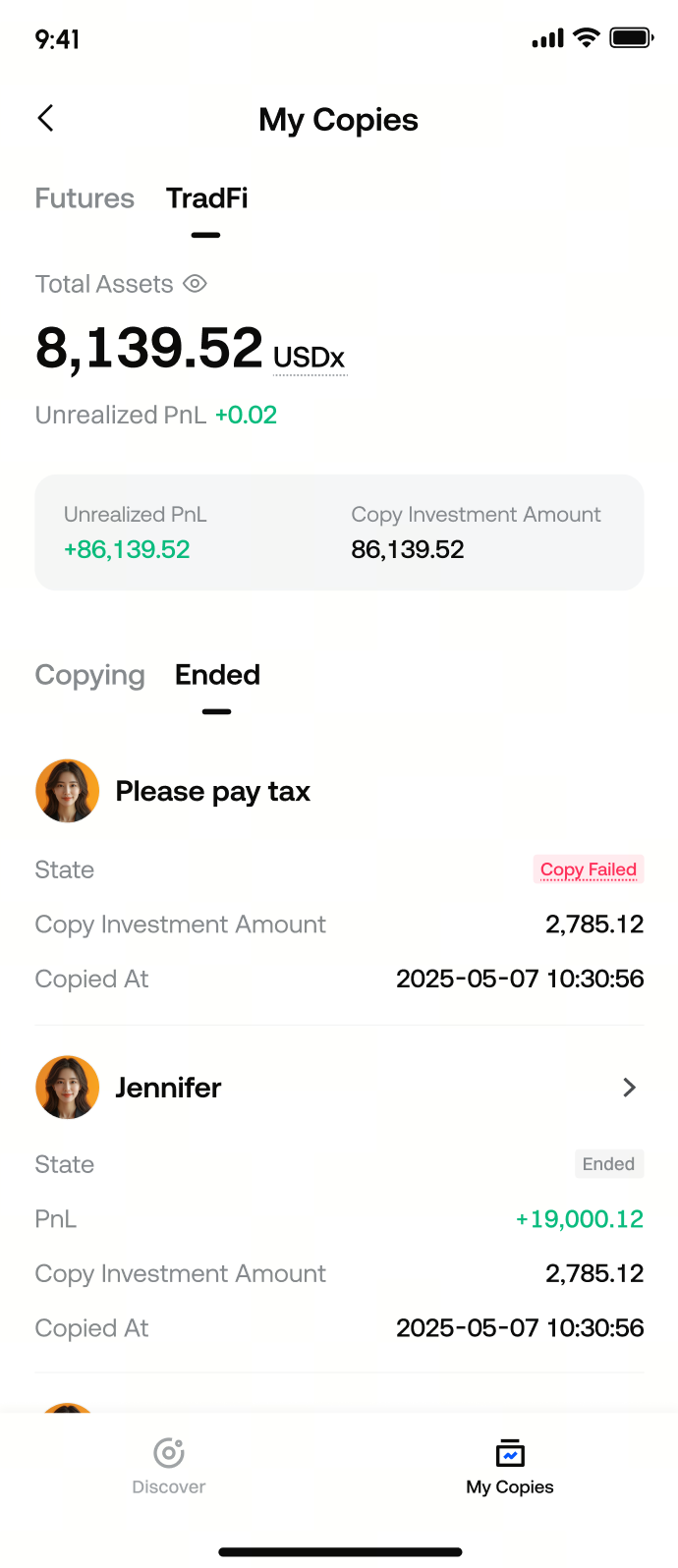
Step 4: View Copy Trading Account Information
Once setup is complete, visit the My Copy Trading page to view:
-
Copy Trading Funds
-
Traders Being Followed
-
Account Status
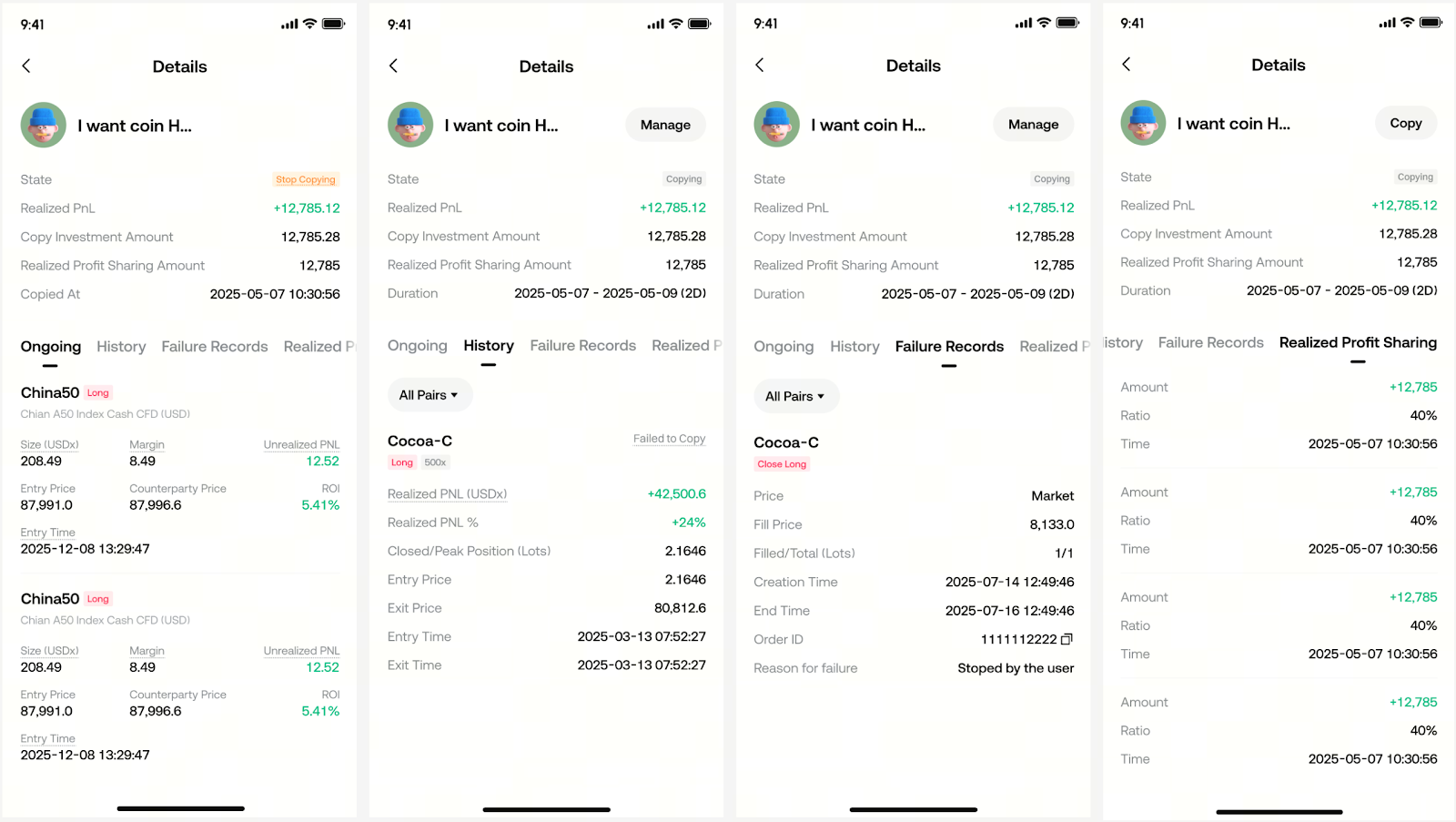
Step 5: Track Trades and Returns
On the Copy Trading Details page, users can view:
-
Copy Trading Positions
-
Failed Orders
-
Profit-Sharing Records
-
Trader Data
Step 6: Manage Copy Trading Strategies
To adjust funds or modify parameters, use the Copy Trading Management page for actions such as:
Risk Control and Return Mechanisms for TradFi Copy Trading
Copy Trading Lots Calculation
The system calculates copy trading positions using the following formula: Copy Trading Lots = Copy Trading NAV / (Lead Trading NAV + Trading Fee) × Lead Trading Lots
This ensures copy trading positions are aligned with the trader’s strategy.
Stop-Loss Protection
TradFi Copy Trading supports stop-loss settings from 1% to 95%. When losses reach the set ratio, the system automatically closes the position and halts copy trading to control risk.
How to Start TradFi Copy Trading Quickly
To experience TradFi Copy Trading, just follow these simple steps:
-
Open the Gate app
-
Go to the Copy Trading feature
-
Click the TradFi section
-
Select a trader and configure copy trading parameters
-
Complete the funds transfer to begin copy trading
Note: Trading involves risk. Please evaluate carefully before investing.
Summary
TradFi Copy Trading provides traders with a streamlined approach to participating in traditional financial markets. By replicating professional traders’ strategies, users can access assets such as gold, forex, stock indices, and commodities without the need for complex market research. The high water mark profit-sharing model and adjustable stop-loss settings offer transparent and controllable copy trading operations. For those looking to explore TradFi markets or experiment with strategy replication, this feature presents a new trading opportunity.







