As Web3 applications gradually expand from finance into real-world consumer use cases, travel is becoming one of the important areas where blockchain technology can be put into practice. Traditional online travel platforms give users convenient booking services, but most of the platform value remains with the company itself. Users typically receive only points or discounts, making it difficult for them to truly participate in the benefits created by platform growth. Against this backdrop, more projects are trying to use token mechanisms to reshape the value relationship between users and platforms.
Staynex is a Web3 social travel platform that emerged from this trend.
What Is Staynex?
As a Web3 social travel platform that combines blockchain technology with travel services, Staynex aims to reshape the travel spending experience through on-chain incentive mechanisms. Users can not only book hotels and vacation products on the platform, but also stake tokens to unlock membership benefits and earn ecosystem rewards during their travel spending journey.

Unlike traditional OTA platforms, Staynex does not focus solely on providing booking services. Its broader goal is to build a mechanism that allows users to share in ecosystem value. Users’ booking activity, membership participation, and community engagement can all be converted into tangible benefits, turning travel spending from a one-time transaction into a form of participation that can accumulate value over time.
What Is the STAY Token Used For?
STAY is the core token of the Staynex ecosystem, playing an important role in connecting user benefits with platform value. Users can stake STAY to obtain Ocean Club membership tiers, which give them access to higher booking discounts and platform benefits. At the same time, users can also receive STAY rewards when they make travel purchases on the platform. This incentive model helps improve user retention and repeat bookings.
Beyond this, STAY also serves a value capture function. Through a revenue-based buyback and burn mechanism, the platform links ecosystem growth with token value. As a result, STAY is not merely a utility token; it is also an important carrier of the platform’s long-term value logic.
How Does the Ocean Club Membership System Work?
Ocean Club is the membership tier system designed by Staynex. Its core logic is that users stake STAY to unlock different levels of membership benefits. The more STAY a user holds and stakes, the higher their membership tier becomes, and the more booking discounts, cashback rates, and exclusive benefits they can receive.
This mechanism differs from the points-based membership systems used by traditional travel platforms. Traditional membership tiers usually depend on accumulated spending, while Staynex connects membership benefits with on-chain assets. This means users receive not only spending-related benefits, but also long-term value linked to the platform ecosystem. The model strengthens user loyalty while also creating sustained demand for the token.
How Does Shield Protocol Support STAY’s Value?
Shield Protocol is the value support mechanism Staynex designed for the STAY token. Its core function is to allocate 20% of the platform’s net revenue to buybacks, burns, and liquidity locking. This means a portion of platform revenue continuously flows into the token market, creating long-term demand support for STAY.

Within this mechanism, buybacks can increase market buying demand, burns reduce circulating supply, and liquidity locking helps improve market stability. Together, these three elements form a complete value loop: platform revenue growth drives token buybacks, buybacks improve supply and demand dynamics, and this further strengthens the long-term value logic of STAY.
Compared with speculative tokens that lack real revenue support, this mechanism gives STAY greater sustainability and makes it easier to build market confidence.
What Role Does the AI Travel Assistant Play in the Ecosystem?
AI Travel Assistant is an intelligent itinerary planning tool provided by Staynex. Its main role is to help users quickly generate personalized travel plans based on their budget, destination, and preferences. By using AI to automatically match hotels, routes, and itinerary suggestions, the platform can lower users’ planning costs and improve booking efficiency.
For Staynex, AI functionality not only improves the user experience, but also strengthens the platform’s service moat. By deeply integrating AI technology with travel booking, the platform can offer smarter and more personalized services, helping it build differentiated advantages in a highly competitive travel market.
The business model of traditional online travel platforms mainly relies on earning commissions by facilitating transactions. The rewards users receive are usually limited to points or coupons, and these benefits do not create long-term value accumulation. The gains from platform growth are largely kept by the platform itself, making it difficult for users to benefit from that growth.
Staynex changes this model through a token-based incentive mechanism. During the spending process, users receive not only services, but also membership benefits and ecosystem rewards through the STAY token. At the same time, platform revenue can flow back into token value through the buyback and burn mechanism, allowing users to indirectly share in the dividends of platform growth. This model turns users from “consumers” into “ecosystem participants,” which is the core difference between Web3 travel platforms and traditional platforms.
Where Does the Potential Value of Staynex (STAY) Come From?
The potential value of Staynex first comes from real travel consumption scenarios. Compared with projects that lack practical use cases, STAY is directly tied to hotel bookings, membership benefits, and platform rewards, giving it a foundation of actual demand. Second, Shield Protocol establishes a revenue-driven buyback and burn mechanism, allowing platform growth to continuously feed back into token value.
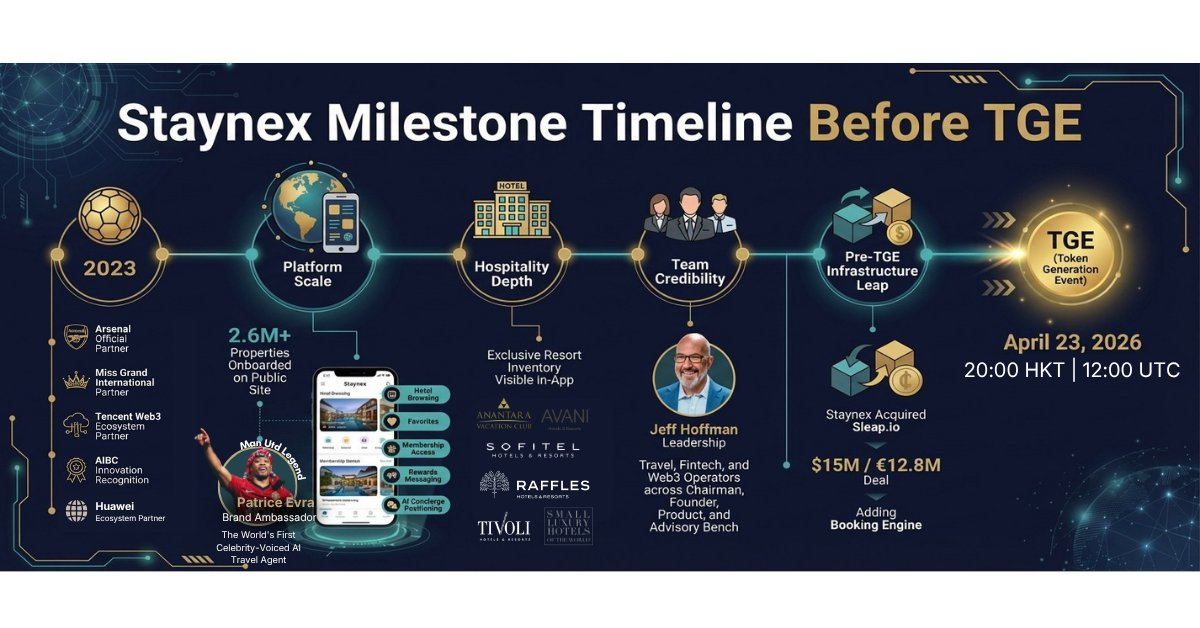
Staynex development milestones, source: Staynex
More importantly, the travel industry itself has a large market scale, while Web3 is still in the early stages of development in this field. If Staynex can continue expanding its user base and increasing platform revenue, the sustainability of its token model may be further strengthened.
Risks and Limitations of Staynex
Although Staynex combines Web3 incentive mechanisms with travel consumption scenarios, its development still faces certain risks.
First, the value support for STAY depends on platform revenue growth. If user growth or booking volume is insufficient, the impact of the buyback and burn mechanism may be limited. Second, the Web3 travel market is still in its early stages, and user education as well as market acceptance will take time to improve. In addition, Staynex faces competitive pressure from traditional travel platforms and other Web3 projects. Whether its membership incentives and ecosystem model can continue attracting users remains uncertain.
Conclusion
Staynex (STAY) combines travel booking, AI itinerary planning, a membership system, and a token economic model to build a Web3 social travel ecosystem with both real-world use cases and on-chain incentive mechanisms. The STAY token not only supports the platform’s membership system, but also gains revenue-backed support through Shield Protocol, forming a long-term value logic.
In an environment where many Web3 projects lack practical real-world use cases, Staynex presents a business model that places greater emphasis on utility and sustainability. For users interested in Web3 adoption and utility-based tokens, Staynex represents an innovative attempt to apply Web3 travel platforms within real consumer scenarios.
FAQs
What Is the STAY Token Used For?
STAY is mainly used for membership staking, booking rewards, and access to platform benefits. It also gains long-term value support through the buyback and burn mechanism.
How Does the STAY Token Gain Value Support?
Through Shield Protocol, STAY uses part of the platform’s net revenue for buybacks, burns, and liquidity locking, strengthening the token’s value support mechanism.
Traditional OTA platforms mainly offer points-based rewards, while Staynex uses token incentives and membership staking to allow users to participate in the value of the platform ecosystem.