Truebit Hit by Major Smart Contract Security Breach
On January 9, Truebit issued an official statement confirming that the protocol had recently suffered a malicious attack. Data from the on-chain analytics platform Lookonchain revealed that a specific smart contract address—0x764C64b2A09b09Acb100B80d8c505Aa6a0302EF2—was exploited, resulting in the unauthorized outflow of assets.
Initial reports indicate that the breach led to the theft of 8,535 ETH, with losses totaling approximately $26.44 million based on market prices at the time.
Official Response and Immediate Actions
Following the disclosure, the Truebit team promptly issued a risk warning, urging users to avoid any interaction with the compromised smart contracts to help prevent further losses. The team also stated that they are actively cooperating with law enforcement agencies in the ongoing investigation. Updates will be communicated exclusively through official channels, and the community is advised to disregard unofficial sources.
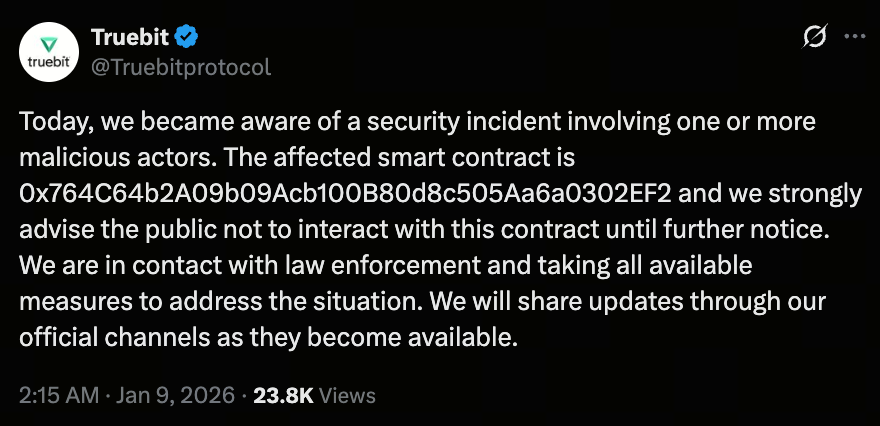
(Source: Truebitprotocol)
Structural Risks in Computational Protocols Under Renewed Scrutiny
This incident is not just an isolated protocol security failure—it has also reignited concerns about the underlying risks in decentralized computational protocols. These protocols are designed to enhance Ethereum’s computing power and deliver more efficient processing for decentralized applications. However, vulnerabilities at the smart contract level can trigger cascading effects, impacting not just individual applications but the broader DeFi infrastructure and eroding user trust.
Community Reassesses Audit and Governance Practices
As the situation evolves, analysts and community members are re-evaluating risk management across these protocols, focusing on:
- Whether smart contract audits are truly comprehensive
- Potential vulnerabilities in upgrade and permission management processes
- The maturity and effectiveness of incident response and communication mechanisms
These discussions underscore that robust security and governance frameworks are essential for the long-term viability of decentralized infrastructure.
For more insights into Web3, click to register: https://www.gate.com/
Summary
The Truebit smart contract breach is a stark reminder that even protocols dedicated to foundational computational capabilities are not immune to smart contract risks. As the DeFi ecosystem continues to grow, achieving the right balance between rapid innovation and strong security will be critical for computational decentralized protocols to secure lasting market trust.