Solana Collapse Warning: Could SOL Fall to $120 Amid Bearish Patterns and Capital Outflows?

Last Updated 2026-03-27 12:08:30
Reading Time: 1m
Solana (SOL) is developing a bearish rounded top pattern. Both on-chain TVL and stablecoin supply have dropped sharply. Analysts caution that a break below the $120 support level could trigger significant downside risk.

Background and Current Price Overview
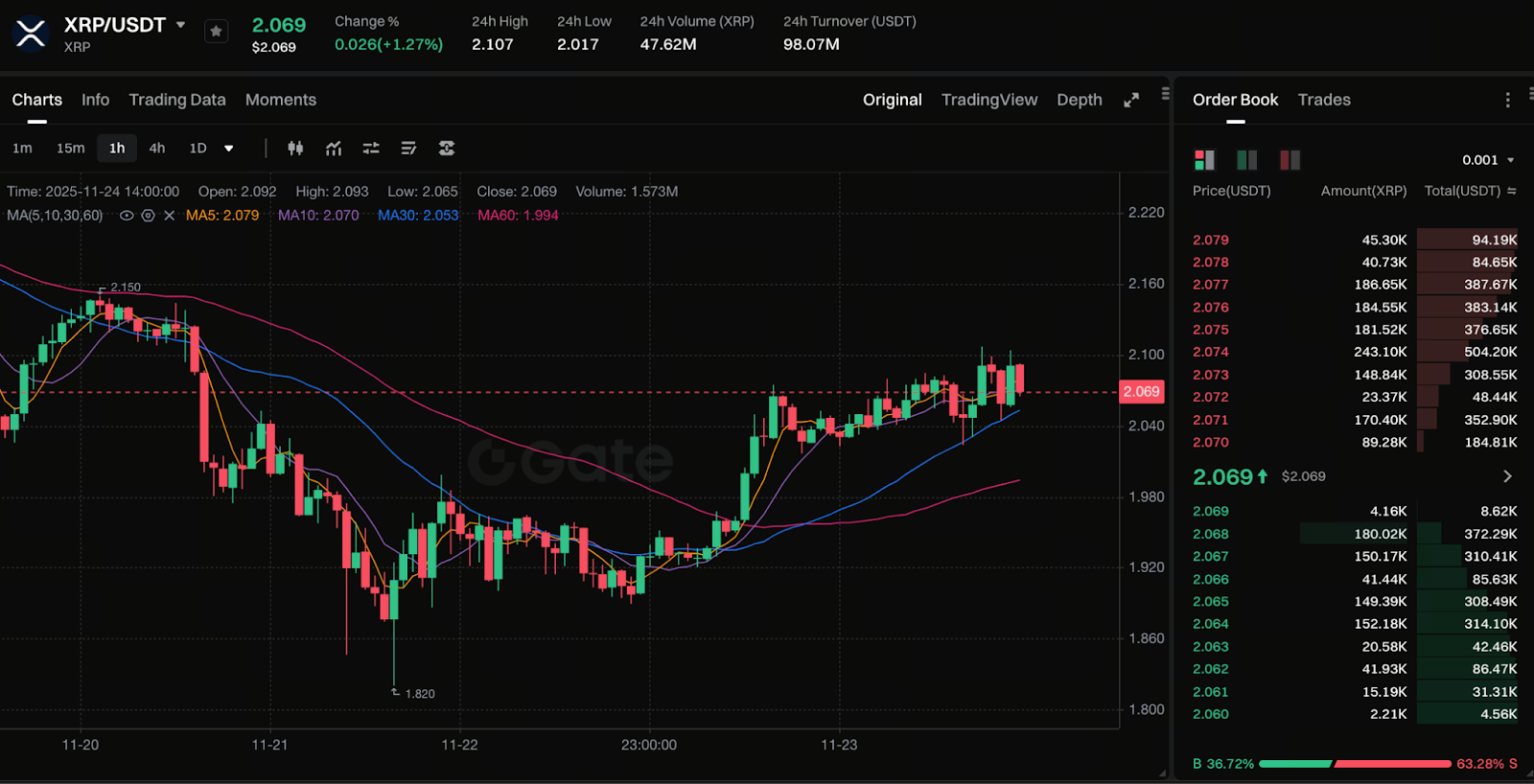

Chart: https://www.gate.com/trade/XRP_USDT

Solana (SOL), a leading Layer-1 blockchain, has seen steady ecosystem growth in recent years. However, the market has turned highly volatile. Recent analysis shows SOL prices under sustained pressure, retreating steadily from last year’s highs. A pronounced rounded top has formed on SOL’s daily chart—a technical formation that often signals a deeper downturn ahead. More concerningly, key on-chain metrics for Solana have deteriorated, which has severely undermined bullish sentiment.

Rounded Top Pattern and Technical Analysis

Technically, SOL’s rounded top pattern is distinct: the price consolidated for an extended period and gradually declined, forming a rounded formation. Simultaneously, analysts highlight that the 50-day Simple Moving Average (SMA) is on the verge of crossing below the 200-day SMA, commonly referred to as a “death cross.” This combination signals weakening buying momentum. If key support fails, selling pressure could accelerate rapidly.

On-Chain Capital Outflow Signals

On-chain data shows that capital is exiting the Solana ecosystem. Specifically, Total Value Locked (TVL) in Solana’s DeFi protocols has dropped steeply from September highs. The stablecoin supply on the network is also falling. Compared to year-to-date peaks, total stablecoin supply has decreased by nearly 20%. This means that not only are funds leaving DeFi protocols, but even stablecoin liquidity—traditionally considered more stable—is also being withdrawn, which is an alarming sign for Solana’s ecosystem health.

ETF Launch Has Not Eased Downward Pressure

Despite expectations that spot Solana ETFs from US asset managers would draw significant inflows, results have fallen short. Analysis reveals these ETFs have not provided immediate support for SOL. Inflows via ETFs have not made up for the outflows from Solana’s ecosystem. Coupled with weakening technicals, this makes SOL increasingly susceptible to further declines.

Worst-Case Scenario: Falling to $120 or Lower

iX Broker and other sources warn that if support breaks, SOL could retrace to $120. If $120 does not hold, SOL could next test $95. Such a decline would not be a minor correction but would signal the full release of structural risk.

Investor Response Strategies

  • Short-term traders: Closely track the $120 support level. If the price nears this zone with rising volume, set stop-losses proactively or consider taking profits.
  • Medium- to long-term investors: If you believe in Solana’s long-term value, consider averaging in rather than going all-in at once. Maintain a cash or stablecoin reserve to hedge against technical risk.
  • Track on-chain data: Prioritize indicators like TVL and stablecoin supply. Also, monitor the rate of ETF inflows as key references for future entry or position increases.
  • Risk management: Amid high volatility, strictly manage position sizing and be prepared mentally and financially for potential downside.
Author: Max
Disclaimer
* The information is not intended to be and does not constitute financial advice or any other recommendation of any sort offered or endorsed by Gate.
* This article may not be reproduced, transmitted or copied without referencing Gate. Contravention is an infringement of Copyright Act and may be subject to legal action.

Related Articles

What is Fartcoin? All You Need to Know About FARTCOIN
Intermediate

What is Fartcoin? All You Need to Know About FARTCOIN

Fartcoin (FARTCOIN) is a representative meme coin within the Solana ecosystem based on an AI-driven narrative. Its core concept originated from an experiment aimed at exploring the "boundaries between AI Agents and humor." More than just a digital asset with social attributes, the project deeply couples absurd humor culture with on-chain financial logic by integrating autonomous AI interaction models.
2026-04-04 22:01:19
Gold Price Forecast for the Next Five Years: 2026–2030 Trend Outlook and Investment Implications, Could It Reach $6,000?
Beginner

Gold Price Forecast for the Next Five Years: 2026–2030 Trend Outlook and Investment Implications, Could It Reach $6,000?

Analyze current gold price trends alongside authoritative five-year forecasts, integrating an evaluation of market risks and opportunities. This gives investors insight into the potential trajectory of gold prices and the main drivers expected to shape the market over the next five years.
2026-03-25 18:13:30
Aster vs Hyperliquid: Which Perp DEX Will Prevail?
Beginner

Aster vs Hyperliquid: Which Perp DEX Will Prevail?

Aster and Hyperliquid are the two representative protocols of the "purpose-built L1 path" within the current decentralized perpetual exchange (Perp DEX) sector. As a pioneer in the field, Hyperliquid has built a deep liquidity moat through its highly mature order book architecture and strong community consensus. Conversely, Aster, as a rising challenger, seeks to leapfrog the competition in high-performance trading through more aggressive multi-chain aggregation logic, private transaction modules, and an underlying execution environment optimized for 2026 market demands.
2026-03-24 11:58:33
AI-Native Settlement Layers: How United Stables Is Building the Next Financial Rail
Beginner

AI-Native Settlement Layers: How United Stables Is Building the Next Financial Rail

Stablecoins were originally designed as dollar substitutes within exchanges, primarily used for asset pricing and trade settlement. As on-chain financial ecosystems have matured, their role has expanded beyond simple payments to include collateral assets, cross-chain liquidity mediums, and unified settlement units. In particular, as AI systems and automated agents begin to participate directly in economic activity, demand has risen sharply for programmable value units capable of instant settlement. This shift is pushing stablecoins toward the role of foundational financial infrastructure.
2026-03-25 03:16:17
ASTER Tokenomics: Buybacks, Burns, and Staking as the Value Foundation of ASTER in 2026
Beginner

ASTER Tokenomics: Buybacks, Burns, and Staking as the Value Foundation of ASTER in 2026

ASTER is the native equity and governance token of the Aster ecosystem, with its core value built upon a radical "Deflationary Engine." Beyond serving as a governance tool, ASTER integrates multiple utilities including staking rewards, trading fee discounts, and liquidity incentives. Through its deep integration with the upcoming dedicated Layer 1 mainnet, it enables direct value capture from protocol cash flow to token holders.
2026-03-25 07:38:07
Hybrid Collateral Stablecoins: Inside United Stables' Stability and Yield Architecture
Beginner

Hybrid Collateral Stablecoins: Inside United Stables' Stability and Yield Architecture

In the early stages of the crypto market, traditional stablecoins mainly relied on single-reserve or single-collateral models. Their primary focus was price stability and payment convenience, which allowed them to become foundational tools for on-chain trading and capital flows. As the market has entered a more mature financial phase, however, this structure has begun to reveal limitations, including high concentration risk and the difficulty of balancing liquidity with yield. These constraints have driven the evolution toward multi-layer collateral and portfolio-based designs, such as the dual-layer hybrid collateral architecture proposed by United Stables, which seeks to redefine the underlying logic of stable assets.
2026-03-25 03:17:39