Project Overview: What Is Nubila Network?
Image: https://nubila.ai/
Nubila Network (NB) is a purpose-driven data oracle platform focused on building a decentralized weather data network and bringing real-world data on-chain. According to official sources, Nubila’s goal is to create an intelligent network that transmits physical world signals—such as weather and environmental data—onto the blockchain, making them machine-readable. Traditional weather and environmental data services are often centralized, with limited coverage and high latency.
Nubila’s vision: every location and every device can participate—device data collection → verification node confirmation → data enters the blockchain → powering services for AI, finance, IoT, and more.
Technical Highlights: Data Oracle & Decentralized Weather Network
Nubila’s technical framework features several core elements:
- Decentralized Physical Infrastructure Network (DePIN): Users deploy devices (like weather stations) to collect local data, with nodes and devices distributed globally across many countries.
- Data Verification & On-Chain: Devices collect data, which is then confirmed by verification nodes and secured by blockchain technology to ensure immutability and traceability.
- Diverse Industry Applications: Weather and environmental data can serve agriculture (resource optimization), energy (solar/wind power forecasting), logistics (route planning), finance/insurance (parametric insurance, weather derivatives), and more.
- NB Token Utility: NB is used for device/node rewards, staking, data access, governance, and other functions.
Latest Update: October 31 Airdrop Opportunity Breakdown
According to the official announcement, Binance Alpha will host the Nubila Network (NB) airdrop event on October 31, 2025.
$NB Tokenomics Summary:
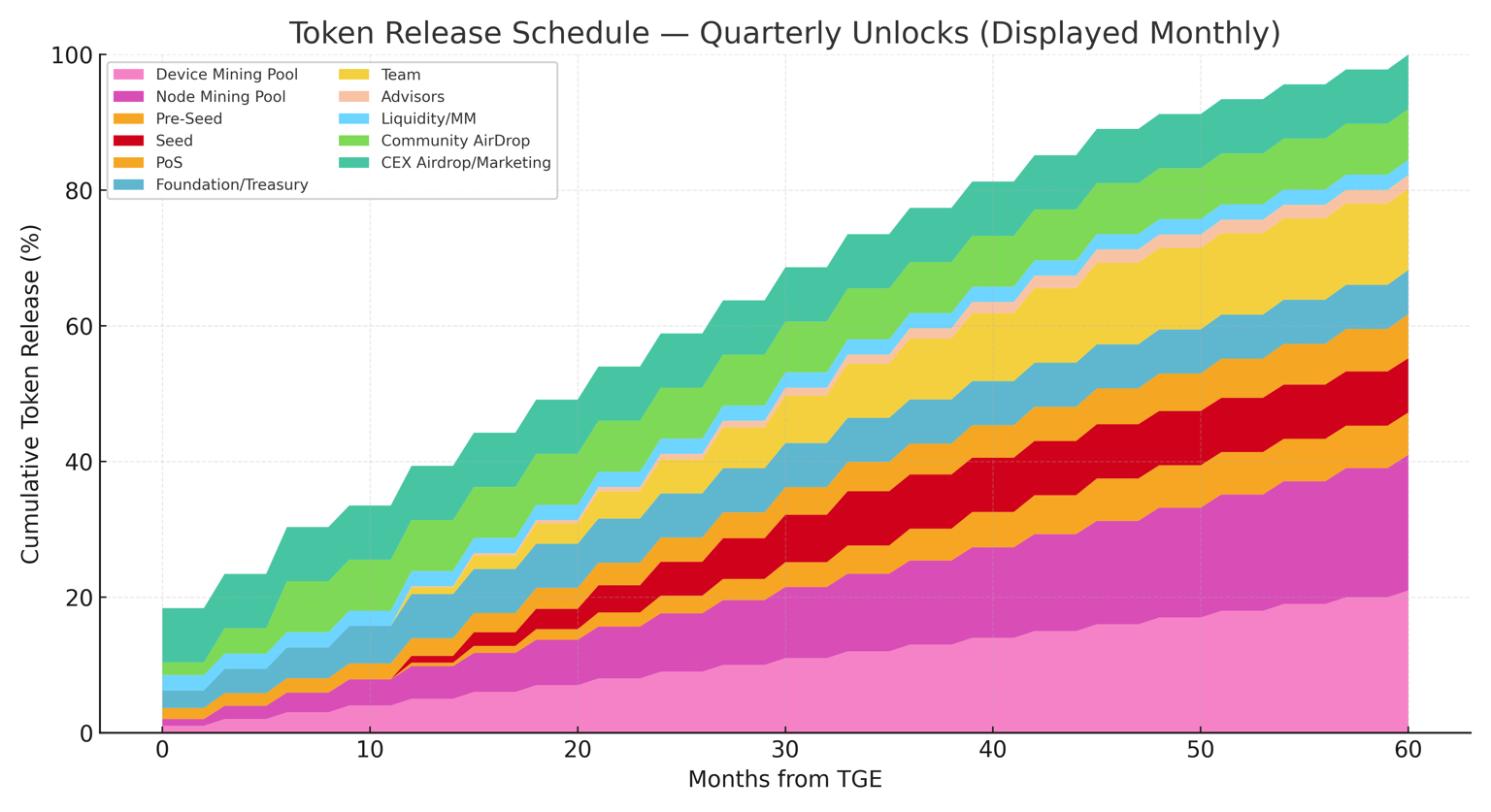
Image: https://nubila.gitbook.io/nubila/nubila-network/usdnb-tokenomics
The core token of Nubila Network, $NB, is the energy driver for its Physical Perception Layer ecosystem. It powers node incentives, data access, network governance, and security. Nubila leverages globally distributed sensors and verification nodes to convert real-world data—weather, energy, air quality—into on-chain smart signals for real-time use by AI, financial, and industrial systems.
$NB follows the BEP-20 standard with a total supply of 1 billion tokens, supporting five primary functions:
- Businesses and developers pay $NB to access live physical data and APIs;
- Device and node operators earn NB rewards for contributing verified data (DePIN model);
- Token holders participate in governance and protocol upgrades;
- Nodes stake NB to guarantee data quality and access priority;
- Developers use NB to unlock advanced SDKs and high-frequency historical datasets.
Nubila’s allocation structure emphasizes a “contributor-first” incentive model:
- Device Mining Pool: 21% (5% unlocked at TGE, linear release over 60 months)
- Node Mining Pool: 20% (5% unlocked at TGE, linear release over 60 months)
- Pre-Seed: 6.25% (12-month cliff, linear release over 36 months)
- Seed: 8% (12-month cliff, linear release over 24 months)
- PoS Staking Pool: 6.5% (25% unlocked at TGE, linear release over 60 months)
- Foundation/Treasury: 6.5% (40% unlocked at TGE, linear release over 12 months)
- Team: 12% (12-month cliff, linear release over 36 months)
- Advisors: 2% (12-month cliff, linear release over 36 months)
- Liquidity/Market Making: 2.25% (fully unlocked at TGE)
- Community Airdrop: 7.5% (25% unlocked at TGE, batch releases after 3 and 6 months)
- CEX Airdrop & Marketing: 8% (fully unlocked at TGE)
About 41% of tokens are allocated to device and node mining pools to directly incentivize the collection and validation of authentic data, supporting network expansion. The rest supports team incentives, staking security, marketing, and community distribution, creating an economic model of “long-term incentives plus early adoption.” The design balances sustainability and decentralization, delivering a trustworthy, real-time physical data foundation for AI and Web3.
Investor Tips: Essential Risks and Opportunities for Newcomers
Opportunities:
- Clear market positioning: On-chain weather/environmental data is a niche sector with genuine practical demand.
- Airdrop opportunity: The October 31 airdrop offers a low-cost entry point.
- Technical and ecosystem readiness: Established sensor network, verification node model, and token mechanics provide a strong base.
Risks:
- Liquidity risk: New tokens may face short-term liquidity shortages and limited exchange support.
- Airdrop participation criteria remain unclear: Requirements such as Alpha Points or allocation ratios have not been finalized.
- Intense market competition: Multiple projects are pursuing data oracle and DePIN models; ongoing execution is essential.
- Rational investor mindset required: Airdrops do not equal guaranteed profit—true project value must be realized.
Advice for newcomers:
- Before joining the airdrop, confirm your eligibility and compliance with Binance Alpha’s rules.
- Limit your exposure—treat this as a “potential small opportunity,” not a primary investment.
- Track project updates, token listings, and exchange launches.
- Learn the project’s technology and market landscape—avoid chasing hype blindly.







