What Are Gate Tokenized Stocks?
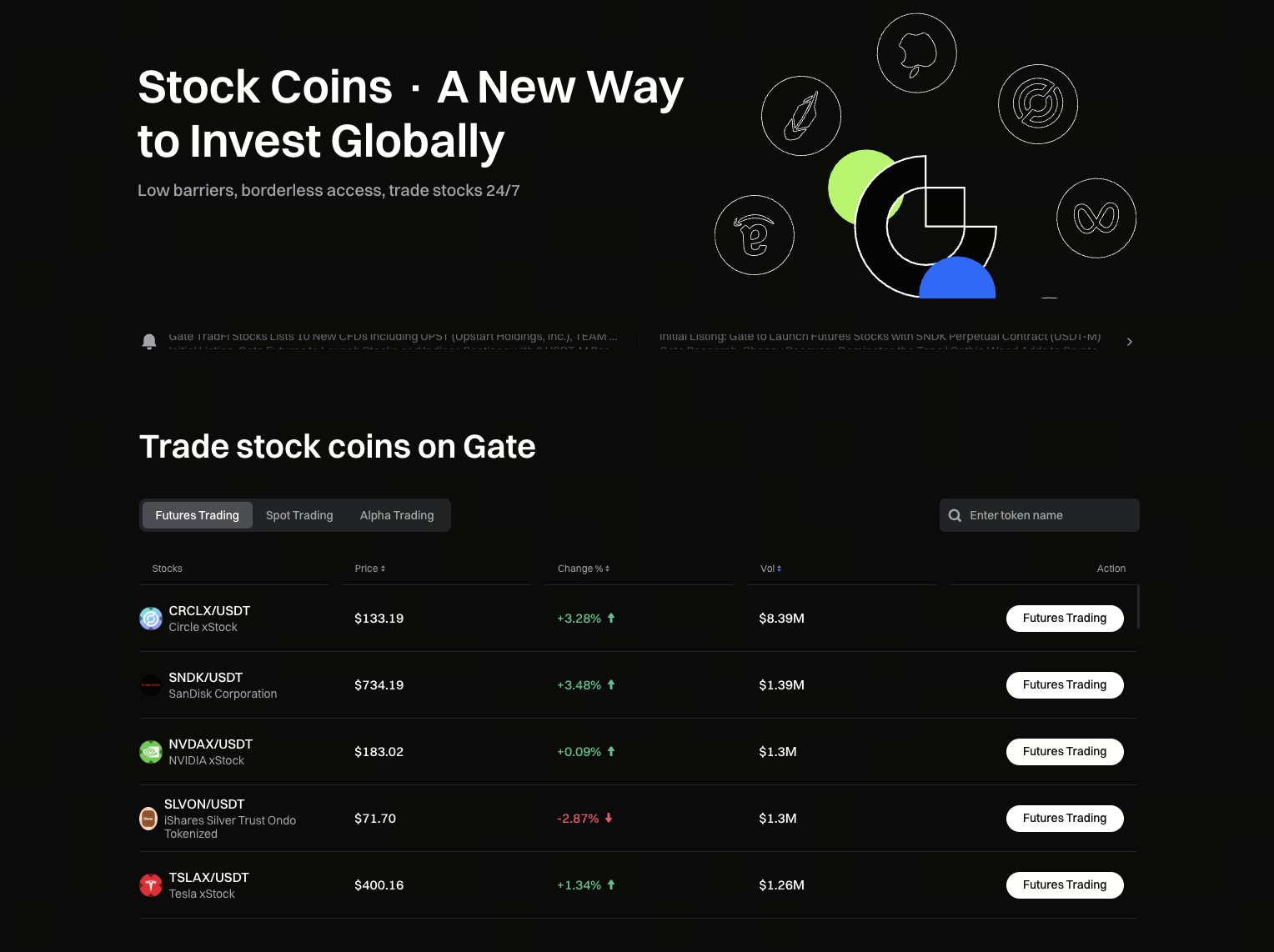 Image source: Gate Tokenized Stocks Zone
Gate tokenized stocks are a groundbreaking digital asset that converts the price movements of traditional stocks into tradable tokens on the crypto market. These tokens mirror the pricing of their underlying stocks, but do not confer actual equity or shareholder rights. By trading tokenized stocks, investors can access stock market volatility through a crypto platform, eliminating the need for traditional brokerage accounts and high fees.
This tokenized model gives investors greater flexibility and transparency, enabling easy participation in stock price movements within the crypto ecosystem, beyond the limitations of conventional stock exchanges.
Advantages of Gate Tokenized Stocks
1. 24/7 Trading
Unlike traditional stock markets with limited trading hours, Gate tokenized stocks are available for trading at any time. Investors can act whenever market conditions change, capturing opportunities as prices shift in real time.
2. Low Entry Barrier
Gate tokenized stocks allow investors to participate in the stock market without opening a traditional brokerage account or committing large sums of capital. The lower entry threshold makes this approach accessible to investors of all sizes.
3. Decentralized Trading
Trading Gate tokenized stocks occurs on decentralized crypto platforms, removing intermediaries found in traditional stock exchanges. This increases transparency and ensures trades are free from intermediary interference, while reducing transaction costs.
4. Global Market Liquidity
Tokenized stocks are not restricted to a single market—they can be traded globally. Their circulation across multiple crypto platforms allows investors to switch between markets easily and capitalize on worldwide opportunities.
How to Trade Gate Tokenized Stocks
-
Select the Right Tokenized Stock: Gate offers a wide range of tokenized stocks across industries and markets. Investors can choose based on their strategies and market outlook. For example, tokens may be linked to stocks in energy, technology, or consumer goods sectors, enabling flexible adjustments as market conditions evolve.
-
Participate in Market Fluctuations: Tokenized stock prices typically reflect market volatility. Investors can monitor trends and seize trading opportunities as prices move. Especially during periods of intense global market swings, tokenized stocks offer more short-term arbitrage possibilities.
-
Adjust Positions Flexibly: In the crypto market, investors can modify positions at any time in response to market shifts. Tokenized stocks provide enhanced trading flexibility, allowing quick reactions to short-term changes. Whether going short, going long, or using leverage, investors have the freedom to operate as needed.
Differences Between Tokenized Stocks and Traditional Stocks
While tokenized stocks track traditional stock price movements closely, several key differences remain:
1. No Shareholder Rights
Tokenized stocks do not grant investors shareholder rights. Holders are not entitled to dividends, voting privileges, or other company benefits.
2. Price Fluctuations and Market Behavior
Tokenized stock prices are influenced by factors such as market demand, liquidity, and sentiment. As a result, their prices are tied not only to traditional stock market movements but also to volatility in the crypto market.
3. Trading Method
Tokenized stocks are traded on crypto platforms, eliminating the need for conventional brokerage accounts. They support 24/7 trading, unlike traditional stock exchanges with strict trading hours.
Risks of Gate Tokenized Stocks
While Gate tokenized stocks offer a convenient way to trade, investors should be aware of certain risks:
-
Market Volatility Risk: Tokenized stock prices are highly sensitive to market fluctuations. Investors must stay alert to avoid losses from sharp price swings.
-
Liquidity Risk: Although tokenized stocks circulate on multiple crypto platforms, some may have limited liquidity. In less liquid markets, timely buying or selling can be challenging.
-
Regulatory Risk: As crypto assets, tokenized stocks are subject to varying regulations worldwide. As global policy evolves, regulatory environments may shift. Investors should monitor relevant policy changes to ensure compliance.
How to Start Trading Gate Tokenized Stocks
Getting started with Gate tokenized stocks is straightforward. Follow these steps:
1. Register a Gate Account
Create an account on the Gate platform and complete identity verification.
2. Fund Your Account
Deposit funds into your account. You can convert fiat currency to crypto assets or deposit crypto assets directly.
3. Select Tokenized Stocks
Browse available tokenized stocks in the Gate Tokenized Stocks Zone and choose those you wish to trade.
4. Start Trading
Use market or limit orders to buy or sell tokenized stocks, respond to market changes flexibly, and capture trading opportunities.
Summary
Gate tokenized stocks deliver an innovative trading platform that removes the limitations of traditional stock market hours and geography, offering 24/7 trading access. With flexibility, transparency, and a low entry barrier, tokenized stocks make it easier for investors to engage with stock market movements.
Despite the expanded opportunities, market volatility is significant. Investors should remain vigilant and implement robust risk management strategies. Through in-depth trend analysis and effective position management, investors can unlock more investment opportunities in the Gate Tokenized Stocks Zone.







