REQ vs LINK: Understanding the Key Differences Between HTML Request Methods and Link Elements
Introduction: Investment Comparison Between REQ and LINK
In the cryptocurrency market, the comparison between REQ vs LINK has been a topic of ongoing interest among investors. Both assets exhibit distinct differences in market capitalization ranking, application scenarios, and price performance, representing different positioning within the crypto asset landscape.
Request (REQ): Launched in 2017, this project has gained recognition through its focus on decentralized payment requests and financial infrastructure. Built on the Ethereum network, it aims to create a financial platform for asset invoices, accounting, auditing, and payment standards.
Chainlink (LINK): Since its introduction in 2017, LINK has established itself as a fundamental infrastructure provider in the blockchain ecosystem, serving as an ERC20 token that facilitates data retrieval and oracle services for smart contracts.
This article will provide a comprehensive analysis of REQ vs LINK investment value comparison, examining historical price trends, supply mechanisms, institutional adoption, technical ecosystems, and future projections. We aim to address the key question that concerns investors:
"Which is the better buy right now?"
Current market data shows REQ ranked at #417 with a market cap of approximately $79.99 million and a circulating supply of 744.29 million tokens, while LINK holds the #17 position with a market cap of approximately $9.72 billion and a circulating supply of 708.10 million tokens. The significant disparity in market positioning and adoption levels forms the foundation for this comparative analysis.
I. Historical Price Comparison and Current Market Status
Request (REQ) and Chainlink (LINK) Historical Price Trends
- 2018: REQ experienced its all-time high of $1.059 on January 6, 2018, following its initial market enthusiasm. Subsequently, the token entered a prolonged correction phase.
- 2020: REQ recorded its historical low of $0.00454707 on March 13, 2020, during the broader cryptocurrency market downturn. The token has since gradually recovered from this point.
- 2021: LINK achieved its all-time high of $52.7 on May 10, 2021, driven by increased adoption of decentralized oracle solutions and DeFi expansion. The token has experienced significant retracement since this peak.
- 2017: LINK recorded its historical low of $0.148183 on November 29, 2017, shortly after its launch, before gaining traction in the blockchain infrastructure space.
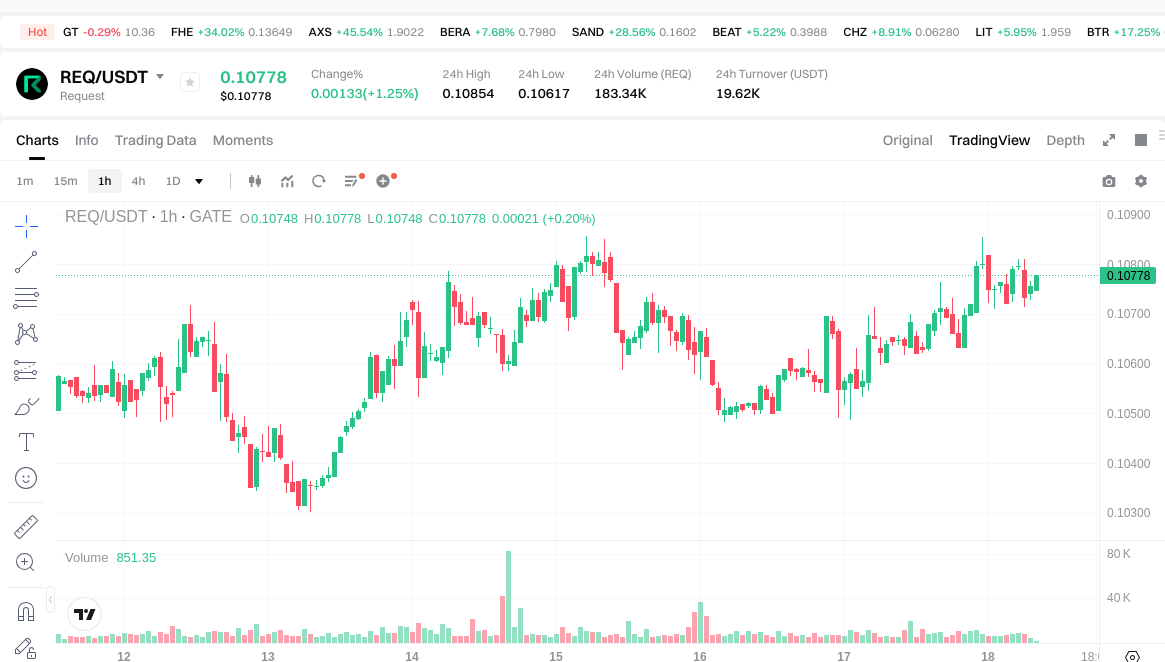
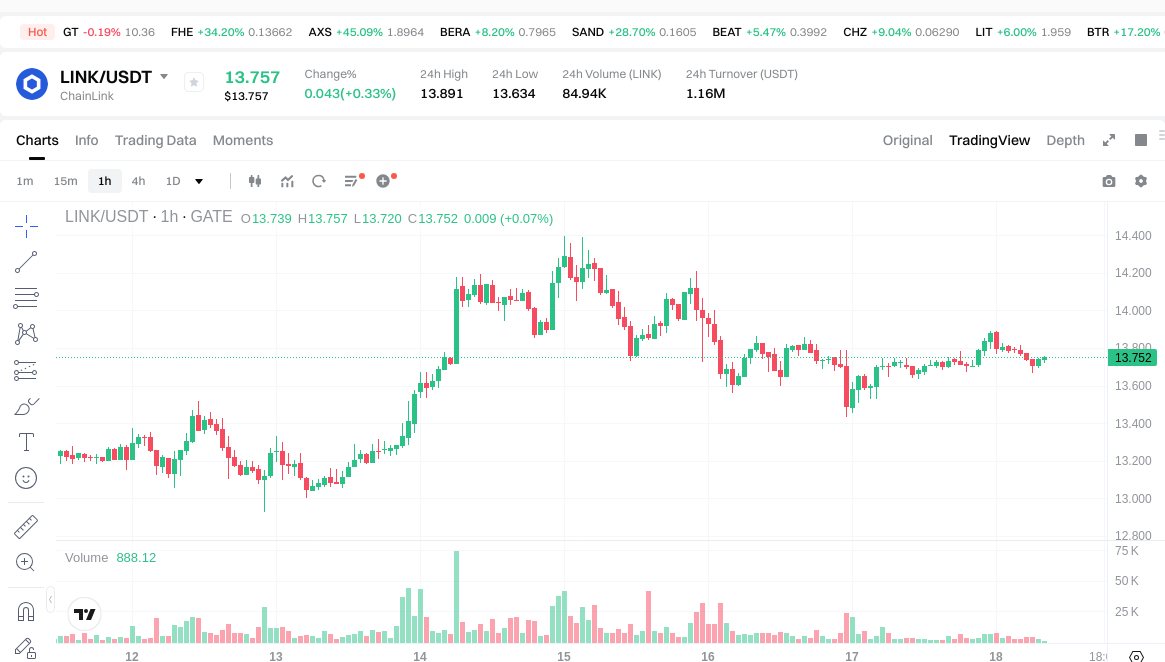
- Comparative Analysis: During the 2021 market cycle, LINK demonstrated stronger resilience with a market cap reaching billions of dollars, while REQ maintained a more modest market presence. From their respective peaks, REQ declined from $1.059 to current levels around $0.107, while LINK decreased from $52.7 to approximately $13.73.
Current Market Status (2026-01-18)
- REQ Current Price: $0.10748
- LINK Current Price: $13.733
- 24-Hour Trading Volume: REQ $19,641.71 vs LINK $1,167,595.15
- Market Capitalization: REQ $79,996,417.34 vs LINK $9,724,336,894.23
- Market Sentiment Index (Fear & Greed Index): 50 (Neutral)
Click to view real-time prices:
- Check REQ current price Market Price
- Check LINK current price Market Price
II. Core Factors Influencing REQ vs LINK Investment Value
Supply Mechanism Comparison (Tokenomics)
-
LINK: Chainlink operates with a fixed maximum supply of 1 billion LINK tokens. The token distribution includes allocations for the project team, early participants, and institutional investors. In December 2022, Chainlink introduced a staking mechanism that allows node operators to stake LINK as collateral, incentivizing honest behavior and securing the network. Nodes that provide inaccurate data or fail to fulfill their responsibilities may lose their staked assets, creating a positive incentive structure.
-
REQ: Information regarding the supply mechanism and tokenomics of REQ was not available in the provided materials.
-
📌 Historical Pattern: For LINK, the implementation of the staking mechanism has contributed to network security and may influence price dynamics by reducing circulating supply when tokens are locked in staking contracts. The fixed supply model provides scarcity characteristics that can support long-term value appreciation under conditions of growing demand.
Institutional Adoption and Market Application
-
Institutional Holdings: LINK has garnered attention from institutional investors, with significant holdings likely concentrated among the Chainlink project team, early participants, and institutional backers. Wallets associated with Chainlink Labs, the core development entity, may hold substantial token quantities to support ongoing project development and operations.
-
Enterprise Adoption: Chainlink's oracle services have demonstrated growing adoption across decentralized finance platforms, enterprise-level users, and emerging blockchain projects. The launch of the Cross-Chain Interoperability Protocol (CCIP) in 2023 expanded its service capabilities, attracting increased developer and project participation. Strategic partnerships, including integration with Google Cloud, have highlighted the application potential of its oracle technology. Chainlink's role as a bridge connecting Web3 and Web2 systems has received positive media coverage, with integration across over 1,500 projects strengthening its market position.
-
Regulatory Environment: Regulatory developments significantly impact LINK's valuation. Favorable regulatory news, such as blockchain project approvals or recognition of Chainlink's role in connecting decentralized and traditional systems, tends to boost market sentiment and drive price appreciation. Conversely, stricter regulatory environments or policy uncertainty may trigger sell-offs and create downward price pressure.
Technology Development and Ecosystem Building
-
LINK Technology Upgrades: The introduction of the Cross-Chain Interoperability Protocol (CCIP) represents a significant technological advancement, expanding Chainlink's service capabilities and enabling enhanced cross-chain functionality. New features and ecosystem upgrades have historically served as important drivers of LINK price appreciation, as innovations attract more developers and projects, thereby increasing demand for the token.
-
REQ Technology Development: Specific information regarding technological developments and ecosystem initiatives for REQ was not available in the provided materials.
-
Ecosystem Comparison: Chainlink's oracle services have achieved widespread adoption in DeFi platforms, with increasing integration in traditional finance and blockchain platforms. The network supports data provision across various use cases, though specific comparisons regarding DeFi, NFT, payment systems, and smart contract implementations between REQ and LINK could not be comprehensively assessed based on available information.
Macroeconomic Environment and Market Cycles
-
Performance Under Inflation: Asset allocation strategies emphasize diversification across asset classes to manage risk in varying economic conditions. The performance of digital assets during inflationary periods depends on multiple factors including market sentiment, adoption rates, and perceived utility. General investment principles suggest that understanding risk tolerance and investment goals forms the foundation of successful long-term investment strategies.
-
Macroeconomic Monetary Policy: LINK's real-time price is influenced by broader cryptocurrency market trends and overall market sentiment. Macroeconomic factors, including interest rate policies and monetary conditions, affect capital flows into digital assets. Chainlink's ecosystem development dynamics, including the pace of oracle service adoption and competitive positioning against other oracle networks, also play significant roles in price determination.
-
Geopolitical Factors: Market demand for Chainlink's oracle services across different jurisdictions and the regulatory treatment of blockchain infrastructure in various countries contribute to investment considerations. The expanding use of Chainlink in cross-border applications and its integration with both decentralized and traditional financial systems position it within the evolving landscape of international digital asset adoption.
III. 2026-2031 Price Prediction: REQ vs LINK
Short-term Forecast (2026)
- REQ: Conservative $0.075446 - $0.10778 | Optimistic $0.10778 - $0.1282582
- LINK: Conservative $9.75824 - $13.744 | Optimistic $13.744 - $18.5544
Mid-term Forecast (2028-2029)
- REQ may enter a consolidation phase with predicted price ranging from $0.0959288749575 to $0.1962852364515
- LINK may enter a growth phase with predicted price ranging from $10.72387626 to $27.0900165382
- Key drivers: institutional capital inflows, ETF developments, ecosystem expansion
Long-term Forecast (2030-2031)
- REQ: Base scenario $0.113476479930495 - $0.17193406050075 | Optimistic scenario $0.17193406050075 - $0.284911931655792
- LINK: Base scenario $23.930273432736 - $29.91284179092 | Optimistic scenario $29.91284179092 - $40.382336417742
Disclaimer
REQ:
| Year | Predicted High Price | Predicted Average Price | Predicted Low Price | Price Change |
|---|---|---|---|---|
| 2026 | 0.1282582 | 0.10778 | 0.075446 | 0 |
| 2027 | 0.169947504 | 0.1180191 | 0.099136044 | 9 |
| 2028 | 0.1511824671 | 0.143983302 | 0.13102480482 | 33 |
| 2029 | 0.1962852364515 | 0.14758288455 | 0.0959288749575 | 37 |
| 2030 | 0.218356256835952 | 0.17193406050075 | 0.113476479930495 | 59 |
| 2031 | 0.284911931655792 | 0.195145158668351 | 0.177582094388199 | 81 |
LINK:
| Year | Predicted High Price | Predicted Average Price | Predicted Low Price | Price Change |
|---|---|---|---|---|
| 2026 | 18.5544 | 13.744 | 9.75824 | 0 |
| 2027 | 21.478436 | 16.1492 | 13.565328 | 17 |
| 2028 | 26.71562156 | 18.813818 | 10.72387626 | 36 |
| 2029 | 27.0900165382 | 22.76471978 | 17.073539835 | 65 |
| 2030 | 34.89831542274 | 24.9273681591 | 23.930273432736 | 81 |
| 2031 | 40.382336417742 | 29.91284179092 | 24.5285302685544 | 117 |
IV. Investment Strategy Comparison: REQ vs LINK
Long-term vs Short-term Investment Strategies
-
REQ: May suit investors focused on emerging payment infrastructure opportunities and early-stage project participation. The token's lower market capitalization suggests potential for higher volatility, which may appeal to those with higher risk tolerance seeking growth opportunities in developing blockchain payment solutions.
-
LINK: May suit investors seeking exposure to established blockchain infrastructure with demonstrated institutional adoption. The token's position as a leading oracle service provider and its integration across over 1,500 projects suggests a foundation for investors prioritizing network effects and ecosystem maturity.
Risk Management and Asset Allocation
-
Conservative Investors: REQ 10-20% vs LINK 80-90% allocation within a diversified cryptocurrency portfolio, emphasizing the more established market position and broader adoption of oracle infrastructure.
-
Aggressive Investors: REQ 30-40% vs LINK 60-70% allocation, allowing for higher exposure to potential growth in emerging payment solutions while maintaining significant allocation to established blockchain infrastructure.
-
Hedging Tools: Stablecoin reserves for market volatility management, options strategies for downside protection, and cross-asset diversification including exposure to different blockchain infrastructure categories.
V. Potential Risk Comparison
Market Risks
-
REQ: The token's lower market capitalization ranking (#417) and trading volume indicate liquidity constraints that may result in higher price volatility. Market sentiment shifts and cryptocurrency cycle dynamics may create amplified price movements in both directions.
-
LINK: While maintaining a stronger market position (#17), the token remains subject to broader cryptocurrency market trends and correlation with major digital assets. Competitive dynamics within the oracle services sector and potential emergence of alternative infrastructure solutions represent ongoing market considerations.
Technical Risks
-
REQ: Limited information regarding current technological developments and network scalability considerations suggests the need for thorough research into the project's technical roadmap and infrastructure resilience.
-
LINK: Oracle network security depends on node operator behavior and the effectiveness of staking mechanisms introduced in December 2022. The Cross-Chain Interoperability Protocol (CCIP) represents an expanding technical surface area requiring ongoing security assessment and network stability monitoring.
Regulatory Risks
- Regulatory frameworks governing blockchain infrastructure and oracle services vary across jurisdictions. LINK's role as a bridge between decentralized and traditional systems may attract regulatory attention as authorities develop frameworks for blockchain infrastructure providers. REQ's positioning in payment and financial infrastructure may face evolving requirements related to payment service regulations and financial compliance standards in different markets.
VI. Conclusion: Which Is the Better Buy?
📌 Investment Value Summary
-
REQ Characteristics: The token represents exposure to decentralized payment infrastructure development with potential for growth as blockchain-based payment solutions evolve. The lower market capitalization suggests higher growth potential accompanied by increased volatility and liquidity considerations.
-
LINK Characteristics: The token provides access to established blockchain oracle infrastructure with demonstrated adoption across DeFi platforms and enterprise integrations. The introduction of staking mechanisms and the CCIP protocol expansion indicate ongoing ecosystem development within a mature market position.
✅ Investment Considerations
-
New Investors: May consider prioritizing assets with established market positions and demonstrated adoption patterns. Understanding the fundamental differences between payment infrastructure (REQ) and oracle services (LINK) forms the foundation for informed allocation decisions.
-
Experienced Investors: May evaluate portfolio allocation based on thesis regarding future adoption trajectories of payment solutions versus oracle infrastructure. Diversification across different blockchain infrastructure categories can provide exposure to multiple growth vectors within the ecosystem.
-
Institutional Participants: May assess both assets within the context of broader blockchain infrastructure exposure, considering factors including liquidity profiles, regulatory clarity, and integration capabilities with existing systems.
⚠️ Risk Disclosure: Cryptocurrency markets exhibit high volatility, and digital asset investments carry risk of loss. This analysis does not constitute investment advice, financial guidance, or recommendations. Individuals should conduct independent research and consult with qualified professionals before making investment decisions.
VII. FAQ
Q1: What is the main difference between REQ and LINK in terms of their core functionality?
REQ focuses on decentralized payment requests and financial infrastructure for invoices and accounting, while LINK provides oracle services that connect smart contracts with real-world data. LINK serves as fundamental blockchain infrastructure with broader adoption across DeFi platforms, having integrated with over 1,500 projects. REQ targets a more specific use case in payment solutions and financial standards built on Ethereum. This functional distinction directly impacts their market positioning, with LINK ranking #17 with a $9.72 billion market cap versus REQ's #417 ranking with $79.99 million market cap.
Q2: Which token presents higher growth potential based on current market metrics?
REQ theoretically offers higher growth potential due to its significantly lower market capitalization ($79.99 million versus LINK's $9.72 billion), though this comes with substantially higher risk. Price predictions suggest REQ could reach $0.284 by 2031 (164% increase from current levels), while LINK may reach $40.38 (194% increase from current levels). However, LINK's established ecosystem, institutional adoption, and integration across major platforms provide a more stable foundation for growth. REQ's lower liquidity and limited trading volume ($19,641 versus LINK's $1.17 million daily) indicate higher volatility and execution risk for larger positions.
Q3: How does the staking mechanism impact LINK's investment value?
LINK's staking mechanism, introduced in December 2022, creates a positive incentive structure that enhances network security and may reduce circulating supply. Node operators stake LINK as collateral to provide oracle services, with penalties for inaccurate data or failed responsibilities. This mechanism potentially supports price appreciation through supply reduction when tokens are locked in staking contracts, while simultaneously strengthening the reliability of Chainlink's oracle network. The staking feature also provides token holders with yield opportunities, adding another dimension to LINK's value proposition beyond pure price appreciation.
Q4: What allocation strategy is recommended for conservative versus aggressive investors?
Conservative investors should consider an 80-90% allocation to LINK versus 10-20% to REQ within their cryptocurrency portfolio, emphasizing LINK's established market position and proven institutional adoption. Aggressive investors may increase REQ exposure to 30-40% versus 60-70% LINK allocation, accepting higher volatility for potential growth in emerging payment infrastructure. Both strategies should exist within a broader diversified portfolio including stablecoin reserves for volatility management and exposure to different blockchain infrastructure categories. Individual risk tolerance and investment timeframe should ultimately determine specific allocation ratios.
Q5: What are the primary regulatory risks affecting REQ and LINK?
LINK faces regulatory considerations as a bridge between decentralized and traditional systems, potentially attracting scrutiny as authorities develop frameworks for blockchain infrastructure providers. Its widespread integration across financial platforms may subject it to evolving requirements for data providers and oracle services. REQ's positioning in payment and financial infrastructure exposes it to payment service regulations and financial compliance standards across different jurisdictions. The regulatory treatment of blockchain infrastructure varies significantly by country, impacting both tokens' adoption potential and operational flexibility in different markets.
Q6: How do historical price patterns inform future investment decisions for REQ versus LINK?
Historical data shows LINK achieved its all-time high of $52.7 in May 2021 during DeFi expansion, demonstrating resilience with sustained market cap in billions. REQ peaked at $1.059 in January 2018 but experienced prolonged correction to a low of $0.00454707 in March 2020. LINK's price pattern reflects broader oracle service adoption and ecosystem development, while REQ's trajectory shows more volatility with less established recovery patterns. These historical trends suggest LINK offers more predictable price behavior based on fundamental adoption metrics, whereas REQ presents a higher-risk profile with less established support levels and historical reference points for valuation.
Q7: What role does liquidity play in the REQ vs LINK investment comparison?
Liquidity represents a critical distinction between these assets, with LINK's 24-hour trading volume of $1,167,595 significantly exceeding REQ's $19,641. This 60x difference in daily volume directly impacts execution quality, with LINK offering tighter spreads, reduced slippage, and easier position entry/exit for both retail and institutional investors. REQ's limited liquidity increases volatility risk and may constrain position sizing for larger investors. For institutional participants or those deploying significant capital, LINK's superior liquidity profile reduces implementation costs and enables more efficient portfolio rebalancing, making it a more practical choice for substantial allocations.
Q8: How does the technology roadmap differentiate REQ and LINK investment prospects?
LINK demonstrates clear technological progression with the 2023 launch of the Cross-Chain Interoperability Protocol (CCIP), expanding service capabilities and attracting increased developer participation. Strategic partnerships including Google Cloud integration highlight real-world application potential and enterprise adoption pathways. Limited information regarding REQ's current technological developments and roadmap presents uncertainty for investors evaluating long-term viability. LINK's continuous innovation cycle, evidenced by staking mechanism implementation and cross-chain protocol development, provides tangible catalysts for future value appreciation, whereas REQ's technological trajectory requires additional research and verification before assessing comparable innovation momentum.
Share
Content
Introduction: Investment Comparison Between REQ and LINK
I. Historical Price Comparison and Current Market Status
II. Core Factors Influencing REQ vs LINK Investment Value
III. 2026-2031 Price Prediction: REQ vs LINK
IV. Investment Strategy Comparison: REQ vs LINK
V. Potential Risk Comparison
VI. Conclusion: Which Is the Better Buy?
VII. FAQ
How to Buy Cryptocurrency


Trending Cryptocurrencies



What is Fully Diluted Valuation (FDV) in crypto?

Is Dtec (DTEC) a good investment?: Analyzing the Potential and Risks of This Emerging Tech ETF

2025 LIME Price Prediction: Expert Analysis and Market Forecast for the Coming Year
Comprehensive Guide: Market Cap to TVL Ratio in Cryptocurrencies—Formula and Examples
Avalanche (AVAX) 2025 Price Analysis and Market Trends
SEI Staking Analysis: 60-70% Supply Locked and Its Price Impact
Bull Flag Pattern: A Guide to Trading Bullish Continuations
Top 8 Demo Trading Platforms: Essential Guide for Crypto Traders
OpenEden RWA Tokens: Unlocking Institutional-Grade Asset Tokenization

Polygon (Previously MATIC): POL Price Insights, Upgrades, and Future Potential

How Does PUMP Community Drive Ecosystem Growth With 10,000+ Daily Interactions and 100+ DApps in 2025?