Trade
Basic
Futures
Futures
Hundreds of contracts settled in USDT or BTC
TradFi
Gold
Trade global traditional assets with USDT in one place
Options
Hot
Trade European-style vanilla options
Unified Account
Maximize your capital efficiency
Demo Trading
Futures Kickoff
Get prepared for your futures trading
Futures Events
Participate in events to win generous rewards
Demo Trading
Use virtual funds to experience risk-free trading
Earn
Launch
CandyDrop
Collect candies to earn airdrops
Launchpool
Quick staking, earn potential new tokens
HODLer Airdrop
Hold GT and get massive airdrops for free
Launchpad
Be early to the next big token project
Alpha Points
Trade on-chain assets and enjoy airdrop rewards!
Futures Points
Earn futures points and claim airdrop rewards
Investment
Simple Earn
Earn interests with idle tokens
Auto-Invest
Auto-invest on a regular basis
Dual Investment
Buy low and sell high to take profits from price fluctuations
Soft Staking
Earn rewards with flexible staking
Crypto Loan
0 Fees
Pledge one crypto to borrow another
Lending Center
One-stop lending hub
VIP Wealth Hub
Customized wealth management empowers your assets growth
Private Wealth Management
Customized asset management to grow your digital assets
Quant Fund
Top asset management team helps you profit without hassle
Staking
Stake cryptos to earn in PoS products
Smart Leverage
New
No forced liquidation before maturity, worry-free leveraged gains
GUSD Minting
Use USDT/USDC to mint GUSD for treasury-level yields

More


OrderOfPrecedence

The structural trend analysis method cannot predict peaks and troughs, but it can help avoid risks and enable people to live long lives.
OrderOfPrecedence
Silver breaks through a 50-year ceiling, but the stage is already not early
Many people have been asking recently: Silver has risen so much, is it already over?
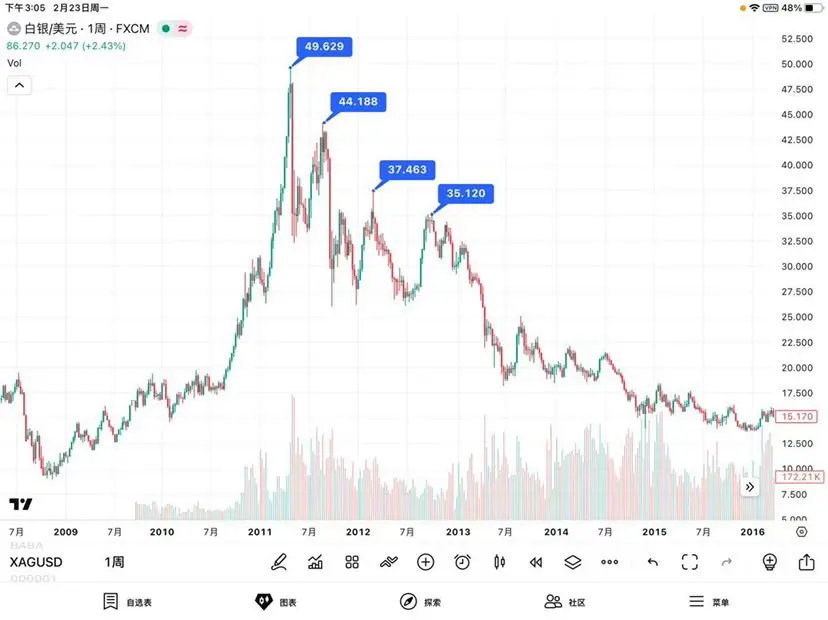
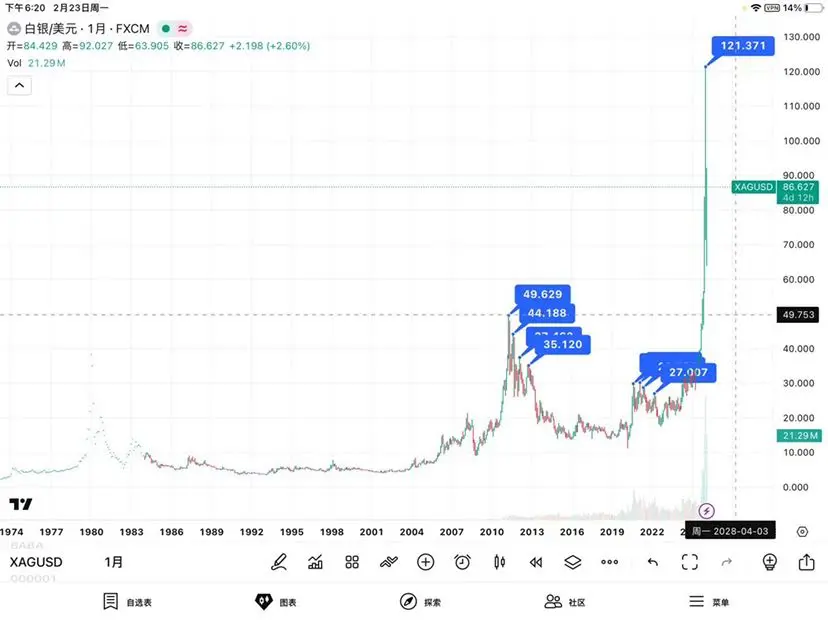
But what really matters is not whether it has risen or not, but that silver recently broke through a structural ceiling that had lasted for 50 years.
First, a word: Breakthrough represents a structural change;
It does not mean an immediate straight-up rise.
1. $50 is the “structural ceiling” for silver for 50 years
Looking at history:
In 1980, silver approached $50, and the bull market ended.
In 2011, silver reached $49.6, and the bull
View OriginalMany people have been asking recently: Silver has risen so much, is it already over?
But what really matters is not whether it has risen or not, but that silver recently broke through a structural ceiling that had lasted for 50 years.
First, a word: Breakthrough represents a structural change;
It does not mean an immediate straight-up rise.
1. $50 is the “structural ceiling” for silver for 50 years
Looking at history:
In 1980, silver approached $50, and the bull market ended.
In 2011, silver reached $49.6, and the bull
- Reward
- like
- Comment
- Repost
- Share
2010 Silver, almost identical to now
Many people think that the most dangerous time for silver is when it starts to decline. But historically, the real danger often occurs when it begins to accelerate upward.
Because that means the cycle has entered a deeper stage.
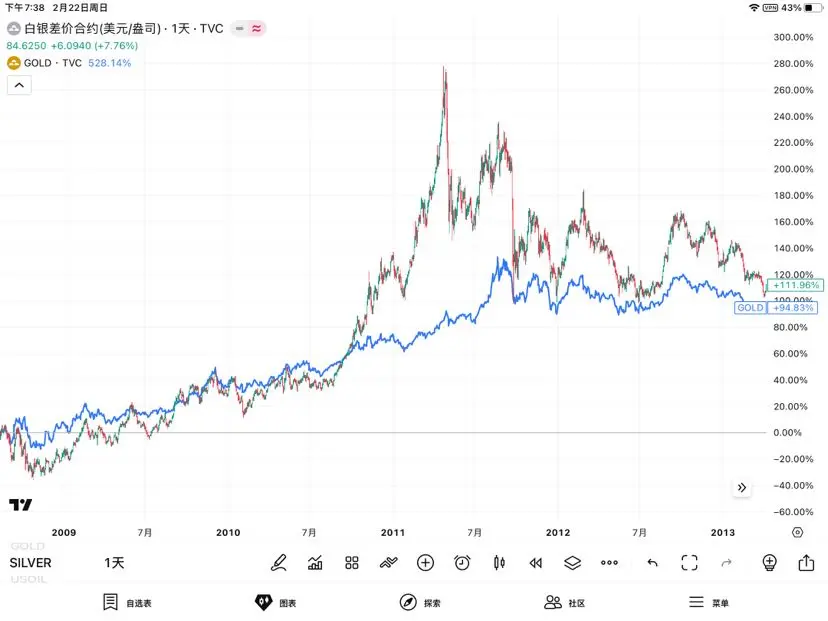
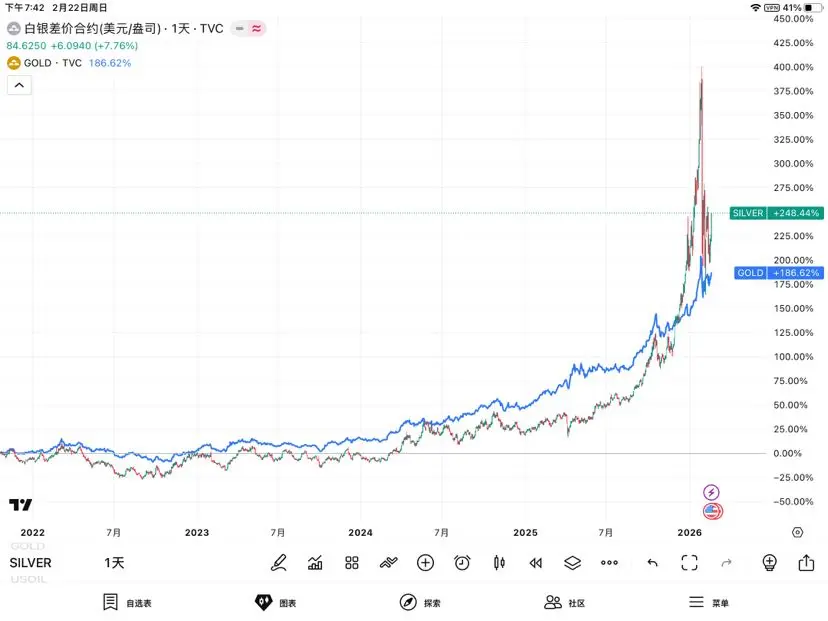
If you go back to 2010, you'll find that silver wasn't crazy from the start.
Before the real surge, it went through a complete process:
Gold had been rising for years and continuously hitting new highs.
Meanwhile, silver lagged noticeably, rising slowly, and was even ignored by the market at times.
Back then, many people trusted gol
View OriginalMany people think that the most dangerous time for silver is when it starts to decline. But historically, the real danger often occurs when it begins to accelerate upward.
Because that means the cycle has entered a deeper stage.
If you go back to 2010, you'll find that silver wasn't crazy from the start.
Before the real surge, it went through a complete process:
Gold had been rising for years and continuously hitting new highs.
Meanwhile, silver lagged noticeably, rising slowly, and was even ignored by the market at times.
Back then, many people trusted gol
- Reward
- 2
- Comment
- Repost
- Share
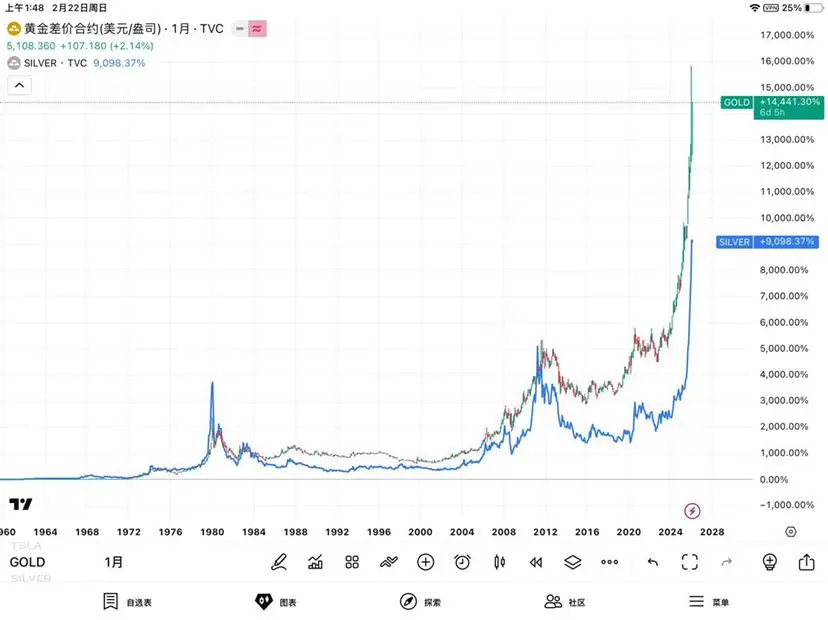
Every cycle's end, silver accelerates (the relationship between gold and silver).
If you extend the history of precious metals to 50 years, you'll find a recurring phenomenon:
Gold always leads the rise; while silver often begins to accelerate after the trend has already gone quite far.
Many people think this is coincidental. But in fact, it's structural, not a coincidence.
1. Gold is responsible for "confirming the trend," silver is responsible for "amplifying the trend"
In every precious metal bull market, gold almost always starts first.
This was the case in the 1970s, after 200
View OriginalIf you extend the history of precious metals to 50 years, you'll find a recurring phenomenon:
Gold always leads the rise; while silver often begins to accelerate after the trend has already gone quite far.
Many people think this is coincidental. But in fact, it's structural, not a coincidence.
1. Gold is responsible for "confirming the trend," silver is responsible for "amplifying the trend"
In every precious metal bull market, gold almost always starts first.
This was the case in the 1970s, after 200
- Reward
- 2
- Comment
- Repost
- Share
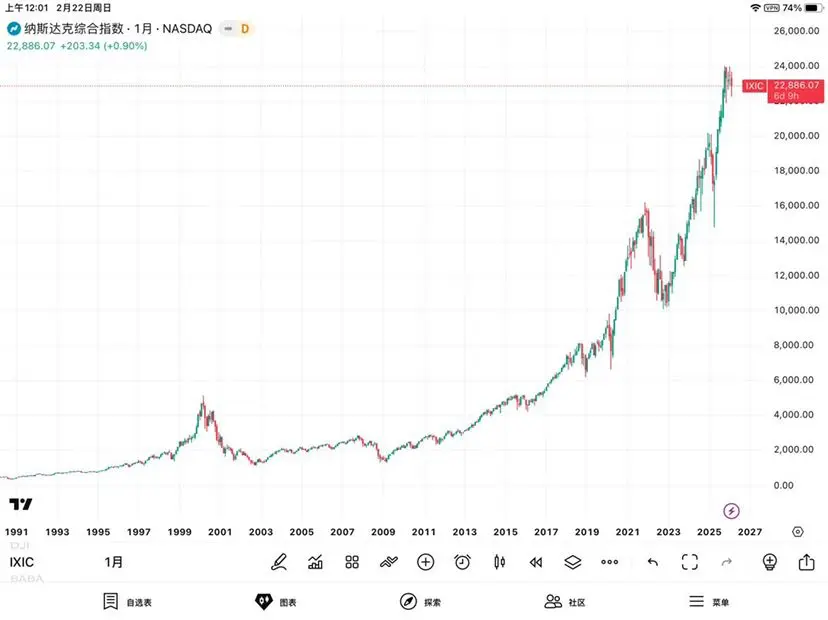
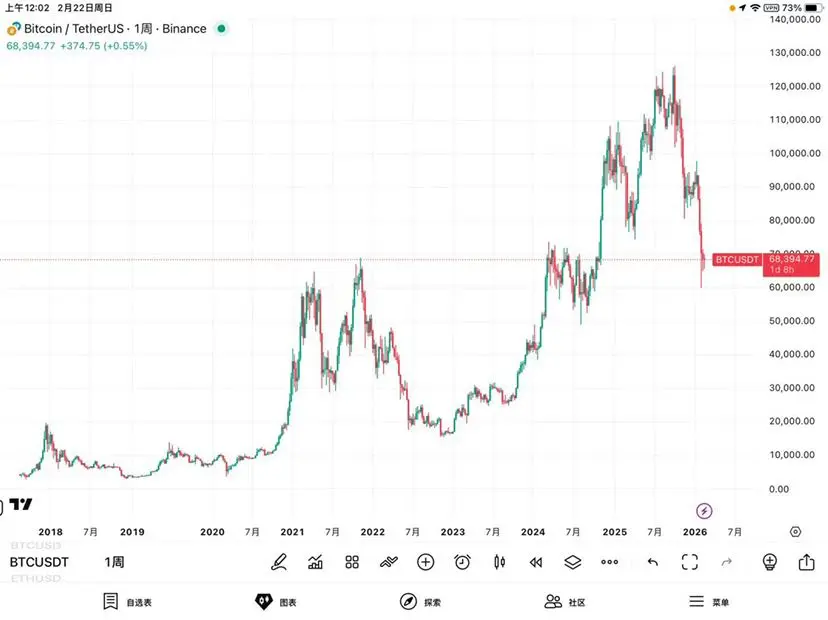
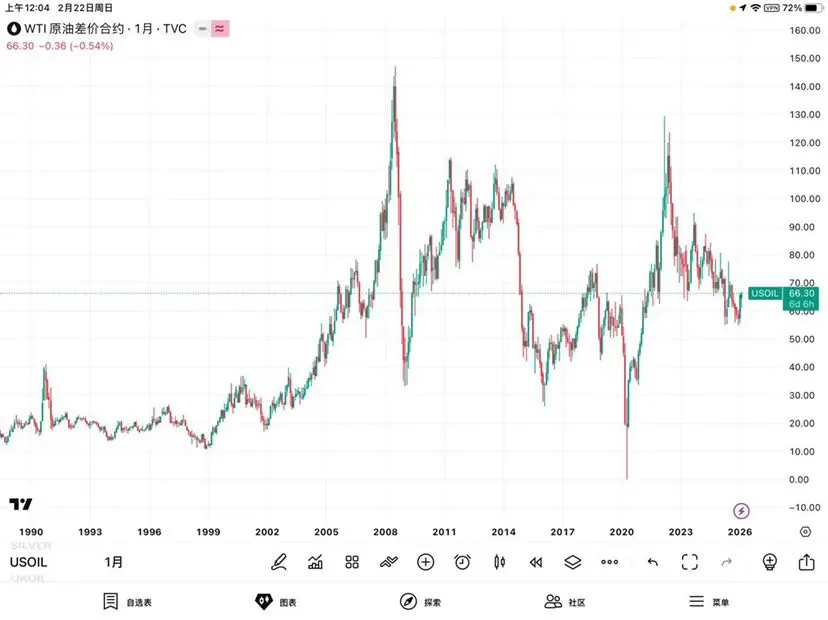
What might happen to gold, Bitcoin, US stocks, and oil if the US does not attack Iran?
The entire internet is speculating about an attack on Iran and asset trend scenarios. Today, we reverse-engineer this: if the US does not attack Iran,
Will gold fall?
Will US stocks rise?
Will Bitcoin rebound?
Will oil plummet?
This question appears to be about war on the surface, but the true answer has long been written in the charts.
Not in the news, but in the long-term structure of gold, US stocks, Bitcoin, and oil.
1. Gold: Short-term may fluctuate, but the trend will not end because of this
If you ext
The entire internet is speculating about an attack on Iran and asset trend scenarios. Today, we reverse-engineer this: if the US does not attack Iran,
Will gold fall?
Will US stocks rise?
Will Bitcoin rebound?
Will oil plummet?
This question appears to be about war on the surface, but the true answer has long been written in the charts.
Not in the news, but in the long-term structure of gold, US stocks, Bitcoin, and oil.
1. Gold: Short-term may fluctuate, but the trend will not end because of this
If you ext
BTC4.46%
- Reward
- like
- Comment
- Repost
- Share
35 Years of Charts Prove: War Has Never Truly Determined the Direction of the U.S. Stock Market
— The True Structural Law Revealed by the Five-Dimensional Deduction System
1. A True Fact
Most people believe: war is the biggest negative factor for the stock market.
Gunfire, conflicts, panic—these tell us: the market will collapse.
But when we place the past 35 years of events—Gulf War, Afghanistan War, Iraq War, Libyan War, Russia-Ukraine War—and the S&P 500 index on the same structural diagram, a completely different fact emerges: over the past 35 years, war has never alone ended the long-term
View Original— The True Structural Law Revealed by the Five-Dimensional Deduction System
1. A True Fact
Most people believe: war is the biggest negative factor for the stock market.
Gunfire, conflicts, panic—these tell us: the market will collapse.
But when we place the past 35 years of events—Gulf War, Afghanistan War, Iraq War, Libyan War, Russia-Ukraine War—and the S&P 500 index on the same structural diagram, a completely different fact emerges: over the past 35 years, war has never alone ended the long-term
- Reward
- 1
- Comment
- Repost
- Share
War and Asset Prices: The 35-Year Structural Iron Law (1990–2026)
—— War Alters Volatility, Currency Determines Direction
Over the past 35 years, humanity has experienced:
Gulf War
Afghanistan War
Iraq War
Libyan War
Crimea Crisis
Russia-Ukraine War
Escalation of Israeli-Palestinian Conflict
And the latest: U.S. military action against Venezuela (2026-01-03, compiled from public international news reports)
Intuition tells most people: war changes market trends.
But when we place the complete historical charts of the S&P 500, crude oil, and gold on the same timeline, a completely different stru
View Original—— War Alters Volatility, Currency Determines Direction
Over the past 35 years, humanity has experienced:
Gulf War
Afghanistan War
Iraq War
Libyan War
Crimea Crisis
Russia-Ukraine War
Escalation of Israeli-Palestinian Conflict
And the latest: U.S. military action against Venezuela (2026-01-03, compiled from public international news reports)
Intuition tells most people: war changes market trends.
But when we place the complete historical charts of the S&P 500, crude oil, and gold on the same timeline, a completely different stru
- Reward
- 1
- Comment
- Repost
- Share
The Only Correct Asset Hierarchy for Ordinary People During the US-Iran Conflict
(Assuming the US actually attacks Iran — this is the premise)
1. First, the conclusion (straightforward order)
In the early stages of war or major conflict, the correct asset hierarchy for ordinary people is:
First: Gold
Second: Cash
Third: Bitcoin
Fourth: U.S. Stocks. This is not a personal opinion, but a recurring capital flow pattern observed over the past decades.
2. First Priority: Gold (Structural Anchor)
At the onset of war, as the world enters a state of uncertainty, capital first seeks not returns,
but: c
(Assuming the US actually attacks Iran — this is the premise)
1. First, the conclusion (straightforward order)
In the early stages of war or major conflict, the correct asset hierarchy for ordinary people is:
First: Gold
Second: Cash
Third: Bitcoin
Fourth: U.S. Stocks. This is not a personal opinion, but a recurring capital flow pattern observed over the past decades.
2. First Priority: Gold (Structural Anchor)
At the onset of war, as the world enters a state of uncertainty, capital first seeks not returns,
but: c
BTC4.46%
- Reward
- 3
- Comment
- Repost
- Share
Why is a "structural advantage" more sustainable than an "information advantage"?
In the market, most people chase information.
Rumors.
Knowing in advance.
Market changes.
Time zone differences.
Insider clues.
But what is truly effective in the long term is never the information advantage, but the structural advantage.
1. Information advantage is a time gap; structural advantage is a rules gap
Essentially, an information advantage means: I know something minutes or hours earlier than you.
But the problem is: the speed of information dissemination is increasing.
Today’s market:
High-frequency t
View OriginalIn the market, most people chase information.
Rumors.
Knowing in advance.
Market changes.
Time zone differences.
Insider clues.
But what is truly effective in the long term is never the information advantage, but the structural advantage.
1. Information advantage is a time gap; structural advantage is a rules gap
Essentially, an information advantage means: I know something minutes or hours earlier than you.
But the problem is: the speed of information dissemination is increasing.
Today’s market:
High-frequency t
- Reward
- 1
- Comment
- Repost
- Share
The real risk of Bitcoin is not in the decline, but in misjudging the phase.
In the next 6 weeks, just focus on three structural lines.
Bitcoin has fallen from above 120,000 to around 60,000. This is not an ordinary decline; it is a disruption of the mid-cycle structure. The main upward structure has been broken, which is crucial because if this judgment is wrong, all subsequent trades will be problematic.
1. What is the current phase?
The current phase is not the start of a bull market. Instead: it is the correction phase after a decline.
The characteristics of the correction phase are: rebou
View OriginalIn the next 6 weeks, just focus on three structural lines.
Bitcoin has fallen from above 120,000 to around 60,000. This is not an ordinary decline; it is a disruption of the mid-cycle structure. The main upward structure has been broken, which is crucial because if this judgment is wrong, all subsequent trades will be problematic.
1. What is the current phase?
The current phase is not the start of a bull market. Instead: it is the correction phase after a decline.
The characteristics of the correction phase are: rebou
- Reward
- like
- 2
- Repost
- Share
WhatCanBeDone? :
:
Severe structural destruction:View More
Bitcoin and Ethereum, what stage are they really in right now?
"Is the bull market about to start again?"
Let me give you the conclusion directly: This is not the beginning of a bull market. It more resembles a "rebound after a sharp decline." The difference between the two is significant.
1. Let's look at a simple fact first:
Bitcoin has fallen from over 120,000 all the way down to around 60,000.
Ethereum has dropped from over 4,000 to around 2,000.
What does this indicate? It shows that the previous rally has ended. The trend has broken.
The current upward movement is just a rebound after a
View Original"Is the bull market about to start again?"
Let me give you the conclusion directly: This is not the beginning of a bull market. It more resembles a "rebound after a sharp decline." The difference between the two is significant.
1. Let's look at a simple fact first:
Bitcoin has fallen from over 120,000 all the way down to around 60,000.
Ethereum has dropped from over 4,000 to around 2,000.
What does this indicate? It shows that the previous rally has ended. The trend has broken.
The current upward movement is just a rebound after a
- Reward
- 2
- Comment
- Repost
- Share
Is the crypto boom over? Where is the future of blockchain heading?
Blockchain has been around for over ten years.
Early benefits did exist:
Regulatory gaps, scarce technology, liquidity spillover, explosive user growth.
But the current reality is clear: the early explosive profits are basically over.
This doesn’t mean blockchain has no future.
It has just shifted from the “gold rush era” to the “financialization era.”
I. Fundamental Changes Happening in the Crypto World
In the past, the crypto market rose on three main factors:
1. Rapid influx of new users
2. Regulatory ga
View OriginalBlockchain has been around for over ten years.
Early benefits did exist:
Regulatory gaps, scarce technology, liquidity spillover, explosive user growth.
But the current reality is clear: the early explosive profits are basically over.
This doesn’t mean blockchain has no future.
It has just shifted from the “gold rush era” to the “financialization era.”
I. Fundamental Changes Happening in the Crypto World
In the past, the crypto market rose on three main factors:
1. Rapid influx of new users
2. Regulatory ga
- Reward
- 2
- Comment
- Repost
- Share
What will the global landscape look like in 2026?
Time frame: Until mid-February 2026.
1. First, clarify the big picture (no guessing needed)
1️⃣ Current Federal Reserve policy stance
Federal Funds Rate Target Range: 3.50%–3.75%
Since 2026: No rate cuts
Policy attitude: Data-dependent, not rushing to shift
What does this mean?
The current financial environment is neither a "loose cycle" nor a "continued large tightening cycle," but a "high-level watch period."
This determines the rhythm for the first half of 2026: markets will repeatedly debate "when to cut rates," but policy has not truly shi
View OriginalTime frame: Until mid-February 2026.
1. First, clarify the big picture (no guessing needed)
1️⃣ Current Federal Reserve policy stance
Federal Funds Rate Target Range: 3.50%–3.75%
Since 2026: No rate cuts
Policy attitude: Data-dependent, not rushing to shift
What does this mean?
The current financial environment is neither a "loose cycle" nor a "continued large tightening cycle," but a "high-level watch period."
This determines the rhythm for the first half of 2026: markets will repeatedly debate "when to cut rates," but policy has not truly shi
- Reward
- like
- Comment
- Repost
- Share
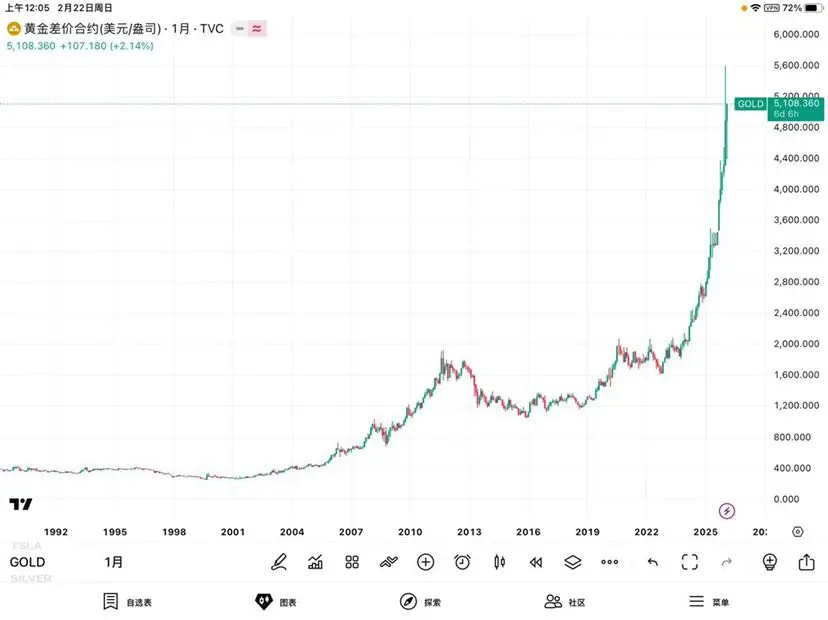
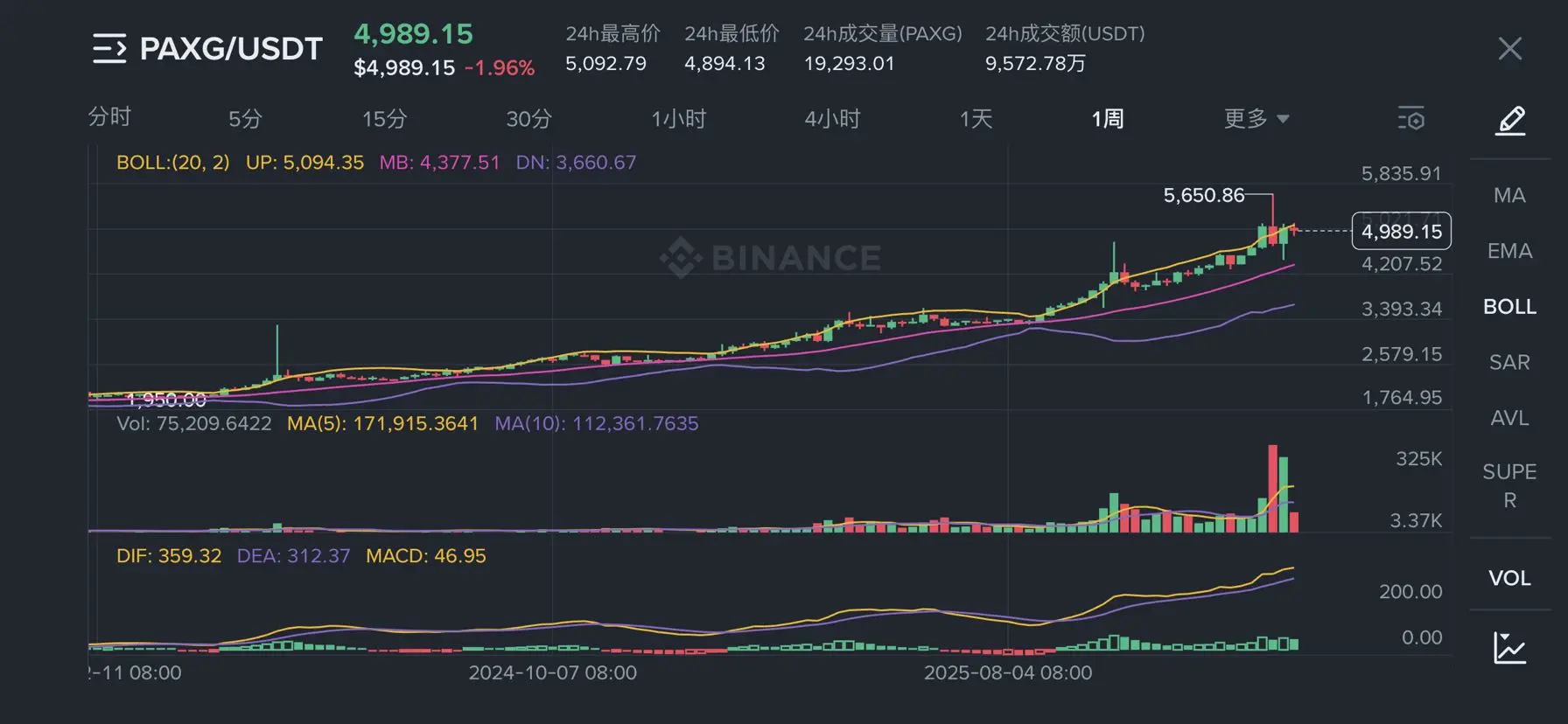
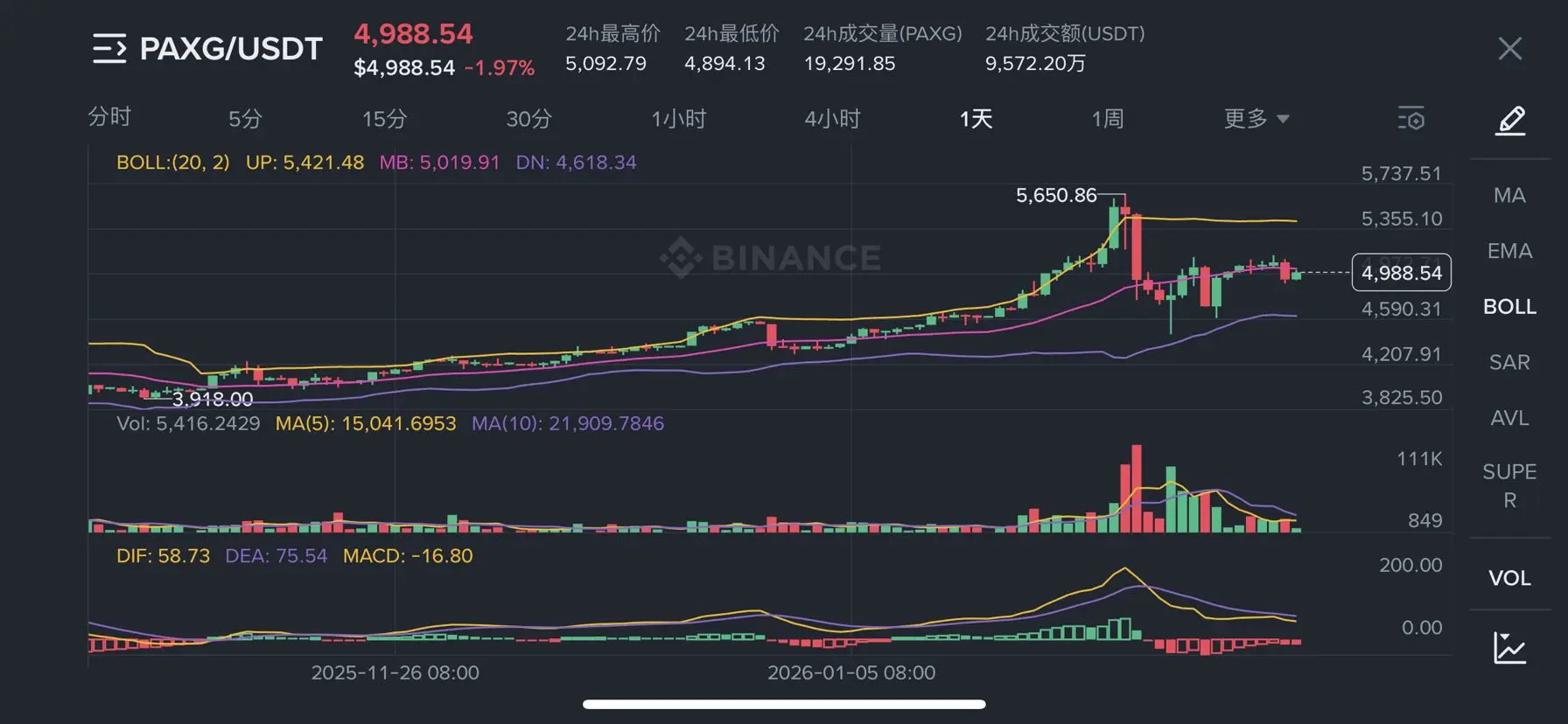
Should you buy gold now or not? A clear explanation: trend, timing, entry points, how to get started
Many people see gold surge from 4500 all the way to 5600, then fall back to around 4900–5000, and start to worry: "Is this the top?" "Can I still buy now?" "Will I get trapped after buying?"
I'll give you a straightforward conclusion:
The overall trend of gold is not bad, but now is not a low-risk buying point.
Either wait for a pullback to a key zone before buying, or wait for a confirmed breakout before entering.
Avoid buying at intermediate levels, as they are the easiest to be whipp
Many people see gold surge from 4500 all the way to 5600, then fall back to around 4900–5000, and start to worry: "Is this the top?" "Can I still buy now?" "Will I get trapped after buying?"
I'll give you a straightforward conclusion:
The overall trend of gold is not bad, but now is not a low-risk buying point.
Either wait for a pullback to a key zone before buying, or wait for a confirmed breakout before entering.
Avoid buying at intermediate levels, as they are the easiest to be whipp
PAXG-0.53%
- Reward
- 2
- 1
- Repost
- Share
BTC1iqbal:
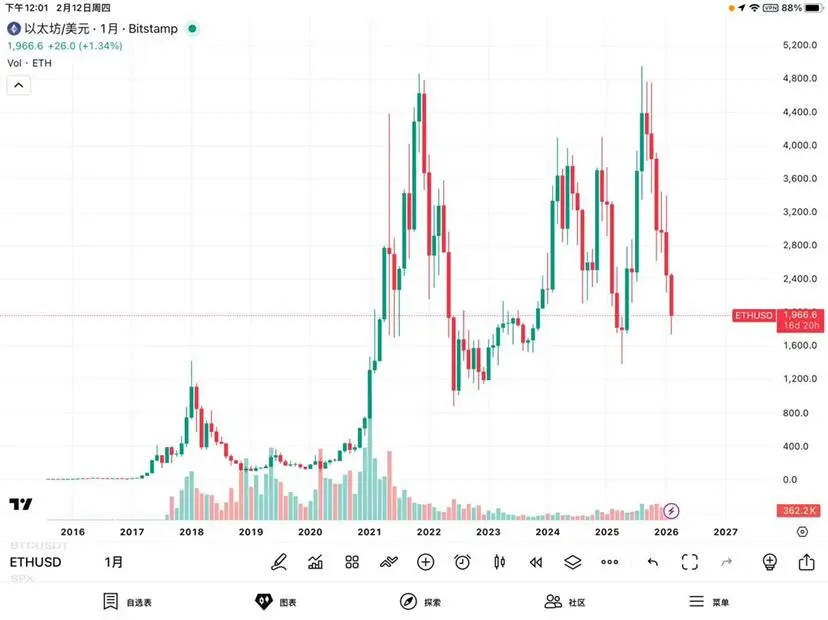
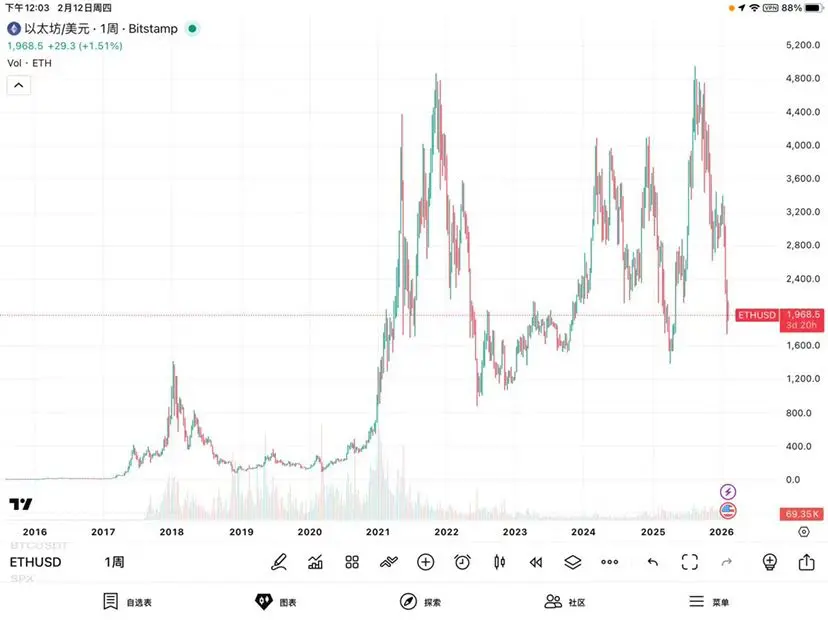
Diamond Hands 💎:From Birth to Now: An Explanation of Ethereum's Full Cycle Structure and Position
Many people are currently discussing a short-term issue:
Will ETH rebound? Is it really over?
But if we don't extend the timeline to the entire lifecycle, these questions are actually meaningless.
This analysis focuses on one thing:
Since its inception in 2015, placing Ethereum within a complete cycle structure to see which stage it is currently in.
1. Ethereum's Full Lifecycle Structure
1️⃣ 2015–2016: Primitive Accumulation Phase
During this stage: no institutions, no ETFs, no macro linkage, extremely low liquid
Many people are currently discussing a short-term issue:
Will ETH rebound? Is it really over?
But if we don't extend the timeline to the entire lifecycle, these questions are actually meaningless.
This analysis focuses on one thing:
Since its inception in 2015, placing Ethereum within a complete cycle structure to see which stage it is currently in.
1. Ethereum's Full Lifecycle Structure
1️⃣ 2015–2016: Primitive Accumulation Phase
During this stage: no institutions, no ETFs, no macro linkage, extremely low liquid
ETH4.36%
- Reward
- 1
- Comment
- Repost
- Share
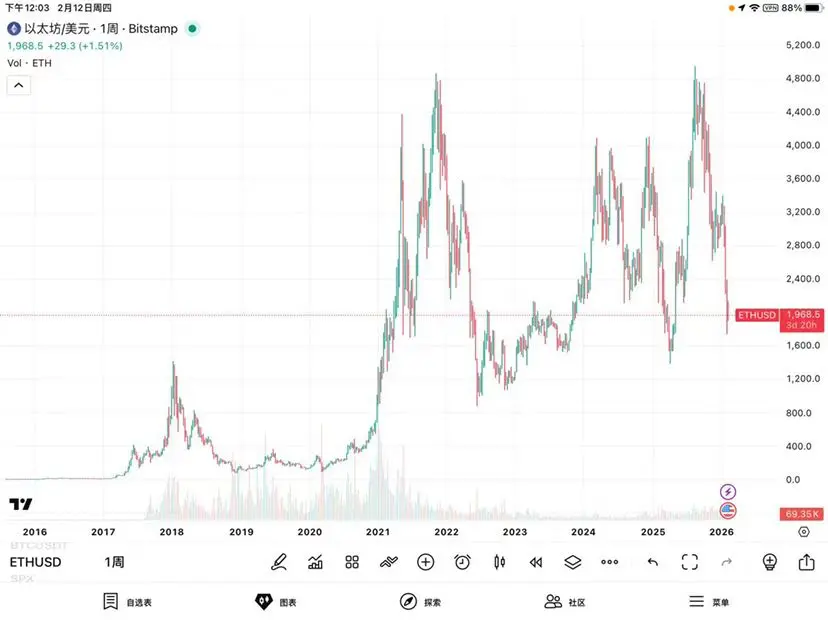
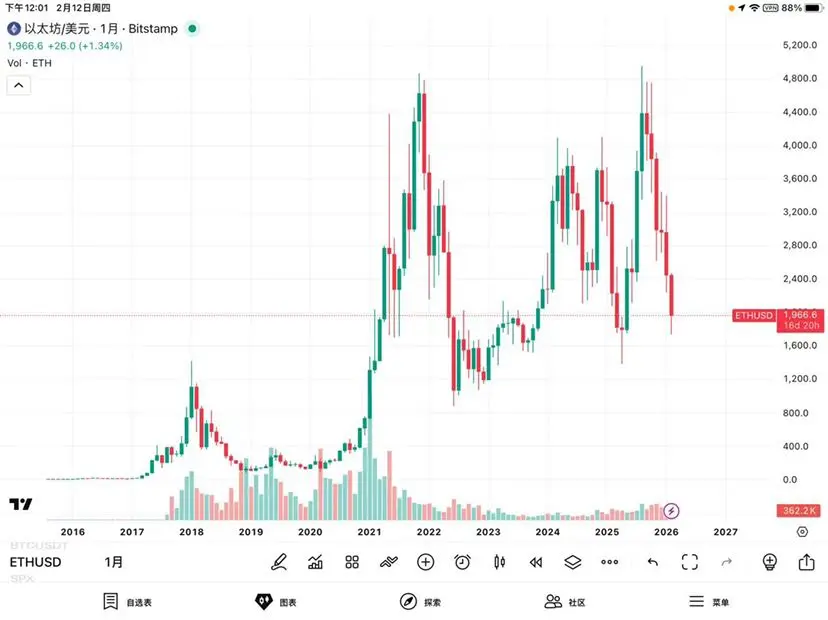
ETH Full Cycle Structure: Where Are We Now?
Many people are asking: Is ETH finally done?
I only discuss the structure, not emotions.
One sentence conclusion
ETH is currently in the "mid-attenuation" phase of the third cycle.
It’s not in the main rally phase, nor in the confirmed bottom phase.
1️⃣ ETH’s Three Major Cycles
First Cycle (2017)
ICO → Surge → Collapse
A typical bubble—clearing structure.
Second Cycle (2020–2022)
Liquidity easing → DeFi/NFT → 4800
Interest rate hikes → Dropped to 800–1000.
Third Cycle (2023–2025)
ETF + Institutionalization + Macro linkage
Re-approaching 4800 then pul
Many people are asking: Is ETH finally done?
I only discuss the structure, not emotions.
One sentence conclusion
ETH is currently in the "mid-attenuation" phase of the third cycle.
It’s not in the main rally phase, nor in the confirmed bottom phase.
1️⃣ ETH’s Three Major Cycles
First Cycle (2017)
ICO → Surge → Collapse
A typical bubble—clearing structure.
Second Cycle (2020–2022)
Liquidity easing → DeFi/NFT → 4800
Interest rate hikes → Dropped to 800–1000.
Third Cycle (2023–2025)
ETF + Institutionalization + Macro linkage
Re-approaching 4800 then pul
ETH4.36%
- Reward
- 2
- 2
- Repost
- Share
MapleLeafHighProfitAndLoss :
:
666666666666666666666666666666666666:View More
Can Bitcoin now participate?
Is a $67,000 Bitcoin an opportunity or a trap?
I don’t predict rises or falls, nor do I guess tomorrow’s trend.
I only use a fixed method to judge:
Structure → Stage → Sentiment → Discipline
We’ll break it down layer by layer.
1. First, look at the structure: Is it in a trend-following or counter-trend move?
Pull the chart to the daily timeframe, and you’ll see a few things:
- The high near $97,000 has already appeared
- Each rebound afterward has not made a new high
- Each decline is making a new low
- The Bollinger middle band has been broken
- Volume clearly inc
Is a $67,000 Bitcoin an opportunity or a trap?
I don’t predict rises or falls, nor do I guess tomorrow’s trend.
I only use a fixed method to judge:
Structure → Stage → Sentiment → Discipline
We’ll break it down layer by layer.
1. First, look at the structure: Is it in a trend-following or counter-trend move?
Pull the chart to the daily timeframe, and you’ll see a few things:
- The high near $97,000 has already appeared
- Each rebound afterward has not made a new high
- Each decline is making a new low
- The Bollinger middle band has been broken
- Volume clearly inc
BTC4.46%
- Reward
- 2
- Comment
- Repost
- Share
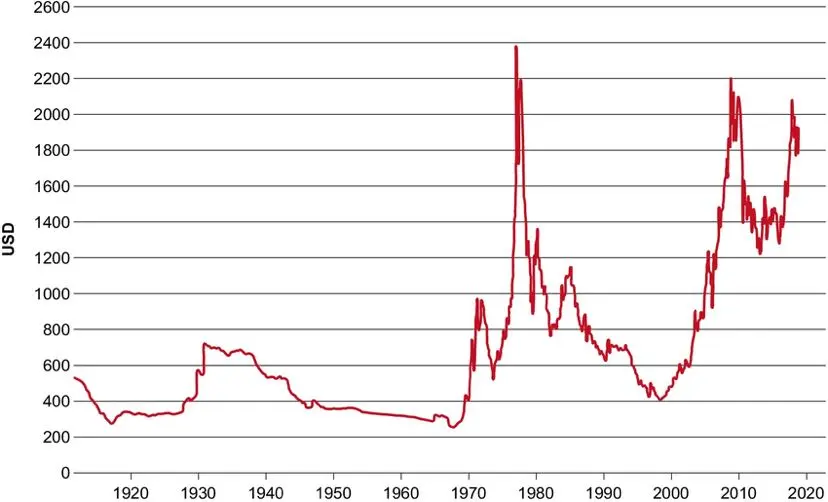
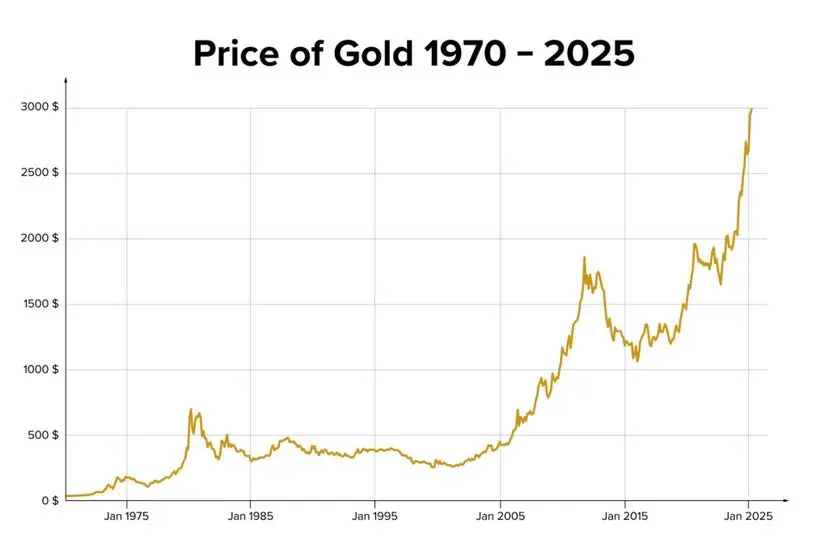
Understanding 100 Years of Gold: Where Are We Now?
Recently, many people have started paying attention to gold again.
Some ask:
Has gold already completed its correction?
At this position, can I still buy?
Will I get trapped at a high if I buy now?
These questions can actually be answered with a long-term chart of gold spanning 100 years.
If you only look at short-term fluctuations over a few days or weeks, the conclusion will definitely be confusing;
but if you extend the timeline to decades, the answer becomes very clear.
1. First, let's say the most important point (to give you a "stay calm
View OriginalRecently, many people have started paying attention to gold again.
Some ask:
Has gold already completed its correction?
At this position, can I still buy?
Will I get trapped at a high if I buy now?
These questions can actually be answered with a long-term chart of gold spanning 100 years.
If you only look at short-term fluctuations over a few days or weeks, the conclusion will definitely be confusing;
but if you extend the timeline to decades, the answer becomes very clear.
1. First, let's say the most important point (to give you a "stay calm
- Reward
- like
- Comment
- Repost
- Share
ETH (Ethereum) - What's Next: I Only Focus on Structure, Not Betting on Rebounds (Including Key Levels and "Allow/Prohibit" Checklist)
Many people instinctively ask during this ETH decline:
"Is it finally over? Can I buy the dip?"
Here's a more realistic answer:
This is not the "bottom-finding" phase, but rather the "post-breakout redefinition of consensus" phase.
Participation depends not on feelings but on the "structural thresholds."
I use a fixed sequence to judge:
Structure → Stage → Transition Conditions → Discipline (Allow/Prohibit) → Execution Levels
1) External Background: This declin
Many people instinctively ask during this ETH decline:
"Is it finally over? Can I buy the dip?"
Here's a more realistic answer:
This is not the "bottom-finding" phase, but rather the "post-breakout redefinition of consensus" phase.
Participation depends not on feelings but on the "structural thresholds."
I use a fixed sequence to judge:
Structure → Stage → Transition Conditions → Discipline (Allow/Prohibit) → Execution Levels
1) External Background: This declin
ETH4.36%
- Reward
- 3
- Comment
- Repost
- Share
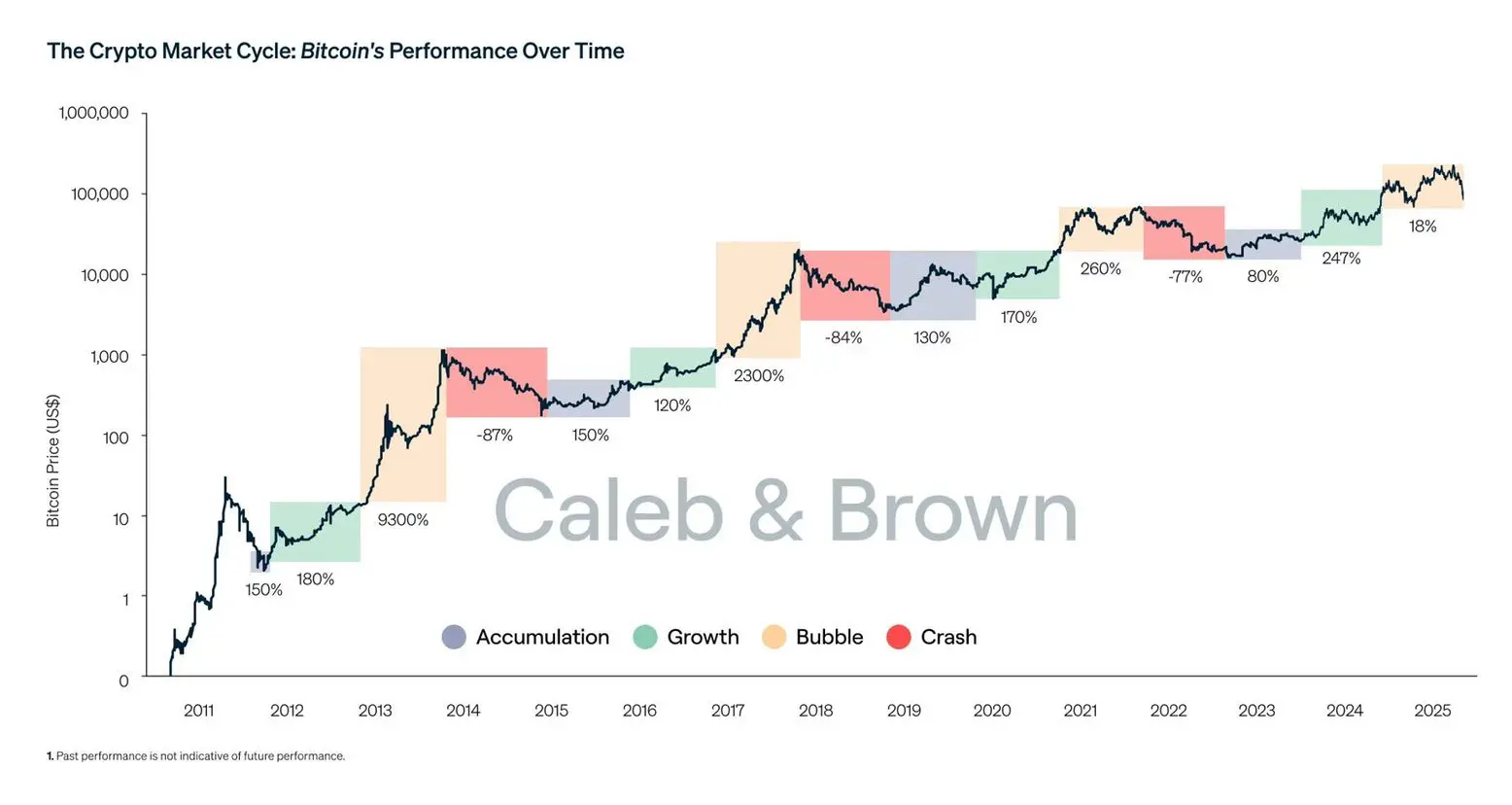
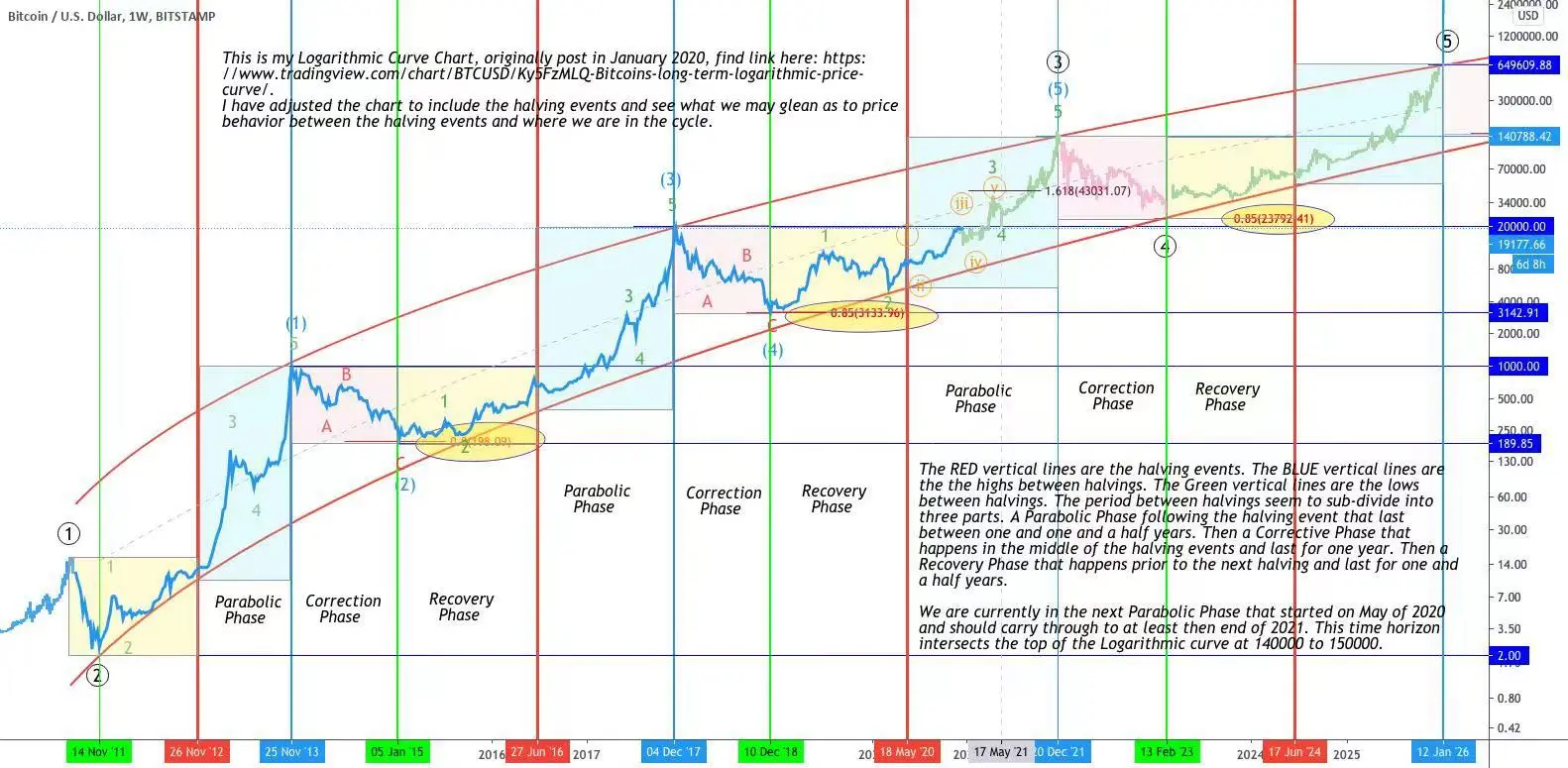
Using a Complete Historical Chart to View BTC: What Does "Downward Completion State" Mean?
Many people ask:
When will BTC finish falling? How low will it go?
If you want a "precise number," you're basically gambling.
But if you're willing to use a more reliable method—looking at the full historical chart (weekly + logarithmic scale)—you'll find:
Every time a bear market ends in history, it's not just about "dropping to a certain point," but about a set of very specific "end patterns."
In other words:
The "downward completion state" is a set of signals, not a single price.
Below, I will break d
Many people ask:
When will BTC finish falling? How low will it go?
If you want a "precise number," you're basically gambling.
But if you're willing to use a more reliable method—looking at the full historical chart (weekly + logarithmic scale)—you'll find:
Every time a bear market ends in history, it's not just about "dropping to a certain point," but about a set of very specific "end patterns."
In other words:
The "downward completion state" is a set of signals, not a single price.
Below, I will break d
BTC4.46%
- Reward
- like
- Comment
- Repost
- Share