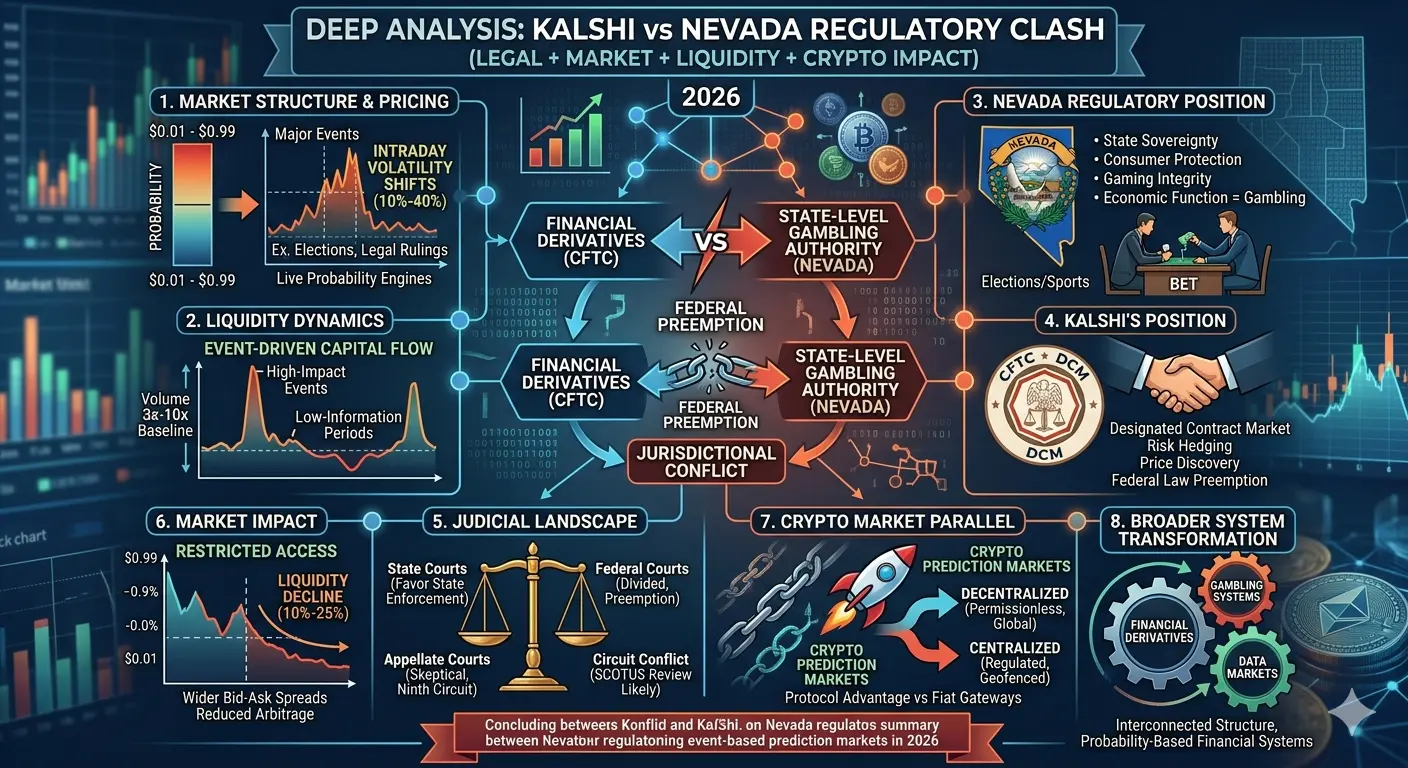
#KalshiFacesNevadaRegulatoryClash
Kalshi Faces Nevada Regulatory Clash: A Defining Moment for Prediction Markets and the Future of Event Trading ⚖️📊
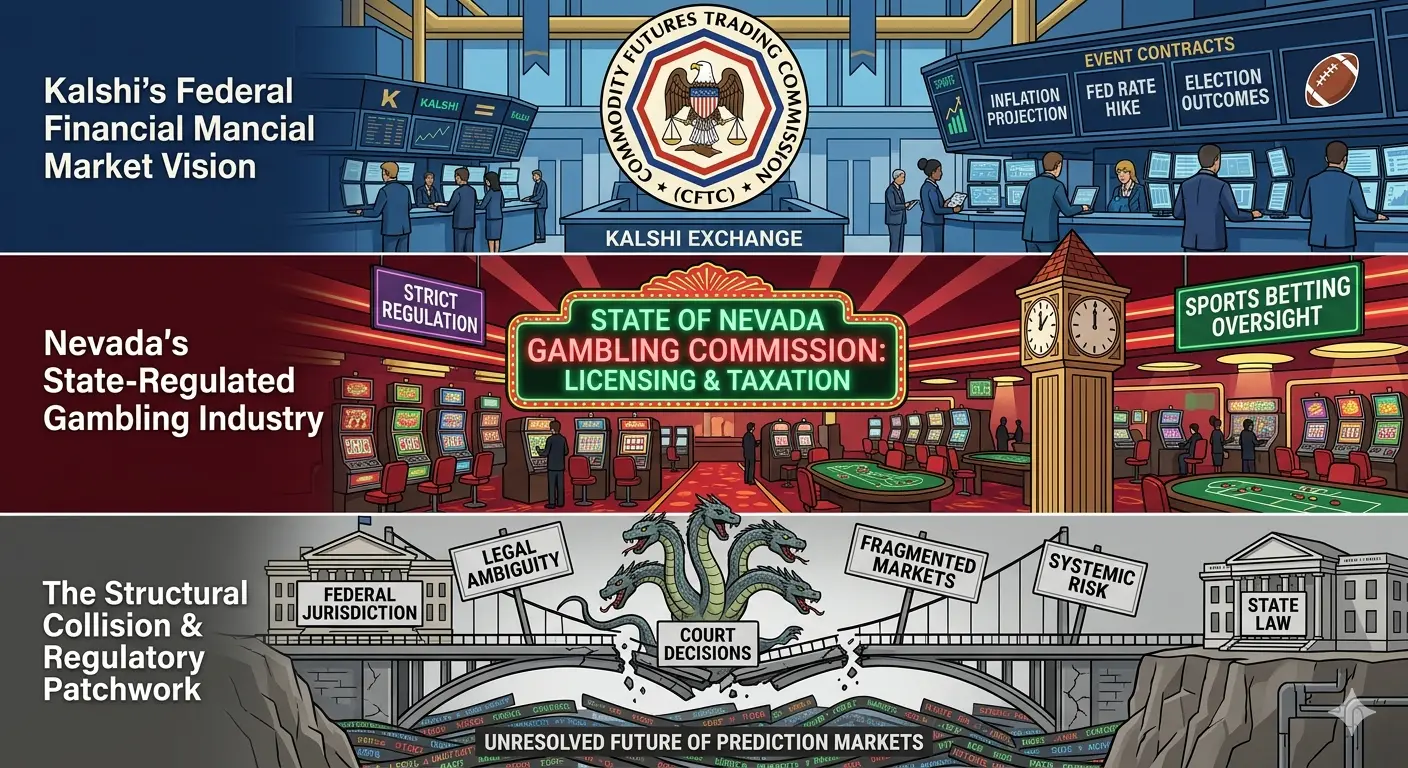
The ongoing situation surrounding Kalshi and Nevada regulators represents one of the most important regulatory discussions in the evolving world of prediction markets. At its core, this conflict is not just about one platform or one jurisdiction, but about how modern financial instruments that resemble both trading and betting should be classified, controlled, and integrated into existing legal frameworks. As platforms like Kalshi continue to grow in visibility and user adoption, they inevitably come into contact with regulatory bodies that were originally designed to oversee traditional gambling systems or financial derivatives markets, but not hybrid models that combine elements of both.
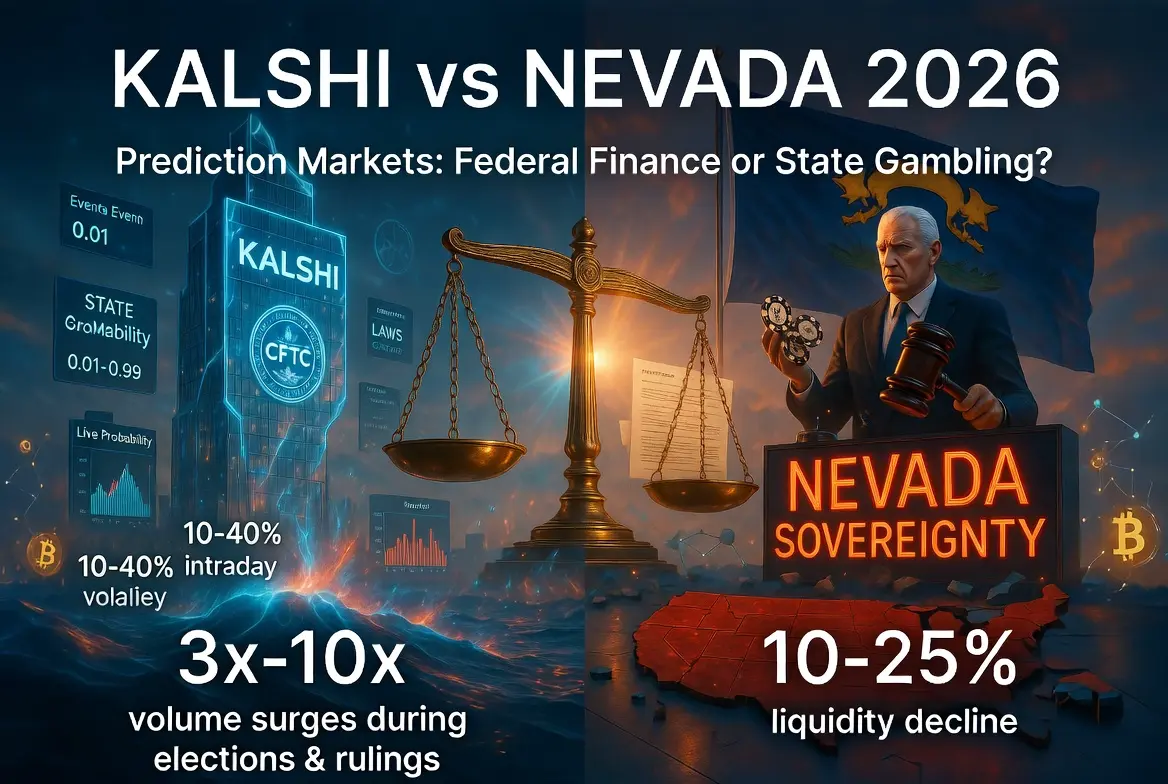
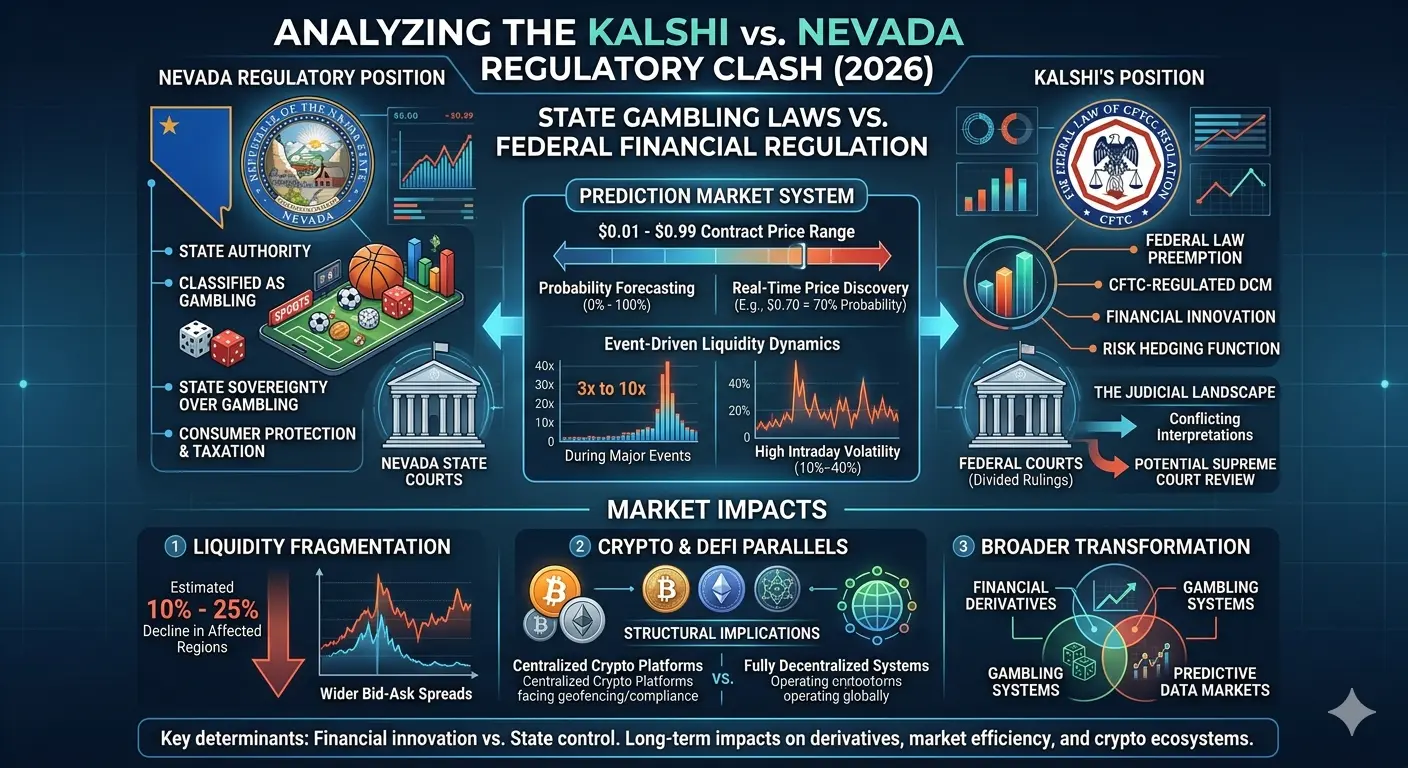
Prediction markets operate on a simple but powerful idea: users trade on the outcome of real-world events. These events can range from economic indicators and political elections to sports results and macro-level financial outcomes. Kalshi, in particular, positions itself as a regulated exchange where event contracts are traded in a structured environment. However, this structure creates a complex legal question. Are these contracts financial derivatives similar to futures and options, or are they a form of wagering that falls under state-level gaming regulations? The answer to this question determines which regulatory authority has jurisdiction, and that is where the tension begins.
Nevada is one of the most heavily regulated gambling jurisdictions in the United States. The state has a well-established legal framework for gaming, casinos, and betting activities, and it maintains strict oversight over any activity that resembles wagering on uncertain outcomes. From the perspective of Nevada regulators, platforms that allow users to speculate on real-world events may fall under gaming laws, even if those platforms are structured like financial exchanges. This interpretation creates friction when applied to prediction market platforms that argue they are financial tools rather than gambling services.
On the other side, Kalshi and similar platforms argue that their model is fundamentally different from traditional gambling. They emphasize that their markets are regulated at the federal level under financial oversight frameworks and that their contracts are designed to function like hedging instruments. In this view, prediction markets are not about entertainment or chance, but about information aggregation and risk transfer. Participants are not simply betting; they are expressing informed opinions about future outcomes, which can have real economic value. This distinction is central to their argument for federal preemption over state-level gaming laws.
The Nevada regulatory clash highlights a broader tension in the financial innovation space. As technology continues to blur the lines between categories that were once clearly separated, regulators are being forced to reinterpret old definitions. Financial markets, gambling systems, and even social prediction tools are increasingly overlapping. This creates uncertainty not only for platforms like Kalshi but also for users, investors, and institutions that want to participate in these emerging markets without violating unclear or conflicting rules.
One of the key implications of this situation is regulatory fragmentation. If different states adopt different interpretations of prediction markets, it could create a patchwork of rules that makes it difficult for platforms to operate uniformly across the United States. For example, a contract that is considered legal and financial in one jurisdiction might be classified as illegal gambling in another. This inconsistency introduces operational risk and may limit the scalability of such platforms unless a clearer federal framework is established.
From a market perspective, uncertainty in regulation often has a chilling effect on innovation. Companies may delay expansion, restrict product offerings, or limit user access in certain regions to avoid legal complications. At the same time, regulatory scrutiny can also validate the importance of the sector. When regulators pay attention to a new market structure, it often signals that the model has reached a level of significance that cannot be ignored. In this sense, the clash itself may be seen as a sign of growth rather than decline.
Another important dimension of this situation is user behavior and perception. Many participants in prediction markets are drawn by the idea of combining information analysis with financial incentives. Unlike traditional gambling, where outcomes are purely chance-based, prediction markets often reward knowledge, research, and analytical thinking. This creates a different user profile, one that overlaps with traders, analysts, and data-driven investors. The regulatory classification of these users as either gamblers or market participants has meaningful consequences for how platforms are designed and how users are protected.
If prediction markets are treated as financial instruments, they would typically fall under stricter disclosure, reporting, and compliance requirements associated with derivatives trading. If they are treated as gambling, they would be subject to age restrictions, licensing requirements, and state-level taxation rules. Each classification carries different implications for innovation, accessibility, and growth potential. This is why the outcome of disputes like the one involving Nevada regulators is so important for the entire industry.
It is also worth considering the global context. Outside the United States, prediction markets are often treated differently depending on jurisdiction. Some countries regulate them as financial products, while others prohibit them entirely or place them under gambling laws. This lack of global consistency further complicates the expansion of platforms that aim to operate internationally. As a result, companies in this space must constantly adapt their compliance strategies based on regional legal interpretations.
Looking forward, the most likely outcome of such regulatory conflicts is not immediate resolution, but gradual evolution. Over time, legal frameworks tend to adapt to new technologies, especially when those technologies demonstrate clear economic utility and user demand. Prediction markets have the potential to provide valuable insights into collective expectations, market sentiment, and probability assessments of real-world events. This informational value may eventually push regulators to create more tailored rules rather than forcing existing gambling or financial categories onto a new system.
In conclusion, the Kalshi-Nevada regulatory clash is more than a legal dispute; it is a reflection of a broader transformation in how markets are structured and understood. It raises fundamental questions about classification, jurisdiction, innovation, and the future of event-based trading systems. As the industry continues to grow, these discussions will likely become more frequent and more complex. The outcome will not only shape the future of Kalshi but also influence the direction of prediction markets as a whole, determining whether they evolve into a fully recognized financial asset class or remain constrained by traditional regulatory boundaries.
Kalshi Faces Nevada Regulatory Clash: A Defining Moment for Prediction Markets and the Future of Event Trading ⚖️📊
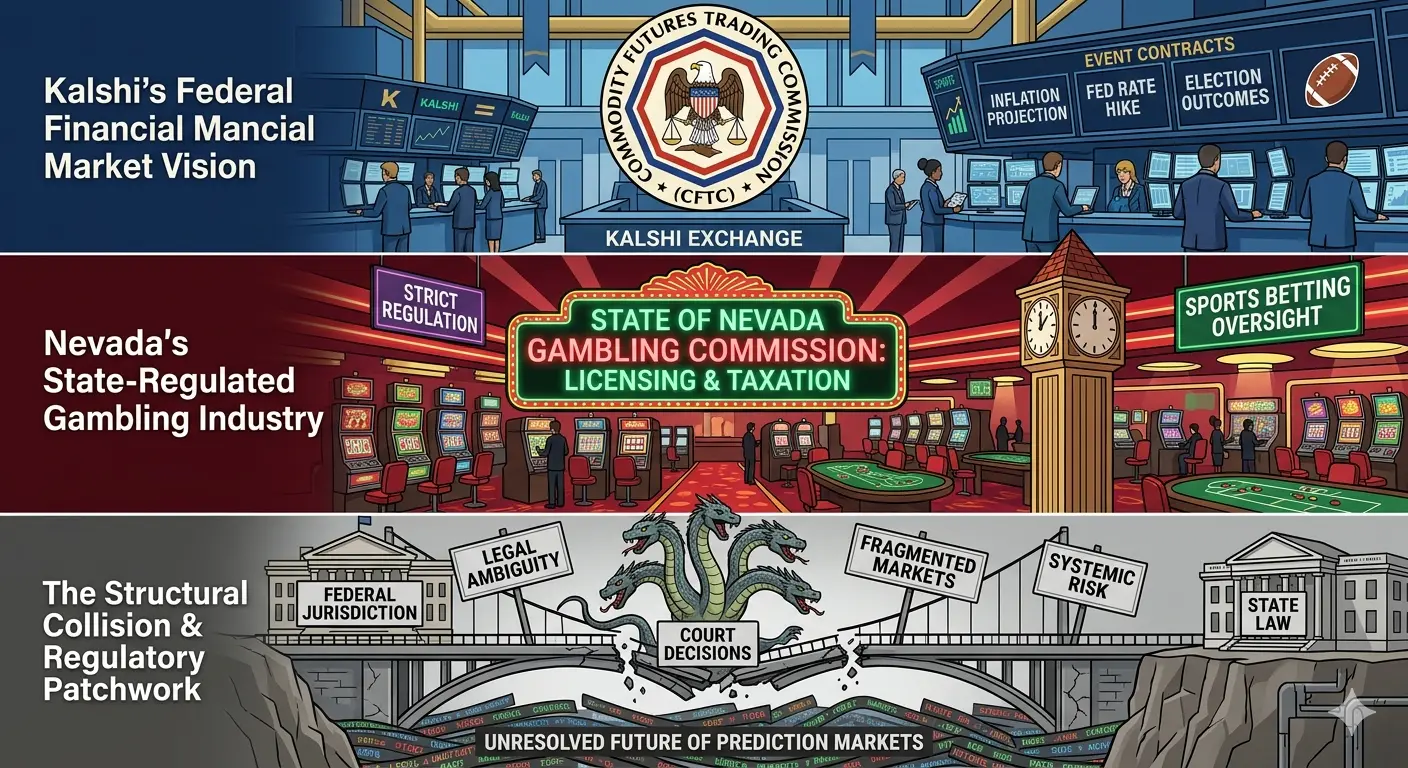
The ongoing situation surrounding Kalshi and Nevada regulators represents one of the most important regulatory discussions in the evolving world of prediction markets. At its core, this conflict is not just about one platform or one jurisdiction, but about how modern financial instruments that resemble both trading and betting should be classified, controlled, and integrated into existing legal frameworks. As platforms like Kalshi continue to grow in visibility and user adoption, they inevitably come into contact with regulatory bodies that were originally designed to oversee traditional gambling systems or financial derivatives markets, but not hybrid models that combine elements of both.
Prediction markets operate on a simple but powerful idea: users trade on the outcome of real-world events. These events can range from economic indicators and political elections to sports results and macro-level financial outcomes. Kalshi, in particular, positions itself as a regulated exchange where event contracts are traded in a structured environment. However, this structure creates a complex legal question. Are these contracts financial derivatives similar to futures and options, or are they a form of wagering that falls under state-level gaming regulations? The answer to this question determines which regulatory authority has jurisdiction, and that is where the tension begins.
Nevada is one of the most heavily regulated gambling jurisdictions in the United States. The state has a well-established legal framework for gaming, casinos, and betting activities, and it maintains strict oversight over any activity that resembles wagering on uncertain outcomes. From the perspective of Nevada regulators, platforms that allow users to speculate on real-world events may fall under gaming laws, even if those platforms are structured like financial exchanges. This interpretation creates friction when applied to prediction market platforms that argue they are financial tools rather than gambling services.
On the other side, Kalshi and similar platforms argue that their model is fundamentally different from traditional gambling. They emphasize that their markets are regulated at the federal level under financial oversight frameworks and that their contracts are designed to function like hedging instruments. In this view, prediction markets are not about entertainment or chance, but about information aggregation and risk transfer. Participants are not simply betting; they are expressing informed opinions about future outcomes, which can have real economic value. This distinction is central to their argument for federal preemption over state-level gaming laws.
The Nevada regulatory clash highlights a broader tension in the financial innovation space. As technology continues to blur the lines between categories that were once clearly separated, regulators are being forced to reinterpret old definitions. Financial markets, gambling systems, and even social prediction tools are increasingly overlapping. This creates uncertainty not only for platforms like Kalshi but also for users, investors, and institutions that want to participate in these emerging markets without violating unclear or conflicting rules.
One of the key implications of this situation is regulatory fragmentation. If different states adopt different interpretations of prediction markets, it could create a patchwork of rules that makes it difficult for platforms to operate uniformly across the United States. For example, a contract that is considered legal and financial in one jurisdiction might be classified as illegal gambling in another. This inconsistency introduces operational risk and may limit the scalability of such platforms unless a clearer federal framework is established.
From a market perspective, uncertainty in regulation often has a chilling effect on innovation. Companies may delay expansion, restrict product offerings, or limit user access in certain regions to avoid legal complications. At the same time, regulatory scrutiny can also validate the importance of the sector. When regulators pay attention to a new market structure, it often signals that the model has reached a level of significance that cannot be ignored. In this sense, the clash itself may be seen as a sign of growth rather than decline.
Another important dimension of this situation is user behavior and perception. Many participants in prediction markets are drawn by the idea of combining information analysis with financial incentives. Unlike traditional gambling, where outcomes are purely chance-based, prediction markets often reward knowledge, research, and analytical thinking. This creates a different user profile, one that overlaps with traders, analysts, and data-driven investors. The regulatory classification of these users as either gamblers or market participants has meaningful consequences for how platforms are designed and how users are protected.
If prediction markets are treated as financial instruments, they would typically fall under stricter disclosure, reporting, and compliance requirements associated with derivatives trading. If they are treated as gambling, they would be subject to age restrictions, licensing requirements, and state-level taxation rules. Each classification carries different implications for innovation, accessibility, and growth potential. This is why the outcome of disputes like the one involving Nevada regulators is so important for the entire industry.
It is also worth considering the global context. Outside the United States, prediction markets are often treated differently depending on jurisdiction. Some countries regulate them as financial products, while others prohibit them entirely or place them under gambling laws. This lack of global consistency further complicates the expansion of platforms that aim to operate internationally. As a result, companies in this space must constantly adapt their compliance strategies based on regional legal interpretations.
Looking forward, the most likely outcome of such regulatory conflicts is not immediate resolution, but gradual evolution. Over time, legal frameworks tend to adapt to new technologies, especially when those technologies demonstrate clear economic utility and user demand. Prediction markets have the potential to provide valuable insights into collective expectations, market sentiment, and probability assessments of real-world events. This informational value may eventually push regulators to create more tailored rules rather than forcing existing gambling or financial categories onto a new system.
In conclusion, the Kalshi-Nevada regulatory clash is more than a legal dispute; it is a reflection of a broader transformation in how markets are structured and understood. It raises fundamental questions about classification, jurisdiction, innovation, and the future of event-based trading systems. As the industry continues to grow, these discussions will likely become more frequent and more complex. The outcome will not only shape the future of Kalshi but also influence the direction of prediction markets as a whole, determining whether they evolve into a fully recognized financial asset class or remain constrained by traditional regulatory boundaries.