

Trade
Basic
Futures
Futures
Hundreds of contracts settled in USDT or BTC
TradFi
Gold
Trade global traditional assets with USDT in one place
Options
Hot
Trade European-style vanilla options
Unified Account
Maximize your capital efficiency
Demo Trading
Futures Kickoff
Get prepared for your futures trading
Futures Events
Participate in events to win generous rewards
Demo Trading
Use virtual funds to experience risk-free trading
Earn
Launch
CandyDrop
Collect candies to earn airdrops
Launchpool
Quick staking, earn potential new tokens
HODLer Airdrop
Hold GT and get massive airdrops for free
Launchpad
Be early to the next big token project
Alpha Points
Trade on-chain assets and enjoy airdrop rewards!
Futures Points
Earn futures points and claim airdrop rewards
Investment
Simple Earn
Earn interests with idle tokens
Auto-Invest
Auto-invest on a regular basis
Dual Investment
Buy low and sell high to take profits from price fluctuations
Soft Staking
Earn rewards with flexible staking
Crypto Loan
0 Fees
Pledge one crypto to borrow another
Lending Center
One-stop lending hub
VIP Wealth Hub
Customized wealth management empowers your assets growth
Private Wealth Management
Customized asset management to grow your digital assets
Quant Fund
Top asset management team helps you profit without hassle
Staking
Stake cryptos to earn in PoS products
Smart Leverage
New
No forced liquidation before maturity, worry-free leveraged gains
GUSD Minting
Use USDT/USDC to mint GUSD for treasury-level yields

More



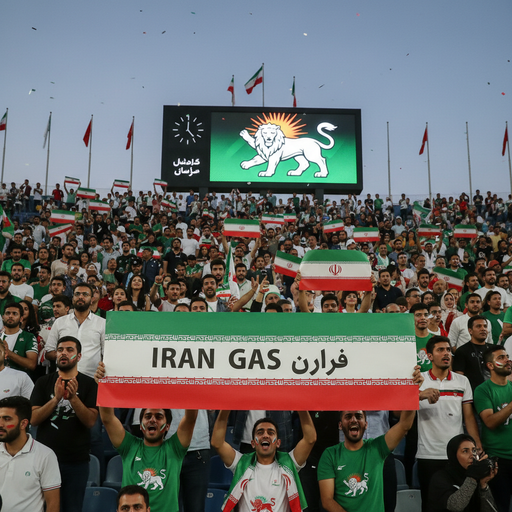


U.S.-Iran conflict, exposing high leverage in Asian stock markets?
Trump’s military actions against Iran caused North Asian stock markets to endure the most severe declines globally. The deep root of this crash is not the direct impact of Middle Eastern conflict on Asian economies, but rather the excessive crowding in AI semiconductor trading and historically high leverage positions, which were forced to be liquidated under external shocks.
On Wednesday, panic selling swept through Seoul and Tokyo. The Korean benchmark index KOSPI fell more than 10% for two consecutive days, marking the largest two-day decline since 2008. Prior to this, global funds were rotating heavily from U.S. software stocks into Asian semiconductors and hard tech targets, with Korea’s market financing balance and new account openings reaching record highs.
After the Iran conflict erupted, the US dollar suddenly strengthened, reducing the appeal of emerging market assets; markets also worried that sustained oil price shocks would push up inflation and force local central banks to raise interest rates, thereby increasing financing costs. Korea’s financial conditions, which have been the loosest in decades, faced sudden tightening, with high-leverage long positions hit hardest. The previously global theme of “selling the US” and diversification shifted into indiscriminate selling of Asian assets under the dual pressure of extremely crowded positions and capital outflows.
Bloomberg analysts believe that the main driver of this round of selling is capital flow rather than deteriorating fundamentals. The long-term super cycle narratives for Samsung Electronics and SK Hynix’s memory chips, as well as TSMC’s strong performance confirming AI capital expenditure trends, have not seen substantive reversals — profit upgrades for Asian companies remain stronger than those in the US.
Capital flows led the crash; why is North Asia the hardest hit?
Bloomberg points out that the relationship between steep market declines and capital flows often exceeds actual changes in fundamentals. Before this crash, as global investors rotated from software companies into AI infrastructure targets, hot money flooded into Asia seeking opportunities in semiconductors and hard tech. The ongoing expansion of AI trading scope is the deep root of North Asia’s major decline this week.
While North Asian economies are highly dependent on oil and natural gas imports, the immediate energy shock risk is arguably more pressing for Europe amid the Middle East conflict.
Moreover, unless the Strait of Hormuz blockade persists long-term, North Asian economies have some buffer through strategic reserves — Japan, for example, is estimated to have about 254 days of oil reserves. This suggests that the sharp sell-off in North Asian markets is less about pricing in economic impacts and more about concentrated deleveraging.
AI narratives attract hot money, record positions hide risks
Before the crisis, investment narratives in North Asian hard tech were almost entirely positive. Samsung Electronics and SK Hynix both stated that memory chip shortages would persist until 2027, with the market generally expecting a multi-year super cycle; analyst earnings forecasts for Samsung continued to be upwardly revised. Meanwhile, TSMC’s strong performance further confirmed that US tech giants will continue to increase AI capital expenditure, and the benefit logic for Asian suppliers remains valid.
Hot money rapidly accumulated among a few winners. According to Bloomberg data, in the week before the escalation of Middle East tensions, the $16 billion iShares MSCI Korea ETF saw net inflows of over $1.2 billion — the highest weekly inflow in its 25-year history. At the same time, South Korean retail investors, who had avoided blue chips for decades, aggressively bought KOSPI component stocks, with active accounts and margin balances both hitting record highs.
Thus, AI infrastructure trading in Asia has become highly crowded — laying the groundwork for subsequent stampede-like sell-offs.
Middle East conflict triggers chain deleveraging
As the Iran conflict continues to escalate, capital begins to retreat. The US dollar’s sudden strength erodes the allocation logic of emerging market assets; markets also worry that ongoing oil price shocks will push up inflation and force central banks worldwide to raise benchmark rates, increasing financing costs.
According to Goldman Sachs and Bloomberg data, Korea’s financial conditions had already been at their loosest in decades. Once financing costs tighten, long positions supported by margin balances face forced liquidation, accelerating the downward spiral.
A deeper problem is that this year’s international diversification theme has led to an unusually high concentration of capital inflows into North Asia. A geopolitical shock occurring thousands of miles away can trigger sharp reverse volatility. The reallocation logic of “selling the US” has thus transformed into indiscriminate liquidation of Asian assets.
Painful deleveraging may lead to healthy correction
Bloomberg analysts believe this sell-off may be viewed as a painful but healthy deleveraging process. It will eliminate momentum traders chasing gains and cause the market to revert to investors who focus on corporate earnings and reasonable valuations.
In terms of fundamentals, profit upgrades in Asia remain stronger than in the US. Analyst earnings forecasts for Samsung Electronics continue to be revised upward, and the super cycle narrative remains intact. Once deleveraging is complete, valuations after thorough correction could provide a more solid foundation for long-term re-entry by funds focused on the semiconductor super cycle and AI infrastructure trends.
Risk warning and disclaimer
Market risks are present; investment should be cautious. This article does not constitute personal investment advice and does not consider individual user’s specific investment goals, financial situation, or needs. Users should consider whether any opinions, views, or conclusions herein are suitable for their circumstances. Investment involves responsibility for your own decisions.