

Trade
Basic
Futures
Futures
Hundreds of contracts settled in USDT or BTC
TradFi
Gold
Trade global traditional assets with USDT in one place
Options
Hot
Trade European-style vanilla options
Unified Account
Maximize your capital efficiency
Demo Trading
Futures Kickoff
Get prepared for your futures trading
Futures Events
Participate in events to win generous rewards
Demo Trading
Use virtual funds to experience risk-free trading
Earn
Launch
CandyDrop
Collect candies to earn airdrops
Launchpool
Quick staking, earn potential new tokens
HODLer Airdrop
Hold GT and get massive airdrops for free
Launchpad
Be early to the next big token project
Alpha Points
Trade on-chain assets and enjoy airdrop rewards!
Futures Points
Earn futures points and claim airdrop rewards
Investment
Simple Earn
Earn interests with idle tokens
Auto-Invest
Auto-invest on a regular basis
Dual Investment
Buy low and sell high to take profits from price fluctuations
Soft Staking
Earn rewards with flexible staking
Crypto Loan
0 Fees
Pledge one crypto to borrow another
Lending Center
One-stop lending hub
VIP Wealth Hub
Customized wealth management empowers your assets growth
Private Wealth Management
Customized asset management to grow your digital assets
Quant Fund
Top asset management team helps you profit without hassle
Staking
Stake cryptos to earn in PoS products
Smart Leverage
New
No forced liquidation before maturity, worry-free leveraged gains
GUSD Minting
Use USDT/USDC to mint GUSD for treasury-level yields

More





SUI 2026 Market Outlook: Navigating Price Volatility, Institutional Adoption, and Ecosystem Growth Amid L1 Blockchain Co
Sui (SUI) has rapidly emerged as a next-generation Layer‑1 blockchain designed to address the core limitations that have constrained older networks such as Ethereum, Bitcoin, and Solana. Combining an object-centric architecture, parallel transaction execution, user-friendly onboarding features, and strong tokenomics, Sui is positioning itself as a high-performance platform capable of handling complex decentralized applications (dApps) in gaming, DeFi, NFTs, and emerging Web3 markets. As of 2026, the network is navigating price volatility, expanding institutional adoption, and achieving new levels of ecosystem growth, including ETFs and high-volume trading. This article provides a deep dive into Sui’s technical innovations, economic structure, ecosystem dynamics, and market positioning to give a comprehensive understanding of its current role and future potential in the blockchain space.
No 01 Architectural Paradigm Breakthrough
At the heart of Sui’s innovation is its object-centric architecture, which fundamentally departs from traditional account-based or UTXO-based blockchain models. Every asset — whether a fungible token, NFT, smart contract state, or in-game item — is treated as an independent object with its own metadata, ownership rules, and lifecycle. This approach enables the network to pre-analyze transaction dependencies and identify which operations are non-conflicting, allowing them to be executed in parallel rather than sequentially. The result is a blockchain capable of hundreds of thousands of transactions per second under certain conditions while maintaining extremely low latency. Beyond speed, this architecture provides composability, traceability, and fine-grained access control, allowing developers to create complex ecosystems in which assets can interact dynamically, evolve over time, and be reliably audited. For example, NFTs can gain properties based on gameplay events, and DeFi instruments can link multiple assets without risk of inconsistent states. This object-centric paradigm represents a radical rethinking of blockchain design, enabling both scalability and functionality at levels previously unattainable in mainstream Layer-1 networks.
No 02 Parallel Execution and Scalability
One of the most remarkable aspects of Sui is its parallel execution model, which allows independent transactions to execute simultaneously instead of being serialized in a global queue. Traditional blockchains, including Ethereum, process transactions sequentially to prevent conflicts, even when the transactions are unrelated. This sequential processing is a key bottleneck limiting throughput and increasing latency. Sui avoids this limitation by leveraging its object-centric design, analyzing transactions to detect dependencies among objects. Transactions that touch separate objects can run concurrently, dramatically increasing throughput. For example, simultaneous transfers of different NFTs, tokens, or game items can be processed at the same time without interference. The network also scales horizontally — adding validators or computing resources proportionally increases throughput. This scalability model is crucial for real-time applications such as multiplayer gaming, dynamic NFT marketplaces, or DeFi exchanges with high-frequency trading, ensuring that Sui can support massive user bases and large transaction volumes without network congestion. The combination of high-speed execution, parallelism, and object-level granularity sets Sui apart as a blockchain built for the demands of next-generation digital economies.
No 03 Consensus Innovation: Narwhal, Bullshark, and Mysticeti
Sui achieves its high throughput and low latency through a multi-layered consensus architecture that separates data availability, transaction propagation, and final ordering. The Narwhal layer functions as a mempool and data broadcast system, quickly disseminating transactions across the validator network while ensuring availability for all participants. Bullshark is responsible for ordering transactions that require global consensus, using optimized Byzantine Fault Tolerant (BFT) protocols to maintain security even in the presence of malicious or failing nodes. More recently, the Mysticeti upgrade introduced a hybrid approach: it identifies transactions that can be finalized without full BFT coordination versus those that require strict consensus due to shared-object interactions. This layered consensus system allows the network to optimize latency for ordinary transactions while maintaining rigorous security guarantees for complex, shared operations. By decoupling dissemination from ordering, Sui avoids the bottlenecks common in traditional blockchains and ensures that network growth (more validators, higher transaction volumes) scales without significant degradation in performance or security.
No 04 – Move and Sui Move Programming Language
Sui’s smart contracts are written in the Move programming language, originally developed for Meta’s Diem project, which emphasizes asset safety, explicit ownership, and deterministic execution. Move prevents critical blockchain vulnerabilities like double-spending, asset duplication, or unauthorized access by enforcing strict resource semantics at the language level. Sui extends Move into Sui Move, integrating deeply with the object-centric architecture. Developers can create dynamic objects, attach modular metadata, and define composable capabilities that control how assets interact. This enables highly sophisticated applications, such as evolving NFTs that change properties based on user actions, in-game items that carry complex rules, and DeFi protocols with multi-asset compositions. Sui Move also supports formal verification, allowing developers to mathematically prove correctness properties of contracts before deployment. This combination of safety, flexibility, and formal rigor positions Sui as a blockchain where complex and high-value applications can operate securely at scale.
No 05 Consensusless Execution of Owned Objects
A subtle but powerful feature of Sui is how it handles owned objects digital assets fully controlled by a single user. Transactions that involve only these private assets do not require full BFT consensus and instead execute on a fast-path mechanism, achieving sub-second finality. This drastically reduces computational overhead and transaction costs, enabling microtransactions and high-frequency interactions that would be expensive or slow on other blockchains. This architecture is particularly beneficial for user-facing applications like games, NFT marketplaces, and social platforms, where responsiveness and low costs are critical to user adoption. By combining fast-path execution for private objects with secure consensus for shared-object interactions, Sui provides a dual-mode system that balances speed, security, and scalability in a way unmatched by traditional Layer-1 chains.
No 06 SUI Tokenomics and Economic Design
The SUI token is central to the network’s operations, serving multiple roles: paying gas fees, securing the network through staking, and participating in governance. SUI has a capped supply of 10 billion tokens, with allocations designed to foster ecosystem growth, incentivize validators, and reward community participants. A unique storage fund mechanism collects a portion of fees from on-chain storage, supporting long-term data maintenance and validator compensation. Part of these fees is burned, creating deflationary pressure that preserves value while maintaining a sustainable economic model. Gradual unlocks and vesting schedules align incentives between early stakeholders and long-term network health, balancing liquidity needs with sustainable adoption. This economic architecture ensures that SUI remains both functional and sustainable, supporting developer innovation, validator security, and community participation.
No 07 User Experience Innovations
Sui differentiates itself with consumer-focused features that lower the entry barrier for Web3 adoption. The zkLogin system allows users to create wallets using familiar Web2 credentials (e.g., Google, Facebook, email) while preserving cryptographic security. Sponsored transactions further improve onboarding by letting applications pay gas fees on behalf of users, allowing new participants to interact without needing SUI upfront. Coupled with fast transaction finality, low costs, and intuitive wallet infrastructure, these features make Sui highly accessible, bridging the gap between Web2 familiarity and Web3 decentralization. This user-friendly experience is essential for scaling adoption in consumer applications such as gaming, NFT social platforms, and financial services.
No 08 Ecosystem Depth and Use Cases
Sui’s technical innovations enable a broad range of applications. In gaming, its object-centric model allows dynamic assets that evolve in real time based on gameplay or social interactions. In DeFi, parallel execution supports high-frequency trading, rapid liquidity provision, and complex composable protocols. Sui also integrates Bitcoin assets via BTCFi, enabling wrapped BTC to participate in decentralized financial ecosystems on Sui. Infrastructure tools like DeepBook, Sui’s on-chain central order book, offer advanced trading and liquidity functionality comparable to centralized exchanges but fully decentralized. Collectively, these features illustrate that Sui is not only a fast blockchain but also a platform capable of supporting sophisticated, interactive, real-time applications across multiple industries
No 09 Security and Developer Tooling
Security in Sui is robust and multi-layered. The Move language enforces strict ownership semantics, preventing asset duplication and common vulnerabilities. Formal verification tools and rigorous auditing practices allow developers to mathematically prove smart contract properties before deployment. Advanced tooling, including AI-assisted testing, fuzzing frameworks, and static analysis, further enhances contract reliability. This focus on security and tooling allows high-value applications in DeFi, gaming, and NFTs to operate with confidence and reduced risk, making Sui attractive for both developers and institutional participants.
No 10 Challenges and Opportunities
Despite its innovations, Sui faces challenges. The Move programming language is less familiar than Solidity or Rust, creating a learning curve for new developers. Validator participation is still maturing, and decentralization must be carefully maintained as the network grows. Market dynamics, including token unlock schedules and liquidity fluctuations, also influence adoption. However, Sui’s object-centric architecture, parallel execution, low fees, zkLogin onboarding, and expanding ecosystem position it as a leading contender in the next-generation blockchain landscape, capable of capturing emerging opportunities in gaming, NFTs,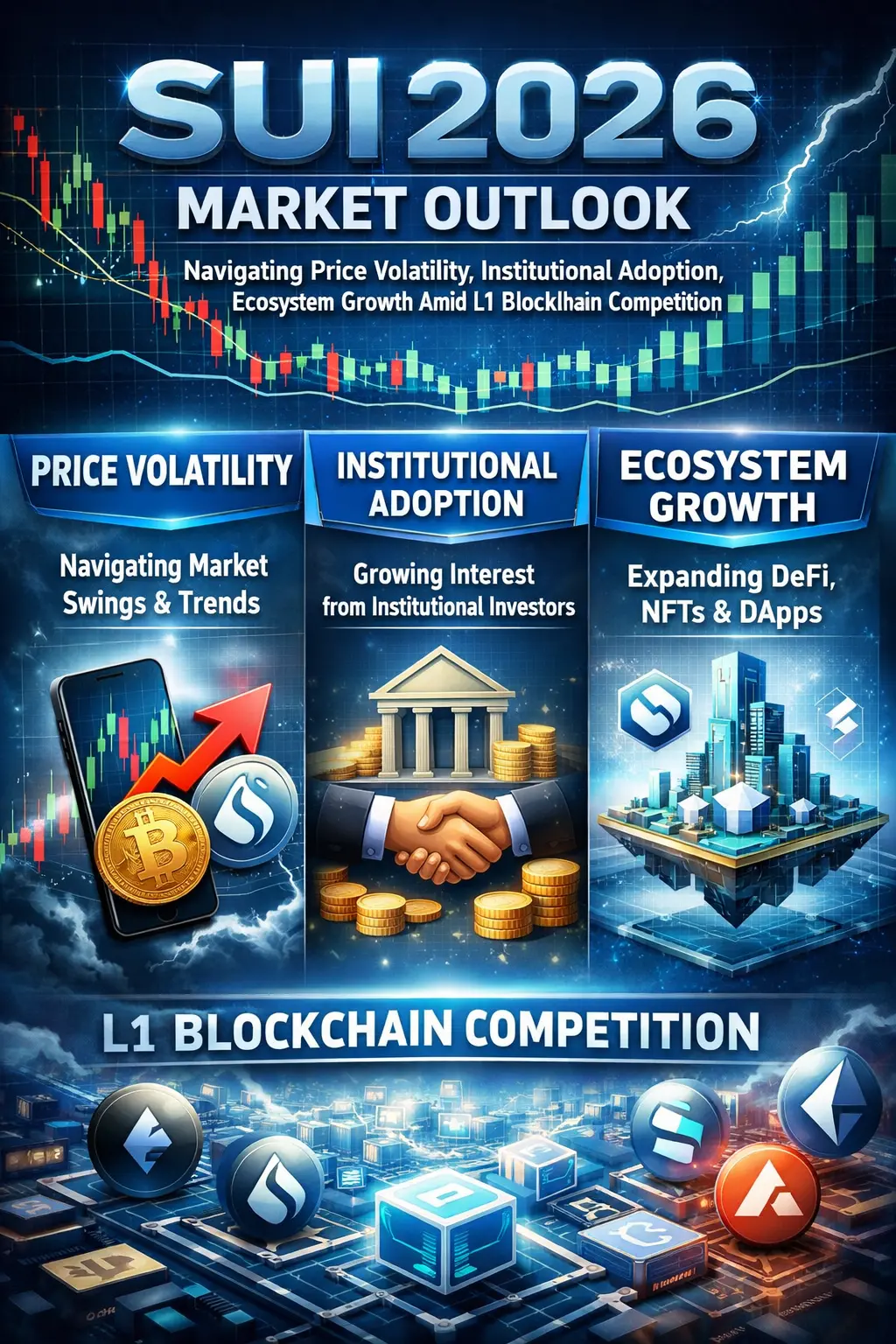 DeFi, and Web3 applications. Its combination of speed, security, and user-friendliness provides a foundation for broad adoption and long-term growth, particularly as institutional products like SUI ETFs and trading volume leadership emerge in 2026.