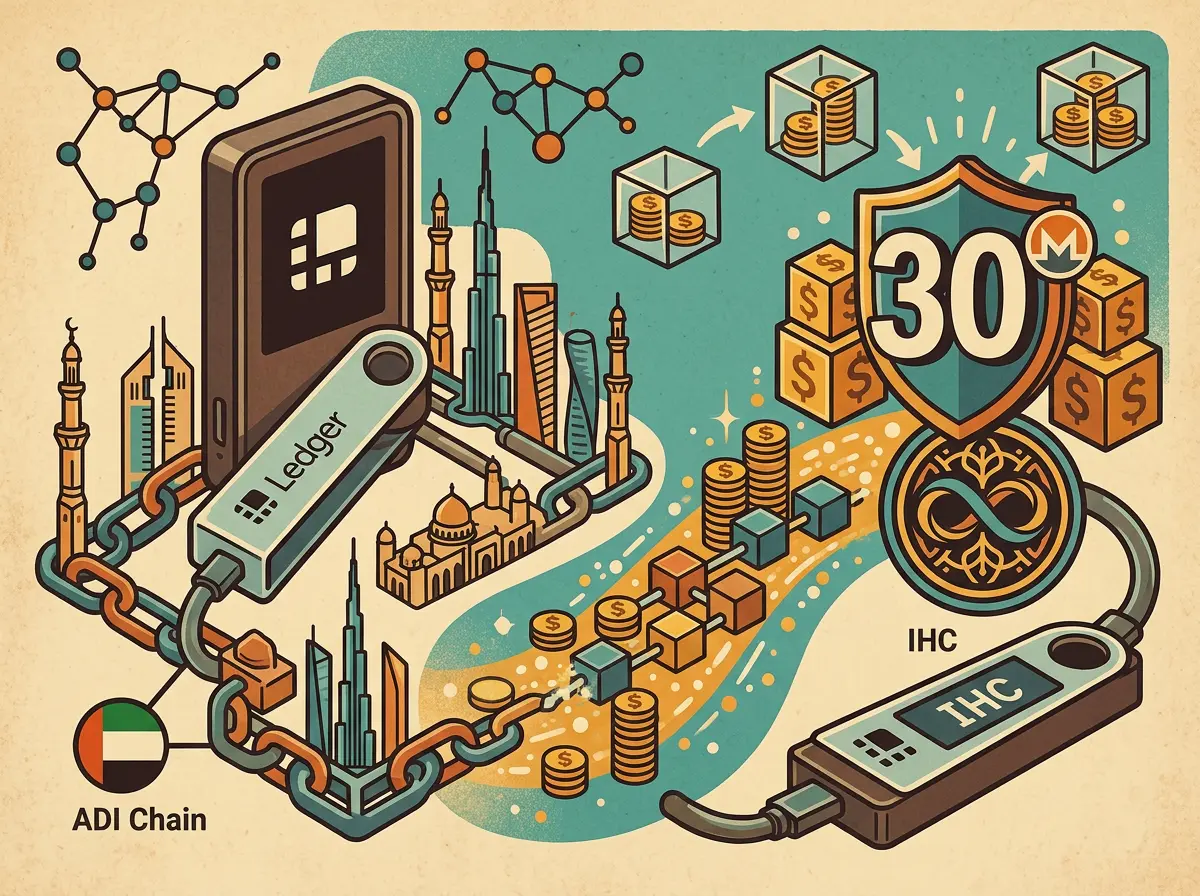
According to CoinTelegraph on May 26, Ledger added native support for the $ADI token on the ADI Chain network, allowing users to self-custody via Ledger hardware wallets and ADI’s hardware signing devices. International Holding Company (IHC) has completed a transaction of 110 million dirhams on this chain.
Global Non-USD Stablecoin Market Landscape: Confirmed Scale Data
Ledger’s support for ADI Chain comes amid an accelerating evolution of the stablecoin market structure worldwide. According to a report published by Visa via Dune Analytics in March 2026, the following market data has been confirmed: the overall stablecoin market size exceeds $300 billion, with USD-denominated stablecoins absolutely dominating; the total supply of non-USD stablecoins is about $1.2 billion, with monthly trading volume of about $10 billion; euro-supported tokens account for more than 80% of non-USD stablecoins, and are increasingly used for payments, remittances, payroll disbursement, and treasury management business.
However, a report from Blockchain for Europe, an EU initiative organization, in April 2026 cited DeFiLlama data indicating that although the euro’s importance in international markets continues to rise, the euro stablecoin share of global stablecoin trading volume remains below 1%, because MiCA’s strict reserve and interest-bearing token rules make it less commercially competitive than USD-supported stablecoins.
Two Confirmed Developments in the Euro Stablecoin Ecosystem
MiCA Rule Review: In May 2026, the European Commission launched a review of MiCA rules, covering provisions related to stablecoins, reserve requirements, and interest-bearing token products. Officials are reassessing how this framework operates in practice.
Qivalis Alliance Expansion: On May 20, 2026, the euro stablecoin alliance Qivalis announced the addition of 25 banks from 15 countries, bringing the total number of member institutions to 37. The alliance plans to officially roll out a regulated euro-denominated stablecoin later in 2026, aiming to build a euro-native option backed by a replaceable alternative to USD-supported stablecoins.
FAQ
What is the architecture of the DDSC stablecoin, and how is it fundamentally different from existing dollar stablecoins like USDC and USDT?
DDSC is an UAE dirham (AED)-denominated stablecoin jointly launched by First Abu Dhabi Bank (FAB) and the ADI Foundation, and approved by the UAE Central Bank in 2026. In terms of the regulatory framework, it is a regulated stablecoin approved by a sovereign central bank. By contrast, USDC is issued by Circle based on USD reserves, and USDT is issued by Tether; both are issued by private institutions and are USD-pegged. DDSC is positioned to serve institutional financial infrastructure within and across borders in the UAE, including cross-border payments for FAB customers, treasury operations, and trade settlement. Its issuing entities and reserve framework differ fundamentally from those of private USD stablecoins.
What are the technical and business logic reasons for ADI Chain to choose as a Layer 2 network rather than an independent Layer 1?
A Layer 2 design allows ADI Chain to inherit the security and settlement finality of the underlying Layer 1, while achieving faster transaction speeds, lower transaction fees, and more flexible compliance control at the application layer. For institutional user scenarios (such as cross-border payments and trade settlement), Layer 2 can optimize throughput and fee structures for specific business use cases while maintaining connectivity to the underlying chain. ADI Chain’s design also positions $ADI as the native Gas token, which makes network fee management and business model design more flexible and better aligned with the needs of institutional holders of DDSC (such as bank customers).
What does it mean for Ledger to provide native support for $ADI , and how does the security differ from software wallets?
Ledger’s native support means that $ADI token private key storage and transaction signing can be completed offline on Ledger’s Secure Element (Secure Element) chip. When transactions are broadcast, the private key is never exposed to the network-connected device. The fundamental difference from a software wallet is that a software wallet stores private keys on network-connected devices (such as a phone or computer), creating a risk that malicious software or hackers could steal them through network attacks. Ledger hardware wallets’ “Cold Storage” architecture is especially important for institutional users, because the scale of their holdings is typically far higher than that of individual users, with stricter security requirements. This integration is an important trust-building step for ADI Chain’s adoption by institutions.


