
The Algorand Foundation released its “Anti-Quantum Roadmap” on June 18, aiming to make the entire Algorand ecosystem quantum-resistant by the end of 2027. Starting this year, Algorand will roll out a series of major upgrades, including the introduction of post-quantum accounts and multi-signature wallets. In subsequent development phases, the upgrades will expand to the network’s underlying protocols and infrastructure. The ultimate goal is to complete “quantum resistance” across the entire ecosystem by the end of 2027.
Phased upgrade details in Algorand’s anti-quantum roadmap
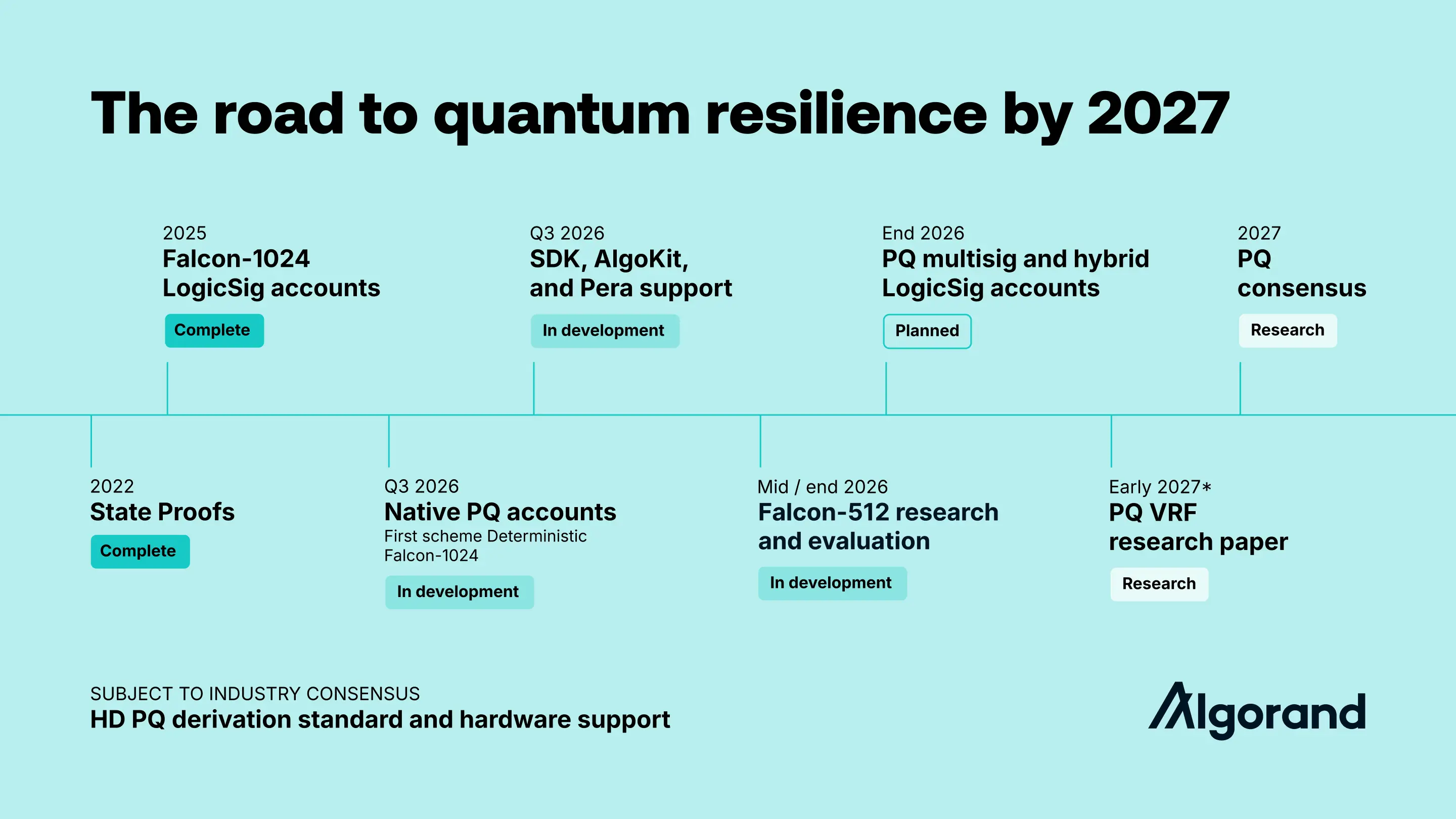
According to the roadmap published by the Algorand Foundation, the upgrade is divided into the following main phases:
First phase (to be launched starting this year): Introduce post-quantum accounts, multi-signature wallets, and staking support to provide quantum-resistant protection for users.
Subsequent development phases: Gradually shift the focus of upgrades to the network’s underlying protocols and infrastructure.
Final goal (by the end of 2027): Enable the entire Algorand ecosystem, including all layers of the protocol, to achieve full quantum resistance.
Algorand Foundation Chief Scientist Chris Peikert said: “To migrate a massive protocol that is already running usually takes several years, and as this century gradually draws to a close, the likelihood of quantum computers launching attacks on traditional cryptography is becoming clearly higher.” He noted that the outside world often underestimates the complexity of upgrading blockchain protocols.
Progress comparison after completion by the end of 2027: retiring early ahead of NIST standards, and three years ahead of the NSA
The Algorand Foundation emphasized that if the roadmap is executed smoothly, the progress completed by the end of 2027 will achieve two important goals: meeting the timeline for retiring traditional encryption standards earlier than NIST; and upgrading three years ahead of the upgrade deadlines set by the NSA for national security systems.
The foundation said blockchain networks absolutely cannot wait until “Q-Day (quantum apocalypse)” arrives to scramble—every defensive preparation must be deployed far in advance.
Key dynamics of the industry responding to quantum threats in parallel
Multiple organizations and blockchain ecosystems have simultaneously deployed quantum security measures:
Google: Has begun integrating post-quantum encryption standards into its infrastructure, aiming to complete the full upgrade by 2029, and warning companies across the industry to prepare as early as possible for the “post-quantum cryptography era.”
NIST: Is actively pushing for the standardization of post-quantum algorithms and has set a phase-out timeline for retiring some outdated cryptographic systems.
Ethereum Foundation: Announced earlier this year the establishment of a dedicated post-quantum security initiative, seeking secure transition solutions for wallets, applications, and validating nodes.
Solana: Published related proposals to explore how users and the network can transition to quantum-resistant encryption technology.
Frequently asked questions
Can quantum computers currently break the private keys of Bitcoin or Ethereum?
According to the article, most experts believe that quantum computers capable of breaking the current mainstream encryption (ECC) have not yet been created. Current deployment plans are forward-looking defenses, not a response to threats that have already occurred.
Why did Algorand’s roadmap start bottom-layer research as early as 2022?
According to the Algorand Foundation, this roadmap is based on bottom-layer research that the team quietly began in 2022. This aligns with the industry’s understanding that protocol upgrades often take several years; the groundwork is done in advance to complete preparations before real threats materialize.
Why does elliptic curve cryptography (ECC) face quantum threats?
According to the article, mainstream blockchains such as Bitcoin, Ethereum, and Solana rely on ECC to protect users’ wallets and transaction security; the cryptography community generally believes that sufficiently powerful quantum computers, in theory, can break ECC—potentially decrypting private keys and jeopardizing digital asset security.


