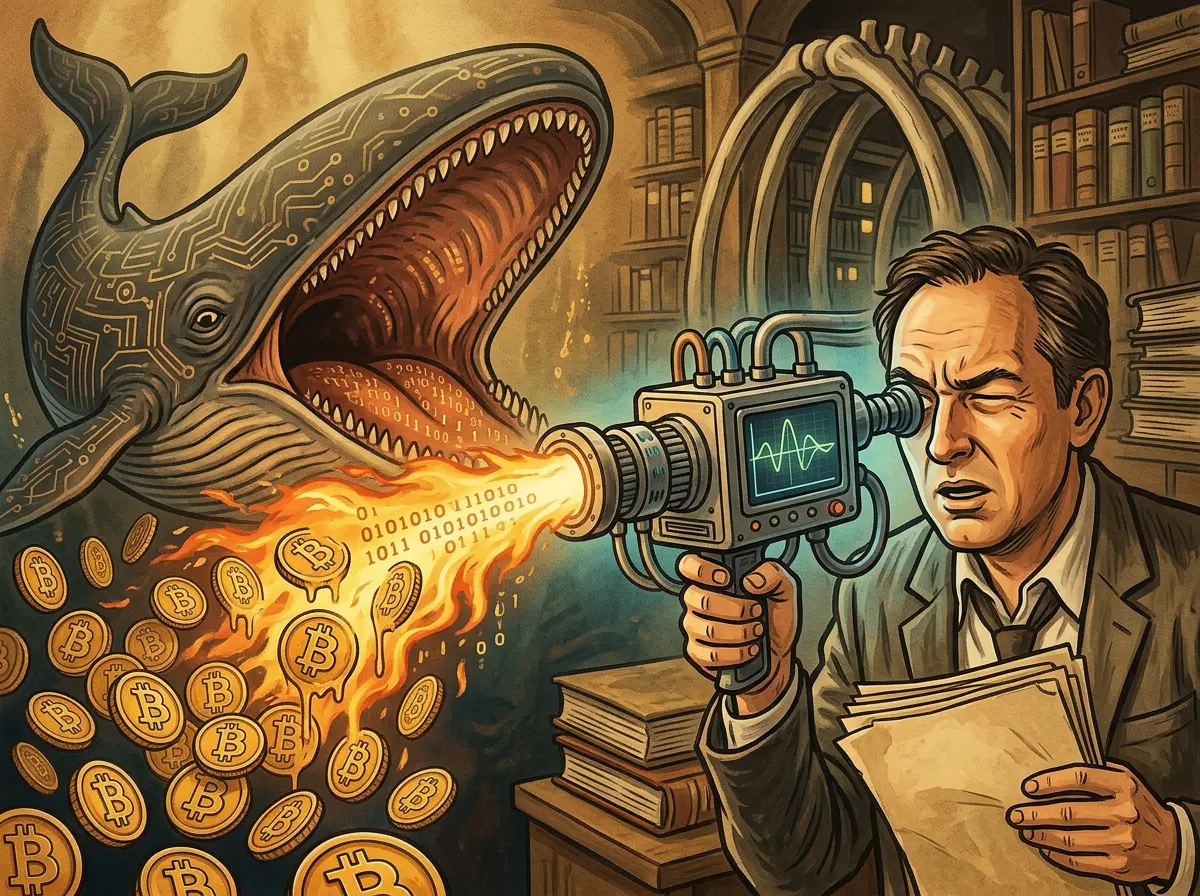
An unknown holder transferred 107 bitcoins into Bitcoin’s best-known burn address through five transactions on May 27, amounting to permanent asset destruction worth more than $8.2 million at that day’s market price. Blockstream CEO and early Bitcoin cryptography figure Adam Back commented on X, “Unexpected quantum bounty?”, sparking heated discussion across the community.
On-chain data confirms: deliberate details behind the five transactions
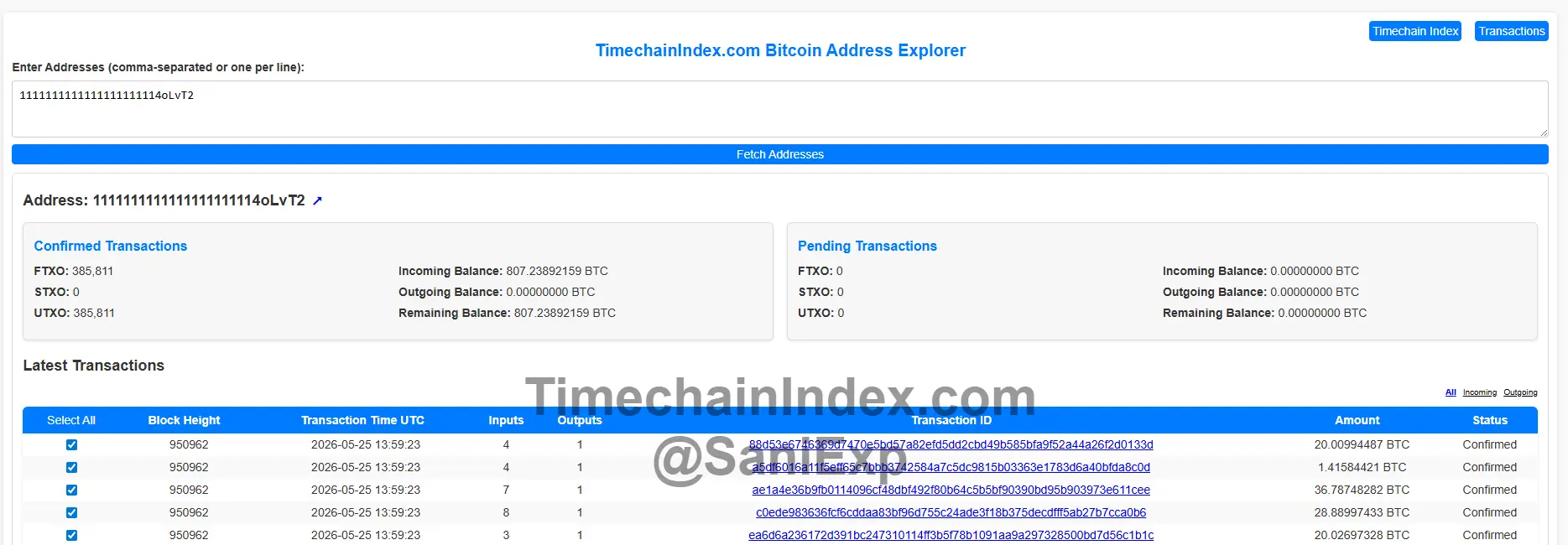 (Source: Sani)
On-chain data shows clear characteristics in how these five transactions were arranged. The timelock block height set for each transaction is consistent, and the miner fees are higher than normal market levels. The combination of features points to a deliberate setup intended for the transactions to be confirmed quickly, rather than a mistake or an automatic liquidation. The burn address “1111111111111111111114oLvT2” is a manually constructed, valid Bitcoin address format with no corresponding private key; any bitcoins sent to it cannot be retrieved on a technical level. The true source of this batch of bitcoins has not yet been confirmed. Some on-chain researchers suggest that the creation time of the related wallets (2014 to 2015) may be related to assets from early exchanges or old miner holdings, but as of the time of reporting, this speculation has not yet been verified by specific on-chain data.
Adam Back’s “quantum bounty” comment and its cryptography background
Adam Back’s “quantum bounty” remark is based on the special cryptographic design of the burn address. A typical Bitcoin address is derived from a private key to generate a public key and then create the address, but the burn address is a directly manually constructed valid format with no real private key, meaning traditional computers cannot reverse-engineer the corresponding private key. The logic implied by Adam Back’s playful comment is: if there is a major breakthrough in quantum computing in the future, then theoretically there could be research directions that break private keys for such addresses, making this bitcoin stash worth more than $8.2 million, in concept, a potential “bounty pool” for quantum cryptography research. Adam Back himself has also recently publicly confirmed that, currently, quantum computers’ capability “even isn’t as good as a $5 computer,” and he said the Bitcoin community still has enough time to study quantum-resistance upgrade solutions.
Current technical assessment: Bitcoin burn status and the existing quantum computing threat
Compared with the token-burning mechanisms commonly seen on Ethereum or some public chains, Bitcoin itself rarely involves active coin burning. In the past, most bitcoins that disappeared did so for passive reasons, such as lost private keys, hard drive damage, or the holder’s death. Market estimates suggest that there are currently 3 million to 4 million bitcoins permanently lost. This incident drew special attention because the sender clearly carried out intentional destruction. Regarding the quantum computing threat, most public assessments from Bitcoin core developers agree that quantum computers with a scale sufficient to threaten the security of Bitcoin private keys are still decades away from practical deployment; Adam Back himself confirms the same position. Institutions such as Google and IBM continue to advance quantum computing research, but to date, no research organizations have confirmed that quantum computers have the practical capability to break Bitcoin’s encryption mechanisms.
Frequently asked questions
Why can’t assets be retrieved from a Bitcoin burn address?
The burn address “1111111111111111111114oLvT2” is a manually constructed, valid Bitcoin address format, but it has no corresponding real private key. Bitcoin’s security mechanism requires the withdrawal party to provide a private key signature to move funds. Since this address has no corresponding private key, any bitcoins sent to it are permanently unrecoverable on a technical level.
Is Adam Back’s “quantum bounty” an official technical warning?
Based on Adam Back’s direct quote on the X platform, he used a playful tone with a question mark (“Unexpected quantum bounty?”), not an official technical warning. Adam Back himself has also recently publicly confirmed that the current capability of quantum computers is “even not as good as a $5 computer,” and at this stage it does not constitute a practical threat to Bitcoin’s encryption mechanism.
Has the source of this batch of bitcoins been confirmed?
As of May 27, 2026, the true source of this batch of bitcoins has not been confirmed. Some on-chain researchers point out that the creation time of the related wallets (2014 to 2015) may be related to assets from early exchanges or old miner holdings, but this speculation has not yet been verified with specific on-chain data.


