Traditional securities markets have long depended on brokerages, central depositories, and exchanges to handle trading and settlement. As blockchain technology advances, more and more financial assets are moving on-chain. Stablecoins offer a digital representation of fiat currencies, while tokenized stocks aim to bring equity assets on-chain, giving traditional securities the programmability and global liquidity of digital assets.
Against the rapid growth of Real World Assets (RWA), xStocks has emerged as a key infrastructure in the on-chain securities space. Through a standardized asset mapping framework, xStocks provides a new foundational layer for stock assets to enter the crypto market, DeFi protocols, and on-chain financial applications.
What Is xStocks
The core mission of xStocks is to transform traditional stock assets into tokenized assets that can circulate on a blockchain.
Each xStocks token typically represents the actual stock of a specific listed company. For instance, a tokenized stock representing Apple Inc. is mapped to actual Apple shares held in custody, while a token for Tesla Inc. is linked to a corresponding number of Tesla shares.
Unlike synthetic assets that merely track prices, xStocks is built on real asset backing. The underlying shares are held by a designated custodian, while the on-chain tokens serve as a digital representation of the corresponding equity.
This structure allows equity assets to break free from the traditional securities account system and participate in the digital asset ecosystem as blockchain tokens.
How Does the xStocks Issuance Architecture Work
The issuance of tokenized stocks typically involves multiple participants working together.
First, the issuer must buy or hold a corresponding number of actual shares. Then, the stock assets are deposited with a regulated custodian or a specialized legal entity. Once the underlying assets are confirmed to be in custody, the issuer mints the corresponding number of tokens on the blockchain based on the amount held.
The entire process forms a three-layer structure:
| Layer |
Function |
| Underlying Asset Layer |
Holds actual stocks |
| Legal and Custody Layer |
Ensures asset ownership |
| Blockchain Layer |
Issues and circulates tokens |
This structure ensures that on-chain tokens maintain a direct relationship with stock assets in the real world.
How Does xStocks Achieve Asset Mapping
Asset mapping is one of the core mechanisms of the xStocks system.
Mapping means that on-chain tokens have a predefined ratio to real-world stock assets. For example, one token may correspond to one share, or it may represent a fraction of a share.
To maintain this relationship, issuers typically conduct regular proof-of-assets and reserve disclosures. When new stocks are added to custody, corresponding tokens can be minted; when tokens are redeemed, the corresponding tokens are burned. Through this minting and burning mechanism, the on-chain token supply stays aligned with the underlying stock holdings.
Key Participants in the xStocks Ecosystem
The tokenized stock market is not run by a single entity but relies on multiple roles working together.
Issuer
The issuer designs the product structure, coordinates the legal framework, and manages the token issuance process.
Custodian
The custodian holds the actual stock assets and ensures their security.
The custodian is a critical foundation of the entire asset-backed system.
Market Maker
Market makers provide liquidity for tokenized stocks.
They narrow bid-ask spreads through continuous quoting, improving trading efficiency.
Blockchain Network
The blockchain network handles token issuance, transfer, and settlement.
It determines transaction speed, fee levels, and asset composability.
Investors
Investors hold tokenized stocks through digital wallets and participate in on-chain financial activities.
What Is the Difference Between xStocks and Traditional Brokerage Systems
Both xStocks and traditional brokerages provide stock exposure, but the underlying operational logic is fundamentally different.
| Dimension |
xStocks |
Traditional Brokerage |
| Asset Form |
On-chain tokens |
Securities account records |
| Holding Method |
Digital wallet |
Brokerage account |
| Settlement Method |
Blockchain settlement |
Central clearing house |
| Composability |
Accessible to DeFi |
Generally not accessible |
| Transfer Method |
On-chain transfer |
Relies on brokerage system |
| Trading Hours |
Depends on platform design |
Exchange business hours |
The two systems serve different market environments, but tokenized stocks are attempting to merge the strengths of traditional finance and digital finance.
What Scenarios Can xStocks Be Used In
Tokenized stocks can be used not only for investment trading but also extended to a wider range of on-chain financial scenarios.
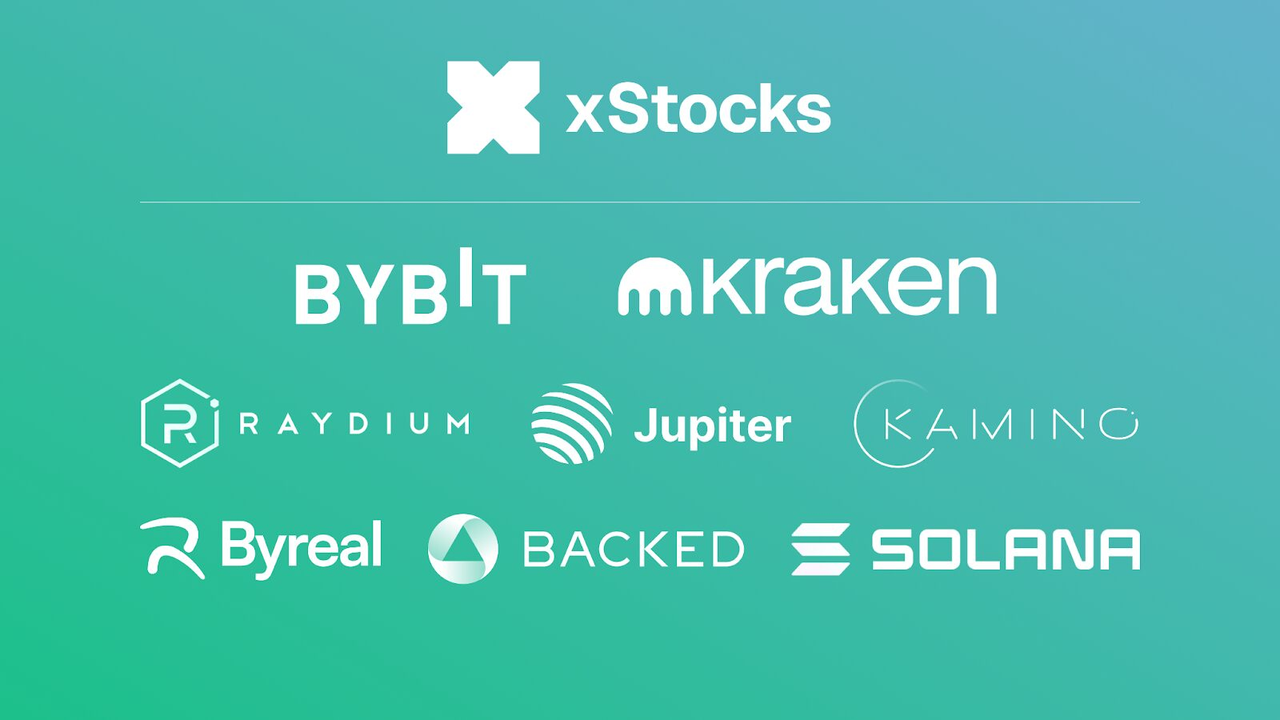
First, global stock access. Through on-chain asset representation, stock assets can reach a broader audience of digital asset users. Second, DeFi protocols. Tokenized stocks may in the future serve as collateral for lending, liquidity pool assets, or part of yield strategies.
In addition, on-chain stocks can also be combined with stablecoins, payment networks, and smart contract applications to create new forms of financial products.
What Challenges Does xStocks Face
Despite their significant potential, tokenized stocks still face several real-world challenges.
Regulatory compliance is one of the most important issues.
Stocks are heavily regulated financial assets, and definitions and requirements for tokenized securities vary across jurisdictions.
Liquidity remains another challenge.
Compared to traditional stock exchanges, the on-chain stock market is still smaller in scale.
In addition, asset custody risks, cross-chain compatibility, and investor protection mechanisms also affect the pace of industry development.
Conclusion
xStocks, as key infrastructure connecting traditional securities markets with the blockchain ecosystem, achieves the digital representation of equity assets through real stock custody, legal structure design, and on-chain token issuance. Unlike synthetic assets that only track prices, the core of xStocks lies in establishing an asset mapping relationship between on-chain tokens and real-world stocks.
As real-world asset tokenization continues to grow, traditional financial assets such as stocks, bonds, and funds are gradually moving onto blockchain networks. xStocks represents an important exploration direction for the on-chain securities market, aiming to give traditional stocks global liquidity, programmability, and on-chain interoperability while maintaining the asset-backed relationship.
FAQs
Is xStocks tokenized stocks?
xStocks is one implementation within the tokenized stock ecosystem. Its core goal is to map real stocks onto a blockchain, allowing equity assets to circulate and settle as digital tokens.
What is the difference between xStocks and synthetic assets?
xStocks typically relies on real stocks as underlying asset support, while synthetic assets track stock prices through collateral and price oracles. Both provide exposure to stock prices, but the underlying mechanisms differ significantly.
Does xStocks represent real stock ownership?
The specific rights depend on the issuance structure and legal framework. Different products may handle voting rights, dividend rights, and redemption rights differently; you should refer to the corresponding issuance documents.
How does xStocks ensure the authenticity of asset reserves?
Tokenized stock issuers typically use methods such as custodian holdings, third-party audits, proof of reserves, and information disclosure to demonstrate that the underlying assets exist and maintain the corresponding relationship.
Can xStocks be used in DeFi protocols?
Theoretically, yes. Since tokenized stocks are on-chain assets, they can be integrated with lending protocols, liquidity pools, and other smart contract applications, but specific support depends on the protocol design.
Will xStocks replace the traditional securities market?
xStocks is more likely to complement traditional securities markets rather than replace them entirely. Tokenized stocks aim to improve asset liquidity, accessibility, and on-chain interoperability, while traditional markets still have mature regulatory and infrastructure systems.