As one of the highest market-cap internet companies in the Hong Kong stock market, Tencent Holdings has long attracted global investor attention. WeChat, QQ, Tencent Games, Tencent Cloud, and its fintech business together form Tencent’s core growth engine, while its extensive investment portfolio further amplifies its influence in the digital economy.
With the continued advancement of artificial intelligence, cloud computing, and digital payments, Tencent Holdings’ role in China’s internet ecosystem is also evolving. For investors tracking the Hong Kong market and the global tech sector, Tencent Holdings has become a critical lens for understanding China’s digital economy.
What Is Tencent Holdings
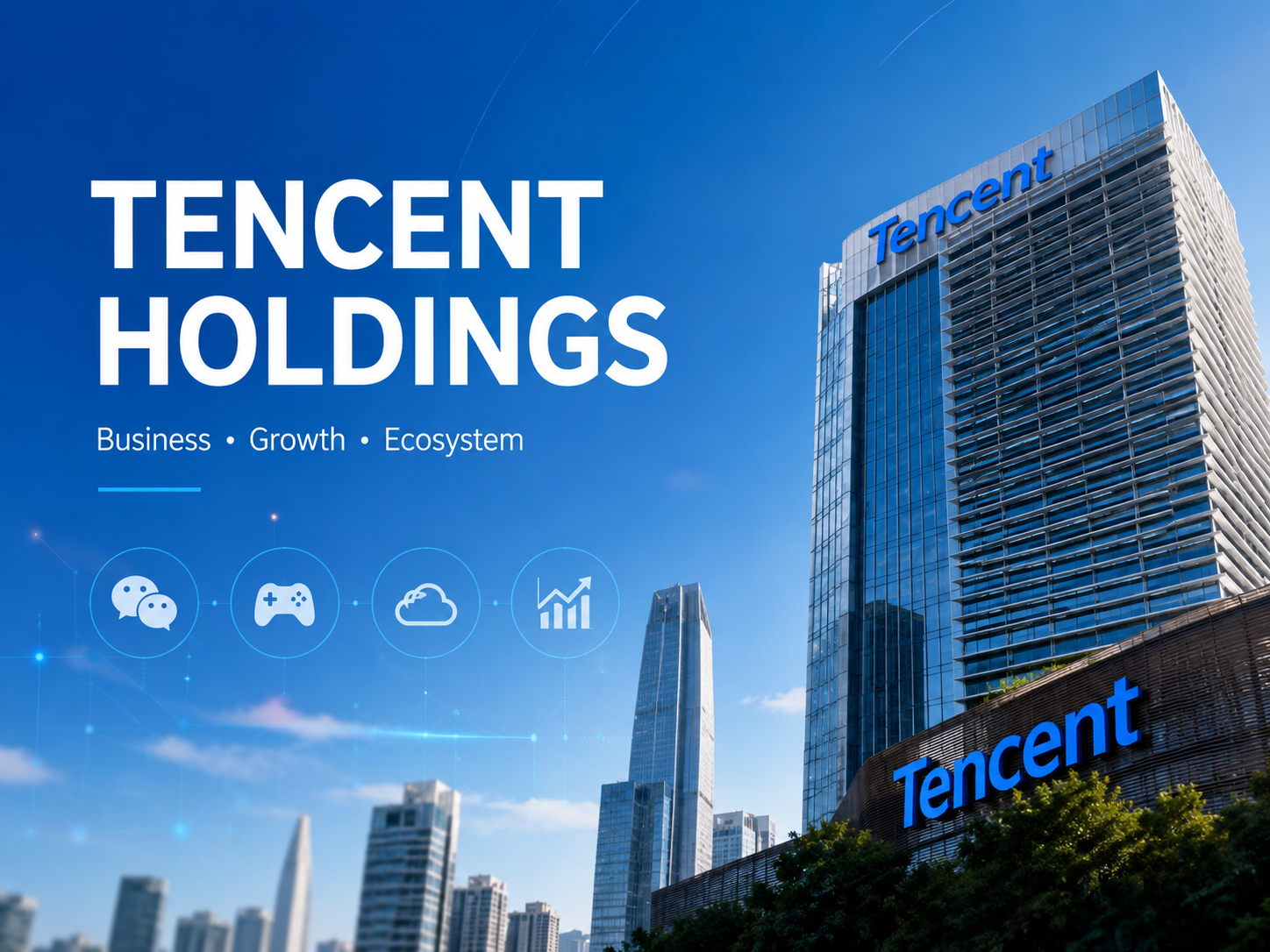
Tencent Holdings (Tencent Holdings, HKEX: 0700) is an internet technology company headquartered in Shenzhen, listed on the Hong Kong Stock Exchange in 2004. Over more than two decades, Tencent has evolved from an instant messaging service provider into a comprehensive technology conglomerate spanning social media, gaming, advertising, fintech, cloud computing, and enterprise services.
WeChat and QQ serve as Tencent’s primary traffic gateways, while Tencent Games has consistently ranked among the top global gaming companies. Meanwhile, new businesses such as Tencent Cloud, WeChat Pay, and Video Accounts continue to push its commercial boundaries, enabling Tencent to build an ecosystem that addresses both consumer lifestyle and enterprise digital needs.
As a major heavyweight in both the Hang Seng Index and the Hang Seng Tech Index, Tencent Holdings is not only one of the most influential tech companies in the Hong Kong market but also a key bellwether for China’s internet industry.
What Are the Core Business Segments of Tencent Holdings
Tencent Holdings now operates a diversified business structure, with multiple segments collectively contributing to its revenue stream and ecosystem foundation.
| Core Segment |
Representative Businesses |
| Value-Added Services |
WeChat, QQ, Tencent Games, Video Subscription |
| Online Advertising |
Video Account Ads, WeChat Ads, Tencent News |
| Fintech & Business Services |
WeChat Pay, Tencent Cloud |
| Investment Business |
Strategic Investments & Equity Holdings |
Value-added services have long been a major revenue pillar, with the gaming business maintaining strong global competitiveness. Titles like Honor of Kings and PUBG Mobile help Tencent generate stable cash flow, while the WeChat ecosystem provides a massive user base for advertising and payment services.
In recent years, fintech and enterprise services have emerged as new growth drivers. Tencent Cloud and WeChat Pay are playing increasingly pivotal roles in the development of the digital economy.
How Does Tencent Holdings’ Revenue Model Work
Tencent Holdings employs a platform ecosystem-driven model, built on a massive user base and strong synergies across its ecosystem. Social platforms serve as traffic gateways, content and payment systems create a closed user loop, while advertising and enterprise services drive monetization.
Currently, Tencent’s revenue primarily comes from gaming and digital content payments, advertising revenue, fintech services, and enterprise digital solutions. These business lines work in synergy, reducing the impact of volatility in any single segment.
The WeChat ecosystem is the core of Tencent’s business model. Its massive user scale not only fuels content consumption and advertising but also drives the growth of payments, live streaming, e-commerce, and enterprise services, creating a platform-based growth structure.
What Role Does Tencent Holdings Play in China’s Internet Ecosystem
Tencent Holdings has evolved from a pure internet company into a key infrastructure provider for China’s digital economy.
WeChat is more than a social app—it also covers payments, Mini Programs, Video Accounts, and enterprise services. WeChat Pay is a major player in China’s mobile payments market, Tencent Cloud supports enterprise digital transformation, and its gaming and digital content businesses connect millions of users and developers.
Through its platform capabilities, Tencent connects consumers, content creators, and enterprise users, establishing broad influence across China’s internet ecosystem. This ecosystem advantage is a key reason for Tencent’s sustained competitiveness.
Tencent Holdings’ Investment Landscape and Industry Layout
Beyond its own operations, Tencent Holdings is also one of the world’s most active tech investors.
Over the years, Tencent has made strategic investments in internet, e-commerce, gaming, AI, and digital finance sectors, backing companies such as JD.com, Meituan, Pinduoduo, SEA, Epic Games, Riot Games, and Supercell.
This investment strategy not only expands Tencent’s ecosystem but also strengthens its connections across the global tech supply chain. Unlike a pure internet platform model, Tencent has built an ecosystem network spanning multiple industries.
How Does Tencent Holdings Differ From Other Tech Giants
Compared to tech giants like Alibaba, Meta, Microsoft, and Apple, Tencent’s development path is distinctly different.
Alibaba is centered on e-commerce, while Tencent excels in social and content ecosystems. Meta has a global edge in social networking but lacks payment and gaming businesses. Microsoft relies more on enterprise software and cloud computing, whereas Tencent operates both consumer and industrial internet segments.
Each tech giant follows a different growth logic. Tencent’s biggest differentiator is its ability to connect content, payments, gaming, and enterprise services through its social platforms, forming a highly synergistic ecosystem.
Main Advantages and Potential Challenges of Tencent Holdings
A massive user base and stable cash flow are Tencent Holdings’ most important advantages. The WeChat ecosystem enjoys extremely high user stickiness, the gaming business consistently delivers profits, and fintech and enterprise services open new growth avenues.
At the same time, industry competition, technological shifts, and regulatory changes pose challenges. AI, cloud computing, and enterprise digital services have become key focus areas for Tencent, with its growth logic shifting from a traditional traffic model toward industrial internet and AI capabilities.
For a large tech company, maintaining core business strengths while identifying new growth opportunities is a critical long-term challenge.
How to Buy Tencent Holdings With USDT on Gate’s Hong Kong Stocks Section
Gate Stocks offers Hong Kong stock trading services. Users can trade Tencent Holdings (0700.HK) using USDT through Gate’s Hong Kong Stocks section. Unlike traditional Hong Kong stock accounts that require separate account opening and currency exchange to HKD, Gate Stocks uses a unified account system, allowing users to manage Hong Kong stocks, US stocks, and digital assets on a single platform for more efficient cross-market asset allocation.
After completing platform KYC and meeting regional eligibility requirements, users can transfer USDT from their Spot or Unified account to their stock account, then search for Tencent Holdings in the Hong Kong Stocks section. The typical process includes:
- Update the Gate App to a version supporting Hong Kong stock trading;
- Complete KYC and access requirements;
- Transfer USDT to the stock account;
- Search for Tencent Holdings (0700.HK);
- Execute buy/sell orders and manage positions.
Since Gate Stocks offers real stock trading, qualifying Tencent Holdings positions also carry corresponding economic rights. In addition to capital gains from stock price movements, investors can participate in Tencent Holdings’ cash dividends and other corporate actions. These rights are automatically processed per platform rules and reflected in account assets.
For long-term investors, returns from Tencent Holdings come not only from corporate value growth but also from accumulated shareholder rewards. By using USDT to invest in Tencent’s Hong Kong stock, users gain the convenience of digital asset settlement while enjoying the economic benefits of real shares, enabling more flexible global asset allocation.
Summary
Tencent Holdings is one of the most iconic companies in China’s internet sector, with operations spanning social media, gaming, advertising, fintech, cloud computing, and investment management. The WeChat ecosystem, diversified revenue mix, and extensive industry footprint form its core competitive strength.
As a leading tech heavyweight in the Hong Kong stock market, Tencent Holdings not only occupies a pivotal position in China’s digital economy but also serves as a key window for global investors tracking the development of China’s tech industry.
FAQ
What is Tencent Holdings?
Tencent Holdings is a leading internet technology company in China, covering social media, gaming, advertising, fintech, and cloud services.
What are Tencent Holdings’ main revenue sources?
Tencent Holdings’ revenue primarily comes from value-added services, online advertising, fintech and enterprise services, and investment income.
Why is Tencent Holdings a key constituent of the Hong Kong stock market?
Tencent Holdings is one of the largest market-cap tech companies in Hong Kong and a major component of the Hang Seng Index and Hang Seng Tech Index.
What is the difference between Tencent Holdings and Alibaba?
Tencent Holdings focuses on social and content ecosystems, while Alibaba is built around e-commerce and consumer platform ecosystems.
How can I buy Tencent Holdings with USDT on Gate?
Gate’s Hong Kong Stocks section supports USDT-denominated trading of Tencent Holdings. After completing KYC and fund transfers, users can participate in the Hong Kong stock market.