The global energy industry is undergoing a deep transformation from traditional fossil fuels to low-carbon, green energy. With the rapid adoption of electric vehicles, rising energy storage demand, and accelerating carbon neutrality policies worldwide, power batteries, hydrogen energy, and renewables have become the key focus areas for future industrial development. For large integrated enterprises, managing the green transition while preserving the strengths of traditional energy has emerged as a critical measure of long-term competitiveness.
As one of South Korea's leading conglomerates, SK Group wields significant influence in semiconductors and telecommunications, while also boasting deep expertise in the energy sector. Centered on SK Innovation, the group is steadily expanding into power batteries, energy storage systems (ESS), hydrogen energy, and low-carbon energy solutions. Through capital investment and industrial synergies, it is building a comprehensive new energy ecosystem, positioning energy as a foundational pillar of future growth.
What Core Businesses Make Up SK Group's New Energy Portfolio?
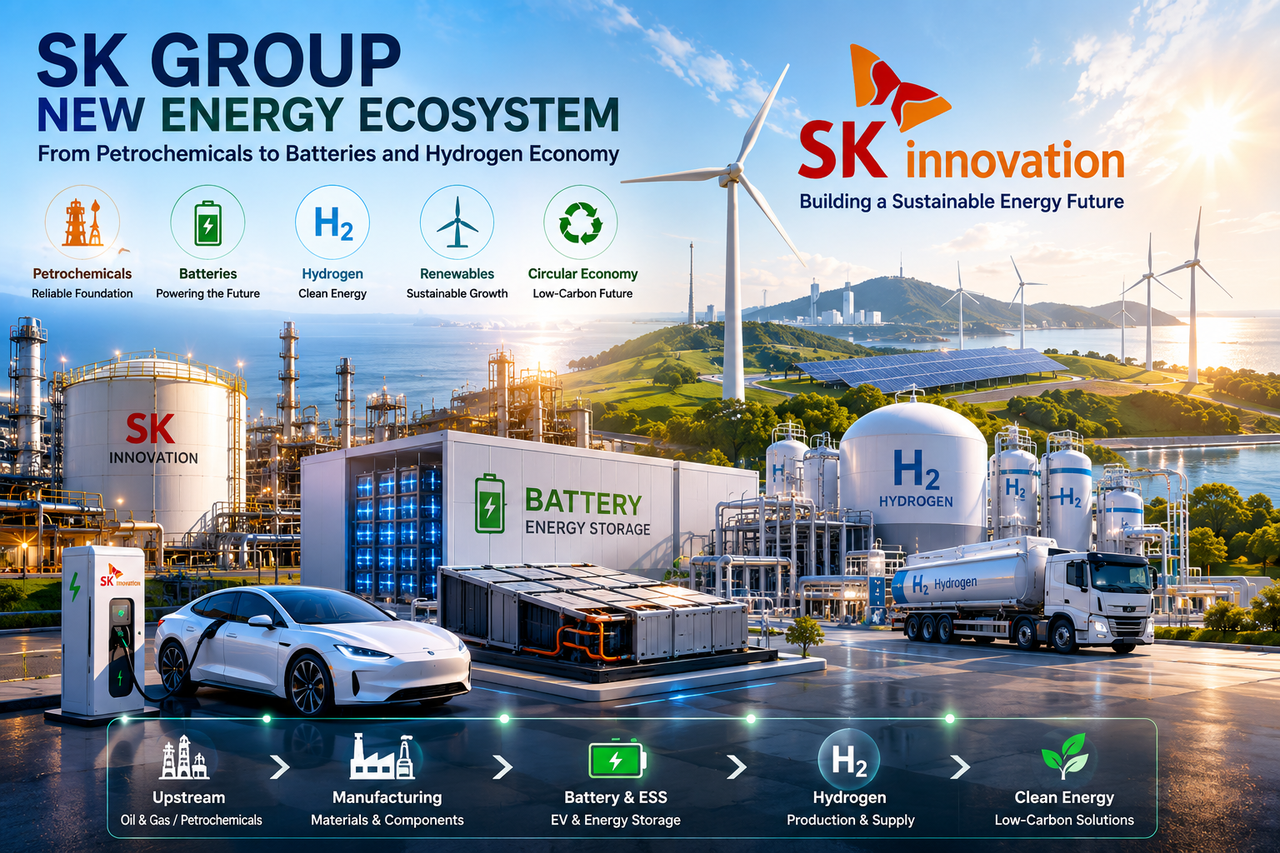
Today, SK Group has established a diversified portfolio spanning traditional energy, new energy, and green technologies.
SK Innovation leads refining, petrochemicals, and the energy transition. The battery division focuses on EV power batteries and energy storage systems. Additionally, the group is actively investing in hydrogen energy, green chemicals, and circular economy projects to advance low-carbon industry development.
| Business Segment |
Core Focus |
Strategic Value |
| Petrochemicals |
Refining, chemical products |
Delivers stable cash flow |
| Power Batteries |
Electric vehicle batteries |
Captures EV market growth |
| Energy Storage Systems (ESS) |
Grid-scale storage |
Supports the energy transition |
| Hydrogen Energy |
Production, storage, applications |
Positions for the future energy system |
| Green Chemicals |
Circular and biomaterials |
Drives sustainable development |
This diversified structure allows SK Group to cover critical links across the energy value chain, strengthening its long-term resilience.
What Role Does SK Innovation Play in the Group's New Energy Strategy?
SK Innovation serves as the flagship platform for SK Group's energy business and the core driver of its new energy transformation.
Originally built on refining and petrochemicals, the company has expanded into lithium-ion power batteries, energy storage, and green energy. With the global EV market booming, the power battery business has become one of the company's highest-growth segments.
Beyond batteries, SK Innovation continues to advance materials innovation, green refining, and low-carbon technology R&D, aiming to maintain a competitive edge in the future energy landscape.
Why Is SK Group Aggressively Entering the Power Battery Sector?
Rapid growth in the EV market has made power batteries one of the most significant growth areas in the global energy industry.
SK Group is ramping up battery R&D spending, establishing overseas production facilities, and building an integrated chain from materials development to battery manufacturing. By boosting energy density, safety, and production efficiency, it aims to secure a larger share of the global power battery market.
Moreover, the power battery business creates technology synergies with the group's semiconductor, digital manufacturing, and smart factory operations, driving overall efficiency.
Why Has Hydrogen Energy Become a Priority for SK Group?
Alongside power batteries, hydrogen energy is a long-term strategic investment area for SK Group.
Given its zero emissions and high energy density, hydrogen is seen as a key solution for future industrial, transportation, and energy storage needs. SK Group is building out the full hydrogen value chain—production, storage, transport, and end-use—to create a complete hydrogen ecosystem.
Although the global hydrogen industry is still maturing, rising technology readiness and policy support position hydrogen as a potential new growth engine for the group.
How Does New Energy Create Synergies Across SK Group's Businesses?
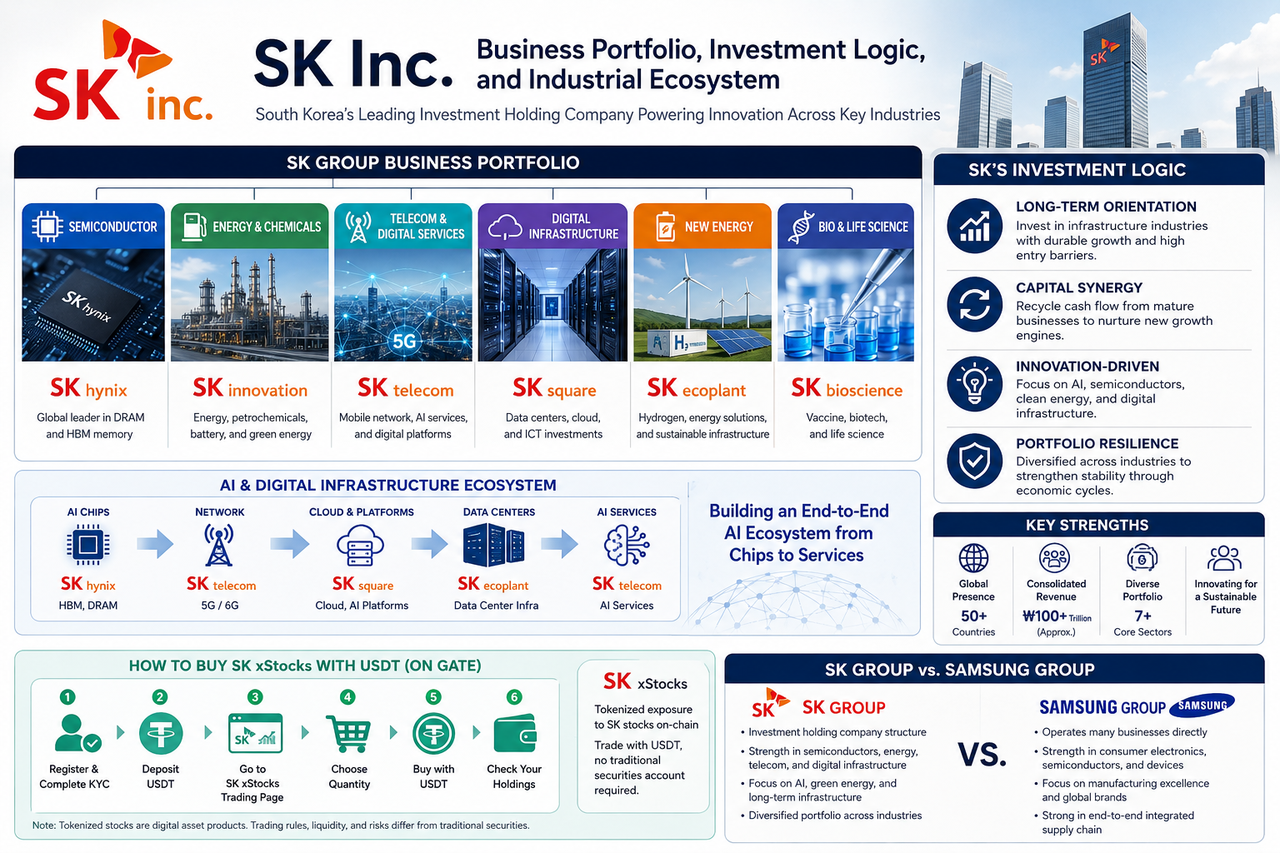
SK Group's strength lies not only in its energy operations but also in its ability to drive cross-industry synergies.
For example, its semiconductor division supplies chips for EVs and smart grids; its telecom arm enables connected vehicles and energy digitization; and its IT services support smart energy management platforms. Together, these businesses form the group's digital energy ecosystem.
| Group Business |
Synergy with New Energy |
| Semiconductors |
Supplies chips for automotive electronics and energy equipment |
| Telecommunications |
Powers smart grids, connected vehicles, and 5G applications |
| IT Services |
Enables digital energy management |
| AI Technology |
Enhances battery R&D and energy dispatch efficiency |
| Investment Platform |
Funds new energy ventures and industry integration |
This integrated model boosts SK Group's overall competitiveness in the global energy transition.
What Opportunities and Challenges Lie Ahead for SK Group's New Energy Business?
Over the next few years, the global new energy market will continue expanding. EV adoption, rising storage demand, and green manufacturing will fuel further growth in power batteries and related sectors.
At the same time, competition is intensifying. Battery makers must push technological innovation, reduce production costs, and strengthen supply chain resilience. The hydrogen industry still grapples with infrastructure gaps, commercialization hurdles, and cost challenges.
For SK Group, the key strategic priorities will be optimizing its legacy energy portfolio, scaling new energy investments, and deepening global industry partnerships.
Summary
SK Group is steadily building a new energy ecosystem that spans petrochemicals, power batteries, energy storage, hydrogen, and green materials—driven by a continuous energy transition. SK Innovation leads this transformation, with power batteries and hydrogen energy serving as the primary growth engines.
Leveraging its strengths in semiconductors, telecom, digital infrastructure, and capital markets, SK Group is reinforcing its new energy synergies and building a long-term competitive edge in the global green energy landscape.
FAQs
Why is SK Group pursuing new energy businesses?
The global energy system is shifting toward low-carbon and green solutions. SK Group aims to upgrade from traditional energy to new energy by developing power batteries, energy storage, and hydrogen, creating new long-term growth opportunities.
What does SK Innovation do?
SK Innovation focuses on refining, petrochemicals, power batteries, energy storage, and green energy. It is a central platform for SK Group's new energy strategy.
Why does SK Group prioritize the power battery industry?
Rapid EV market growth is driving sustained demand for power batteries. SK Group is investing in technology and global capacity to strengthen its position in the global battery supply chain.
What advantages does SK Group have in hydrogen energy?
With deep energy industry experience, strong capital resources, and cross-sector synergies, SK Group can build a complete hydrogen value chain—from production to end-use—and leverage digital technologies to accelerate commercialization.
How does the new energy business synergize with SK Group's semiconductor operations?
Semiconductors are applied in EVs, energy storage, and smart energy systems. Combined with AI, telecom, and digital infrastructure, these capabilities enable more efficient energy management and support a smart energy ecosystem.
What are the key priorities in SK Group's future new energy strategy?
Going forward, SK Group will likely expand investments in power batteries, energy storage, hydrogen, and green materials, while decarbonizing its traditional energy operations, strengthening global partnerships, and enhancing its competitiveness in the new energy value chain.