À medida que os agentes de IA se consolidam como um pilar essencial da indústria de inteligência artificial, a atenção em torno das redes de IA abertas intensifica-se rapidamente. Cada vez mais empresas exploram aplicações práticas de agentes autónomos na geração de conteúdos, operações automatizadas, análise financeira, apoio à investigação e serviços empresariais. Contudo, com o crescimento contínuo do número de agentes, a indústria enfrenta novos desafios: viabilizar a colaboração entre modelos, o agendamento de recursos, a distribuição de valor e os incentivos à contribuição. É neste contexto que a ChainOpera AI apresenta a sua arquitetura de inteligência colaborativa.
Na confluência entre Web3 e IA, a ChainOpera AI é mais do que uma simples camada de infraestrutura de IA. Representa um caminho de implementação real para uma rede de inteligência descentralizada. Através da Prova de Inteligência, de um Mercado de Agentes, de um Terminal de IA e de uma rede GPU distribuída, a ChainOpera AI procura construir um ecossistema económico aberto onde utilizadores, programadores, modelos e recursos informáticos participam ativamente. Neste sistema, as capacidades de IA podem ser criadas, negociadas e recompensadas como ativos digitais, dando origem gradualmente a uma Economia de Agentes plenamente desenvolvida.
Arquitetura técnica central da ChainOpera AI
Por conceção, a ChainOpera AI não é um produto isolado — trata-se de uma rede de inteligência colaborativa composta por várias camadas funcionais. A arquitetura subjacente integra diversos módulos principais: Terminal de IA, Plataforma de Programador de Agentes, Rede de Agentes, Camada de Modelos, Camada de Infraestrutura GPU e Prova de Inteligência. Cada módulo desempenha um papel específico e todos operam em sincronia através de um protocolo unificado.
Quando um utilizador inicia uma tarefa, o sistema capta o pedido através do Terminal de IA. A Rede de Agentes analisa e decompõe a tarefa, encaminhando-a para os agentes de IA adequados com base na natureza do trabalho. Diferentes agentes assumem funções distintas — recolha de dados, análise de informações, geração de conteúdo, raciocínio e tomada de decisões — e colaboram para concluir tarefas complexas.
Durante a execução, a Camada de Modelos trata da carga de trabalho de inferência propriamente dita, enquanto a rede GPU fornece a potência computacional necessária. O consumo de recursos, os registos de invocação de serviços e as métricas de contribuição são registados on-chain, servindo de base para a subsequente distribuição de recompensas.
O que verdadeiramente distingue a ChainOpera AI das plataformas de IA tradicionais é o seu enfoque na colaboração entre agentes especializados, em vez de depender de um único supermodelo. Esta arquitetura reflete a lógica de crescimento da própria Internet: muitos nodos independentes a formar uma rede cujas capacidades globais se expandem ao longo do tempo, não através de atualizações centralizadas, mas sim da participação coletiva.
À medida que o número de agentes e casos de utilização aumenta, a rede desenvolve uma capacidade colaborativa mais robusta — construindo progressivamente um ecossistema inteligente e aberto.
Compreender a Prova de Inteligência (PoI)
A Prova de Inteligência (PoI) constitui uma das inovações técnicas mais marcantes da ChainOpera AI e funciona como o mecanismo central de distribuição de valor em toda a rede.
As redes blockchain tradicionais baseiam-se na Prova de trabalho (PoW) ou na Proof of Stake (PoS) para consenso e incentivos. No entanto, para uma rede orientada para a IA, medir o valor dos participantes apenas com base no hashrate ou nas participações em Tokens já não é suficiente. Desenvolver um agente de elevada qualidade é fundamentalmente diferente de fornecer recursos computacionais — as respetivas contribuições são distintas.
Para resolver esta questão, a ChainOpera AI introduziu a Prova de Inteligência, criando uma estrutura de medição de valor concebida especificamente para redes de IA. O sistema monitoriza continuamente o desenvolvimento de agentes, o treino de modelos, as contribuições de recursos GPU, a execução de inferência e as interações dos utilizadores, avaliando-os com base nos padrões reais de utilização e na qualidade da contribuição.
Neste sistema, as recompensas deixam de estar exclusivamente ligadas à escala dos recursos investidos, passando a refletir o valor real gerado para a rede. Por exemplo, um agente amplamente utilizado por muitos utilizadores pode obter recompensas superiores a um que apenas fornece hardware. Do mesmo modo, os fornecedores de modelos de alta qualidade podem auferir retornos contínuos com base na frequência de utilização dos seus modelos.
Olhando para o futuro, a Prova de Inteligência é mais do que um mero mecanismo de recompensa — representa uma tentativa de estabelecer um novo padrão para a demonstração de valor em futuras redes de IA. À medida que a Economia de Agentes se expande, aprender a quantificar contribuições inteligentes tornar-se-á um dos grandes desafios da indústria. A PoI é a resposta da ChainOpera AI a esse desafio.
Como o Terminal de IA liga utilizadores e agentes de IA
O Terminal de IA é a principal interface de interação com a ChainOpera AI, funcionando como o ponto de contacto central entre os utilizadores e toda a rede de agentes.
Nos produtos de IA tradicionais, os utilizadores interagem normalmente de forma direta com um único modelo — um chatbot, um gerador de conteúdo ou um assistente de código. Na maioria dos casos, apenas um modelo processa cada pedido. A ChainOpera AI pretende transformar este paradigma através do Terminal de IA, possibilitando um modelo de colaboração multi-agente.
Quando um utilizador submete um pedido, o sistema não o encaminha simplesmente para um modelo. Em vez disso, analisa primeiro o tipo de tarefa e depois reúne automaticamente a melhor combinação de agentes. Por exemplo, a elaboração de um relatório de investigação setorial pode exigir a contribuição de um agente de investigação, um agente de análise de dados, um agente de redação e um agente de revisão — todos a trabalhar em paralelo.
Os utilizadores não precisam de navegar por fluxos de trabalho técnicos complexos nem de selecionar ferramentas manualmente. O Terminal de IA trata automaticamente da decomposição de tarefas, do agendamento de recursos e da integração de resultados, apresentando o resultado final num formato unificado.
Esta conceção reduz significativamente a barreira de utilização dos agentes de IA. Para os utilizadores finais, o resultado é uma experiência mais completa e profissional. Para o ecossistema, melhora a eficiência de orquestração entre agentes e reforça os efeitos de escala da rede.
À medida que o número de agentes continua a crescer, o Terminal de IA pode tornar-se um portal de tráfego essencial para todo o ecossistema.
Para além de servir os utilizadores finais, a ChainOpera AI está concebida para atrair programadores para o ecossistema através da sua Plataforma de Programador de Agentes dedicada.
Construir um agente de IA envolve geralmente integração de modelos, processamento de dados, conexões API, conceção de fluxos de trabalho, bem como implementação e manutenção. A via de desenvolvimento tradicional é dispendiosa e exige fortes competências técnicas.
A Plataforma de Programador de Agentes foi criada para eliminar estas barreiras. Os programadores podem utilizar as ferramentas e a infraestrutura da plataforma para criar agentes e integrá-los rapidamente no ecossistema alargado.
Com uma estrutura de desenvolvimento unificada, os programadores podem concentrar-se na lógica de negócio e nas capacidades especializadas, sem terem de reconstruir a infraestrutura subjacente de raiz. Uma equipa de análise financeira pode concentrar-se na criação de um agente de pesquisa de mercado; uma equipa de conteúdo pode construir um agente de redação; uma equipa de serviços empresariais pode desenvolver um agente de apoio ao cliente ou de automação.
Melhor ainda, estes agentes não existem isoladamente. Uma vez desenvolvidos, podem ser implantados na rede e disponibilizados aos utilizadores através do Mercado de Agentes.
Este modelo transforma os programadores de meros contribuidores técnicos em verdadeiros participantes do ecossistema que partilham as receitas. À medida que a Economia de Agentes amadurece, os agentes de elevada qualidade podem gerar valor sustentado ao longo do tempo.
Funcionamento da rede de modelos e GPU descentralizada
A potência computacional continua a ser um dos recursos mais essenciais na indústria de IA.
Atualmente, a maioria das grandes empresas de IA depende de enormes centros de dados e clusters GPU centralizados para treino e inferência. Embora eficiente, este modelo acarreta custos elevados, barreiras de entrada significativas e uma concentração acentuada da propriedade dos recursos.
A ChainOpera AI pretende construir uma infraestrutura computacional mais aberta através de uma rede GPU distribuída.
Nesta arquitetura, operadores de nodos individuais, fornecedores profissionais e parceiros institucionais podem contribuir com capacidade GPU para a rede. Quando um utilizador submete uma tarefa, o sistema aloca e agenda dinamicamente os recursos com base na disponibilidade.
Os nodos GPU aceitam pedidos de inferência, executam os cálculos necessários e devolvem os resultados à rede. Após a conclusão da tarefa, os nodos são recompensados proporcionalmente à sua contribuição real. Toda a contabilidade e liquidação ocorrem on-chain.
Para além da computação, a camada de modelos também opera de forma aberta. Os programadores podem integrar vários tipos de modelos de IA na rede, enriquecendo o ecossistema com capacidades diversificadas.
Esta conceção partilha semelhanças conceptuais com as DePIN (Redes de Infraestrutura Física Descentralizada). O seu objetivo central é libertar recursos ociosos a nível global, melhorar a sua utilização e reduzir os custos de construção e manutenção da infraestrutura.
À medida que a procura por inferência de IA continua a aumentar, as redes GPU distribuídas podem tornar-se um complemento relevante — ou até uma alternativa — à computação em nuvem tradicional.
Como a ChainOpera AI potencia a Inteligência Colaborativa
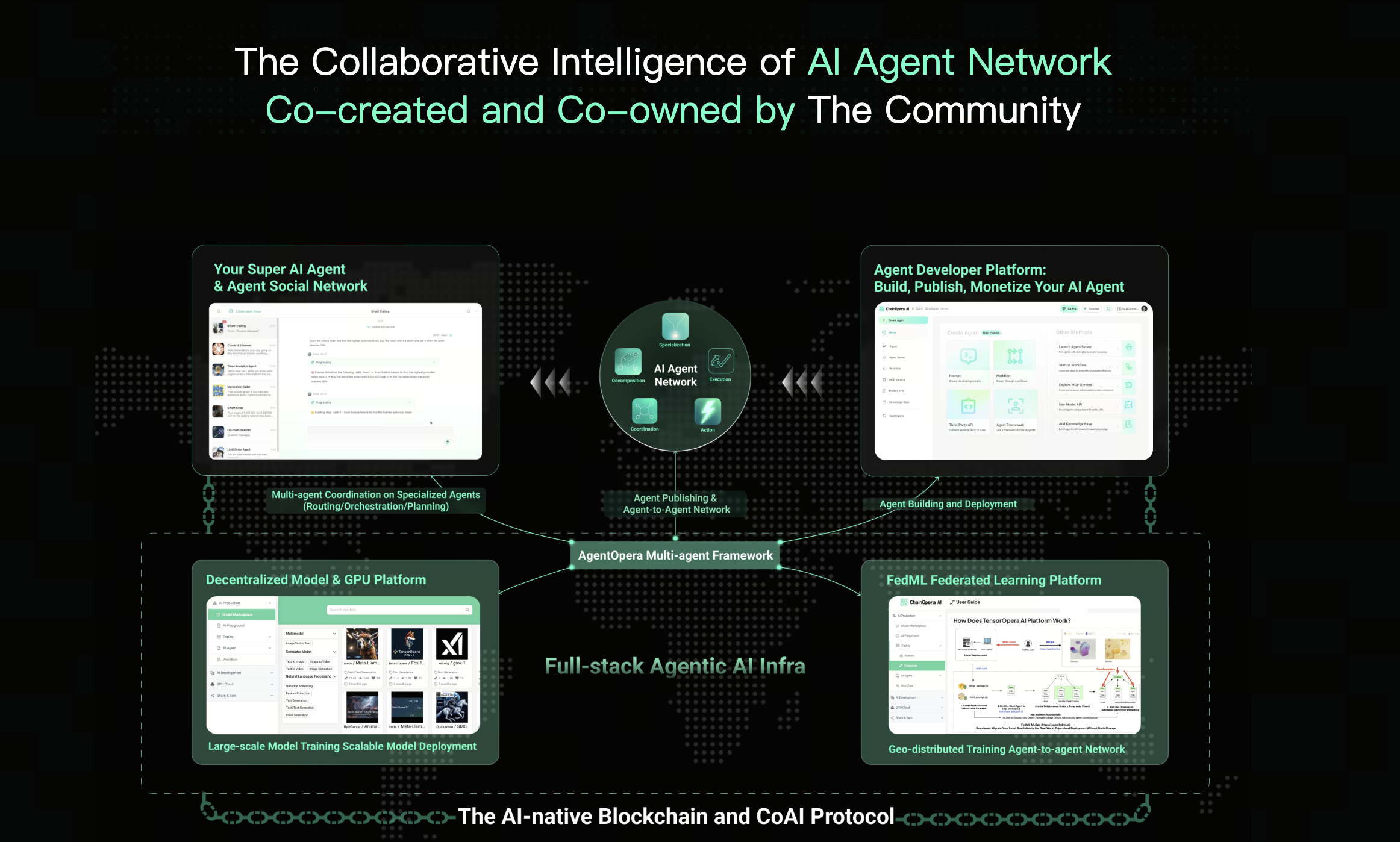
A inteligência colaborativa é a filosofia de conceção central da ChainOpera AI — e um dos seus maiores fatores de diferenciação face à maioria dos projetos de IA.
Os sistemas de IA tradicionais baseiam-se tipicamente num único modelo de grande dimensão para realizar tarefas. Com o aumento dos parâmetros dos modelos, esta abordagem melhorou efetivamente o desempenho, mas também introduziu custos mais elevados, escalabilidade limitada e capacidades restritas a domínios específicos.
A ChainOpera AI acredita que o futuro será moldado por redes de agentes especializados, e não por uma única superinteligência.
Num modelo de inteligência colaborativa, cada agente concentra-se naquilo que faz melhor. Um agente de investigação recolhe informações; um agente de análise processa dados; um agente de redação gera conteúdo; um agente de tomada de decisão sintetiza os resultados.
Ao enfrentar tarefas complexas, estes agentes trabalham em conjunto como membros de uma equipa — cada um com um papel distinto, alcançando coletivamente um objetivo comum. Este princípio reflete o funcionamento das organizações humanas: especialistas diversos a colaborar para criar maior valor.
À medida que o número de agentes cresce, a fronteira de capacidade da rede expande-se. Cada novo agente não acrescenta apenas uma nova função, mas também cria novas combinações com as existentes — gerando cenários de aplicação mais ricos e diversificados.
A longo prazo, a inteligência colaborativa pode tornar-se um dos modelos definidores do desenvolvimento das redes de IA.
Principais desafios das redes de IA descentralizadas
Apesar do seu potencial promissor, a IA descentralizada enfrenta ainda desafios significativos no mundo real.
Eficiência da rede
Os sistemas distribuídos são geralmente mais complexos do que os sistemas centralizados.
O agendamento de tarefas e a coordenação de recursos introduzem uma sobrecarga adicional.
Controlo de qualidade dos modelos
As redes abertas permitem uma ampla participação de programadores.
Garantir a qualidade consistente dos agentes e modelos continua a ser um desafio crucial.
Segurança e privacidade dos dados
As redes de IA processam volumes massivos de dados.
A proteção da privacidade e a conformidade regulamentar são preocupações fundamentais.
Conceção de incentivos
Recompensas insuficientes reduzem a participação.
Recompensas excessivas podem desestabilizar o modelo económico.
Viabilidade comercial
A maioria dos projetos de IA descentralizados encontra-se ainda numa fase inicial de desenvolvimento do ecossistema.
O valor comercial a longo prazo necessita ainda de ser validado pela procura real do mercado.
Estes não são desafios exclusivos da ChainOpera AI. Afetam toda a indústria de IA descentralizada.
O futuro da tecnologia da ChainOpera AI
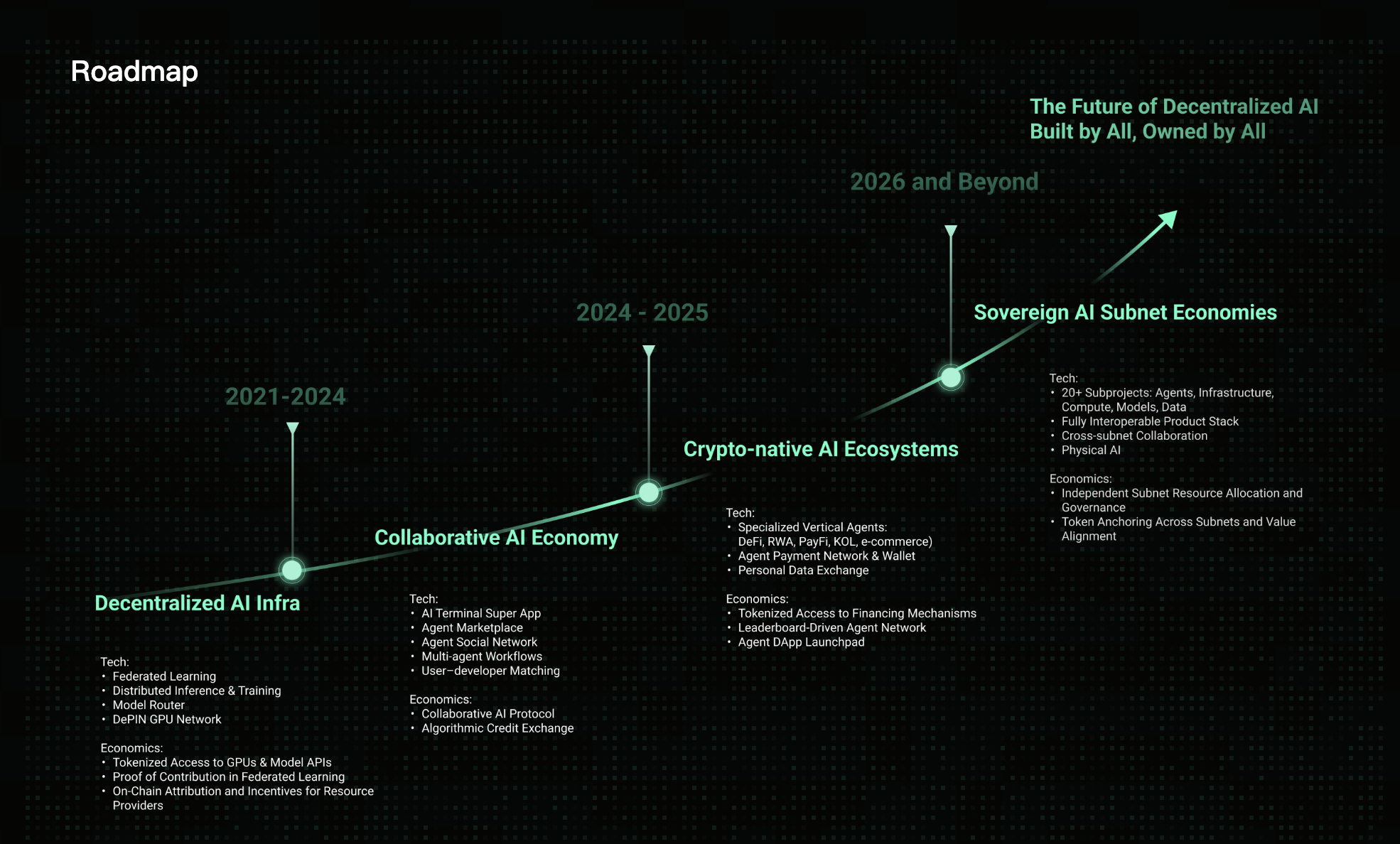
Com base no seu roadmap atual, as prioridades futuras da ChainOpera AI concentram-se em três áreas: escalar a rede de agentes, aperfeiçoar o mecanismo de Prova de Inteligência e reforçar as capacidades de infraestrutura.
-
O projeto visa atrair mais programadores para o ecossistema, aumentando o número e a variedade de agentes e serviços. À medida que surgem mais agentes especializados, a estrutura de inteligência colaborativa continuará a amadurecer.
-
A Prova de Inteligência será refinada para melhorar a avaliação das contribuições, a precisão das recompensas e a justiça do sistema. Com o tempo, este mecanismo pode evoluir para um sistema completo de crédito de inteligência para redes de IA.
-
No plano da infraestrutura, os planos incluem a expansão da rede GPU para aumentar a utilização de recursos e reduzir os custos de inferência. As capacidades entre cadeias serão igualmente melhoradas, permitindo que os serviços de agentes e os ativos digitais fluam por vários ecossistemas.
Com o Mercado de Agentes, o Terminal de IA e a infraestrutura distribuída a progredir em paralelo, a ChainOpera AI ambiciona construir uma economia inteligente aberta — na qual utilizadores, programadores, modelos e recursos informáticos participam e beneficiam mutuamente.
Se estes objetivos forem concretizados passo a passo, a ChainOpera AI poderá tornar-se uma camada fundamental para a Economia de Agentes do futuro.
Conclusão
A arquitetura da ChainOpera AI assenta no princípio da inteligência colaborativa. Através do seu Terminal de IA, Plataforma de Programador de Agentes, mecanismo de Prova de Inteligência e rede GPU distribuída, oferece uma infraestrutura de IA descentralizada completa. Ao contrário das plataformas de IA tradicionais que dependem de um único modelo e de recursos centralizados, a ChainOpera AI privilegia a colaboração multi-agente — expandindo as capacidades de inteligência através de uma rede aberta e participativa.
À medida que os agentes de IA, a Economia de Agentes e a IA descentralizada continuam a evoluir, as redes de inteligência colaborativa ganham reconhecimento como uma direção importante para a indústria. Para a ChainOpera AI, o valor a longo prazo dependerá não só da sua inovação tecnológica, mas também do crescimento do ecossistema de programadores, dos níveis de atividade dos agentes e da adoção real. Se conseguir sustentar os efeitos de rede e aperfeiçoar o seu sistema de distribuição de valor, a ChainOpera AI estará bem posicionada para assumir um papel de liderança no futuro da infraestrutura de IA aberta.