As Finanças descentralizadas (DeFi) foram inicialmente desenvolvidas em torno de criptoativos, com mecanismos de empréstimos, negociação e ganhos que dependem sobretudo de ativos nativos on-chain, como ETH e stablecoins. Esta abordagem aumentou a eficiência do capital, mas limitou a diversidade de ativos e fontes de ganhos. Como a maioria dos ganhos resulta da negociação on-chain e da volatilidade do mercado, a DeFi tem dificuldade em estabelecer uma ligação direta à economia real.
O aparecimento dos Real World Assets (RWA) alterou este paradigma. Ao mapear ativos de dívida reais on-chain, o capital DeFi pode agora participar em atividades económicas concretas e obter ganhos de fluxo de caixa provenientes de ativos tangíveis.
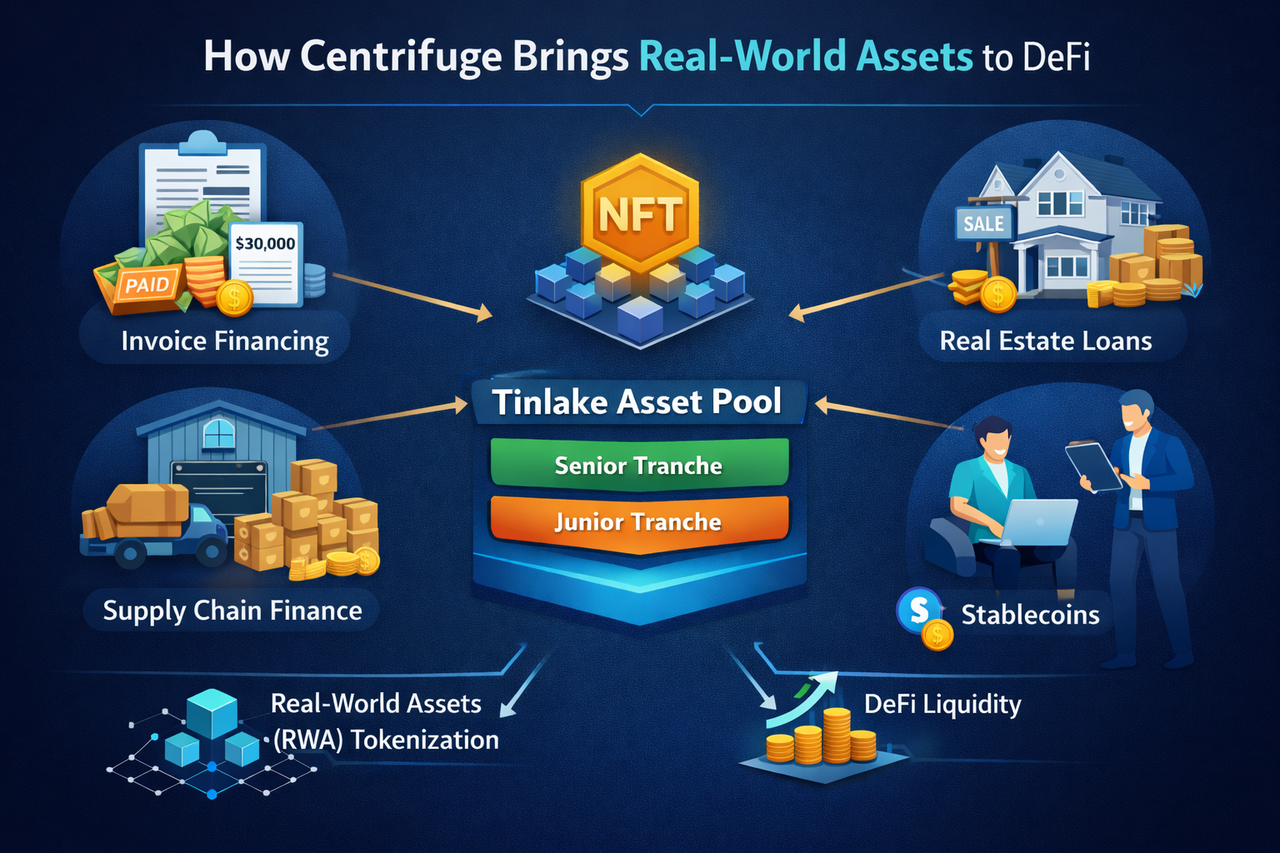
Centrifuge, um protocolo on-chain especializado no financiamento de ativos reais, desempenha um papel fundamental ao transformar ativos financeiros tradicionais em instrumentos de financiamento acessíveis pela DeFi. Com pools de ativos e infraestrutura de Contrato inteligente, a Centrifuge permite às empresas tokenizar ativos como faturas, créditos de empréstimos ou contas a receber, trazendo-os on-chain como alvos de financiamento — apoiados por liquidez on-chain. Esta integração cria um ciclo fechado entre o financiamento de ativos reais e os fluxos de capital on-chain, tornando a Centrifuge um protocolo de referência na adoção de RWA.
Quais são as principais aplicações da Centrifuge?
A Centrifuge é utilizada sobretudo no financiamento de ativos de dívida reais, incluindo financiamento de faturas, contas a receber, empréstimos imobiliários e crédito privado. Estes ativos geram normalmente fluxos de caixa claros, mas enfrentam processos de financiamento complexos e liquidez limitada na finança tradicional.
Ao tokenizar estes ativos e inseri-los em pools de ativos on-chain, a Centrifuge aumenta a liquidez dos ativos e permite que ativos reais acedam ao mercado das finanças descentralizadas. Para titulares de ativos, isto significa acesso mais eficiente ao financiamento; para investidores on-chain, abre novas fontes de ganhos ligadas à economia real.
O financiamento de faturas é um dos principais casos de uso da Centrifuge.
Na prática empresarial, as empresas enfrentam frequentemente atrasos de fluxo de caixa enquanto aguardam o pagamento de faturas por parte dos clientes, o que pode comprometer a eficiência operacional. Com a Centrifuge, é possível tokenizar faturas não liquidadas como ativos de financiamento, introduzi-las em pools de ativos on-chain e obter liquidez de investidores.
Este modelo permite aceder a fundos antes da caducidade da fatura, aumentando a eficiência do fluxo de caixa. Simultaneamente, os investidores ganham ao fornecer capital para estes ativos de fatura, completando o ciclo de financiamento on-chain.
Como o financiamento da cadeia de abastecimento utiliza a Centrifuge para se tornar on-chain?
No financiamento da cadeia de abastecimento, contas a receber significativas imobilizam capital de exploração, enquanto o financiamento tradicional depende de crédito bancário e processos de avaliação morosos.
A Centrifuge converte contas a receber da cadeia de abastecimento em ativos de financiamento on-chain, tornando-as elegíveis para pools de capital DeFi. As empresas podem aceder a financiamento a partir dos pools de ativos, melhorando a rotação de capital, enquanto investidores on-chain podem obter ganhos ao apoiar estas necessidades de financiamento.
Este método reduz a dependência de intermediários tradicionais e permite que o financiamento da cadeia de abastecimento alcance uma circulação de capital mais eficiente através de protocolos on-chain.
Como os empréstimos imobiliários se tornam ativos de financiamento on-chain?
Os empréstimos imobiliários são outro caso de uso relevante da Centrifuge.
Tradicionalmente, os ativos de empréstimos imobiliários são detidos por instituições financeiras e financiados através de canais convencionais. A Centrifuge permite que estes créditos de empréstimos sejam tokenizados como ativos de financiamento on-chain, permitindo a entrada em pools de ativos e o acesso a liquidez on-chain.
Este processo aumenta a liquidez dos empréstimos imobiliários e oferece aos investidores on-chain oportunidades de ganhos ligados ao mercado imobiliário, integrando o financiamento imobiliário no ecossistema on-chain.
Os ativos de crédito privado, normalmente empréstimos não públicos emitidos por empresas ou instituições financeiras, apresentam baixa liquidez e opções de financiamento limitadas.
A Centrifuge permite que estes ativos de crédito obtenham financiamento através de pools de ativos on-chain, maximizando a utilização dos ativos. Os titulares de ativos ganham liquidez por via do financiamento on-chain, enquanto os investidores participam nos ganhos gerados por ativos de crédito reais.
Este mecanismo traz ativos de crédito privado para o mercado de capital on-chain e amplia o espectro de ativos suportados pela DeFi.
Como a Centrifuge facilita a integração de RWA nas finanças on-chain?
A Centrifuge utiliza a tokenização de ativos e o financiamento de pools de ativos para ligar ativos reais ao mercado DeFi.
Primeiro, os ativos reais são tokenizados como certificados on-chain; depois, são colocados em pools de financiamento, onde investidores fornecem stablecoins para participar no financiamento. Contratos inteligentes automatizam os fluxos de capital e a distribuição de ganhos, simplificando o processo de financiamento on-chain para ativos reais.
Esta estrutura oferece liquidez on-chain a ativos reais e permite que o capital on-chain participe em atividades económicas reais, acelerando a integração de ativos do mundo real nas finanças descentralizadas.
Quais são as vantagens e desafios das aplicações da Centrifuge?
As aplicações da Centrifuge melhoram a eficiência do financiamento de ativos reais e diversificam as fontes de ganhos da DeFi. O modelo de pool de ativos on-chain aumenta a liquidez dos ativos reais e dá aos investidores acesso a ganhos ligados à economia real.
No entanto, trazer ativos reais on-chain apresenta desafios como verificação de autenticidade dos ativos, risco de incumprimento e requisitos legais e de conformidade. Estes fatores implicam que os protocolos on-chain continuam a depender de estruturas legais off-chain e de gestão de ativos.
À medida que a Centrifuge expande as aplicações de RWA, torna-se necessário equilibrar a eficiência on-chain com um controlo de risco off-chain robusto.
Resumo
As aplicações da Centrifuge abrangem financiamento de faturas, financiamento da cadeia de abastecimento, empréstimos imobiliários e crédito privado — permitindo que estes ativos reais entrem no mercado financeiro on-chain através da tokenização e pools de financiamento on-chain.
Esta abordagem aumenta a eficiência do financiamento de ativos reais e introduz fontes de ganhos do mundo real na DeFi. Com o crescimento do papel de RWA nas finanças on-chain, a Centrifuge está a tornar-se uma infraestrutura fundamental para integrar ativos reais no ecossistema DeFi.
Perguntas frequentes
Quais são as principais aplicações da Centrifuge?
A Centrifuge é utilizada sobretudo em cenários de financiamento de ativos reais, como financiamento de faturas, financiamento da cadeia de abastecimento, empréstimos imobiliários e crédito privado.
Porque é que o financiamento de faturas é adequado à Centrifuge?
As faturas apresentam fluxos de caixa claros e podem ser financiadas antecipadamente através de pools de ativos on-chain, aumentando a eficiência do fluxo de caixa das empresas.
Como é que a Centrifuge apoia o financiamento da cadeia de abastecimento?
Ao tokenizar contas a receber e inseri-las em pools de ativos, a Centrifuge oferece às empresas da cadeia de abastecimento canais de financiamento on-chain.
Como é que os empréstimos imobiliários acedem ao financiamento on-chain?
Os créditos de empréstimos imobiliários podem ser tokenizados e inseridos em pools de financiamento on-chain para receber liquidez on-chain.
Qual é o valor central da Centrifuge?
O valor central da Centrifuge reside em permitir que ativos reais entrem no mercado financeiro on-chain, ligando necessidades de financiamento reais à liquidez de capital DeFi.