Users can directly use USDT to trade Samsung stocks through the Gate Korea Stocks section without needing to open a separate traditional Korean securities account, and they can manage both digital assets and global stock assets on the same platform.
What Do You Need to Prepare to Buy Samsung Stocks on Gate?
Before using USDT to buy Samsung stocks, users need a Gate account, Korea stock trading permissions, and sufficient USDT balance. Depending on account status, product rules, and regional requirements, identity verification and related onboarding processes may be necessary.
Before trading, you should also confirm that the Gate Korea Stocks service is available in your region and verify the ticker symbol and product information for Samsung Electronics. Since access rules may vary by region, the information displayed on Gate's official page should be treated as the final reference.
If you have no prior experience with the Korean stock market, you can first learn about Gate's stock services and global stock trading mechanisms.
| Requirement |
Purpose |
Check Details |
| Gate Account |
Access Korea stocks service |
Confirm account status |
| Identity Verification |
Obtain trading permissions |
Complete KYC |
| USDT Balance |
Used for stock settlement |
Verify available funds |
| Product Availability |
Confirm Samsung stock support |
Check live page |
| Regional Eligibility |
Meet access requirements |
Confirm local rules |
Step 1: How to Deposit USDT on Gate?
The Gate Korea Stocks section supports settlement in USDT, so you need to ensure your account has sufficient USDT before buying Samsung stocks.
Users can obtain USDT through on-chain deposits, spot trading, or account transfers. After depositing, funds typically require network confirmations before they can be used for stock trading.
When making an on-chain deposit, confirm the correct network and deposit address, and carefully check the asset type to avoid financial loss due to operational errors.
Once your funds are ready, you can enter the Gate Korea Stocks section to find Samsung stocks.
Step 2: How to Find Samsung Stocks?
The Gate Stocks section supports searching by ticker symbol and company name. After entering the stocks page, you can find the relevant stock under Samsung Electronics.
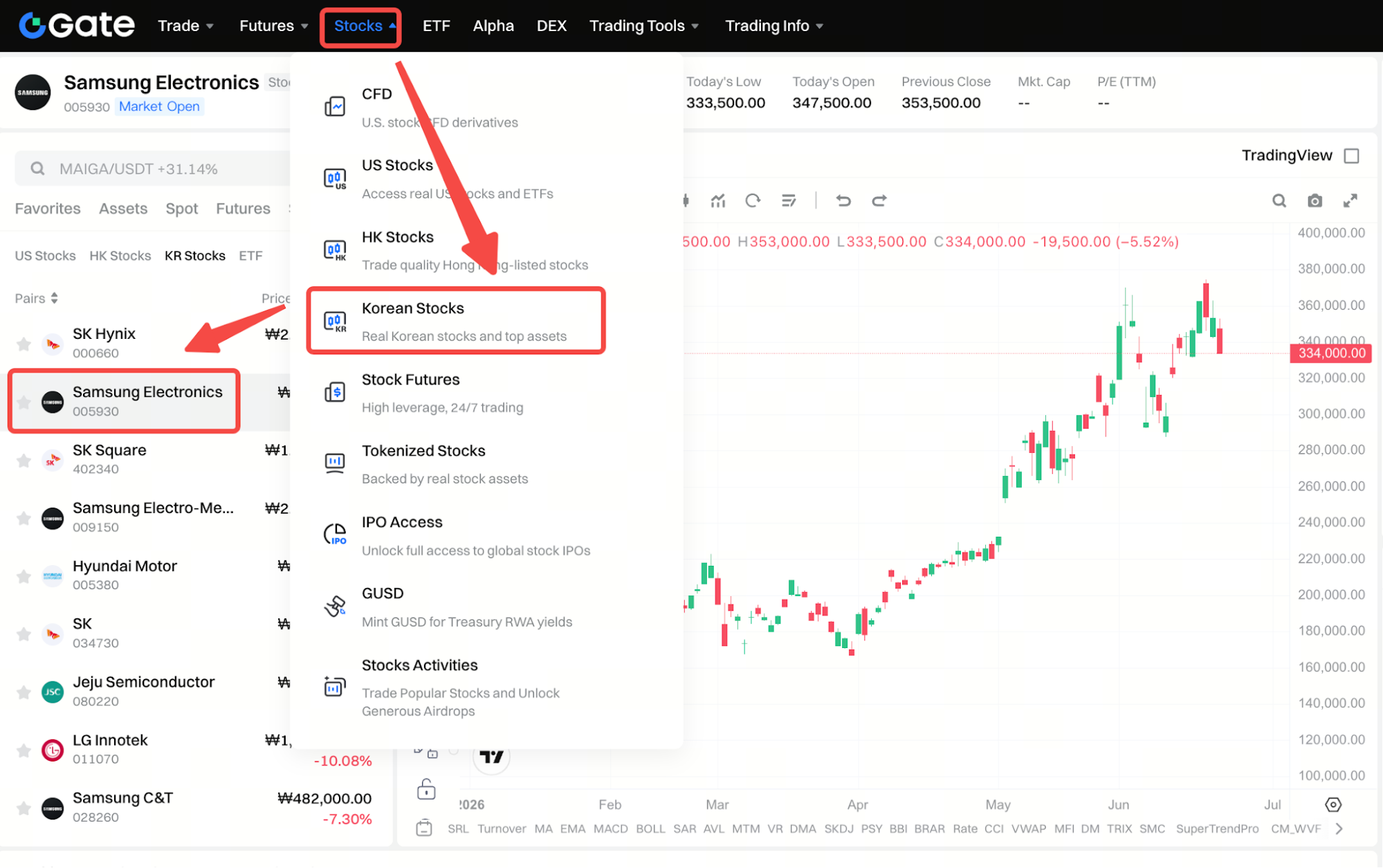
Before entering the trading page, confirm the asset name, ticker symbol, market status, and related trading rules. Since stock products and market status may change, the real-time page information should serve as the final basis.
Before placing an order, follow this process:
| Step |
User Action |
Check Details |
| Enter Gate Stocks |
Open the stocks section |
Confirm entry into Korea stocks market |
| Search Samsung Electronics |
Find Samsung Electronics |
Verify stock information |
| View Details Page |
Read product information |
Confirm market status |
| Check Balance |
View USDT funds |
Confirm tradable amount |
| Open Order Page |
Prepare to trade |
Check fees and quantity |
Step 3: How to Place an Order to Buy Samsung Stocks?
After finding Samsung stocks, users can enter the corresponding trading page, enter the purchase amount or number of shares, and check the order details before confirming the order.
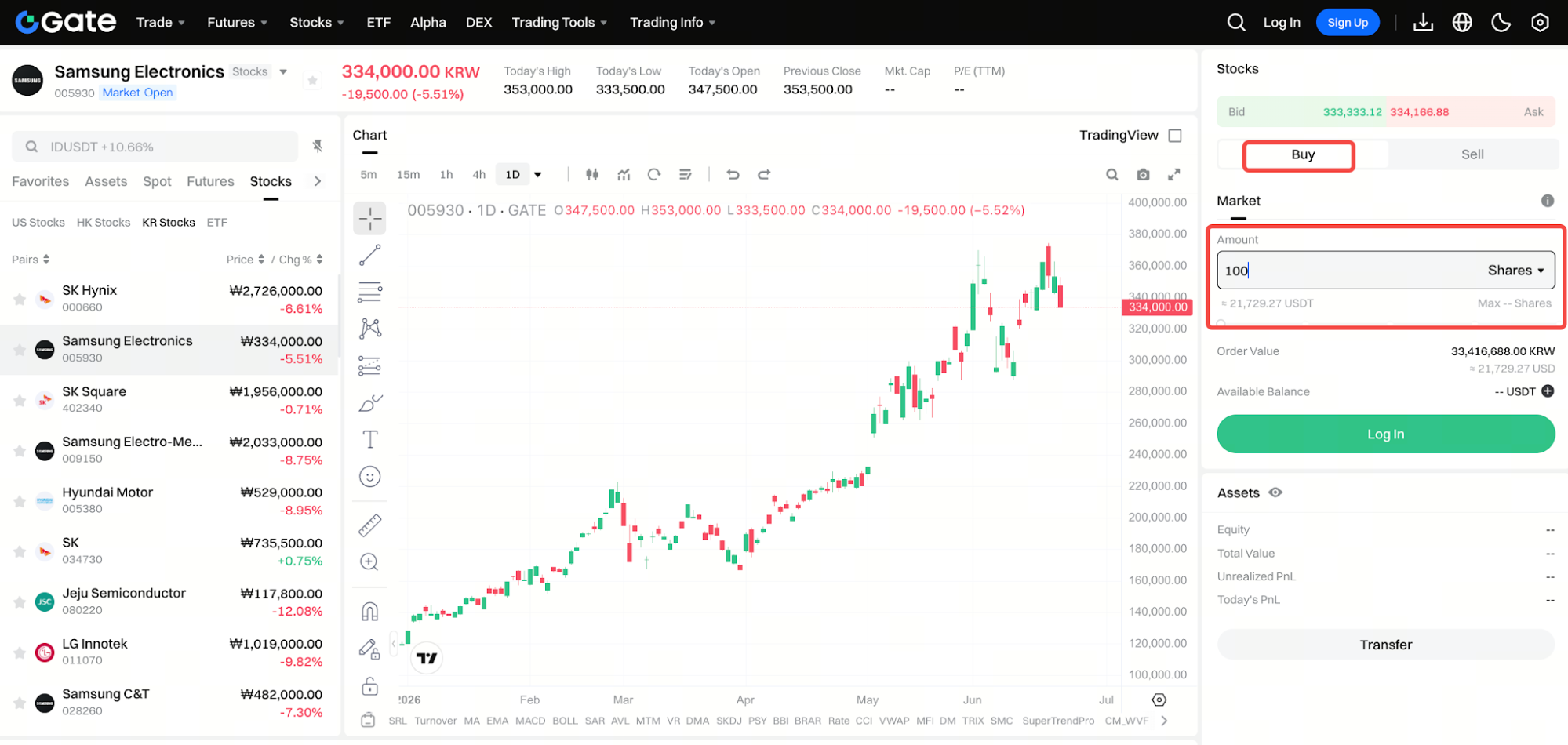
If a market order is supported, the order will typically be filled at the real-time market price. If a limit order is supported, you can set your own buy price, but the fill time will depend on market conditions.
Before submitting the order, pay special attention to:
- Samsung stock name and ticker;
- Order type;
- Purchase amount or number of shares;
- Estimated transaction cost;
- Market status and liquidity;
- Relevant notices.
After the order is filled, you can view your holdings in the stock account and manage your assets in one place.
What Are the Trading Fees for Samsung Stocks?
The stock trading fee displayed on the Gate stocks page can be as low as 0.023%. Specific fees should be confirmed on the real-time page.
In addition to trading fees, investors should also pay attention to the spread, order execution price, and other related costs. Since product rules and market conditions may change, the information displayed on the real-time order page should serve as the final reference.
| Fee Type |
Meaning |
Note |
| Trading Fee |
Fee incurred from stock execution |
Check real-time rate |
| Spread |
Difference between bid and ask prices |
Monitor market liquidity |
| Execution Cost |
Variation in actual fill price |
Check order confirmation page |
| Other Fees |
Determined by product rules |
Refer to official instructions |
Therefore, before buying Samsung stocks, carefully review the fee information on the order page.
What Risks Should You Know Before Buying Samsung Stocks?
Samsung Electronics is a large tech company whose stock price may be affected by factors such as global semiconductor industry cycles, consumer electronics demand, artificial intelligence infrastructure investment, and changes in the global economic environment.
Samsung Electronics operates across multiple sectors including memory chips, foundry services, smartphones, display panels, consumer electronics, and AI hardware. Changes in industry competition, technological iterations, and fluctuations in market demand can all impact the company's performance and stock price.
In addition to market risks, investors should also pay attention to exchange rate risk, liquidity risk, platform rule risk, and asset allocation risk. Given the cyclical nature of the tech industry, you should allocate assets reasonably based on your own risk tolerance.
FAQ
What is the difference between buying Samsung stocks on Gate and through a Korean brokerage?
The Gate Korea Stocks section supports settlement in USDT and uses a unified account system, while traditional Korean brokerages typically rely on the Korean won and local securities account systems.
What is the minimum purchase amount for Samsung stocks?
The minimum purchase requirement for Samsung stocks should be based on Gate's real-time page rules.
Do Samsung stocks bought on Gate offer dividends?
Gate stocks support economic rights corresponding to the real underlying stocks, so eligible holdings can participate in cash dividends and related corporate actions in accordance with platform rules.
Can Samsung stocks be sold at any time?
When the Korean stock market is open and in compliance with product rules, users can sell their Samsung stocks based on real-time market conditions.