As institutional capital gradually enters the crypto market, the need to connect traditional assets with onchain finance continues to grow. RWA, or real world assets, has become an important direction for the blockchain industry, and KAIO was built in this context as a tokenization infrastructure designed for institutions.
As blockchain evolves from a tool for value transfer into broader financial infrastructure, KAIO gives traditional assets onchain composability, cross chain liquidity, and round the clock trading capabilities. In doing so, it brings more stable sources of yield and a richer asset structure to DeFi.
Definition and Background of KAIO
Real world assets, or RWAs, refer to financial or physical assets that exist offchain, such as bonds, funds, real estate, or credit assets. Traditionally, these assets rely on centralized financial systems for issuance and management, which often limits both transparency and liquidity.
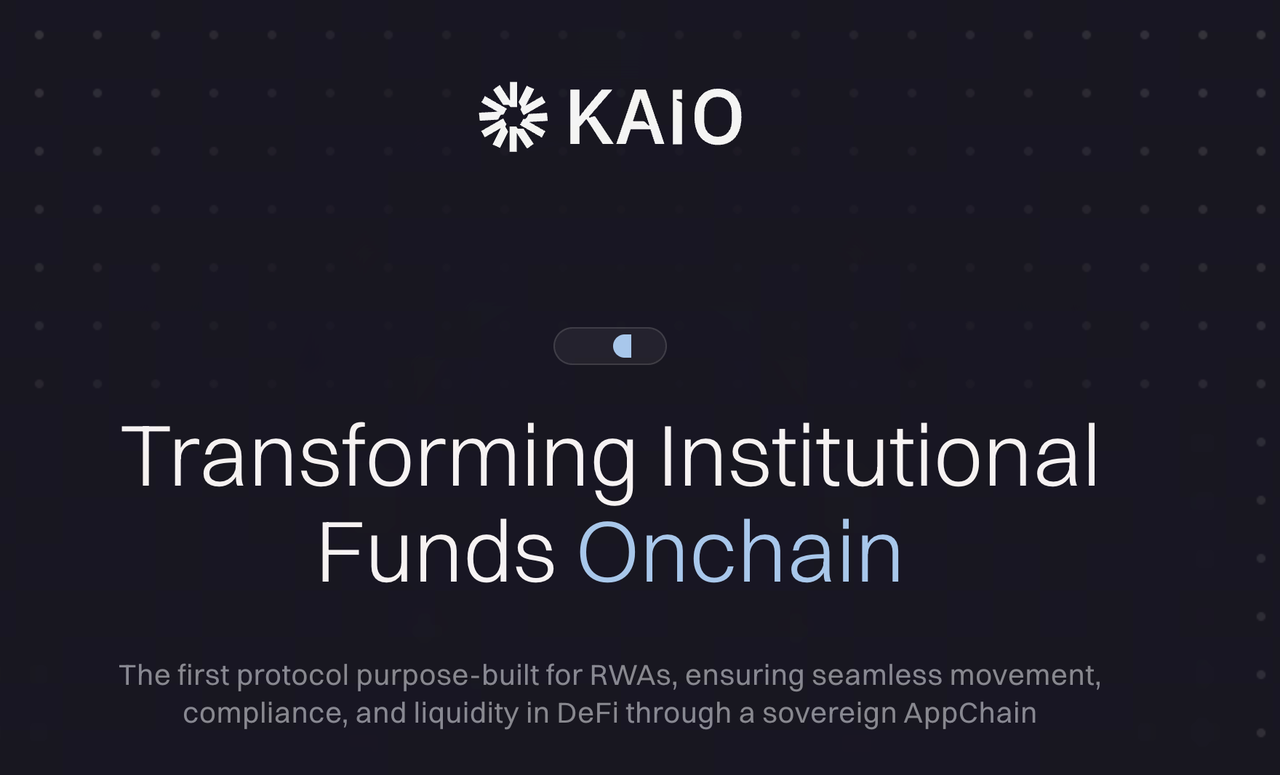
KAIO operates in the field of RWA tokenization infrastructure. Through blockchain technology, it converts traditional assets into onchain tokens, allowing them to circulate and be used in decentralized environments.
KAIO’s development also reflects a broader industry trend. On one side, institutional investors want access to yield opportunities in the crypto market. On the other, DeFi needs more stable, lower volatility assets as a foundation. The introduction of RWAs has become a key path for connecting these two needs.
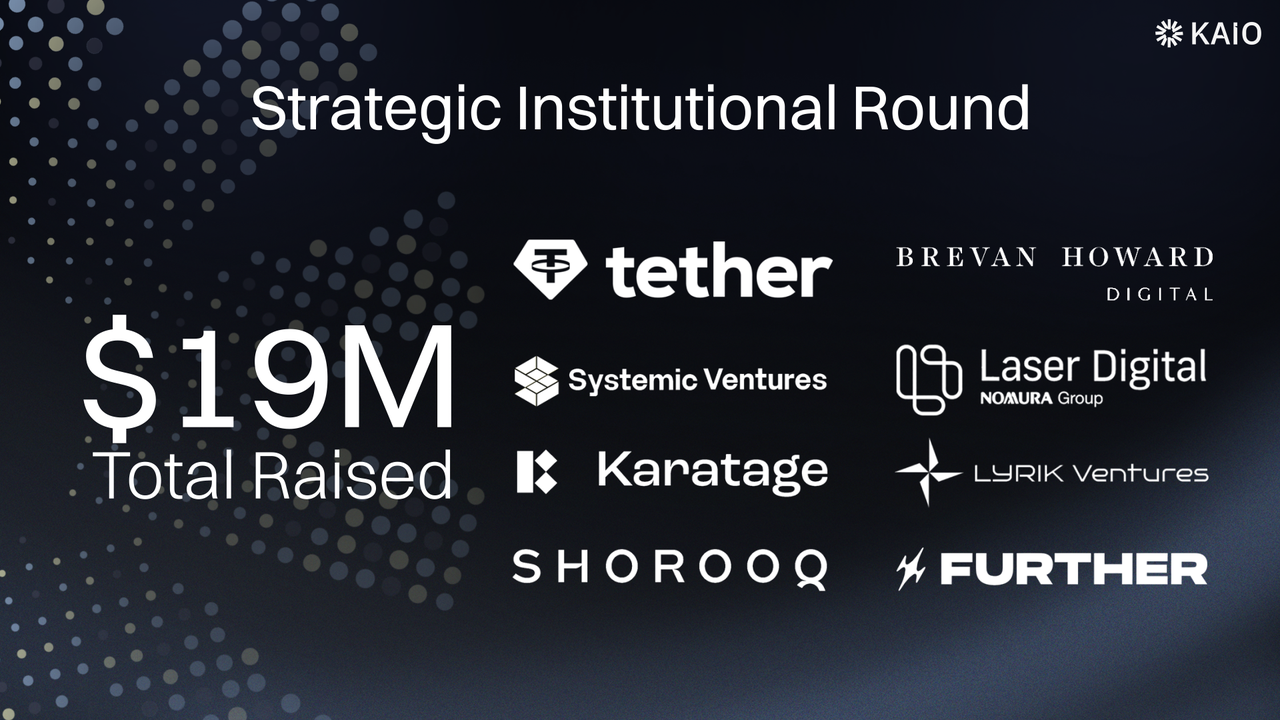
In terms of financing, KAIO completed an $8 million strategic funding round in April 2026, led by Tether with participation from several crypto and institutional investors, bringing its total funding to $19 million. Participating investors included Systemic Ventures, Further Ventures, Laser Digital, Brevan Howard Digital, and others.
How Does KAIO Work?
The core of how KAIO works lies in mapping the lifecycle of traditional financial assets onto an onchain system, allowing these assets to circulate digitally while remaining compliant.
First, asset issuers, such as fund managers, tokenize fund shares through the KAIO platform. This process involves asset custody, valuation, and the establishment of the relevant legal structure.
Second, investors must complete compliance verification before participating, including identity checks and geographic restrictions. This mechanism helps ensure that asset circulation meets regulatory requirements.
Once the assets are brought onchain, investors can subscribe to or redeem them, with the relevant processes executed automatically by smart contracts. At the same time, the net asset value, or NAV, is updated regularly and synchronized onchain.
This mechanism gives traditional assets trading characteristics similar to crypto assets while preserving their original financial attributes.
KAIO’s Technical Architecture
KAIO uses a modular architecture to support the complex management needs of financial assets. Its core structure consists of two parts, the application layer and the infrastructure layer.
At the application layer, KAIO provides institution focused interfaces, such as Gateway and APIs, allowing traditional financial institutions to connect to blockchain systems without needing to understand the underlying technology in depth.
At the infrastructure layer, KAIO relies on smart contracts to execute asset issuance, trading, and settlement, while using a multichain architecture to enable cross chain interoperability. This allows assets to circulate across different blockchains and improves liquidity.
In addition, KAIO introduces compliance modules to restrict and manage investor behavior, helping onchain assets align with real world legal frameworks.
KAIO’s Core Products and Asset Types
KAIO mainly supports the conversion of traditional financial products into onchain assets. The most important form is fund tokenization.
Common asset types include:
-
Money Market Funds
-
Private Credit
-
Hedge Funds
These assets are usually issued by well known institutions and converted into onchain tokens through KAIO, allowing them to be held, traded, or used as collateral in DeFi.
Through this model, KAIO brings high quality assets from traditional financial markets into the onchain ecosystem, giving users access to more stable sources of yield.
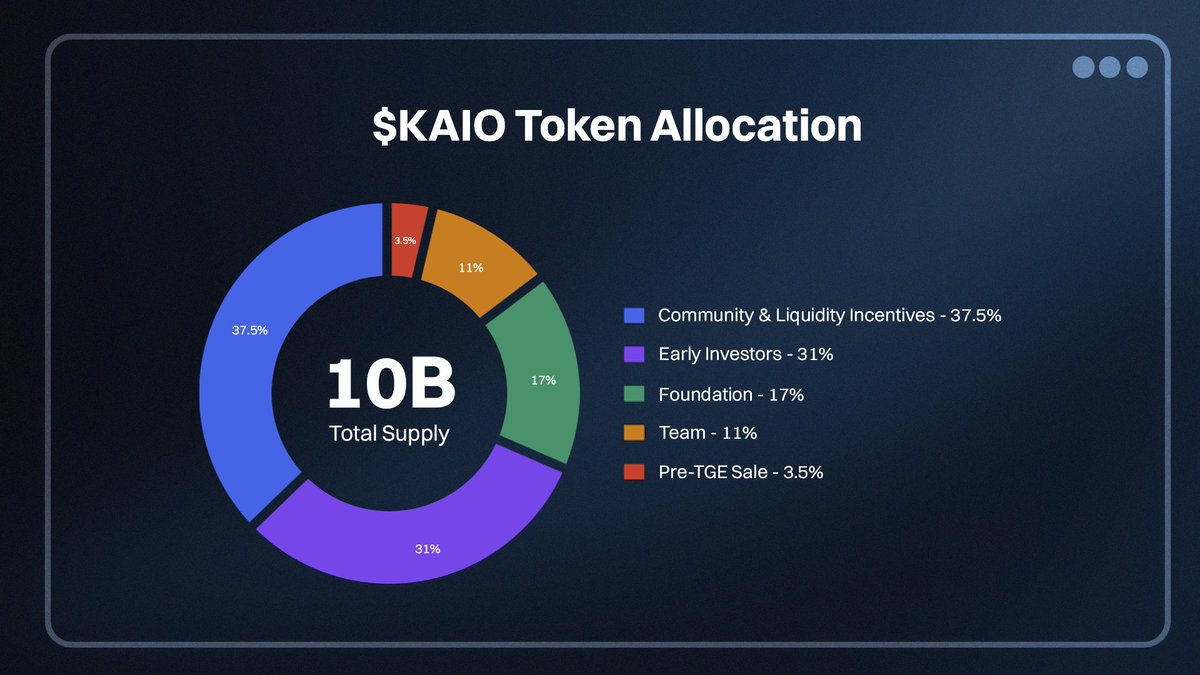
KAIO Tokenomics: Total Supply and Allocation
KAIO’s Use Cases in DeFi
The RWA assets introduced by KAIO create new possibilities for DeFi applications.
First, these assets can be used as collateral in lending protocols, improving overall system stability.
Second, RWA assets usually have relatively stable yield characteristics, which allows them to serve as a source of returns while reducing the high volatility risk commonly seen in DeFi.
In addition, because KAIO supports a cross chain architecture, these assets can circulate across different ecosystems, improving overall liquidity.
These features make KAIO an important bridge between traditional finance and DeFi.
KAIO’s Strengths and Limitations
KAIO’s strengths mainly lie in its institutional grade design and compliance capabilities.
By introducing compliance mechanisms, KAIO can attract participation from traditional financial institutions while reducing regulatory risk. In addition, the assets it supports are mostly lower volatility financial products, giving DeFi a more stable base layer of assets.
However, this model also has certain limitations.
Because compliance requirements are involved, KAIO has a relatively high barrier to entry, and not all users can participate. At the same time, its operation depends on real world legal and regulatory systems, which limits its degree of decentralization to some extent.
KAIO vs Ondo vs Centrifuge: How Different RWA Protocols Compare
In the RWA sector, different protocols, including KAIO, Ondo, and Centrifuge, differ in their positioning and implementation approaches.
KAIO focuses more on institutional grade assets and compliance frameworks, emphasizing deep integration with the traditional financial system. By comparison, some protocols lean more toward DeFi native assets or open lending structures.
This distinction makes KAIO better suited for institutional participation and the introduction of high quality assets, while other protocols may have advantages in openness and flexibility.
| Dimension |
KAIO |
Ondo |
Centrifuge |
| Target Users |
Institutions |
Hybrid |
DeFi Native |
| Compliance |
Strong |
Moderate |
Weak |
| Asset Types |
Funds |
Treasuries |
Invoices/Loans |
| Structure |
AppChain |
Protocol |
Pool Model |
Conclusion
As an important piece of infrastructure connecting traditional finance with blockchain, KAIO brings real world assets into the DeFi ecosystem through RWA tokenization.
Its core value lies in providing high quality assets to onchain markets while maintaining compliance, thereby improving DeFi’s stability and scalability.
As institutional capital continues to enter the crypto market, protocols like KAIO are likely to play a more important role in the financial system of the future.
FAQ
Is KAIO a Blockchain or a Protocol?
KAIO is fundamentally an RWA tokenization protocol, not a standalone blockchain network.
What Assets Does KAIO Support?
It mainly supports traditional financial assets such as money market funds, private credit, and hedge funds.
Is KAIO Designed for Regular Users?
KAIO is more focused on institutional users, and some assets may only be available to qualified investors.
How Is KAIO Different from Traditional Funds?
KAIO tokenizes fund shares, allowing them to circulate on the blockchain with greater transparency and liquidity.
Is KAIO Fully Decentralized?
KAIO introduces compliance mechanisms, so it can be considered a semi decentralized model to some extent.