Plasma (XPL) Presale Booms: New Stablecoin Chain Joins Top Presale Crypto List

Beginner
Quick Reads
Last Updated 2026-04-03 22:18:48
Reading Time: 1m
Plasma (XPL) is invested by Tether and Founders Fund, becoming one of the most anticipated Presale Crypto List projects of 2025 with zero Gas transfers and stablecoin payment mechanisms.

What is Presale Crypto List?

Presale Crypto List refers to the phase where project parties release tokens at a lower price through private placements or early sales before the official launch or public sale on the mainnet. This stage usually offers discounts and significant growth potential, making it suitable for investors with a higher risk tolerance to position themselves in advance.

Plasma (XPL): The explosive logic of a new stablecoin public chain
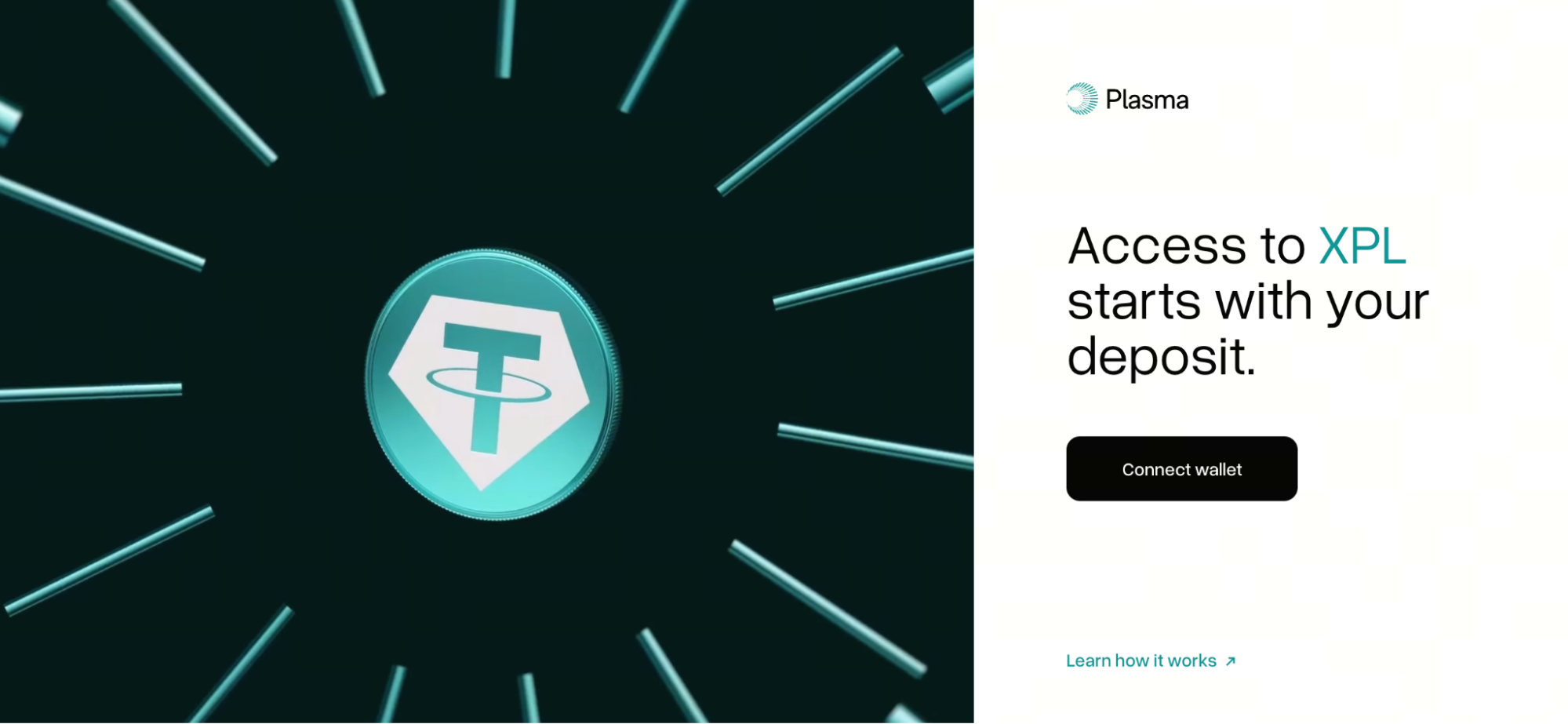

Figure:https://app.plasma.to/

Plasma is a new public blockchain designed specifically for stablecoin trading, led by Tether and Founders Fund among others. It combines the UTXO security model of Bitcoin with the EVM compatibility of Ethereum, innovatively allowing users to use USDT as gas fees for transactions, and even waiving gas payments in simple transaction scenarios.

Latest News

  • As of July 14, 2025, the Plasma project has completed over $27.5 million in funding, with a valuation of up to $500 million.
  • The first round of the $500 million quota was sold out in minutes, and the second round was also snapped up within 30 minutes.

Investment Highlights

  • Gas Innovation: Simple USDT transfers with no fees, complex transactions pay USDT as Gas, and node earnings are stable.
  • Depositing stablecoins generates a quota: Plasma Vault supports deposits of USDT, USDC, DAI, and USDS, forming a quota to purchase XPL coins.
  • Privacy and Compliance Coexist: Supports privacy mode, selective disclosure, while providing dedicated API access for institutions, batch settlement, and cross-chain custody.

Why is it worth paying attention to?

Plasma stands out in the presale projects, not only because of its strong funding background and technological construction but also because it captures the underlying demand for stablecoin circulation, integrating privacy, security, compliance, and usability into one chain, and is expected to become a key part of the next generation of DeFi infrastructure.

Overview of Other Popular Pre-sale Projects (Brief)

  • Bitcoin Hyper ($HYPER): A Bitcoin Layer 2 built on Solana VM, enhancing BTC programmability and TPS, current presale price $0.012275.
  • Remittix ($RTX): A cross-border payment platform covering 30+ countries, has raised $16 million, token price $0.0811.
  • TOKEN6900 ($T6900): A Meme + community-driven project focused on social gameplay and GameFi modules.
  • SUBBD ($SUBBD): AI creator subscription platform that supports automated smart contract revenue distribution, pre-sale price 0.0012 ETH.
  • SpacePay ($SPY): Offline retail crypto payment solution, currently in presale, planned to launch on the mainnet in Q4 2025.

Although these projects have not received strong backing from global institutions like Plasma, each has its own innovative logic and is worth researching individually based on personal preferences.

Investment advice and risk warning

  1. Priority audit projects: If Plasma has completed security verification, other projects should carefully assess the technical team and compliance background.
  2. Control the proportion of funds: It is recommended to keep a single presale project within 10-15% of the investment portfolio.
  3. Pay attention to the unlocking plan: Be sure to understand the lock-up period and release rhythm to avoid excessive selling pressure in the secondary market.
  4. Continuous tracking: Actively join project communities, monitor on-chain data and governance voting, and dynamically adjust investment strategies.

By focusing on projects like Plasma (XPL), investors are expected to capture high growth dividends on the eve of a bull market. But remember - while pre-sales are sweet, the risks are also high, and rationality should always come first.

Author: Max
Disclaimer
* The information is not intended to be and does not constitute financial advice or any other recommendation of any sort offered or endorsed by Gate.
* This article may not be reproduced, transmitted or copied without referencing Gate. Contravention is an infringement of Copyright Act and may be subject to legal action.

Related Articles

The ve(3,3) Flywheel Explained: How AERO Tokenomics Powers Aerodrome’s DeFi Economy
Beginner

The ve(3,3) Flywheel Explained: How AERO Tokenomics Powers Aerodrome’s DeFi Economy

In the competition for DeFi liquidity, high-inflation mining alone is no longer enough to build lasting advantages. Aerodrome applies the ve(3,3) economic model to redesign token emissions, voting mechanisms, and revenue distribution, creating a liquidity flywheel centered on governance and cash flow. This article examines AERO tokenomics, the veAERO locking mechanism, and protocol revenue models to explain how Aerodrome builds a sustainable DeFi economic system.
2026-03-25 06:41:58
AI-Native Settlement Layers: How United Stables Is Building the Next Financial Rail
Beginner

AI-Native Settlement Layers: How United Stables Is Building the Next Financial Rail

Stablecoins were originally designed as dollar substitutes within exchanges, primarily used for asset pricing and trade settlement. As on-chain financial ecosystems have matured, their role has expanded beyond simple payments to include collateral assets, cross-chain liquidity mediums, and unified settlement units. In particular, as AI systems and automated agents begin to participate directly in economic activity, demand has risen sharply for programmable value units capable of instant settlement. This shift is pushing stablecoins toward the role of foundational financial infrastructure.
2026-03-25 03:16:17
Aerodrome Tokenomics: How ve(3,3) Powers Base's Most Profitable DEX
Beginner

Aerodrome Tokenomics: How ve(3,3) Powers Base's Most Profitable DEX

AERO is the native token of Aerodrome Finance, a core decentralized exchange and liquidity protocol in the Base ecosystem. It is primarily used for liquidity incentives and ecosystem operations. veAERO is a governance NFT that users receive by locking AERO, representing both voting power and the right to share protocol revenue. Through a dual track structure of AERO as a utility token and veAERO as a governance credential, Aerodrome separates liquidity usage value from long term governance power, allowing participants to act as liquidity providers, governance decision makers, and revenue sharers within the same system.
2026-03-25 06:40:31
How Does PAXG Work? In-Depth Overview of the Physical Gold Tokenization Mechanism
Beginner

How Does PAXG Work? In-Depth Overview of the Physical Gold Tokenization Mechanism

PAXG (Pax Gold) is a tokenized asset backed by physical gold, issued by the fintech company Paxos and traded on the Ethereum blockchain as an ERC-20 token. The core concept is to tokenize physical gold on-chain, with each PAXG token representing ownership of a certain amount of gold. This structure enables investors to hold and trade gold in the form of a digital asset.
2026-03-24 19:12:51
How is the price of PAXG determined? Pegging mechanism, trading depth, and influencing factors
Beginner

How is the price of PAXG determined? Pegging mechanism, trading depth, and influencing factors

PAXG (Pax Gold) is a tokenized asset backed by physical gold reserves, launched by fintech firm Paxos and issued as an ERC-20 token on the Ethereum blockchain. The core concept is to digitally represent real-world gold assets, allowing investors to hold and trade gold via the blockchain network. Because each PAXG token corresponds to a specific quantity of physical gold, its price is theoretically expected to closely track the global gold market.
2026-03-24 19:11:40
DePIN Identity Network and Real World Applications: How Humanity Protocol Brings on-chain Identity Into the Physical World
Beginner

DePIN Identity Network and Real World Applications: How Humanity Protocol Brings on-chain Identity Into the Physical World

Most Web3 identity systems remain confined to on-chain environments and struggle to achieve meaningful adoption in real world settings. Through a DePIN architecture and physical verification hardware, Humanity Protocol aims to bring decentralized identity into access control systems, hospitality, public services, and offline events, allowing on-chain identity to function not just as a digital credential, but as foundational infrastructure for real world access.
2026-03-25 07:40:53





