

Trade
Basic
Futures
Futures
Hundreds of contracts settled in USDT or BTC
TradFi
Gold
Trade global traditional assets with USDT in one place
Options
Hot
Trade European-style vanilla options
Unified Account
Maximize your capital efficiency
Demo Trading
Futures Kickoff
Get prepared for your futures trading
Futures Events
Participate in events to win generous rewards
Demo Trading
Use virtual funds to experience risk-free trading
Earn
Launch
CandyDrop
Collect candies to earn airdrops
Launchpool
Quick staking, earn potential new tokens
HODLer Airdrop
Hold GT and get massive airdrops for free
Launchpad
Be early to the next big token project
Alpha Points
Trade on-chain assets and enjoy airdrop rewards!
Futures Points
Earn futures points and claim airdrop rewards
Investment
Simple Earn
Earn interests with idle tokens
Auto-Invest
Auto-invest on a regular basis
Dual Investment
Buy low and sell high to take profits from price fluctuations
Soft Staking
Earn rewards with flexible staking
Crypto Loan
0 Fees
Pledge one crypto to borrow another
Lending Center
One-stop lending hub
VIP Wealth Hub
Customized wealth management empowers your assets growth
Private Wealth Management
Customized asset management to grow your digital assets
Quant Fund
Top asset management team helps you profit without hassle
Staking
Stake cryptos to earn in PoS products
Smart Leverage
New
No forced liquidation before maturity, worry-free leveraged gains
GUSD Minting
Use USDT/USDC to mint GUSD for treasury-level yields

More


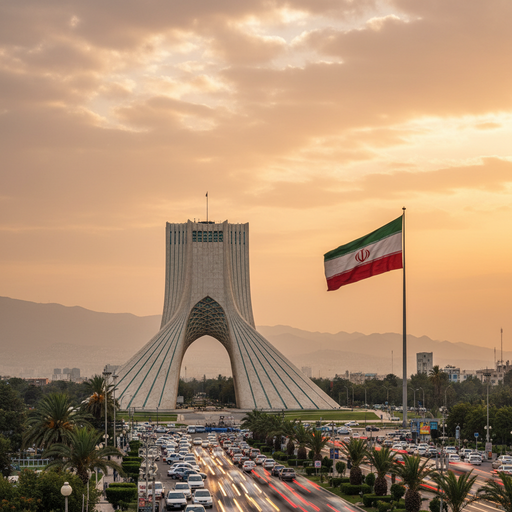




International oil prices surged nearly 8% on Monday! Middle East conflict blocks key straits. Where will oil prices go from here?
On Sunday evening Eastern Time, U.S. crude oil prices surged by over 7%. Market participants are concerned that the war between the U.S. and Iran could spiral out of control, leading to severe supply disruptions.
As of 7 p.m. Eastern Time (8 a.m. Beijing Time Monday), U.S. crude oil prices rose more than 7.7% intraday, gaining $5.16 to reach $72.18 per barrel. The global benchmark Brent crude also increased by about 8%, up $5.91 to $78.78 per barrel.
Substantial Blockade of the Strait of Hormuz
According to CCTV, on the 1st local time, Iran officially announced that Supreme Leader Khamenei was killed in the U.S.-Israeli attack on February 28, “died in the line of duty.” High-ranking officials including the Iranian Armed Forces Chief of Staff and Defense Minister also died in the attack.
On the evening of February 28, the Iranian Islamic Revolutionary Guard Corps announced that any ships passing through the Strait of Hormuz were prohibited, after which an oil tanker attempting to pass the strait on March 1 was hit and began sinking.
In the IRGC’s announcement on the 1st, Iran claimed that three unauthorized US and UK oil tankers in the Persian Gulf and Strait of Hormuz region were targeted by missile attacks.
Since one-fifth of global maritime oil transportation passes through the Strait of Hormuz, analysts believe that a blockade of the strait could have a significant impact on the international energy market, with short-term sharp increases in oil prices expected.
However, the market’s ultimate reaction will depend on whether this war causes long-term disruption of traffic through the Strait of Hormuz, which is the most critical chokepoint in global oil trade.
On Sunday, U.S. President Trump stated that military operations would continue until all U.S. objectives are achieved. Trump previously said Iran hoped to negotiate, and he had agreed to negotiations, offering a potential de-escalation to avoid large-scale and prolonged conflict.
Speed of Strait Restoration Will Determine Oil Price Trends
Analysts led by Henri Patricot at UBS reported on Sunday:
According to consultancy Rystad Energy, due to precautionary measures by shipping companies, oil tanker transportation through the strait has essentially halted.
Oil analyst Matt Smith from energy consultancy Kpler said:
Data from Kpler indicates that by 2025, the daily throughput of the strait will exceed 14 million barrels, about one-third of global maritime crude exports. The company states that roughly three-quarters of this volume is destined for China, India, Japan, and South Korea.
Could Oil Prices Surge to $120?
Barclays analysts told clients last Saturday that, as security in the Middle East continues to deteriorate, Brent crude could rise to $100 per barrel.
UBS analysts also pointed out that the market might be anticipating significant supply disruptions, potentially pushing Brent spot prices above $120 per barrel.
Barclays analyst Amarpreet Singh told clients:
Andy Lipow, president of Lipow Oil Associates, said that due to the uncertain situation in Tehran, domestic unrest, and labor strikes at Iran’s oil fields and ports, Iran’s oil exports could also decline sharply. Iran’s daily oil production is about 3.3 million barrels.
(Source: Cailian Press)