

Trade
Basic
Futures
Futures
Hundreds of contracts settled in USDT or BTC
TradFi
Gold
Trade global traditional assets with USDT in one place
Options
Hot
Trade European-style vanilla options
Unified Account
Maximize your capital efficiency
Demo Trading
Futures Kickoff
Get prepared for your futures trading
Futures Events
Participate in events to win generous rewards
Demo Trading
Use virtual funds to experience risk-free trading
Earn
Launch
CandyDrop
Collect candies to earn airdrops
Launchpool
Quick staking, earn potential new tokens
HODLer Airdrop
Hold GT and get massive airdrops for free
Launchpad
Be early to the next big token project
Alpha Points
Trade on-chain assets and enjoy airdrop rewards!
Futures Points
Earn futures points and claim airdrop rewards
Investment
Simple Earn
Earn interests with idle tokens
Auto-Invest
Auto-invest on a regular basis
Dual Investment
Buy low and sell high to take profits from price fluctuations
Soft Staking
Earn rewards with flexible staking
Crypto Loan
0 Fees
Pledge one crypto to borrow another
Lending Center
One-stop lending hub
VIP Wealth Hub
Customized wealth management empowers your assets growth
Private Wealth Management
Customized asset management to grow your digital assets
Quant Fund
Top asset management team helps you profit without hassle
Staking
Stake cryptos to earn in PoS products
Smart Leverage
New
No forced liquidation before maturity, worry-free leveraged gains
GUSD Minting
Use USDT/USDC to mint GUSD for treasury-level yields

More


Trending Topics
View More42.47M Popularity
153.43K Popularity
105.77K Popularity
1.67M Popularity
503.75K Popularity




Pin
The impact far exceeds the Venezuela incident! The market is on high alert after the US and Israel jointly target Iran
Caixin February 28 News (Editor: Niu Zhanlin)
Following major military operations by the U.S. and Israel against Iran, market observers are preparing for potential turbulence. Investors believe that the impact on the markets will far exceed the shocks caused by recent geopolitical events.
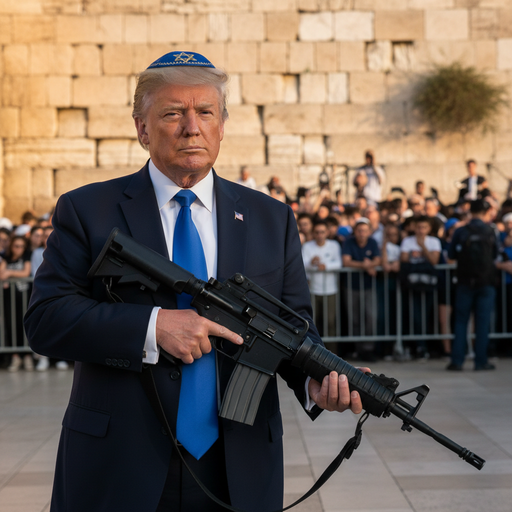
President Trump confirmed on Saturday that the U.S. military has launched “large-scale combat operations” against Iran, amid reports of explosions in several Middle Eastern cities.
Trump described the U.S. military actions against Iran as “massive and ongoing,” warning that American lives could be lost. The strikes aim to destroy Iran’s missile industry, eliminate the Iranian Navy, and prevent Iran from acquiring nuclear weapons. Trump also called for regime change in Iran.
Recently, the market has shown resilience to geopolitical and economic shocks, including Trump’s announcement of raising tariffs on all U.S. imports to 15%, and the forced arrest of Venezuelan President Maduro, which have not caused sustained market disruptions.
Florian Weidinger, Co-Chief Investment Officer at Santa Lucia Asset Management, said, “The impact of this U.S.-Israel joint operation against Iran will definitely be greater than the Venezuela situation.”
He believes that the Venezuela incident “mainly affects those concerned with heavy crude oil.” The country’s heavy, high-sulfur crude oil is difficult to extract but favored by certain complex refineries, especially in the U.S. “Because of this, the risk is higher. Next week, oil prices are expected to rise more sharply.”
Oil Prices Could Surge Significantly, Funds Shift to Safe-Haven Assets
Kenneth Goh, Director of Private Wealth Management at UOB Kay Hian, said, “Venezuela is just a ‘production issue,’ while Iran is a ‘strategic choke point.’”
The Strait of Hormuz, located between Oman and Iran, is considered one of the world’s most critical oil transit chokepoints. Market intelligence firm Kpler data shows that over 13 million barrels of oil pass through this strait daily in 2025, accounting for about 31% of global seaborne oil.
Oil analysts believe a complete closure is unprecedented and difficult to achieve. However, RBC Capital Markets’ oil team recently stated that Iran likely has the capability to attack tankers in the strait and lay mines.
Bridget Payne, Head of Energy Forecasting at Oxford University, said that disruptions in shipping through the Strait of Hormuz could reduce vessel traffic by 50%, pushing oil prices up to $84 per barrel. If transportation is completely halted for a week, prices could soar to $140 per barrel, with impacts comparable to the Russia-Ukraine conflict.
In June 2025, when Israel attacked Iran’s nuclear facilities, global stock markets initially plunged but quickly rebounded after confirming that the Strait of Hormuz was unaffected.
Goh stated, “The market will likely follow this pattern next Monday.” He added that there could be clear safe-haven trades, including a strengthening dollar and yen, and capital flowing into gold.
Notably, in the risk-sensitive cryptocurrency market, Bitcoin and other digital assets have already plummeted sharply, continuing a months-long sell-off in the crypto space.
Bitcoin once dropped 3.8% to $63,038, and Ethereum declined 4.5% to $1,835. According to CoinGecko, following the news, the total market cap of digital assets evaporated about $128 billion instantly.
Other market participants share similar views. Alicia García-Herrero, Chief Economist for Asia-Pacific at Natixis, expects that next Monday’s market open will show “volatile and risk-averse sentiment,” with global stocks potentially falling 1-2% or more, U.S. Treasury yields dropping 5-10 basis points, and oil prices jumping 5-10%.
However, she cautioned investors “not to bet recklessly,” and to wait for Iran’s response.
Some fund managers noted that risk-averse positions have been gradually accumulated over the past few weeks, which could provide some buffer for market volatility when trading begins.
Weidinger said that recent cross-asset price movements have shown signs of a “mild crisis environment,” including rising oil prices and increased demand for U.S. Treasuries.
Although the market has anticipated some escalation in Middle East tensions, investors are closely watching whether U.S. actions are merely short-term, targeted strikes or if they will develop into a long-term regional conflict.
David Roche, analyst at Quantum Strategy, said that the market impact will depend on the duration of the conflict and whether Iran attempts to close the Strait of Hormuz. If the conflict is short and controllable, safe-haven trades and oil price surges may be temporary.
But if the situation evolves into a prolonged “regime change operation” lasting three to five weeks, market reactions could be severe, with investors factoring in broader regional conflict risks and longer-term disruptions to oil supplies.
Billy Leung, strategist at Global X ETFs, pointed out that if Iran undertakes long-term retaliatory actions, Asian markets will be especially sensitive due to their high dependence on stable energy supplies and trade routes. He expects global stocks to open lower, with volatility rising sharply, especially pressuring high-beta and cyclical sectors.