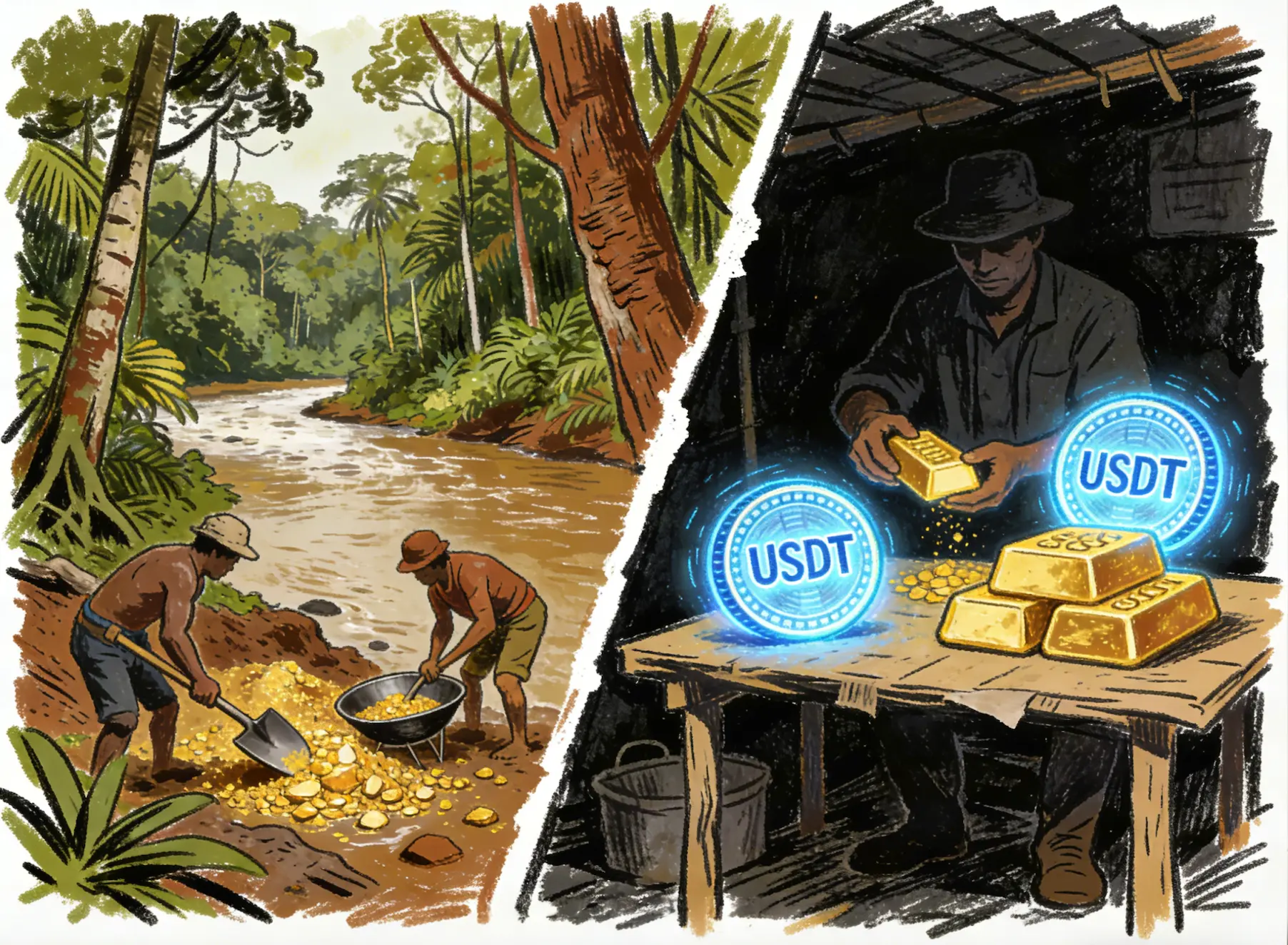
 Illegally mined gold from the Amazon Basin is increasingly being traded for the stablecoin USDT in Venezuela, according to a new report from the Global Initiative Against Transnational Organized Crime (GI-TOC).
The March 2026 report, titled “Shifting Amazon Gold Flows,” reveals that Venezuela has become a regional destination for illicit gold over the past two years, with transactions increasingly settled using Tether’s stablecoin to evade sanctions and launder proceeds.
Report Findings: USDT Emerges as Payment Method in Illicit Gold Trade
Shift in Gold Flow Patterns
The GI-TOC report describes how Venezuela has transformed into “a regional destination” for illegally traded Amazonian gold over the past two years, reversing earlier trends that saw the precious metal flow out of the country toward Brazil and Guyana. This reversal has been accompanied by the emergence of new money laundering strategies, including the use of cryptocurrencies that help transnational criminals and Venezuelan officials circumvent international sanctions.
Based on interviews with two gold traders based in Georgetown, Guyana, the report indicates that gold originating from Guyana is reportedly sold in Venezuela in exchange for Tether.
Growing Role of Stablecoins
Research indicates that illicit gold traders have been using USDT over the past year, highlighting the increasing relevance of stablecoins in global illicit transactions alongside broader concerns about crypto and organized crime. Given the increased licit and illicit interaction around stablecoins, this trend is expected to develop further.
The findings align with research from other organizations, including a December 2025 report concluding that Venezuela had become increasingly reliant on USDT amid sanctions and rampant inflation.
Venezuela’s Gold Industry and Criminal Networks
Economic Significance
Gold mining in Venezuela generated just over $2.2 billion in revenue last year, providing the Maduro government with a key source of income at a time when mismanagement and sanctions have been reducing oil revenues. The country’s gold industry has become a financial lifeline as petroleum revenues decline.
Government and Criminal Collaboration
The report reveals that the Maduro government used the Venezuelan gold trade to foster loyalty among politicians and security forces, while elements within the government coordinated with criminal groups gaining a growing foothold in the Amazon Basin.
Within Venezuela’s criminal ecosystem, the illicit gold trade plays an influential role, binding together senior political figures, military officials and transnational criminal groups. Military officials reportedly purchase gold at premium prices, attracting smugglers to the region. The gold entering Venezuela is then monetized through opaque channels, sometimes with state involvement.
Tether’s Response and Law Enforcement Cooperation
Asset Freezes
Tether has pointed to its work with law enforcement around the world, including the freezing of approximately $4.3 billion in assets linked to illicit activity. This represents ongoing efforts to cooperate with global authorities in combating financial crime.
Compliance Measures
The company has consistently stated its commitment to working with regulators and law enforcement to prevent the misuse of its stablecoin for illegal purposes. The frozen assets demonstrate Tether’s capacity to respond to legitimate law enforcement requests despite the pseudonymous nature of blockchain transactions.
Legislative Response: U.S. Legal Gold and Mining Partnership Act
Proposed Legislation
Congress is currently debating the United States Legal Gold and Mining Partnership Act, which has advanced to the Senate Committee on Foreign Relations. The legislation aims to reduce the negative environmental and social impacts of illicit gold mining in the Western Hemisphere.
According to the draft bill, the proposed strategy would include combatting and disrupting financing and financial flows of illicit actors involved in illicit gold trading, and preventing foreign persons from benefitting from the U.S. financial system.
Need for Crypto-Specific Provisions
To be effective, the bill should include provisions related to crypto, given the growing role of digital assets in laundering the proceeds of illicit gold transactions. Any strategy arising from the passage of the bill will have to build upon past experience in combating the illegal flow of minerals, including the adoption of systemic reforms needed to render gold trading more transparent and accountable, domestically and internationally.
Environmental and Economic Implications
Environmental Devastation
The use of USDT in financing illegal mining operations contributes to severe environmental damage in the Amazon rainforest, including deforestation, mercury pollution, and biodiversity loss. By providing an efficient payment mechanism, USDT may increase the profitability and scale of these destructive operations.
Economic Consequences
This illicit trade undermines legitimate markets, deprives governments of tax revenue, distorts local economies, and fuels corruption while strengthening criminal networks. Digital currency transactions in Caracas can drive environmental destruction hundreds of miles away in the Amazon, highlighting the interconnected nature of these crimes.
FAQ: GI-TOC Report on Illicit Gold Trade and USDT
Q: What is the main finding of the GI-TOC report?
A: The report finds that illegally mined gold from the Amazon Basin is increasingly being traded for the stablecoin USDT in Venezuela, creating a new method for criminal networks and Venezuelan officials to evade international sanctions and launder proceeds.
Q: How significant is Venezuela’s gold industry in this context?
A: Venezuela’s gold mining industry generated over $2.2 billion in revenue last year, becoming a crucial income source as oil revenues declined due to sanctions and mismanagement. The trade involves senior political figures, military officials, and transnational criminal groups.
Q: How has Tether responded to these findings?
A: Tether has pointed to its ongoing cooperation with global law enforcement, noting that it has helped freeze approximately $4.3 billion in assets linked to illicit activity worldwide.
Q: What legislative action is being proposed to address this issue?
A: The U.S. Congress is considering the Legal Gold and Mining Partnership Act, which would establish strategies to combat illicit gold mining and disrupt financial flows of criminal actors. Experts recommend including specific provisions related to cryptocurrency to address the growing role of digital assets in these transactions.
Q: Why does this matter beyond financial crime concerns?
A: The illicit gold trade financed through USDT contributes to severe environmental damage in the Amazon, including deforestation and mercury pollution, while also undermining legitimate economies and strengthening criminal networks across the region.
Disclaimer: The information on this page may come from third parties and does not represent the views or opinions of Gate. The content displayed on this page is for reference only and does not constitute any financial, investment, or legal advice. Gate does not guarantee the accuracy or completeness of the information and shall not be liable for any losses arising from the use of this information. Virtual asset investments carry high risks and are subject to significant price volatility. You may lose all of your invested principal. Please fully understand the relevant risks and make prudent decisions based on your own financial situation and risk tolerance. For details, please refer to
Disclaimer.


