As the global cryptocurrency industry steadily moves into an era of regulation, Europe has emerged as one of the most closely watched compliance markets for digital assets. The formal implementation of the MiCA framework has not only established a unified regulatory system across all 27 EU member states but also turned "whether an exchange holds a MiCA license" into a key benchmark for evaluating exchange compliance. For investors, choosing a licensed platform means higher information transparency and stronger asset protection. For exchanges, obtaining MiCA authorization means they can legally enter one of the world’s most mature digital asset markets.
Before MiCA, crypto exchanges largely relied on individual member state licenses, leading to significant regulatory divergence. MiCA has unified regulation and market access for the first time, allowing platforms with CASP authorization to offer services across the entire EU.
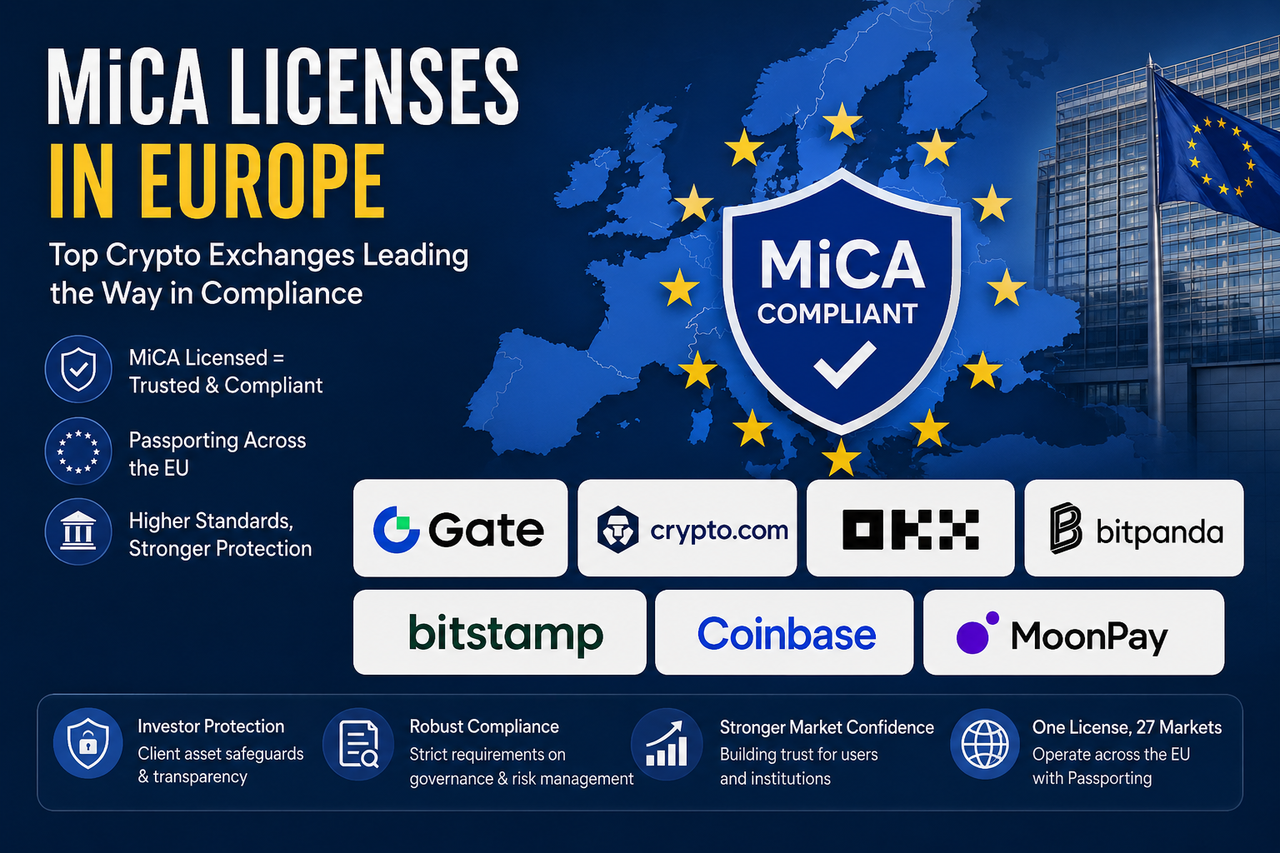
Which Major Exchanges Have Obtained MiCA Authorization
As MiCA rolls out, several international crypto firms have already secured authorization or cleared key regulatory milestones.
Gate
Gate is one of the first major international exchanges to obtain a MiCA license. Its Maltese entity, Gate Technology Ltd (Gate Europe), has received the license under the Malta Financial Services Authority (MFSA) and will offer crypto asset trading and custody services to users under MFSA oversight—a key milestone in Gate Group’s global compliance strategy.
Through its European compliance expansion, Gate has strengthened its position in digital asset trading, custody, and services, while continuing to extend its European coverage.
Crypto.com
Crypto.com has steadily grown its European presence and is actively pursuing MiCA authorization. Its European strategy spans crypto trading, payments, institutional services, and digital asset infrastructure.
OKX
OKX has long seen Europe as a priority market. With MiCA now in effect, OKX is stepping up local compliance efforts and pushing forward with license applications to boost its competitiveness in the region.
Bitpanda
As a digital asset platform born in Europe, Bitpanda has focused on regulated market development. Its business model aligns closely with the MiCA framework, making it a key representative of homegrown European compliant exchanges.
Bitstamp
Bitstamp is one of Europe’s longest-standing crypto exchanges. With years of compliance expertise and a mature risk management system, it continues to wield strong market influence in the MiCA era.
Coinbase
Coinbase has intensified its international push and is actively growing its European business. As MiCA matures, Europe has become a cornerstone of Coinbase’s global growth strategy.
How Does a MiCA License Impact Exchanges
MiCA authorization first raises the bar for entering the European market.
Previously, some exchanges could enter Europe via lightly regulated jurisdictions. MiCA now requires firms to establish robust governance, risk management, and customer asset protection systems. This shift means future competition will center on compliance and long-term operational strength rather than just trading volume or marketing spend.
For large international exchanges, MiCA helps build competitive advantages and brand moats. For platforms with limited resources and compliance capabilities, it brings higher costs and greater market challenges.
Why Users Care Whether an Exchange Has a MiCA License
For everyday investors, a MiCA license signals a higher level of regulatory protection.
MiCA requires licensed entities to segregate customer assets, meet disclosure obligations, implement risk management, and stay under continuous regulatory supervision. These measures boost market transparency, reduce operational risk, and increase user trust in the platform.
While a license doesn’t guarantee zero risk, platforms operating under a unified regulatory framework generally offer stronger user protections. That’s why more European investors are now prioritizing MiCA authorization when choosing an exchange.
How Will MiCA Change the Competitive Landscape of European Exchanges
MiCA is steering the European crypto market from rapid expansion into a phase of regulated maturity.
Future exchange competition will move beyond trading fees and product range to focus on regulatory compliance, institutional services, risk management, and cross-border operations. Platforms that consistently meet regulatory standards will earn greater trust from both retail and institutional investors.
In the long run, MiCA is expected to foster a more transparent, secure, and mature digital asset market in Europe, further boosting the region’s influence in the global crypto industry.
Summary
The MiCA license has become a critical gateway to the European crypto market. As leading international platforms—Gate, Crypto.com, OKX, Bitpanda, Bitstamp, and Coinbase—actively pursue MiCA authorization, Europe’s digital asset industry is entering a new era of unified regulation.
For exchanges, MiCA means more than just compliance—it’s a ticket to the unified EU market and a magnet for institutional capital. For investors, a licensed platform offers higher transparency, stronger regulatory safeguards, and better asset protection.
FAQs
Which exchanges have already obtained a MiCA license?
Companies including Gate, Crypto.com, Bitpanda, and Bitstamp have secured authorization or passed key regulatory steps. Coinbase and OKX are also actively advancing their MiCA compliance efforts in Europe.
What is the purpose of a MiCA license?
Once authorized, firms can use the EU passporting mechanism to operate across all EU member states, while also boosting their regulatory credibility and ability to partner with institutions.
Does a MiCA license cover all of Europe?
MiCA applies to EU member states. After approval by one member state’s regulator, firms can typically serve other EU countries through passporting.
Why should users care about a MiCA license?
Licensed platforms must meet strict requirements for asset protection, disclosure, and risk management, so they generally offer higher transparency and compliance standards.
Will MiCA eliminate smaller exchanges?
MiCA raises the industry entry bar. Platforms with limited resources or compliance capabilities may struggle. However, the unified framework also creates a fairer competitive environment for firms with long-term viability.