The development of on-chain derivatives markets has long faced two core challenges: high trading complexity and insufficient capital efficiency. Traditional on-chain trading typically requires users to complete multiple steps—wallet connection, cross-chain switching, order management, and risk control—making sustained participation difficult for most everyday users.
Tradoor aims to redesign this process. The protocol’s goals are "less capital to start, lower interaction complexity, higher execution efficiency." By providing a unified trading entry, price locking mechanism, and automated risk system, it transforms complex derivatives trading into an experience that feels more like a mobile internet product.
At the same time, Tradoor has chosen to deploy initially on the TON ecosystem, with plans for gradual multi-chain expansion. Its objective is not merely to offer trading capabilities but to build a new derivatives infrastructure covering on-chain trading, liquidity management, and intelligent strategy execution.
What Is Tradoor (TRADOOR)?
Unlike traditional centralized derivatives platforms, Tradoor moves order execution, risk management, and liquidity support to an on-chain environment while minimizing the burden of complex operational steps for users. Users can complete the entire process—from asset preparation to order execution—without needing to switch between multiple trading interface layers.
Tradoor prioritizes the trading experience as a key design focus. Its officially disclosed target execution speed reaches millisecond-level confirmation. An order price locking mechanism lets users know the execution price at the time of order placement, reducing uncertainty from price fluctuations during the trade.
Beyond trading capabilities, Tradoor also introduces an AI risk control concept. By leveraging machine learning and automated management, it aims to improve the protocol's stability in complex market environments while reducing liquidity risks and the impact of extreme market events.
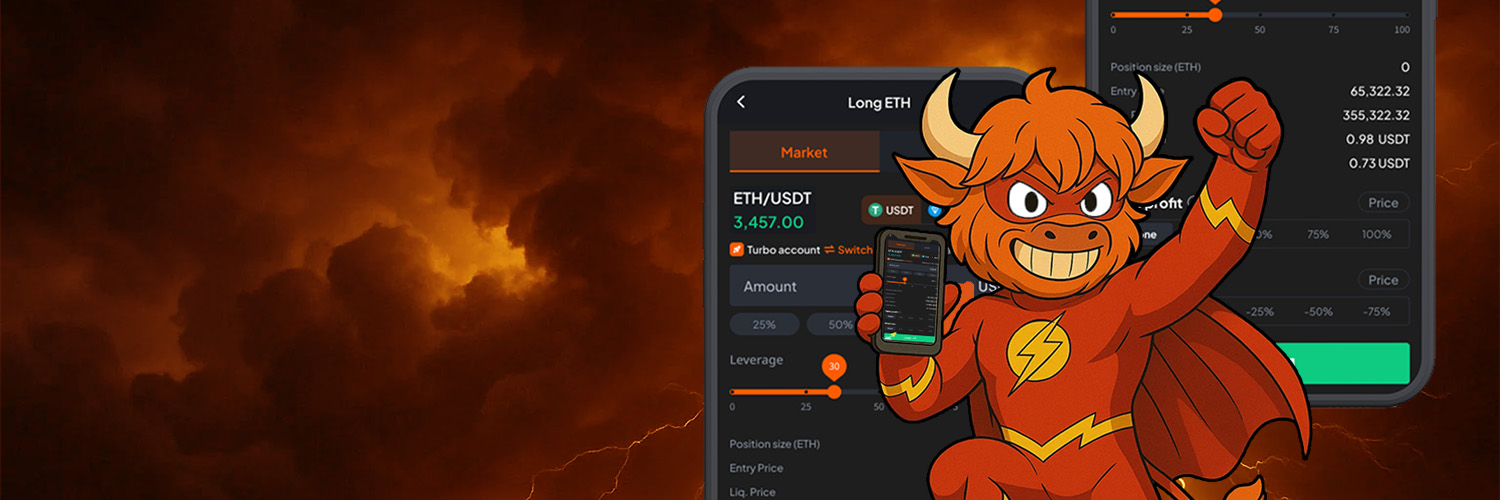
Source: tradoor.io
How Does Tradoor Build an On-Chain Derivatives Trading Protocol?
Tradoor's core design goal is to lower the barrier to entry for on-chain leveraged trading. Traditional on-chain derivatives protocols often emphasize feature completeness, which can increase user learning costs. In contrast, Tradoor focuses on trading experience and process optimization.
The protocol uses a unified trading framework to connect multiple core modules: order management system, liquidity support system, risk control system, and multi-terminal access layer. Users only need to complete basic interactions to gain full trading capabilities.
For trade execution, Tradoor emphasizes fast execution and price certainty. The price locking mechanism reduces price deviation between order submission and execution, improving overall trading consistency.
The protocol also plans to gradually expand multi-chain access. While currently centered on the TON ecosystem, the architecture already includes cross-chain compatibility to support more liquidity sources and user entry points in the future.
How Do Tradoor's Options and Perpetual Contracts Work?
Tradoor integrates options trading and perpetual contracts into a single trading system, allowing users to choose appropriate strategy tools based on different market conditions.
Options products enable users to design strategies around future price movements. Compared to directly holding assets, options typically offer more flexible yield structures and risk control capabilities, making them a key component of the derivatives market.
Perpetual contracts emphasize continuous trading. Unlike traditional futures, perpetual contracts have no fixed expiration date and maintain price alignment with the underlying asset through market mechanisms.
Tradoor aims to reduce switching costs between different products through a unified trading entry point, enabling users to manage various strategy types in one environment and improve overall capital efficiency.
What Role Does the TRADOOR Token Play in the Tradoor Ecosystem?
TRADOOR is the native token of the Tradoor protocol ecosystem, serving to connect trading activity, liquidity support, and protocol governance. Rather than acting solely as a medium of exchange, TRADOOR primarily fulfills ecosystem coordination functions.
In on-chain derivatives protocols, tokens typically serve three value transmission purposes: incentivizing participants, coordinating market behavior, and driving ecosystem expansion. TRADOOR's design logic follows these same goals, enabling the protocol to establish long-term relationships among users, liquidity providers, and operations.
On the trading side, the token system helps create more sustainable user participation mechanisms. On the ecosystem side, it enables resource allocation and governance coordination. As the protocol's functionality expands, the token system may become key infrastructure connecting future product matrices.
Note that token functionality will continue to adjust as the protocol evolves. When evaluating the token's value, users should focus on the protocol's functionality and ecosystem role rather than viewing the token simply as a price instrument.
Tradoor's Liquidity and Risk Control Mechanisms
Liquidity and risk control determine whether an on-chain derivatives protocol can operate stably over the long term. Since derivatives trading inherently involves leverage, the protocol must not only meet trading demands but also ensure the system continues functioning during extreme market volatility.
Tradoor emphasizes unified management and risk isolation in its liquidity design. Through algorithmic management coordinated with the trading engine, the protocol improves capital efficiency and minimizes the impact of isolated market fluctuations on the overall system.
For risk management, Tradoor introduces machine learning-assisted mechanisms and multi-layered security measures to monitor abnormal market behavior and liquidity changes. Officially called the AI-Enhanced Liquidity Protection Mechanism, this system aims to create a more balanced risk structure among traders, liquidity providers, and the protocol.
The protocol also incorporates an Auto-Deleveraging (ADL) mechanism as a protective measure during extreme conditions. When market volatility exceeds preset risk thresholds, the ADL system helps mitigate cascading risks and enhance overall resilience to imbalance.
From a design perspective, Tradoor is not simply pursuing higher leverage capabilities—it aims to establish on-chain derivatives infrastructure that can maintain stable operation over the long term.
How Does Tradoor's Telegram Trading Entry Reduce On-Chain Trading Barriers?
Traditional on-chain trading typically requires wallets, browser plugins, and multiple independent applications working together—a complex process that raises the entry barrier for ordinary users.
Tradoor leverages Telegram as a key trading entry point, reducing learning costs by using a familiar instant messaging environment. Users can perform trading operations and account management without frequently switching between applications.
This model reflects the recent trend in on-chain applications, shifting from infrastructure-driven to user-entry-driven development. Rather than just optimizing underlying performance, the priority is enabling more users to complete trades in a low-complexity environment.
In addition to Telegram, Tradoor also supports web and mobile access, allowing users to flexibly switch based on device scenarios. This unified multi-terminal experience is a key component of the protocol's user retention strategy.
Looking ahead, if further integrated with automated strategy systems, the Telegram entry point could also take on strategy execution and intelligent interaction functions, expanding its role beyond a simple trading gateway.
Traditional derivatives trading platforms typically rely on centralized matching systems and manage trades and assets through custodial accounts. While this model has mature infrastructure, it requires users to trust the platform with asset and order management.
Tradoor, by contrast, reorganizes the trading process using on-chain infrastructure. The protocol emphasizes user asset control, trading transparency, and automated execution, reducing reliance on a single platform.
The two models also differ in product objectives. Traditional platforms often focus on high-frequency trading efficiency and mature financial instruments, while on-chain derivatives protocols prioritize open access, composability, and cross-ecosystem connectivity.
| Comparison Dimension |
Tradoor |
Traditional Derivatives Platform |
| Trading Entry Points |
Web / Mobile / Telegram |
Platform client |
| Asset Control |
User self-custody |
Platform custody |
| Risk System |
Protocol automated control |
Platform centralized control |
| Trading Environment |
On-chain execution |
Centralized execution |
| Scalability |
Multi-protocol composability |
Platform internal expansion |
As the digital asset market develops, the two models may coexist over the long term rather than fully replace each other.
Tradoor's Position in the TON DeFi Ecosystem
The TON ecosystem has been steadily expanding its infrastructure and user entry capabilities, with derivatives trading remaining a relatively new component.
Tradoor's positioning goes beyond being a single trading platform—it aims to become the derivatives trading layer within the TON ecosystem, providing options, perpetual trading, and potentially automated trading capabilities in the future.
Compared to basic exchange protocols, derivatives protocols can improve capital efficiency and create more complex market structures. Thus, Tradoor's role in TON is closer to that of financial infrastructure.
Additionally, the natural synergy between Telegram and TON gives Tradoor a differentiated entry point advantage. The protocol seeks to combine user growth with financial capabilities to bring more non-professional users into on-chain trading.
As multi-chain capabilities advance, Tradoor's ambition may expand from a single-ecosystem protocol to a cross-ecosystem derivatives platform.
Tradoor's Advantages and Limitations
Tradoor's advantages lie primarily in trading experience, execution efficiency, and user entry design. Through a unified interface, fast confirmation, and a price locking mechanism, it reduces the complexity of on-chain derivatives trading.
Multi-terminal support is another important feature. Users get a consistent trading experience across web, mobile, and Telegram, lowering switching costs between devices.
Furthermore, the risk control system and Auto-Deleveraging mechanism provide additional protection during extreme market conditions, ensuring the protocol balances growth focus with system stability.
However, on-chain derivatives protocols still face challenges around liquidity depth, user education, and market volatility. Options and leveraged products are inherently complex, so users need to understand the relevant mechanisms before participating.
Moreover, multi-chain expansion, automated trading, and AI-assisted capabilities are still evolving, and their actual performance needs to be validated through long-term market operation.
Conclusion
Tradoor is an on-chain derivatives trading protocol built for web, mobile, and Telegram. By integrating options, perpetual contracts, risk control, and multi-terminal entry points, it aims to lower the barriers to on-chain trading while improving efficiency.
The protocol establishes a more complete trading infrastructure through unified liquidity design, a price locking mechanism, AI-enhanced risk management, and an Auto-Deleveraging system. At the same time, leveraging the TON ecosystem and Telegram context, Tradoor has charted a development path distinct from traditional derivatives platforms.
As on-chain finance expands to mainstream users, trading experience, risk control, and cross-terminal capabilities are likely to become key competitive areas for derivatives protocols in the next phase.
FAQ
What is Tradoor?
Tradoor is an on-chain derivatives trading protocol that supports options and perpetual contract trading, with multi-terminal access via web, mobile, and Telegram.
Why does Tradoor emphasize the Telegram trading entry point?
Telegram reduces the learning cost for users to enter on-chain trading and minimizes the operational complexity of switching between applications.
How does Tradoor control derivatives trading risk?
Tradoor uses machine learning-assisted risk control, a liquidity protection mechanism, and an Auto-Deleveraging system to improve protocol stability during extreme market conditions.
What is the purpose of the TRADOOR token?
TRADOOR connects protocol governance, ecosystem incentives, and market participation mechanisms, serving an ecosystem coordination function.
What is the biggest difference between Tradoor and traditional derivatives platforms?
Tradoor emphasizes on-chain execution, user asset control, multi-terminal entry points, and open ecosystem composability.







