مع تحول سوق التمويل اللامركزي (DeFi) من الأصول عالية التقلب نحو فرص عائد الدولار على السلسلة، برزت العملات المستقرة المدرة للعائد كجسر رئيسي بين منطق دخل التمويل التقليدي وسيولة البلوكشين. وباعتبارها مكونًا أساسيًا في نظام Maple البيئي، تتجاوز SyrupUSDC وظائف العملات المستقرة التقليدية عبر توجيه عوائد سوق الائتمان المؤسسي إلى الأصول على السلسلة، مما يوسع نطاق استخدامات العملات المستقرة.
خلفية SyrupUSDC
لطالما كانت العملات المستقرة ركيزة أساسية لسوق الأصول الرقمية. فالعملات المستقرة التقليدية مثل USDC و USDT تُستخدم أساسًا في المدفوعات والتسويات والتداول وتخزين القيمة، وعادةً ما تكون قيمتها مرتبطة بالدولار الأمريكي.
مع نمو التمويل على السلسلة، يتزايد تركيز المستخدمين على كفاءة رأس المال للعملات المستقرة. فالكميات الكبيرة من العملات المستقرة الخاملة تحافظ على القيمة لكنها لا تحقق عائدًا مباشرًا. لذلك أنشأت Maple Finance عملة SyrupUSDC لتحويل دخل الفوائد من الإقراض المؤسسي إلى أصول عائد على السلسلة قابلة للحفظ والنقل والتركيب.
كيف تعمل SyrupUSDC؟
تعمل SyrupUSDC فوق البنية التحتية للإقراض المؤسسي لـ Maple.
يودع المستخدمون أولاً USDC في منتجات Maple ذات الصلة، ويقوم النظام بسك كمية مقابلة من SyrupUSDC بسعر الصرف الحالي. بمجرد الاحتفاظ بها، تدخل الأموال الأساسية إلى سوق الإقراض المؤسسي لـ Maple وتبدأ في كسب فائدة مستمرة يدفعها المقترضون.
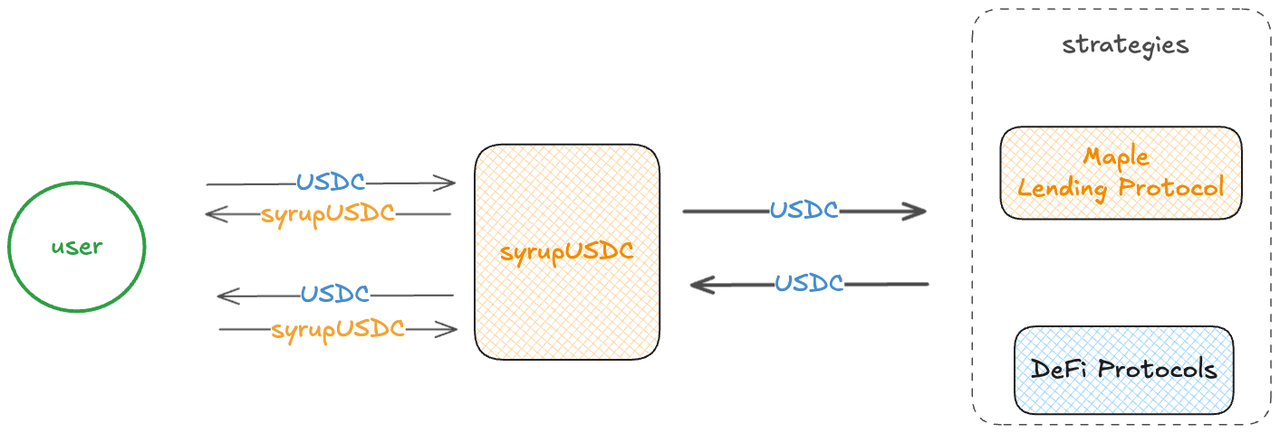
على عكس بعض منتجات العائد التي توزع المكافآت بشكل دوري، تحقق SyrupUSDC العوائد من خلال نمو صافي قيمة الأصول (NAV). فمع تراكم فائدة القرض، تزداد قيمة USDC التي تمثلها كل SyrupUSDC تدريجيًا.
وعندما يسترد المستخدمون، يقوم النظام بتحويل SyrupUSDC مرة أخرى إلى المبلغ المقابل من USDC بأحدث سعر صرف، محققًا بذلك العائد المتراكم.
ما هي مصادر عائد SyrupUSDC؟
يأتي عائد SyrupUSDC بشكل أساسي من قروض الأصول الرقمية من الدرجة المؤسسية لـ Maple.
يشمل المقترضون على شبكة Maple صناديق الأصول الرقمية، وصناع السوق، وشركات التداول الكمي، وغيرهم من المشاركين الماليين المحترفين. تحصل هذه المؤسسات على حدود القروض مقابل تقديم ضمانات وتدفع الفائدة وفقًا لذلك.
بعد دخول فائدة القرض إلى مجمع Maple، تُخصم الرسوم الضرورية واحتياطيات المخاطر، وينعكس الباقي في قيمة أصول SyrupUSDC.
ونظرًا لأن القروض عادةً ما تكون قصيرة الأجل وبمعدلات فائدة ثابتة، فإن مصدر العائد شفاف نسبيًا - وهو مختلف جوهريًا عن بعض نماذج عائد التمويل اللامركزي التي تعتمد على إصدار الرموز.
ما الفرق بين SyrupUSDC و USDC؟
على الرغم من أن كلاً من SyrupUSDC و USDC مبنيان حول الدولار الأمريكي، إلا أن لكل منهما غرضًا مختلفًا.
الهدف الرئيسي لـ USDC هو استقرار السعر لتسهيل المدفوعات والتسويات والمعاملات على السلسلة. ولا تحقق USDC نفسها عائدًا تلقائيًا ما لم تُودع بنشاط في بروتوكولات الإقراض أو منتجات العائد.
أما SyrupUSDC فتضيف طبقة مدرة للعائد إلى خصائص عملتها المستقرة. فخلال فترة احتفاظك بـ SyrupUSDC، تزداد قيمتها تدريجيًا مع تراكم دخل القروض المؤسسية.
من ناحية المخاطر، تواجه USDC بشكل أساسي مخاطر المصدر. أما SyrupUSDC، فبالإضافة إلى المخاطر المتعلقة بالمصدر، تنطوي أيضًا على مخاطر ائتمانية ومخاطر سيولة ناشئة عن سوق الإقراض المؤسسي.
ما هي حالات استخدام SyrupUSDC في التمويل اللامركزي؟
مع تزايد أهمية الأصول المدرة للعائد، تستمر تطبيقات SyrupUSDC في التوسع.
يمكن للمستخدمين الاحتفاظ بـ SyrupUSDC كأصل عائد طويل الأجل، وكسب العوائد مع الحفاظ على التعرض للدولار على السلسلة.
كما تسمح بعض بروتوكولات التمويل اللامركزي لـ SyrupUSDC بالمشاركة في توفير السيولة، وتجميع العائد، والإقراض المضمون، مما يزيد من كفاءة رأس المال.
ونظرًا لأن SyrupUSDC تولد عائدًا بطبيعتها، فإن إمكاناتها في منتجات تجزئة العائد، وبروتوكولات الدخل الثابت، واستراتيجيات إدارة الأصول آخذة في النمو أيضًا.
ما المخاطر التي تواجهها SyrupUSDC؟
على الرغم من أن SyrupUSDC تهدف إلى توفير عوائد مستقرة، إلا أن بعض المخاطر لا تزال قائمة.
قد يؤدي تخلف المقترضين المؤسسيين عن السداد إلى إطالة الجداول الزمنية لاسترداد القروض أو التسبب في خسائر برأس المال. ورغم أن Maple تستخدم الإفراط في الضمانات وإدارة المخاطر، إلا أنه لا يمكن القضاء على المخاطر الائتمانية تمامًا.
تشكل مخاطر العقد الذكي تحديًا لجميع منتجات التمويل على السلسلة. فثغرات كود البروتوكول، أو شذوذ أوراكل، أو مشكلات التكامل مع الجهات الخارجية يمكن أن تؤثر جميعها على أمن الأصول.
بالإضافة إلى ذلك، أثناء أحداث الاسترداد واسعة النطاق، قد تؤثر إدارة السيولة على كفاءة عمليات سحب الأصول.
ملخص
SyrupUSDC - عملة مستقرة مدرة للعائد أطلقتها Maple Finance - تقدم عوائد الدولار على السلسلة من خلال إقراض الأصول الرقمية من الدرجة المؤسسية. وعلى عكس USDC التقليدية، تدمج SyrupUSDC القدرة على الكسب مباشرة في الأصل، مع تراكم الفوائد المنعكس عبر ارتفاع سعر الصرف.
تكمن قيمتها الأساسية في ربط سوق الائتمان المؤسسي بنظام التمويل اللامركزي البيئي، مما يتيح للمستخدمين الوصول إلى فرص الدخل الثابت على السلسلة بشكل أكثر بساطة. ومع ذلك، لا تزال SyrupUSDC تواجه مخاطر ائتمانية ومخاطر العقد الذكي ومخاطر السيولة.
الأسئلة الشائعة
من أين يأتي عائد SyrupUSDC؟
يأتي عائد SyrupUSDC بشكل أساسي من قروض الأصول الرقمية من الدرجة المؤسسية لـ Maple Finance. تُضاف الفائدة التي تدفعها المؤسسات المقترضة إلى صافي قيمة الأصول وتنعكس على الحاملين من خلال نمو سعر الصرف.
ما الفرق بين SyrupUSDC و USDC؟
USDC هي عملة مستقرة تقليدية تستخدم للمدفوعات والتسويات، بينما تحافظ SyrupUSDC على خصائص الأصول بالدولار مع تحقيق عائد مستمر. يختلف الاثنان بشكل كبير في التموضع الوظيفي وهيكل المخاطر.
كيف يُوزع عائد SyrupUSDC؟
لا توزع SyrupUSDC العائد عن طريق زيادة عدد الرموز. بدلاً من ذلك، تراكم العائد من خلال زيادة قيمة USDC التي تمثلها كل SyrupUSDC.
ما الفرق بين SyrupUSDC و aUSDC من Aave؟
يأتي عائد aUSDC بشكل أساسي من سوق الإقراض على السلسلة لـ Aave، بينما يأتي عائد SyrupUSDC من سوق الائتمان المؤسسي لـ Maple. وتختلف هياكل المقترضين ومصادر العائد ونماذج المخاطر بينهما جميعًا.