Previously, participating in global stock markets often meant opening separate securities accounts, preparing market-specific funds, and managing cross-border capital arrangements. For users interested in both digital assets and traditional securities markets, managing multiple accounts and switching between funding channels often increased operational complexity.
As digital assets continue integrating with traditional finance, stock trading models are evolving from standalone brokerage accounts toward unified asset account structures. Gate Stocks provides a new way to connect digital asset accounts with stock markets, allowing users to complete cross-market asset allocation within a single platform.
Why Gate Stocks Is Becoming a New Way to Connect Digital Assets with Stock Markets
Gate Stocks integrates digital asset accounts with stock investing scenarios within one ecosystem, allowing users to participate in U.S. and Hong Kong stock market trading, while managing fund transfers, positions, and assets through a unified account structure. Compared with traditional models that require separate securities and funding accounts, this approach reduces account switching and cross-market operational complexity.
In the past, participating in global stock markets typically required opening brokerage accounts, preparing market-specific funds, and coordinating accounts across multiple platforms. For users interested in both digital assets and equities, managing multiple accounts, converting funds, and repeating operational steps often increased costs. As demand for cross-market allocation grows, unified account models are becoming an emerging trading experience.
The key innovation of Gate Stocks is not simply adding stock trading functionality—it is expanding access between digital asset accounts and traditional securities markets. Users can trade stocks and ETFs within one account structure while centrally managing holdings, funds, and corporate action information, creating a more streamlined cross-market investment experience.
Why USDT Can Be Used to Participate in U.S. and Hong Kong Stock Trading
Traditional stock trading generally depends on local fiat currency systems—for example, USD for U.S. stocks and HKD for Hong Kong stocks. For cross-market investing, fund preparation often requires account opening, deposits, and currency conversion. Gate Stocks allows users to use USDT as the funding gateway, reducing the need for additional currency exchange and multiple account operations.
Using USDT does not change how the underlying markets operate. U.S. stock trading still follows USD-denominated market pricing, while Hong Kong stocks remain quoted in HKD. Market pricing, execution rules, and trading mechanisms continue to follow their native market structures. USDT primarily changes how users access those markets through a more unified funding process.
For users already accustomed to managing capital through digital assets, USDT use cases are expanding. Beyond crypto trading, USDT is increasingly being used for stock and ETF investing, creating a more continuous funding experience while reducing conversion costs and operational complexity.
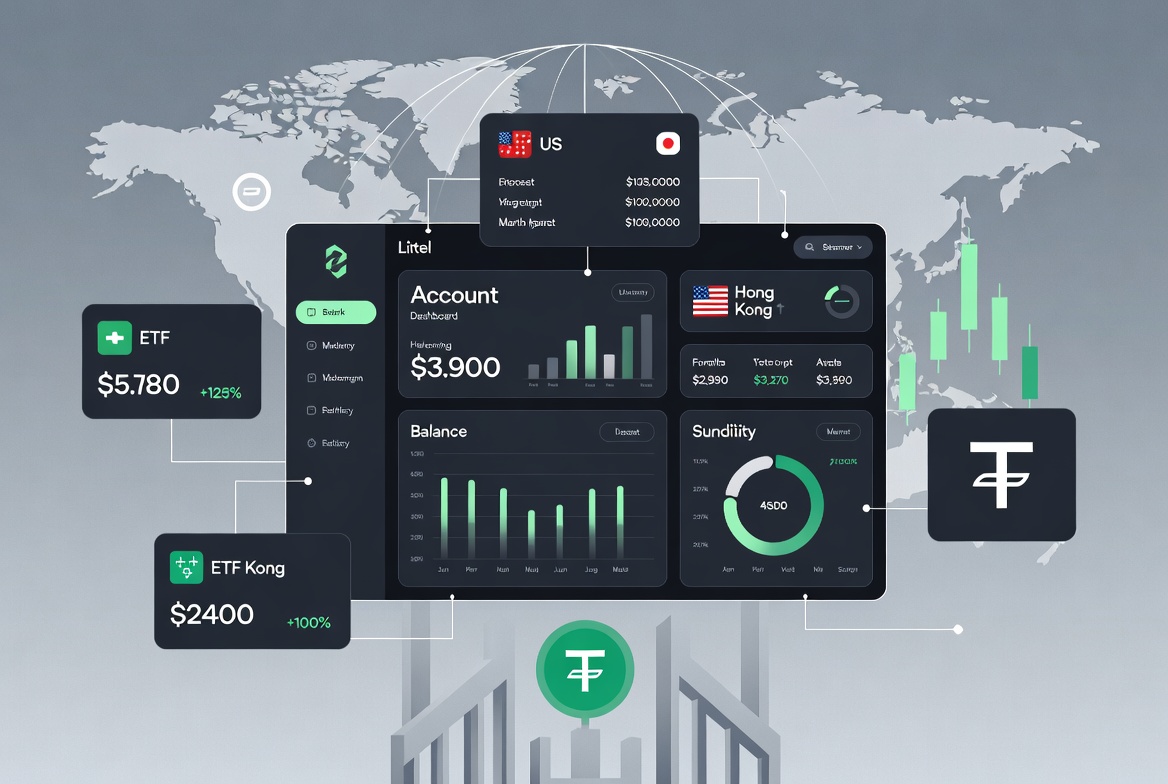
Which Markets and Assets Does Gate Stocks Support
Gate Stocks currently supports trading access to more than 10,000 stocks and ETF assets across multiple major U.S. securities markets and liquidity networks. Compared with platforms offering limited stock-mapping products, Gate Stocks emphasizes broader market access and asset coverage.
The U.S. market offering includes major exchanges and liquidity venues such as NYSE, Nasdaq, NYSE Arca, NYSE American, and BATS. Users can access stocks and ETFs through a single interface and complete trading and portfolio management within supported ranges.
Beyond U.S. equities, Gate Stocks has officially launched Hong Kong stock trading capabilities. The initial launch supports more than 1,000 Hong Kong-listed companies, covering highly recognized stocks across both the Main Board and GEM of the Hong Kong Stock Exchange. Through a unified stock account system, users can manage both U.S. and Hong Kong holdings in one place.
How to Trade Stocks Through Gate Stocks Using USDT
The entire stock trading process through Gate Stocks can be completed within one unified account environment without opening a separate overseas brokerage account.
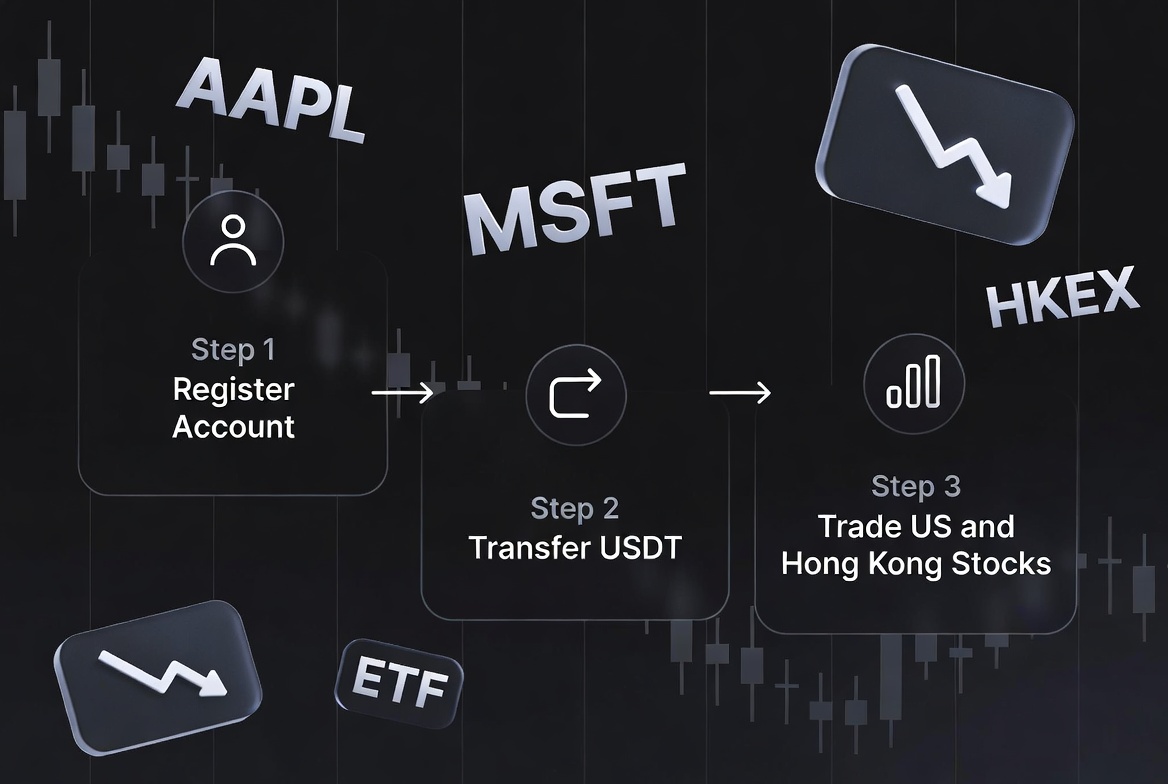
Step 1: Update the Gate App to a version that supports stock trading and complete registration and KYC verification.
Step 2: Enter the TradFi section and access the Stocks area. Transfer USDT from your unified account or spot account into the stock account.
Step 3: Search for the target stock or ETF, select the quantity, and complete the transaction.
For Hong Kong stock trading, users can directly switch to the Hong Kong market within the stock section. For U.S. markets, users can browse stocks and ETFs and place orders directly.
How Gate Stocks Differs from Traditional Overseas Brokerage Models
Traditional overseas brokers generally operate with standalone securities account systems. Users typically complete account opening, identity verification, fund preparation, and asset management separately. Investors participating in U.S. or Hong Kong markets may also need to manage cross-border funding, multiple platform logins, and separate asset views.
By contrast, Gate Stocks emphasizes unified account functionality. After account setup, users can manage digital assets, transfer USDT, and trade stocks within one platform without establishing separate brokerage accounts, reducing management complexity caused by multiple accounts.
From a product structure perspective, Gate stock trading operates independently from CFDs and perpetual contracts. Users buy, hold, and sell stock assets through dedicated stock accounts with separate fund management. Spot stock trading does not involve funding rates, swap fees, or overnight holding charges, making it more suitable for stock allocation scenarios. As market coverage expands, the stock account system is expected to support broader market access and asset management features.
How to Manage Positions and Corporate Actions After Trading
After completing stock transactions, users can centrally view positions, asset changes, order records, and fund history within the account system without switching platforms. Unified asset visibility reduces information fragmentation and supports long-term portfolio management.
Beyond daily position tracking, stock investing also involves corporate actions such as cash dividends, stock dividends, stock splits, and reverse splits. Gate Stocks supports synchronized processing of these events according to product rules and reflects related changes within the account structure.
For users participating across multiple markets, unified management reduces operational burden. Investors can view both U.S. and Hong Kong stock positions within one interface while centrally managing holdings, profit and loss changes, and trading records.
Who Is Gate Stocks Designed For
Users already accustomed to managing funds through digital assets may find the Gate Stocks account structure and trading process easier to understand. Participating through a unified account reduces account migration and fund switching while creating a more seamless experience between digital and stock assets.
Users seeking to reduce currency conversion processes, lower account-switching costs, and maintain exposure to both stocks and digital assets may also benefit from improved efficiency.
For investors looking to allocate across both U.S. and Hong Kong markets, Gate Stocks offers centralized asset management. Users can manage positions, execute trades, and monitor assets within one account environment for a more convenient global equity investing experience.
Conclusion
Trading U.S. and Hong Kong stocks through Gate Stocks using USDT is fundamentally about connecting digital assets with traditional securities markets through a unified account system. Users do not need to open separate overseas brokerage accounts or prepare USD or HKD independently. Instead, they can participate in stock and ETF markets while managing trading, holdings, and assets within one platform. As market coverage continues expanding, unified accounts and multi-asset coordination are becoming an increasingly important direction for global investing.
FAQ
Is Gate Stocks a tokenized stock product?
No. Gate Stocks provides stock market trading services and is not based on tokenized equities or on-chain stock mapping products.
Do I need to convert USDT into USD before trading stocks?
No. Users can prepare for trading directly with USDT without converting into USD in advance.
Does Gate Stocks support Hong Kong stock trading?
Yes. Users can update to a supported version and access Hong Kong stock trading through the Stocks section.
Which stock markets does Gate Stocks support?
Gate Stocks currently supports major U.S. securities markets and the Hong Kong stock market, covering both stocks and ETFs.
Does Gate Stocks support fractional investing?
Yes. Users can participate by investment amount without purchasing full shares.
How are dividends and stock splits processed?
Cash dividends, stock dividends, stock splits, and reverse splits are processed according to product rules and synchronized within the account system.