In the past, the automotive industry was typically viewed as a classic manufacturing sector: companies would develop vehicles, produce them, and sell to consumers. But as the global auto industry shifts toward electrification and software-driven models, revenue structures have begun to change. Value is no longer concentrated solely at the moment of delivery—it now extends into financing services, long-term maintenance, digital capabilities, and user lifecycle management.
Hyundai Motor is in the midst of this transformation. While it retains traditional manufacturing capabilities, it is also expanding into finance, software, and future mobility services, aiming to build a more stable, long-term operational structure. Understanding how Hyundai Motor makes money is essentially understanding how the modern auto industry is evolving from a one-time manufacturing model into a continuous operation model.
How Automakers Structure Their Revenue
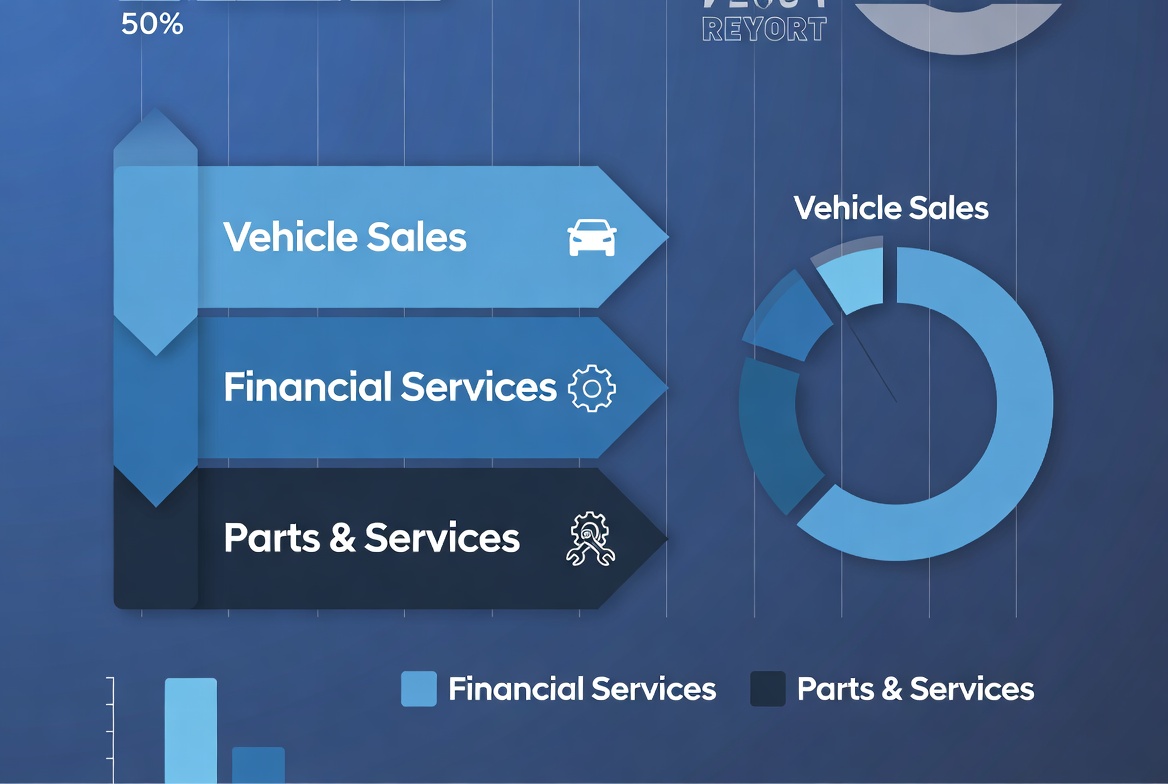
Many users believe that automotive companies earn nearly all their revenue from selling cars, but major global auto groups typically use a multi-layered revenue structure. Vehicle sales remain the largest component, with value realized through R&D, supply chain procurement, manufacturing, and end-user sales. However, for mature automakers, relying solely on new-car sales is rarely enough to sustain long-term growth. That’s why revenue sources have gradually expanded. Hyundai Motor’s business model can be understood as a four-tier structure.
The first tier is vehicle revenue—sales income from car deliveries.
The second tier is automotive finance, including loans, leasing, and financing services, which extend customer relationships and improve operational efficiency.
The third tier is the after-sales service system—maintenance, parts, replacements, and long-term operational services.
The fourth tier extends into digital capabilities, including software upgrades, smart services, and ongoing feature delivery.
This structure means the automotive industry increasingly resembles a long-term service business rather than a one-time manufacturing transaction. Going forward, the difference between automakers may not be just sales volume—it will be who can consistently capture user lifecycle value.
How Vehicle Sales Generate Core Revenue
Vehicle sales remain the core revenue source in Hyundai Motor's business model. Automotive products naturally involve complex supply chains. Companies must coordinate R&D, procurement, manufacturing, channels, and inventory management. Ultimately, profitability depends not just on sales volume but on the efficiency of the entire system. Hyundai Motor covers different demand scenarios through a multi-layered product structure, with each product position targeting a specific price range, cost structure, and market strategy—forming a diversified revenue mix.
In addition, global manufacturing footprint affects vehicle revenue efficiency. Regional production capacity lowers transportation and supply costs, while local operations enable faster responses to market changes. This means competition among automakers takes place not only at the product level but also at the organizational coordination level.
Notably, vehicle sales revenue is no longer a one-time event. More companies now view cars as entry points for long-term customer relationships, aiming to create ongoing value through subsequent services. So while Hyundai Motor’s vehicle business remains core, it is already integrating with long-term operational capabilities.
How Financial Services and Long-Term Operations Expand Revenue Potential
If selling cars determines revenue scale, then finance and service systems determine revenue sustainability. A key shift in Hyundai Motor’s revenue structure is the growing strength of automotive finance. In today’s automotive industry, consumers rarely pay the full purchase price upfront. Financing, leasing, and installment plans have become essential components of the business system. These financial services lower the barrier to car ownership and build longer-term customer relationships.
At the same time, after-sales service has grown increasingly important. Traditional after-sales focused on repairs, but today it has expanded into long-term maintenance, digital services, vehicle management, and continuous operations. This shift means companies are no longer just selling hardware—they are continuously providing usability.
From a business model perspective, this structure brings two changes: the revenue cycle lengthens, and operational volatility becomes more manageable. For a global group like Hyundai Motor, long-term service capabilities have become a significant competitive advantage.
How Electric Vehicles Are Reshaping Hyundai Motor’s Profit Structure
The rise of electric vehicles (EVs) is not just changing product design—it’s also transforming how profits are generated in the automotive industry. In the traditional internal combustion era, most value was concentrated in engines, mechanical components, and mass production capabilities. In the new energy era, value is shifting to batteries, electronic architectures, software, and platform capabilities. This change fundamentally alters automakers’ profit logic.
Hyundai Motor has been steadily advancing its EV capabilities, aiming not simply to increase new-energy sales but to rebuild its profit model under the new industrial structure. Platformization is a key change: sharing underlying capabilities across multiple models reduces R&D complexity and boosts production efficiency. Meanwhile, the importance of software continues to rise.
Future vehicle value may depend more on continuous upgrade capabilities than on hardware alone. For Hyundai Motor, this means profit sources are gradually moving from one-time delivery to long-term operations. Over the long run, the automotive industry may evolve into a combined structure of “manufacturing profit + software profit + service profit.”
How Global Expansion and Scale Effects Improve Efficiency
One key reason Hyundai Motor can compete globally over the long term is scale effects. The automotive industry is a heavy-asset sector that requires sustained investment in R&D, factory construction, and supply chains. Scale has a direct impact on operational efficiency.
Hyundai Motor continues to expand global production and regional coordination, using its worldwide footprint to diversify operational risk. But scale effects go beyond just increasing sales volume.
| Capability Dimension |
Before Expansion |
After Reaching Global Scale |
| R&D Investment |
Independent development per model |
Platform sharing, technology reuse |
| Production System |
Regional independent manufacturing |
Global coordinated production |
| Procurement Capability |
High cost volatility |
Centralized procurement improves efficiency |
| Supply Chain |
Local optimization |
Global resource scheduling |
| Product Updates |
Longer cycle |
Simultaneous iteration across markets |
| Risk Management |
Reliance on single region |
Multi-region risk diversification |
As organizational capabilities improve, companies can more effectively share R&D results, procurement resources, and technical capabilities. This coordination is especially important in the automotive industry, where vehicle upgrades often involve simultaneous changes across multiple systems. Only with sufficient scale can a company sustain the necessary technology investments.
Therefore, Hyundai Motor’s development logic is not just about market expansion—it’s about building long-term operational capabilities within the global automotive market.
Risks and Limitations of Hyundai Motor’s Business Model
Although Hyundai Motor has built a relatively complete revenue structure, the automotive industry remains inherently complex. First, there is capital investment pressure. Automotive R&D, manufacturing, and supply systems all require long-term investment, so the company must constantly balance growth and efficiency.
Second, technological cycles are shifting rapidly. The continuous evolution of electrification, software, and energy systems means the company must continually adjust its resource allocation.
At the same time, global market fluctuations can affect long-term operational stability. Competition in the auto industry is no longer confined to traditional manufacturers—it now includes new-energy companies, tech firms, and future mobility platforms.
For Hyundai Motor, the advantage lies in its relatively comprehensive capabilities, but the challenge comes from having to upgrade in multiple directions simultaneously. Therefore, business model evolution is not about replacing the existing system, but gradually adjusting the structure over time.
Conclusion
Hyundai Motor’s revenue structure is no longer limited to vehicle sales. It has evolved into a coordinated business system encompassing manufacturing, finance, services, and software. Vehicle revenue remains the foundation, but long-term operational capabilities, automotive finance, and digital services are emerging as new growth drivers.
At the same time, electric vehicles and software-defined cars are reshaping profit structures, gradually turning the automotive industry from a manufacturing sector into a long-term service industry. Understanding how Hyundai Motor makes money is essentially understanding how the global auto industry is moving from selling products to operating users.
FAQ
Does Hyundai Motor mainly make money by selling cars?
Vehicle sales remain the core revenue source, but the importance of finance, after-sales services, and digital capabilities is steadily increasing.
Why is automotive finance important?
Automotive finance extends customer relationships, increases purchasing flexibility, and strengthens long-term operational capabilities.
Will electric vehicles change how automakers generate profits?
Yes. The future profit structure will likely shift toward platform capabilities, software services, and long-term operations.
Why do global automakers emphasize scale effects?
The automotive industry requires high R&D and manufacturing investment. Scale improves resource utilization efficiency and supports long-term technology upgrades.