With the rapid development of large language models(LLMs), vision AI, and multimodal systems, Humanoid Robots are once again becoming one of the hottest directions in the global technology industry.
Most robot systems in the past could only perform fixed tasks. A new generation of AI technologies, however, is giving robots stronger environmental understanding and task reasoning capabilities. This means robots may eventually become more than industrial tools. They could become true “AI labor.”
In today’s Humanoid Robot industry, Figure AI and Tesla Optimus are among the most closely watched projects. Both companies hope to build general-purpose robots capable of working in the real world for long periods of time, but the technical logic, industrial resources, and commercialization paths behind them are completely different. These differences may also lead the two companies toward two very different robotics ecosystems.
Figure AI is widely seen as an “AI-first” Humanoid Robot company.
Compared with traditional robotics companies that focus on motion control and mechanical structure, Figure AI puts greater emphasis on large AI models, robotic reasoning, and Vision-Language-Action(VLA)architecture. Its core goal is to help robots truly understand the real world.
Tesla Optimus, on the other hand, looks more like an extension of Tesla’s autonomous driving technology and automotive manufacturing capabilities.
Tesla has one of the world’s most mature electric vehicle manufacturing systems, large-scale supply chain capabilities, and massive amounts of vision data. These give Tesla Optimus a natural advantage in hardware mass production and data feedback loops.
Put simply:
Although both companies are building Humanoid Robots, their underlying strategies are fundamentally different.
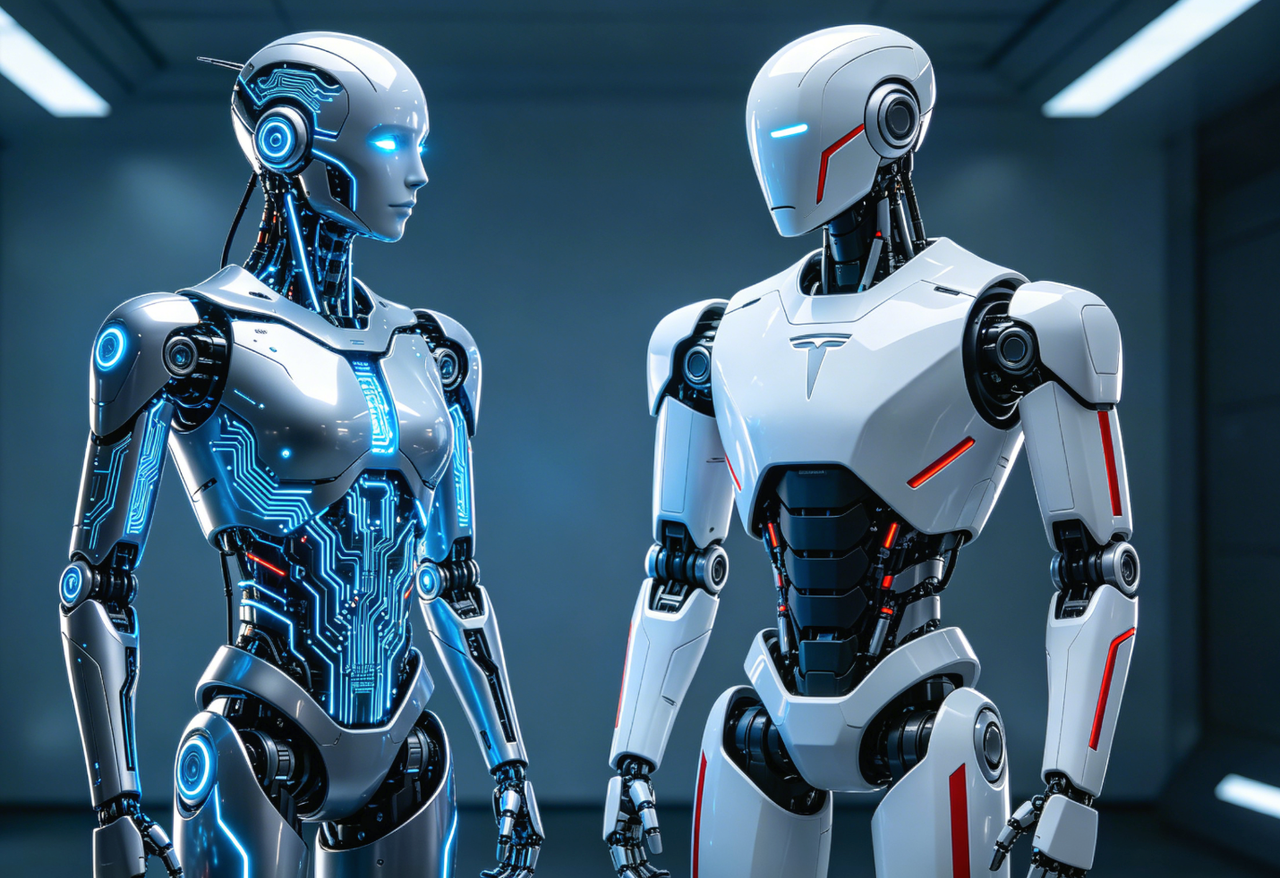
Figure AI’s core direction is “AI + Robotics.”
The company believes the true core of humanoid robots is not mechanical structure, but whether robots can understand and reason autonomously.
That is why Figure AI consistently focuses on:
Figure AI hopes that, in the future, robots will be able to complete complex tasks in the real world much like AI Agents.
For example, a robot does not only need to “see” an object. It also needs to understand the environment, plan actions, execute tasks, and keep learning.
This is also why Figure AI places more emphasis on AI model capability than simply showing off robot motion performance.
What Is Tesla Optimus’s Core Strategy
Tesla Optimus’s core advantage comes from the industrial system Tesla has already built.
Tesla has accumulated large amounts of vision data, chip capabilities, and neural network training experience in autonomous driving, and these capabilities can be transferred directly into robotics.
Compared with Figure AI, Tesla places more emphasis on large-scale manufacturing, autonomous driving AI transfer, data feedback loops, and low-cost mass production. In essence, Tesla Optimus is reusing Tesla’s already mature AI and manufacturing ecosystem.
Elon Musk has even said that Optimus could eventually be worth more than Tesla’s car business. This means Tesla’s goal for Humanoid Robots is not merely to create a robot product, but to build a future AI labor platform.
What Is the Difference Between Helix AI and Tesla AI
Helix AI is Figure AI’s core robotic intelligence system.
It uses a Vision-Language-Action(VLA)architecture and is designed to give robots environmental understanding, language reasoning, and action planning capabilities.
Figure AI’s goal is to build a Robotics Foundation Model specifically designed for the physical world.
Tesla’s AI system, by contrast, is more directly inherited from its autonomous driving path.
Tesla has long focused on camera-based perception, end-to-end neural networks, and real-world driving data. It places greater emphasis on training a unified AI system through large-scale real-world data.
So the biggest difference between the two companies is this:
Figure AI places more emphasis on robotic reasoning, while Tesla places more emphasis on real-world data scale and engineering systems.
Figure AI is currently more focused on the coordination between the robot body and the AI system.
Its robot design priorities include dexterous hands, human-machine interaction, and the ability to perform complex tasks, with the aim of helping robots adapt to a wide range of real-world work environments.
Tesla Optimus pays more attention to the logic of scaled manufacturing.
Tesla has natural advantages in areas such as:
-
Battery technology
-
Motor systems
-
Chip design
-
Automated factories
This means Tesla Optimus may be more likely to achieve low-cost mass production earlier.
At the same time, however, Figure AI may have greater flexibility in robotic AI architecture.
In the short term, Tesla’s manufacturing advantage is more obvious.
Tesla already has global-scale factories, supply chains, and automation capabilities. Once its robot matures, it may be easier to scale production quickly.
Figure AI’s advantage, however, is that it is more focused on the robot itself.
Figure AI has already partnered with BMW on factory deployment and is continuing to train robots for tasks in real industrial environments.
By comparison, Tesla Optimus is still more focused on Tesla’s internal scenarios at this stage.
As a result, the two companies may form different commercial paths in the future:
Will Robot-as-a-Service Become Important
Figure AI is more likely to move toward a Robot-as-a-Service(RaaS)model.
This model is similar to enterprise SaaS. Companies do not need to buy robots. Instead, they pay a monthly usage fee.
Figure AI provides:
-
Robot deployment
-
AI system upgrades
-
Data training
Tesla, over the long term, may be more inclined toward large-scale robot sales because it already has global experience selling consumer-grade hardware.
This means Figure AI looks more like a “robot cloud platform,” while Tesla looks more like a “robot manufacturer.”
Conclusion
Figure AI and Tesla Optimus are both pushing Humanoid Robots toward commercialization, but their paths are fundamentally different.
Figure AI places greater emphasis on AI reasoning, Helix AI, and Robotics Foundation Models. It aims to build a robotics platform with autonomous understanding capabilities.
Tesla Optimus relies more heavily on Tesla’s autonomous driving technology, manufacturing system, and supply chain capabilities, with the goal of lowering robot deployment costs through scaled production.
In the short term, Tesla may have a stronger advantage in mass production. In the long term, Figure AI’s flexibility and specialization in robotic AI systems could also become a distinctive competitive strength.
The future of the Humanoid Robot industry may not be decided by a single winning path. Instead, it is likely to become a long-term competition in how AI and manufacturing systems converge.
FAQs
Figure AI places greater emphasis on robotic AI and reasoning capabilities, while Tesla Optimus places more emphasis on manufacturing systems and data scale.
Does Tesla Optimus Use Autonomous Driving Technology
Yes. Many of Tesla Optimus’s AI technologies come from Tesla’s autonomous driving system, including visual perception and neural network architecture.
Because it is considered one of the most typical AI-first Humanoid Robot companies.
Why Is Tesla Building a Humanoid Robot
Tesla hopes to use its AI and manufacturing capabilities to build a future automated labor platform.
Tesla has stronger advantages in supply chains and manufacturing systems, so it is more likely to advance large-scale mass production.