As generative AI, large model inference, multi-agent systems, and open data networks advance at a rapid pace, traditional centralized AI platforms face challenges such as high costs, resource concentration, and steep innovation barriers. A growing number of projects are exploring blockchain-based open AI networks that enable global developers to collectively participate in model training, inference services, and intelligent application development. Against this backdrop, the token economic model has become a critical infrastructure determining the long-term viability of decentralized AI networks.
From the perspective of digital asset and Web3 technology evolution, DeepNode aims to transform AI models, computing resources, and intelligent contributions into a quantifiable, verifiable, and incentivizable on-chain value system. Through its Proof-of-Work Relevance (PoWR) mechanism, dynamic trust evaluation system, and DN token incentive network, DeepNode seeks to establish a novel economic framework that continuously discovers high-quality models, optimizes resource allocation, and fosters self-evolution of the intelligent network. This model not only influences operational efficiency but also determines DN's future value capture capability and ecosystem growth potential.
Core Functions and Uses of the DN Token
Within the DeepNode network, DN is far more than a tradable digital asset — it serves as the value hub of the entire open intelligence ecosystem.
Functionally, DN fulfills four primary roles:
Network Settlement Asset
Users must pay DN fees to call AI models, execute inference tasks, or purchase intelligent services. As network application scale expands, the actual demand for DN usage grows in tandem.
Ecosystem Incentive Tool
Model developers, validators, miners, and data contributors earn DN rewards by providing effective contributions, sustaining a continuous economic cycle.
Security Guarantee Mechanism
Nodes involved in verification and consensus typically stake DN. This staking mechanism raises the cost of malicious behavior and strengthens network security.
Governance Credential
DN holders participate in governance decisions, including protocol upgrades, parameter adjustments, ecosystem fund allocation, and future development direction.
This multi-purpose design endows DN with payment attributes, production factor attributes, and governance attributes simultaneously.
DN Token Allocation and Release Mechanism
For any blockchain project, the token allocation structure directly impacts long-term ecosystem health.
A sound token economic model must satisfy three requirements:
-
Incentivize early builders
-
Ensure long-term ecosystem development
-
Avoid excessive short-term selling pressure
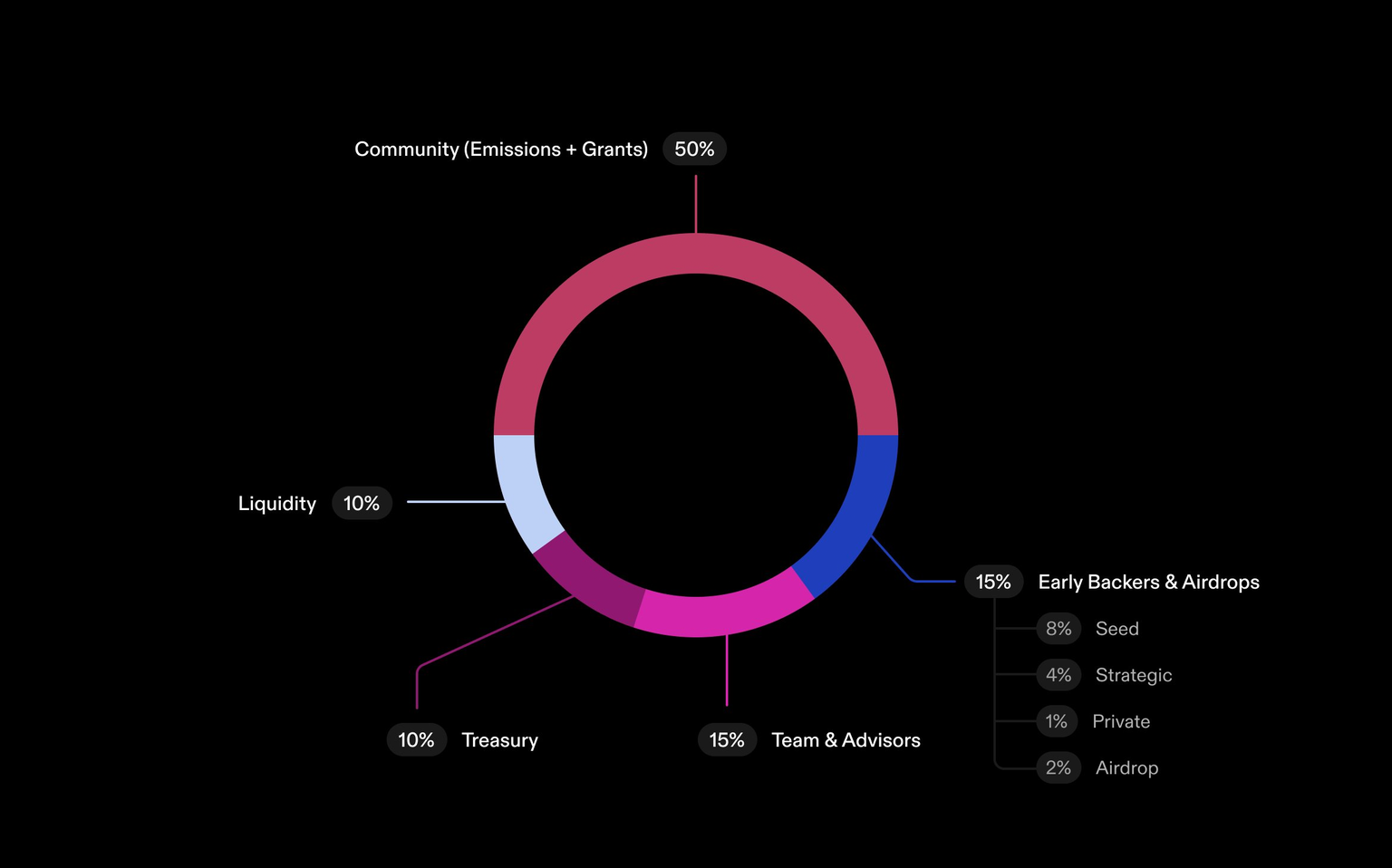
Based on DeepNode's publicly available information, overall DN allocation centers on ecosystem building, network incentives, core team, investors, and community development.
The largest portion is typically allocated to the network incentive pool. The rationale: an open intelligence network's core competitiveness derives from participant numbers and contribution quality. Without a sustained incentive mechanism, developers and node operators will struggle to remain in the ecosystem long-term. Meanwhile, team and investor shares typically feature longer lock-up periods and linear release schedules.
This design helps reduce short-term market supply pressure and aligns project team interests with long-term ecosystem growth.
For investors, three key indicators warrant attention:
These factors directly influence market supply and demand dynamics.
How DN Incentivizes Model Developers, Miners, and Validators
Most traditional AI platforms operate on centralized business models: model developers contribute technology, cloud platforms control traffic, and the majority of revenue concentrates with platform operators. DeepNode seeks to change this value distribution paradigm. For model developers, rewards depend on the number of model invocations and their contribution value. When a model consistently attracts user demand, its development team earns more DN rewards.
Miners primarily contribute hashrate resources. The network distributes rewards based on actual inference tasks completed, computational efficiency, and service stability.
Validators assume quality control responsibilities. They evaluate model output results and help the network identify low-quality or malicious nodes.
If validation results are adopted, validators also receive corresponding rewards. This three-party collaboration forms a complete value cycle:
-
Models provide intelligence capabilities
-
Miners provide computing resources
-
Validators provide quality assurance
Together, they drive network growth.
How the PoWR Mechanism Affects DN Value Capture
PoWR (Proof-of-Work Relevance) is one of DeepNode's key innovations. Traditional PoW focuses on computational volume; PoS emphasizes capital investment. PoWR, however, prioritizes actual contribution value. Not all hashrate receives equal rewards. The network evaluates the relevance, effectiveness, and final value of tasks completed by nodes. Only work that genuinely enhances the network's intelligence capabilities earns higher returns.
This mechanism yields two important outcomes:
-
Avoids wasting vast amounts of computational resources.
-
Distributes incentives more precisely to high-value contributors.
As more high-quality models are called and real demand increases, DN usage and staking demand rise in tandem.
Thus, PoWR is not merely a consensus mechanism but a vital component of DN's value capture system.
The Role of DN in Governance
As the ecosystem expands, governance mechanisms grow increasingly important. DeepNode's long-term goal is not single-team control but gradual transition to community governance.
DN holders can participate via on-chain voting in:
-
Protocol upgrades
-
Incentive parameter adjustments
-
New feature launches
-
Ecosystem fund allocation
-
Strategic partnership approvals
Governance rights mean DN is more than a revenue certificate — it represents influence over the network's future direction. In a mature stage, governance demand often becomes a key support factor for token value.
Key Factors Influencing DN Token Value
DN's market performance is influenced by multiple factors.
Growth in AI Service Demand: As more developers and enterprises adopt DeepNode's open intelligence network, actual DN usage demand increases accordingly.
Ecosystem Expansion Speed: Growth in model count, node count, application count, and user base all affect network activity.
PoWR Mechanism Efficiency: If the network consistently identifies high-value contributors and improves resource utilization, ecosystem competitiveness strengthens.
Token Circulation Structure: Circulating supply growth rate, staking ratio, and release schedule all affect market supply and demand.
Overall Industry Environment: Development trends in both AI and Web3 sectors directly impact market attention on decentralized AI projects.
Therefore, DN's value does not rely solely on market sentiment — it is closely tied to actual network usage and ecosystem development progress.
Risks to Consider When Investing in DN
Despite decentralized AI being viewed as a key future direction, investing in DN carries certain risks.
-
Technology Implementation Risk: Open Intelligence remains in a relatively early stage; many technical solutions lack large-scale validation.
-
Market Competition Risk: The AI-Web3 intersection already hosts multiple competing projects, including decentralized hashrate networks, AI Agent platforms, and data markets. If DeepNode fails to establish a clear differentiated advantage, it may face competitive pressure.
-
Token Economic Risk: Poorly designed incentive mechanisms could lead to high inflation, user attrition, or insufficient value capture.
-
Regulatory Risk: As AI and digital asset industries face increasing regulatory scrutiny, policy changes may affect project development.
-
Market Volatility Risk: Crypto assets are inherently volatile; DN's price performance may also be affected by overall market cycles.
Investors should therefore evaluate multiple dimensions: technology, ecosystem, market, and regulation.
Long-Term Development Potential of the DN Ecosystem
From an industry trends perspective, AI-blockchain convergence is emerging as a new innovation frontier. Future AI networks may no longer be dominated by a few centralized platforms but evolve toward open collaboration models. The Open Intelligence network built by DeepNode represents a significant exploration in this direction.
If DeepNode can continue attracting model developers, computing providers, and enterprise users, it has the potential to form a complete intelligent network spanning training, inference, verification, and application layers. As Agent economies, multimodal AI, on-chain reasoning, and autonomous intelligent systems develop, demand for open intelligence infrastructure may grow continuously. Additionally, if the PoWR consensus mechanism and Dynamic Trust Weights operate effectively, they will further enhance network efficiency and resource utilization.
From a long-term perspective, DeepNode's potential lies not in a single product but in its ability to build open intelligence infrastructure.
Once the ecosystem achieves network effects, the DN token can become an important medium connecting intelligent resources and value transfer.
Summary
DeepNode is building a new generation of decentralized AI networks through the Open Intelligence concept, with the DN token serving as the operational core of this ecosystem.
From resource settlement and ecosystem incentives to network governance, from node staking to value capture, DN is deeply embedded across every aspect of DeepNode. The PoWR consensus mechanism further ties reward distribution to actual contribution value, enabling the network to more efficiently discover high-quality models and high-value participants.
As generative AI, Agent economies, and open intelligence networks continue to develop, the importance of decentralized AI infrastructure is rising. For users focused on the AI-Web3 convergence track, understanding the DN token economic model not only clarifies DeepNode's operational logic but also offers deeper insight into the future direction of the open intelligence ecosystem.