Ao contrário dos sistemas tradicionais de blockchain, que se centram sobretudo em transações de ativos, a Sign procura resolver o desafio dos “dados fiáveis” no Web3. Em ambientes descentralizados, informações como identidade, contributos, registos de governança, reputação ou estado de conformidade são frequentemente difíceis de verificar de forma consistente. A Sign introduz um mecanismo padronizado de atestação onchain, permitindo a diferentes aplicações gerar e verificar credenciais fiáveis, criando uma infraestrutura de dados partilhada.
Na ótica do desenvolvimento de infraestruturas de blockchain, a Sign representa uma importante exploração da camada de identidade e dados do Web3. Ao introduzir atestações onchain, credenciais verificáveis, sincronização de dados cross-chain e arquitetura modular, a Sign transforma registos de identidade e comportamento em recursos onchain composáveis. Isto proporciona uma base de dados mais sólida para governança de DAO, identidade onchain, verificação de airdrop e sistemas de reputação onchain.
Contexto e posicionamento da Sign
 Fonte: Site Oficial da Sign
À medida que o ecossistema Web3 se expande, as aplicações de blockchain evoluem de simples transações de ativos para sistemas sociais e económicos mais complexos. Neste contexto, identidade fiável e dados fiáveis tornam-se infraestruturas essenciais.
Por exemplo:
-
Os DAO precisam de verificar os contributos dos membros
-
Os projetos de airdrop precisam de identificar utilizadores genuínos
-
Os protocolos DeFi precisam de reconhecer participantes com elevada reputação
-
As comunidades Web3 precisam de sistemas de reputação onchain
No entanto, a maioria dos sistemas de blockchain ainda não dispõe de um mecanismo padronizado para registar e verificar este tipo de informação. O protocolo Sign surge para responder a este desafio. O seu objetivo principal é construir uma rede de atestação onchain que permita a diferentes aplicações gerar, armazenar e verificar credenciais digitais.
Estas credenciais podem representar várias formas de informação onchain ou offchain, como verificação de identidade do utilizador, registos comportamentais, contributos em projetos, histórico de votação em DAO ou o histórico de atividade de um indivíduo em redes blockchain. Em conjunto, contribuem para criar um sistema de identidade digital e dados mais completo e verificável.
Ao estruturar e ancorar esta informação onchain, a Sign pretende tornar-se a camada de infraestrutura de dados fiáveis da era Web3.
Componentes principais e características técnicas da Sign
O protocolo Sign assenta em três componentes fundamentais.
- Atestação (Sistema de Prova)
A atestação é o mecanismo central da Sign. Regista uma declaração feita por uma entidade sobre outra.
Exemplos:
-
Um DAO confirma que um utilizador é membro central
-
Um protocolo verifica que um utilizador concluiu uma tarefa específica
-
Uma instituição confirma que um utilizador passou na verificação KYC
Estas atestações são registadas de forma criptográfica e mantêm-se verificáveis.
- Schema (Estrutura de Atestação)
Para garantir compatibilidade entre aplicações, a Sign utiliza estruturas Schema para definir o formato das atestações.
Exemplos:
-
Schema de atestação de identidade
-
Schema de atestação de contributo
-
Schema de atestação de governança
Os schemas permitem que diferentes aplicações utilizem um padrão de dados comum.
- Rede de Verificação
O protocolo Sign permite que nós de verificação de terceiros validem e sincronizem atestações, aumentando a fiabilidade dos dados e reduzindo riscos de ponto único de falha. Este modelo permite que os dados de atestação sejam armazenados onchain, mas também possibilita consultas eficientes via sistemas offchain.
Como funciona o protocolo Sign
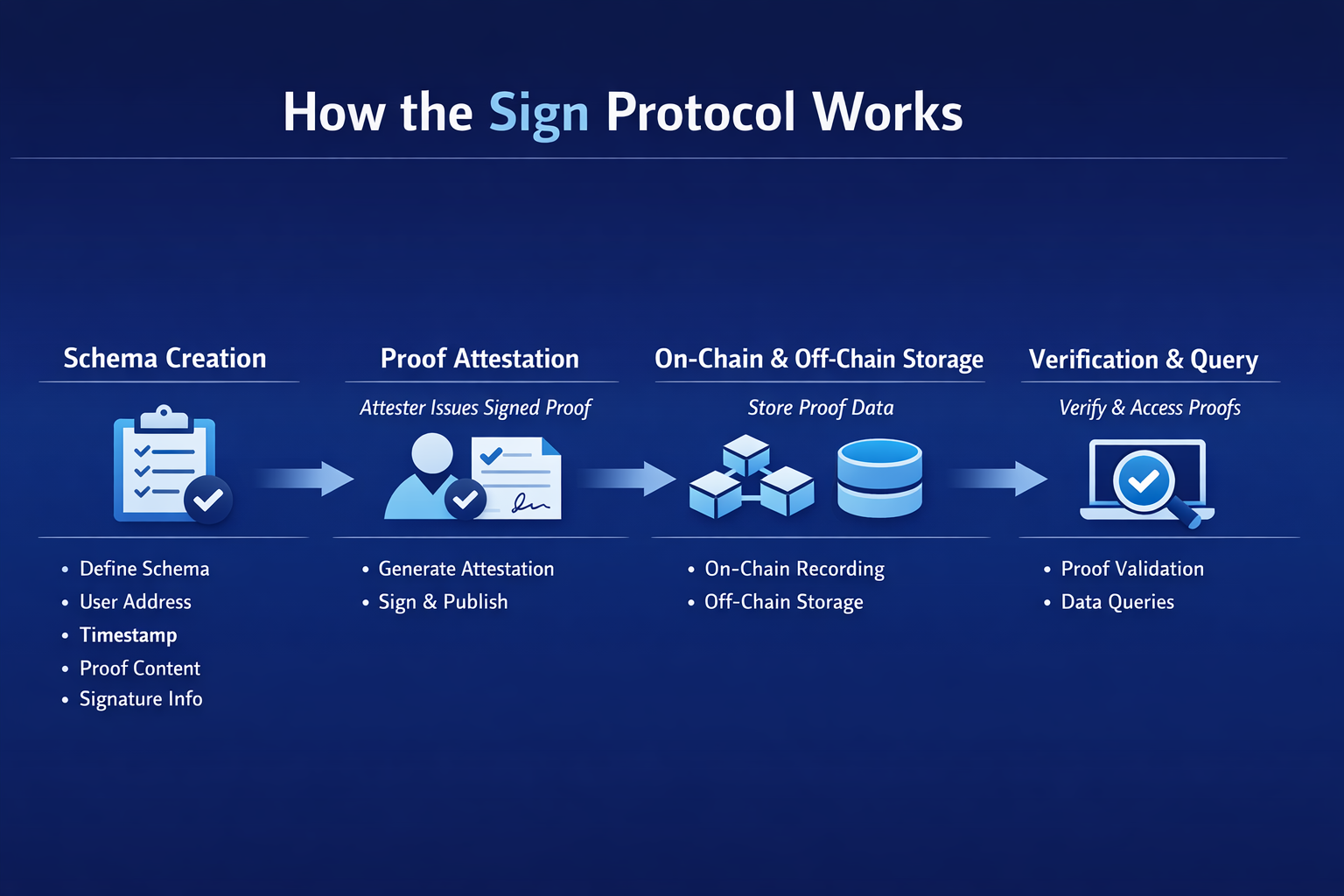
A lógica operacional da Sign pode ser entendida como um ciclo de vida completo: criação de atestação → armazenamento → verificação → utilização.
Processo de criação de atestação
O processo de geração de atestações inclui normalmente os seguintes passos.
- Criar um Schema
Os programadores definem a estrutura da atestação, que pode incluir:
-
Endereço do utilizador
-
Carimbo temporal
-
Conteúdo da atestação
-
Informação de assinatura
- Publicar uma Atestação
O emissor da atestação, designado Attester, gera uma assinatura e submete a atestação.
- Registo Onchain
A atestação pode ser escrita diretamente na blockchain ou registada por soluções de armazenamento offchain.
- Verificação e Consulta
Outras aplicações podem verificar atestações através da API do protocolo Sign ou consultando dados onchain.
Através deste processo, qualquer aplicação pode gerar credenciais fiáveis.
Mecanismo de interoperabilidade cross-chain
O ecossistema Web3 é cada vez mais multi-chain. Por isso, a Sign foi concebida para considerar dados cross-chain.
O mecanismo cross-chain da Sign inclui principalmente:
-
Sincronização de atestação cross-chain, permitindo partilha de dados de atestação entre diferentes blockchains
-
Interfaces de verificação unificadas, permitindo aos programadores usar a mesma lógica de verificação em várias cadeias
-
Compatibilidade de schema multi-chain, assegurando estruturas de dados consistentes entre redes
Esta capacidade cross-chain permite que registos de identidade ou comportamento de uma cadeia sejam verificados noutra.
Por exemplo:
Isto melhora significativamente a portabilidade dos sistemas de identidade Web3.
Arquitetura modular
O protocolo Sign adota uma arquitetura modular para suportar diferentes requisitos de aplicações.
Os módulos principais incluem:
-
Camada de atestação, responsável pela geração e gestão de atestações
-
Camada de dados, responsável pelo armazenamento de schemas e registos de atestação
-
Camada de verificação, responsável pela validação da autenticidade das atestações
-
Interfaces para programadores (API / SDK), permitindo integração fácil do protocolo
As vantagens da arquitetura modular incluem:
Os programadores podem selecionar componentes conforme as necessidades do projeto.
Governança do token SIGN e modelo económico
O token SIGN é o ativo central de governança e incentivo no ecossistema do protocolo Sign.
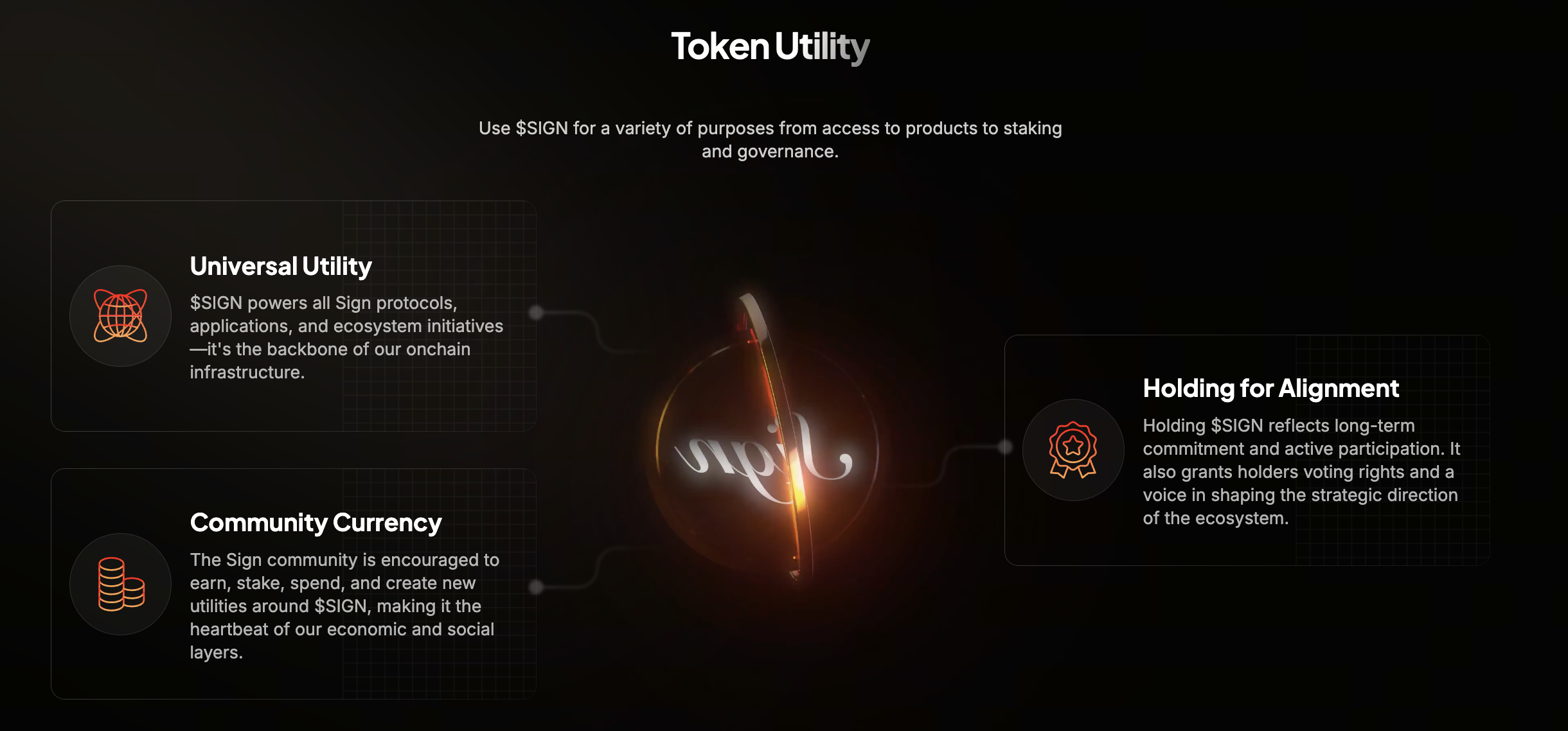
Fonte: Site Oficial da Sign
As principais funções incluem:
- Governança do protocolo
Os detentores de SIGN podem participar em votações de governança sobre temas como:
- Incentivos de rede
O SIGN pode ser utilizado para recompensar:
- Pagamentos no ecossistema
Em determinadas aplicações, o SIGN pode ser utilizado para pagar:
-
Taxas de geração de atestação
-
Taxas de consulta de dados
-
Taxas de utilização de API
Este modelo posiciona o SIGN como mecanismo económico central para o funcionamento do protocolo.
Ecossistema Sign e principais casos de uso
À medida que cresce a procura por infraestrutura de identidade e dados Web3, os cenários de aplicação da Sign continuam a expandir-se.
- Sistemas de identidade Web3
A Sign pode servir como infraestrutura para sistemas de identidade descentralizada (DID).
Os utilizadores podem deter múltiplas atestações, como:
-
Status de membro comunitário
-
Histórico de contributos em projetos
-
Histórico de posse de NFT
Em conjunto, estes registos formam o perfil de identidade onchain do utilizador.
- Governança DAO
Os DAO podem usar a Sign para registar:
-
Contributos dos membros
-
Histórico de votação
-
Permissões de funções
Isto permite criar estruturas de governança mais transparentes.
- Qualificação para airdrop e resistência a Sybil
Muitos projetos precisam de mecanismos para identificar utilizadores reais.
O mecanismo de atestação da Sign pode suportar:
Isto reduz o risco de ataques Sybil.
- Sistemas de reputação onchain
Ao registar o comportamento dos utilizadores ao longo do tempo, podem ser estabelecidas pontuações de reputação onchain.
Exemplos:
-
Reputação de crédito DeFi
-
Pontuações de contributo comunitário
-
Registos de contributo de programadores
Estes conjuntos de dados podem ser partilhados entre diferentes aplicações.
Diferenças entre Sign e sistemas tradicionais de gestão de identidade
Os sistemas tradicionais de identidade dependem geralmente de instituições centralizadas para gerir os dados dos utilizadores. Em contraste, a Sign foi concebida segundo os princípios descentralizados do Web3.
As diferenças arquitetónicas entre Sign e sistemas tradicionais de identidade resultam em abordagens distintas ao controlo de dados, soberania do utilizador e interoperabilidade de aplicações, permitindo a cada modelo servir necessidades diferentes do ecossistema.
Riscos a considerar ao investir na Sign
Apesar de a Sign demonstrar potencial tecnológico, existem vários riscos a considerar.
- Risco de adoção tecnológica
A atestação onchain permanece um setor emergente de infraestrutura e a sua escala de aplicação ainda está em desenvolvimento.
Se a adoção do ecossistema crescer lentamente, o valor do protocolo pode ser afetado.
- Pressão competitiva
O setor de identidade e atestação Web3 já inclui vários projetos concorrentes, tais como:
A Sign terá de manter-se competitiva tanto em tecnologia como no desenvolvimento do ecossistema.
- Incerteza regulatória
Sistemas de verificação de identidade e dados podem envolver considerações de privacidade e conformidade.
Alterações futuras na regulação podem afetar o desenvolvimento do protocolo.
- Volatilidade do mercado de tokens
O preço do token SIGN pode ser influenciado pela perceção do mercado e condições de liquidez.
A perspetiva a longo prazo para a Sign depende da adoção real da tecnologia de atestação onchain, da concorrência no ecossistema e de alterações no ambiente regulatório. O preço do token SIGN pode também ser influenciado por movimentos mais amplos no mercado das criptomoedas.
Conclusão
A Sign (SIGN) procura resolver um desafio fundamental no ecossistema Web3: como estabelecer sistemas de dados e identidade fiáveis num ambiente descentralizado. Através de atestações onchain, estruturas de schema e mecanismos de verificação cross-chain, a Sign converte identidade, comportamento e dados em credenciais verificáveis que podem ser partilhadas entre aplicações. Esta infraestrutura pode suportar sistemas de identidade Web3 e fornecer bases técnicas para governança DAO, reputação onchain e verificação de airdrop.
A longo prazo, à medida que os ecossistemas multi-chain e aplicações Web3 continuam a expandir-se, a importância da infraestrutura de dados fiáveis pode crescer. Se a Sign conseguir alcançar avanços na adoção por programadores e aplicações reais, o seu papel na camada de infraestrutura Web3 poderá expandir-se ainda mais.
Perguntas Frequentes
P1: O que faz a Sign (SIGN)?
A Sign é um protocolo de atestação onchain utilizado para criar e verificar credenciais digitais de identidade, comportamento e dados.
P2: Como está a Sign relacionada com DID?
A Sign pode servir como infraestrutura para sistemas de identidade descentralizada (DID), registando atestações relacionadas com identidade.
P3: Qual é o objetivo do token SIGN?
O SIGN é utilizado sobretudo para governança do protocolo, incentivos do ecossistema e certos pagamentos de taxas de rede.
P4: A Sign suporta várias blockchains?
Sim. A Sign foi concebida com interoperabilidade cross-chain, permitindo que dados de atestação sejam partilhados entre várias redes blockchain.
P5: Que casos de uso suporta a Sign?
A Sign pode ser utilizada em governança DAO, verificação de airdrop, sistemas de identidade onchain, sistemas de reputação e gestão de comunidades Web3.